
Like other automakers, luxury and otherwise, the BMW Group acknowledges that the future of automotive is electrified. However, unlike its peers, the BMW brand is not conceding to a lineup of only battery electric vehicles (BEVs). Industry observers expect its sister brands—Mini and Rolls-Royce—to transition to electric-only by 2030. But with just a handful of models, their lineups are a fraction of BMW's, which has an extensive range of cars and crossovers.
Instead, BMW's strategy is to introduce a BEV into every key segment with a global sales target of 50 percent EVs by the end of the decade. Although the Bavarians are in no hurry to EV everything, they remain pioneers in the technology. After all, the discontinued BMW i3 was the world's first-ever mass-produced EV and helped launch what is now BMW's "i" sub-brand.
The post-i3 EV evolution starts with the all-new 2022 BMW i4 and 2022 BMW iX. The i4 is an all-electric version of the 4 Series compact car, while the iX is BMW's first-ever crossover EV. In leading the way for BMW's next round of EVs, these first drafts, if you will, are chockful of technology and avant-garde design.
Focusing on the new BMW i4, this electrified 4 Series comes in just one style: Gran Coupe. The gas-powered 4 Series is available as a 2-door convertible, coupe, and Gran Coupe, which is BMW parlance for a 4-door coupe. But at least you get two flavors with the i4. They would be the rear-wheel-drive i4 eDrive40 and the all-wheel-drive (AWD) performance-focused i4 M50. This review focuses on the i4 M50 Gran Coupe.

Photo: Beverly Braga
The BMW i4 competes in the Compact Premium Car market segment. According to data collected from verified new-vehicle buyers for the JD Power 2022 Automotive Performance, Execution and Layout (APEAL) Study, 75 percent of new Compact Premium Car buyers are male (vs. 62 percent for the industry), and the median age of a new Compact Premium Car buyer is 51 years (vs. 54).
As part of the APEAL Study, owners rated the Compact Premium Car segment in 10 primary categories. Listed below in descending order, you'll find their preferences, from their most favorite thing about the vehicle to their least favorite:
In the sections that follow, our independent expert analyzes an i4 M50 Gran Coupe equipped with the following options:
The test vehicle's price was $82,820, including the $995 destination charge.

Photo: Beverly Braga
The BMW i4 has identical dimensions to the 4 Series Gran Coupe. Both have a 112.4-inch wheelbase and measure 188.5 inches in length and 72.9 inches in width. The i4 is 57 inches tall, while the 4 Series is 56.8 inches. So, basically the same there, too. But because of the battery packs, the i4 loses 0.6 inches of ground clearance to the 4 Series' 5.5 inches.
Like the 4 Series, the i4 provides plenty of comfort. The headroom and shoulder room are the same for the gas and electric versions. Legroom, however, is reduced a smidge for all occupants in the i4. Where the 4 Series offers 41.9 inches (front) and 34.9 inches (rear) to stretch one's legs, the i4 chops those figures to 41.5 and 34.2, respectively. This is likely due to the positioning of the batteries.
But the i4 remains a usable 5-passenger compact. There are soft-touch, padded surfaces where you expect them to be. Perforated SensaTec faux leather is standard on all i4 models, with Vernasca genuine leather available for both the eDrive40 and M50. BMW outfitted my test car with the standard SensaTec. The seat material is firm but not stiff, and there is ample cushioning plus adjustable thigh supports on the front seats for added comfort.
Standard on the M50 model are raised knee pads affixed to the center console, similar to the M440i Gran Coupe (presumably for those M-inspired spirited drives where you need extra bracing). Likewise, while the bolstering is sufficient, I would have preferred a snugger fit—or at least adjustments—for those canyon-carving sessions.
Storage space in the cabin is standard fare. The center console bin isn't deep but can hold a fair number of loose tchotchkes. The same can't be said for the glovebox, which is on the small and narrow side. If you're looking for the owner's manual, you'll find it stowed in the trunk.
A nook within the center console doubles as a wireless charging pad for smartphones. My iPhone 13 Pro, which is 5.78 inches long and 2.82 inches wide, fits just fine, but wiggle room is limited. Larger-screen smartphones could be a tighter squeeze. Otherwise, USB-C charging ports are available in the front and rear, as well as a 12-volt socket.

Photo: Beverly Braga
BMW iDrive 8 is the automaker's latest generation of operating software for its vehicle infotainment system. Not only distinctive for its data processing speeds and intuitive functionality, iDrive 8 also debuts the BMW Curved Display. This new (and standard) feature seamlessly blends the 12.3-inch driver information display with the 14.9-inch touchscreen. The iDrive 8 system debuted on the BMW iX, followed by the i4. Additional infotainment details include:
Optional features are:
BMW optioned the i4 M50 Gran Coupe test vehicle with all the available infotainment technology. And thankfully, the curved display is more than just a pretty face. Highly customizable and with lightning-quick responsiveness, the main touchscreen is intuitive and easy to use even while driving.
Some functions, such as reorganizing widgets on the home screen, are locked when the vehicle is in motion. But if you really needed to swap the telephone widget with the weather widget, that would be no problem at a stop sign or short stoplight. Moving and adding widgets is similar to how you would customize apps on your smartphone.
Response time with BMW Intelligent Personal Assistant is slower, however. After test-driving multiple new BMWs, I've found each one's voice activation to operate at different speeds.
In the iX, using voice commands is so irritatingly slow you have to do everything manually, including inputting navigation destinations. In the i4, response times are quicker but still lag behind previous experiences. Intelligent Personal Assistant's saving grace is its ability to recognize natural speech patterns. For that, BMW's human-machine interface (HMI) system is one of the best around. No need to speak robot to a robot.
Instead of using specific prompts like "Navigation," followed by "Enter address," merely say, "Hey, BMW, drive to 123 Main Street in City, State." No address? No worries. "Drive to the nearest Target" will get you there. Not traveling anywhere specific but feeling chilly? "Hey, BMW, set the temperature to 78 degrees" will warm up the cabin without you needing to lift a finger. Just don't ask for jokes. The punny ones would make even the most skilled dad-joke tellers cringe.
If you prefer to use the iDrive Controller, it works as intended. But some functionality proved clumsy. When trying to highlight a different widget on the home screen, on occasion, I found myself nudging the control knob to the right multiple times before it selected the next widget. Perhaps driver error or maybe a faulty controller, I don't know. But making selections using up, down, or left movements didn't give me the same amount of angst.
Another annoyance is that the system doesn't save certain data, like previous destinations. These require a BMW ID login. Merely something to keep in mind should you have one as a loaner.

Photo: Beverly Braga
BMW eDrive is the underlying technology in all the automaker's plug-in hybrids and BEVs. Simply put, eDrive refers to the combination of electric motors, high-voltage batteries, power electronics, and a charging system. The BMW i4 and BMW iX are the first models to showcase the fifth generation of eDrive.
The i4 eDrive40 features a single rear electric motor that delivers 335 horsepower and 317 pound-feet of torque. The same housing in which the motor resides contains its one-speed transmission. The eDrive40 is rear-wheel-drive only. Moving up to the i4 M50 means two electric motors that combine for 536 hp and 586 pound-feet of torque.
With the same single-speed transmission as the eDrive40 but with standard xDrive AWD, the M50 has a zero-to-60-mph time of 3.7 seconds. The i4 eDrive40 will take 5.5 seconds. Compared to the 4 Series, the i4 is quicker off the line simply because EVs are infamous for their instant torque. And that instant zoom makes all the difference.
The 430i Gran Coupe with a turbocharged 2.0-liter 4-cylinder engine offers 255 hp and 295 pound-feet of torque while taking 5.8 seconds to reach 60 mph. The M440i Gran Coupe delivers 382 hp and 369 pound-feet of torque through its 3.0-liter turbo-6. But its zero-to-60-mph time of 4.4 seconds still pales to its electric twin, the i4 M50.
To be fair, the 4 Series is an excellent base with which to start. The M440i is a joy to drive with smooth gearing, precision steering, and engaging dynamics. Add a lower center of gravity and zero-second torque delivery, and your mind is slightly blown. The i4 M50 will surprise you. Literally. Press the accelerator a little too firmly, and you might find yourself cursing loudly. (At least, I hope that's not just me.)
Acceleration is phenomenal. It doesn't matter what drive mode you're in, but you have a few options. Comfort is the default drive setting, while Eco Pro and Sport modes offer some level of customization. Eco Pro also offers Eco Pro Individual, in which you can change the damping and steering feel to either Comfort or Sport. Under the Sport mode menu, you'll find Sport, Sport Boost, and Sport Individual.
Available on the M50 model, Sport Boost, when activated, will max out the vehicle's horsepower and torque for 10 seconds. And if the battery has ample charge, you can boost multiple times in succession. Even if you're not religious, you might find yourself uttering a few Hail Marys. Followed by giggling with delirious joy.
Confident braking is standard on the M50, thanks to M Sport brakes. The M50 also adds an Adaptive M suspension and variable Sport steering. BMW also equipped my test vehicle with the optional High Performance Tire package. This package adds enhanced-capability M Sport brakes, a rear spoiler, and 20-inch wheels with high-performance tires. Stopping in the BMW i4 was as on point as the going.
And this will all happen in silence, which is weirdly thrilling in its own way. Or, if equipped, you can activate BMW IconicSounds Electric. In collaboration with award-winning composer Hans Zimmer, IconicSounds essentially reimagines car sounds as a film score. Car sounds without an engine, more specifically. And it's…different.
On its own, IconicSounds is the perfect soundtrack for a cutting-edge futuristic thriller. But in the i4, those extended escalations of "wooooom" sound like a rubber band stretching beyond its limits—if that had a sound. In Eco or Comfort mode, the audio was mild. When configured for Sport, the whole bit sounded out of place. It's a unique way to add some form of aural sensation to an EV. But it wasn't my jam, so I turned the feature off during my drives.

Photo: Beverly Braga
BMW calls its collection of advanced driver assistance systems (ADAS) Active Driving Assistant. Standard safety and ADAS features of the 2022 BMW i4 are:
Standalone safety options for the i4 eDrive40 are a head-up display, Icon adaptive LED headlights with Laserlight, and Drive Recorder. Drive Recorder will record and play back video of the vehicle's surroundings as well as capture information such as speed and GPS location.
The following safety features are available for the i4 M50:
Just like the iDrive 8 infotainment system, the operation of the i4 M50 safety systems is intuitive. The ADAS features also work brilliantly in tandem. Using cruise control, the vehicle handles automatic lane changes more smoothly than most human drivers. While not always a buttery transition depending on the lane markings, lane changes are never jerky, even when the road is slightly curved.
I attempted a lane change into the shoulder to further test the ultrasonic and radar sensors and the steering and lane control ADAS. While in the far-right lane, I lightly tapped the stalk to activate the right-hand turn signal. The signal stayed on, but the vehicle made no attempts to enter the shoulder lane. Exit lanes were the only times the system seemed unsure whether to stay put or follow the dotted lines.
To reiterate that Active Driving Assistant is a hands-on semi-autonomous system, visual warnings popped up within five seconds of taking my hands off the steering wheel. First in yellow, appearing as flashing lights on the steering wheel and changing color to the animated driving assist mode icon within the IP. After another 10 seconds, a double-beep tone will sound, and the visual cues will change to red.
If none of these are enough to get your attention, the system will consider the driver impaired and activate Emergency Stop Assistant. When this happens, the hazard lights will flash while the vehicle automatically maneuvers to the outer edge of the road before stopping and contacting emergency services.
Another neat trick is car wash mode. The feature appears when you hit the parking assist camera button (surround-view camera). When selecting the function, the system mutes all the audible safety warnings. You can also toggle the 3D camera views simply by swiping the touchscreen.

Photo: Beverly Braga
Although similar in dimensions to its gasoline counterpart, the BMW i4 offers less cargo capacity. BMW lists the i4 as having 10 cubic feet of trunk capacity with the rear seats up. It lists the 4 Series at 15.6 cubic feet of cargo space. With its sloping roofline, the i4 is deceiving in its capacity level. It is a hatchback, after all, and even with the official trunk numbers being smaller, the i4 can still pack a number of things.
For reference, I fit three 13-gallon bags filled with recyclables, a 20-inch carry-on suitcase, and a small backpack in the trunk. One of the bags was also sitting up rather than on its side. The hatchback lid closed securely without crushing my things. If it weren't for the cargo cover, I could have had all the bags propped up to make room for more items.
One key disappointment regarding storage is that the BMW i4 has no front trunk or "frunk." Same as the iX. However, unlike the iX, you can unlatch the hood without requiring dealership involvement. But why bother? There's nothing to see except a massive cover of the electric motor and access to fluids.
There also is no dedicated cubby for the charging cable. Although there is an underfloor storage compartment in the trunk, it's 80-percent filled with the Harman Kardon subwoofer. The open space next to it can accommodate a six-pack, though. A consolation is storage bins on either side of the cargo area.
The BMW i4 has a maximum EPA-rated range of 301 miles. However, this figure drops depending on the model and wheel size. An i4 eDrive40 equipped with standard 18-inch wheels offers the maximum range. Swap the 18s for 19s, and the range drops to 282 miles. A fully charged i4 M50 on its standard 19-inch alloys has a range of 270 miles. Go for the larger 20-inch wheel-and-tire set, and your driving distance dives to 227 miles.
None of this is a dealbreaker for daily driving. Average commutes are well within the i4's various driving ranges, and most EV owners charge their vehicles while at work or home. When plugged into a Level 2 charger typically found at offices and residences, the i4 has a charging rate of up to 11 kW. This translates to a zero-to-100-percent battery charge within eight hours.
According to BMW, the i4 can reach an 80-percent battery capacity within 31 minutes when connected to a DC fast charger. That's because the charging rate increases to up to 200 kW. BMW says the i4 can gain 90 miles of range in 10 minutes at a high-powered charging station.
But these figures are in ideal conditions. A road trip, for example, adds a lot of uncertainty. Don't be mistaken. The BMW i4 would make a superb road-tripping vehicle. Unfortunately, the current fast-charging network and infrastructure are neither reliable nor available, especially when taking the scenic route.
Also, when using a local Electrify America station, the fastest charging rate available was 45 kW, even though that particular charger offered up to 350 kW. The station had six double-plug chargers of varying kW, and three other EVs were plugged in. Suffice it to say, even with a 36-percent battery charge, the car estimated it would take 43 minutes to reach 80 percent. In the end, after 41 minutes, the i4 M50 charged to 82 percent with a range of 214 miles.
Being a first-year model, neither the National Highway Traffic Safety Administration (NHTSA) nor the Insurance Institute for Highway Safety (IIHS) has rated the crashworthiness of the BMW i4. However, BMW equips the i4 with an extensive list of standard safety features and offers additional driving-assistance systems.
At launch, BMW i4 pricing starts at $55,400 for the entry-level eDrive40 and $65,900 for the M50 performance trim. Destination adds another $995.
In the JD Power 2022 Initial Quality Study (IQS), the Lexus IS ranks highest in the Compact Premium Car segment. The Genesis G70 and the BMW 4 Series are the next highest-ranked models.
In the 2022 APEAL Study, the Lexus IS ranks highest in the Compact Premium Car segment. The Genesis G70 and the BMW 4 Series are the next highest-ranked models.
Other competitors to the 2022 i4 include the Kia EV6, Polestar 2, and Tesla Model 3.

Photo: Beverly Braga
BMW might not be ready to jump on the all-EVs-or-nothing bandwagon just yet. Frankly, the automaker doesn't need to. As an innovator in electric-vehicle tech, BMW has the know-how and the means to get there. But the company is also self-aware enough not to put the carriage before the horse. Electrification in vehicles such as plug-in hybrids can be the stopgap while EVs gain market share and the charging infrastructure catches up to sales. And that's where the BMW i4 could've been perfect.
Had it been a PHEV, I would throw my money at it. Its amazing performance would still exist, and I wouldn't have to take a premium fuel-only vehicle on a 500-mile road trip while the i4 sits in my driveway. I wanted to take the i4 on my trip, but I didn't want the anxiety of pulling up to a fast-charging station and being unable to charge. But that's a life choice. I go on long drives or take dayslong road trips simply because I can.
Outside of that (and its curious lack of extra storage space), the BMW i4 M50 is fantastic. The design is distinctive but not off-putting. There is functional utility for people and their stuff. The ride is comfortable, and the performance is bananas. The range could be better, but the car still offers plenty of miles for everyday commuting. The BMW i4 is the kind of vehicle you'd find an excuse to drive even if you had nowhere to go.
Beverly Braga is a freelance writer and consultant with nearly 20 years of experience as a storyteller and communications professional. In addition to JDPower.com, her work has appeared in numerous print and digital outlets covering the automotive, entertainment, lifestyle, and food & beverage industries.


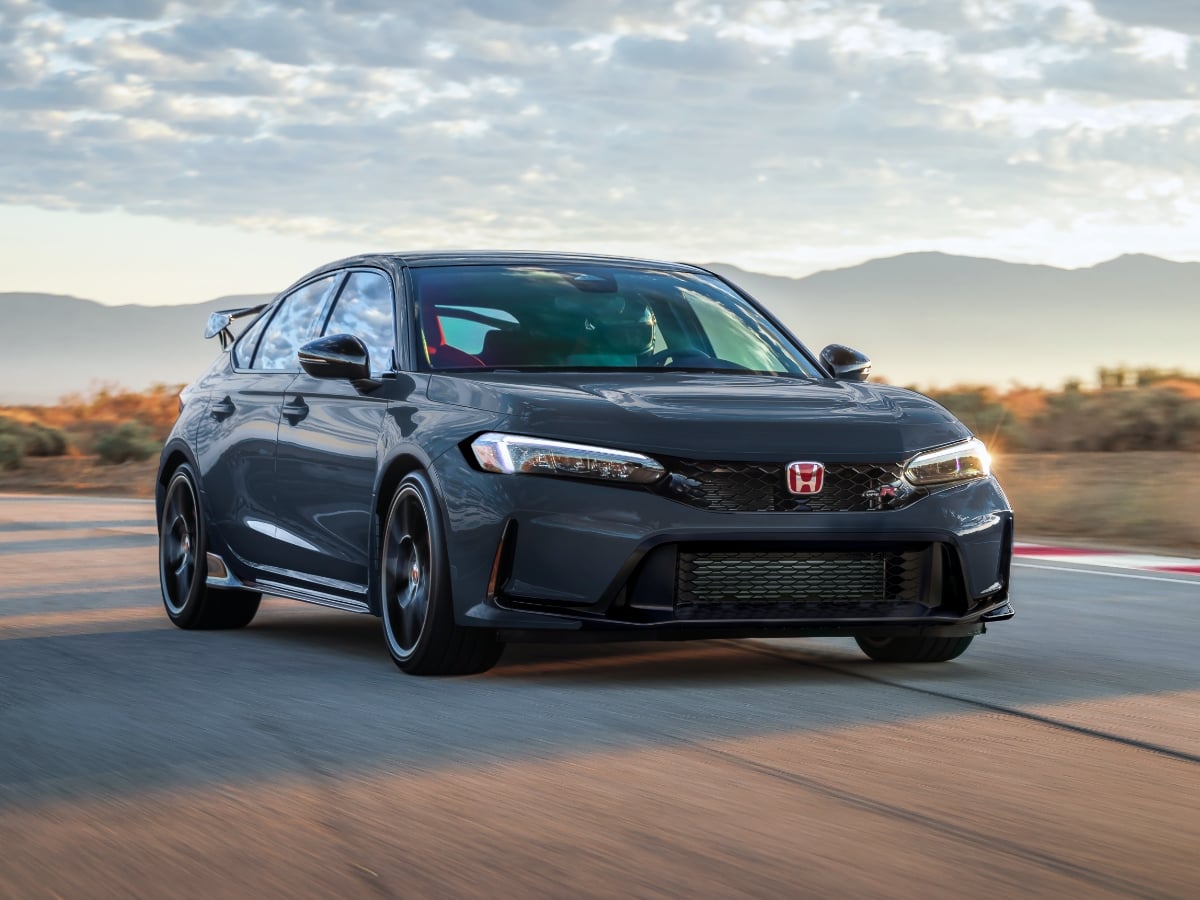
The 2027 Civic Type R goes on sale in October 2026, and it starts at $49,990, including the $1,295 destination charge.
Read the Full Article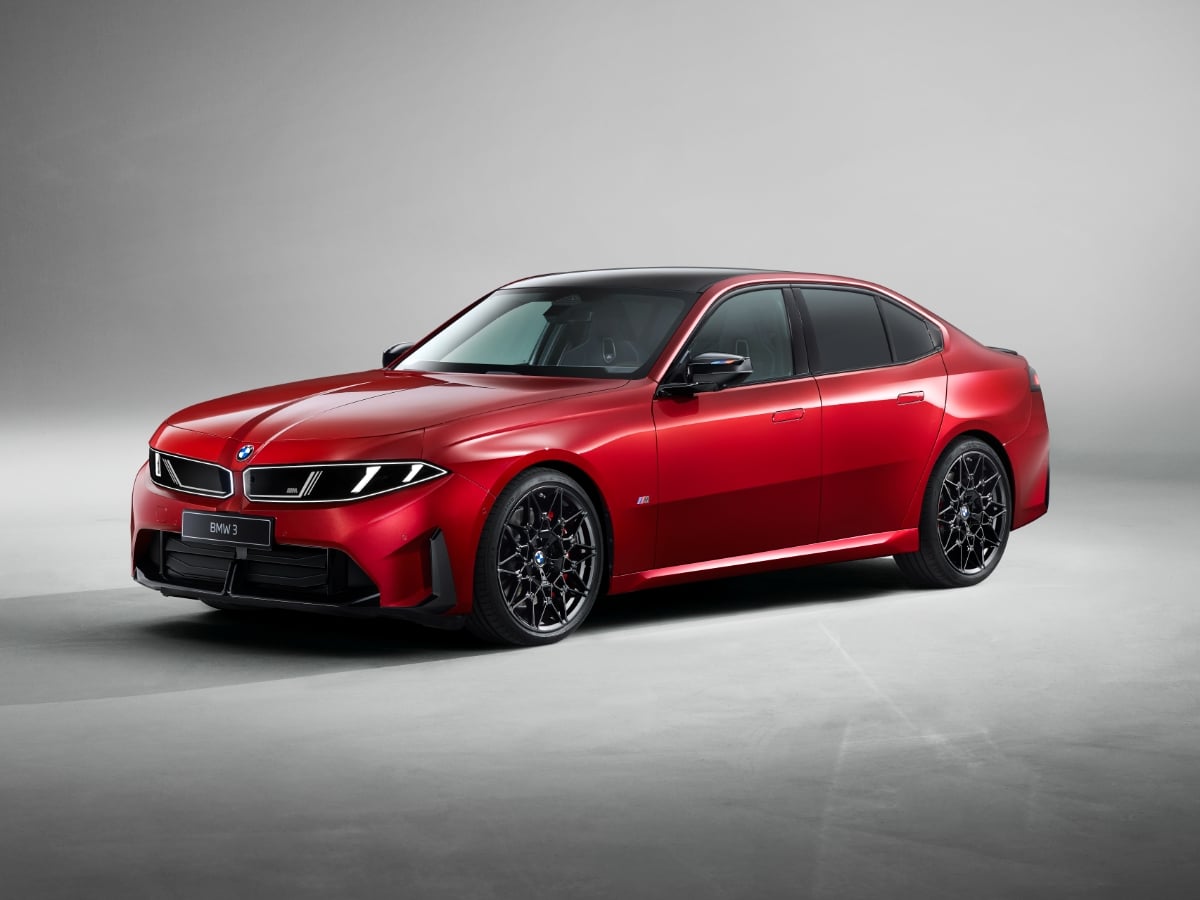
Part of BMW’s Neue Klasse (new class) rollout of redesigned models, the 2027 BMW 3 Series is all-new and goes on sale in the first quarter of 2027.
Read the Full Article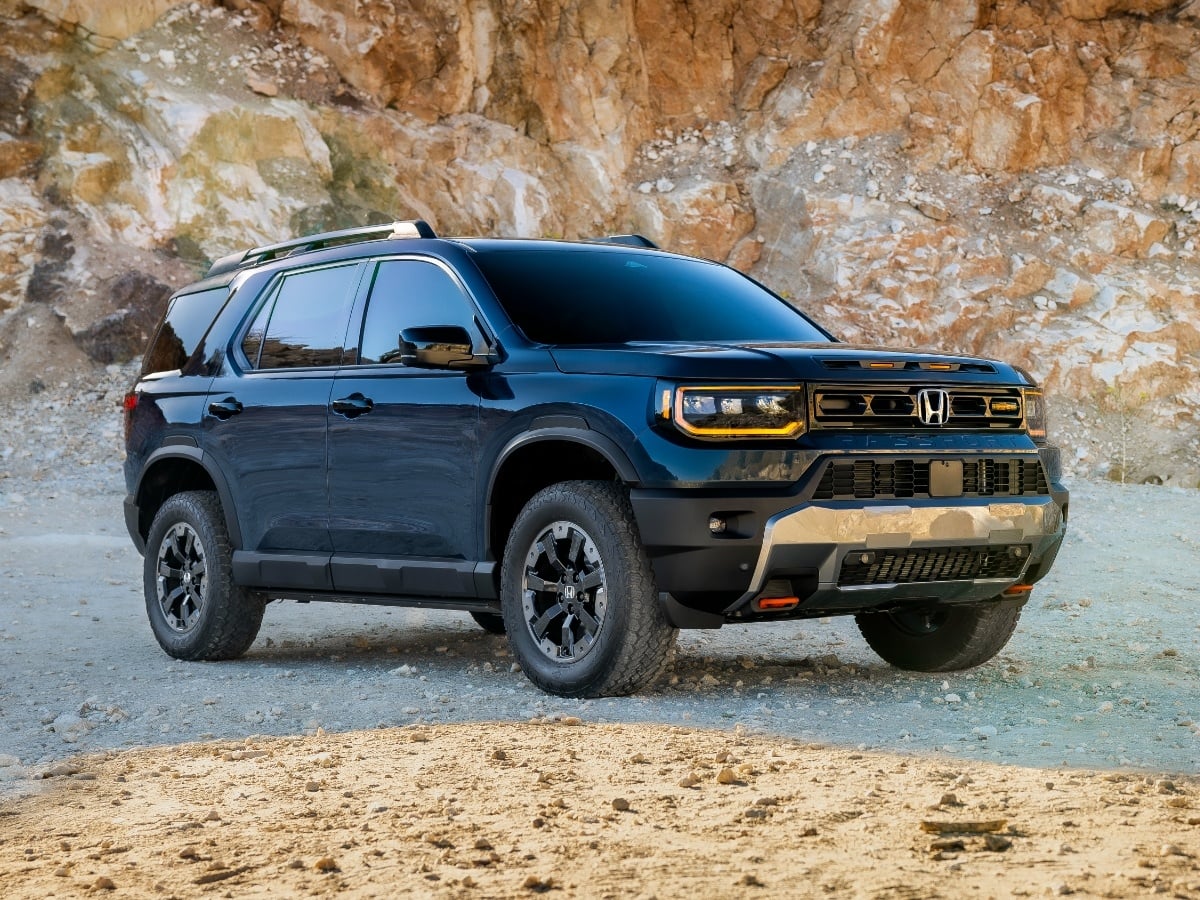
Updates to the 2027 Honda Passport TrailSport include a reworked suspension, improved steering, subtle styling enhancements, and added standard equipment.
Read the Full Article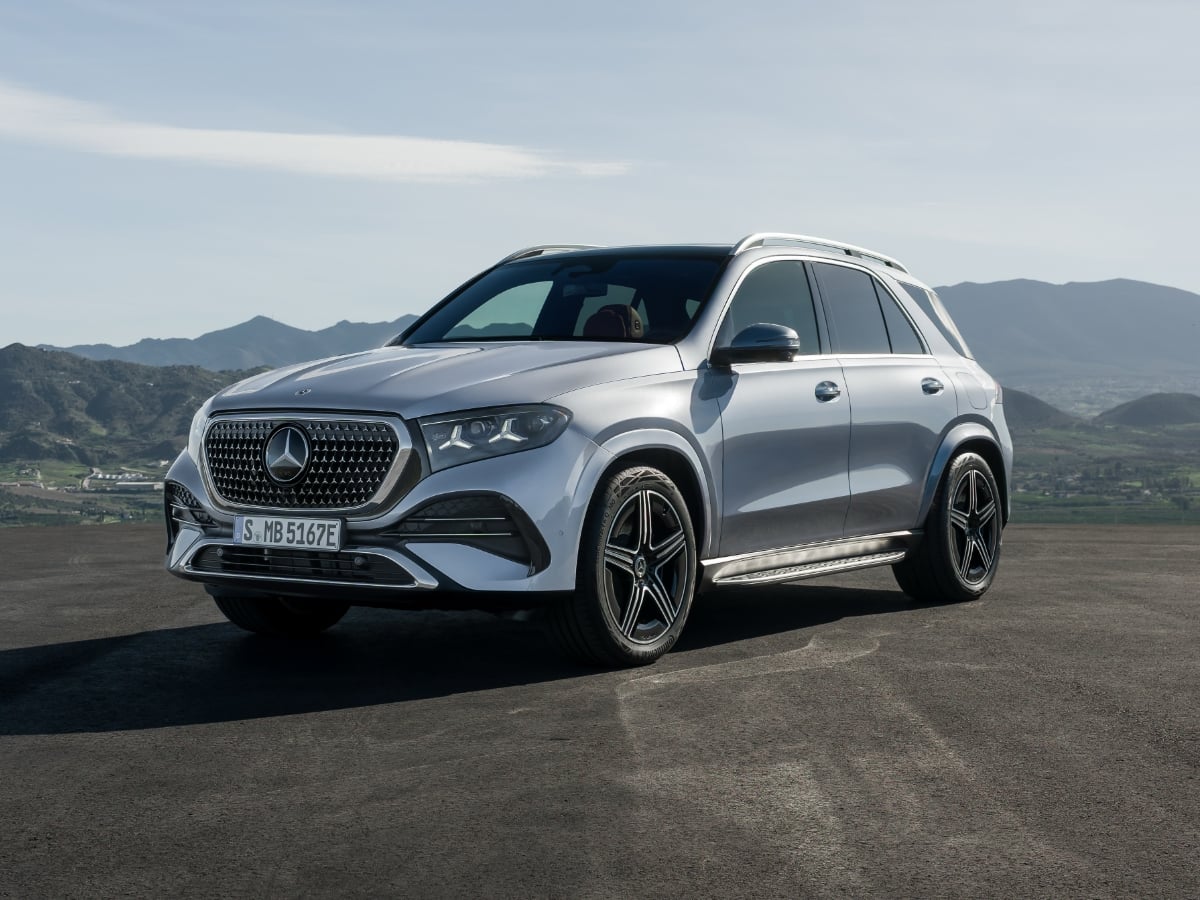
The midsize 2027 Mercedes GLE remains available in original and spicy Coupe recipes, now with standard 4Matic all-wheel drive (AWD), MBUX Superscreen technology, and a panoramic glass sunroof for ...See More
Read the Full Article