
Mazda’s guiding philosophy is jinba ittai, which essentially translates to the feeling of a horse and rider as one. It is a driving-focused car company, and jinba ittai informs everything about a Mazda, from driving dynamics to driving position.
The Mazda Mazda3 is infused with it, but after a near decade-long absence of a turbocharged engine option in the company’s compact hatchback and sedan, the driving enthusiasts who adore Mazda demanded more. They’re getting it in the form of the 2021 Mazda3 2.5 Turbo.
Equipped with the engineering equivalent of a double shot of espresso, the new 2021 Mazda3 Turbo gets a big infusion of power and performance. But this isn’t like the old boy-racer Mazdaspeed 3. As Mazda seeks to elevate its brand to a premium position within the automotive ecosystem, it now takes a more mature approach to feeding your need for speed.
Mazda offers the turbocharged Mazda3 in 4-door sedan and 5-door hatchback form, and in standard or Premium Plus trim. Prices range from $29,900 (plus a $945 destination charge) for a standard sedan to $33,750 for a hatchback with the Premium Plus package. Options and accessories can push the price north of $36,000.

Photo: Christian Wardlaw
The test vehicle came in sedan form with Premium Plus trim and extra-cost Machine Gray paint. It totaled up to $33,890, including the destination charge.
Before we discuss the results of our evaluation of the 2021 Mazda3 2.5 Turbo, it is helpful to understand who buys this compact car, and what they like most and least about their vehicles.
According to JD Power data, 65% of Mazda3 owners are male (vs. 54% for the segment), and the median age of a Mazda3 owner is 45 years (vs. 49).
Owners say their favorite things about the Mazda3 are (in descending order) the exterior styling, driving feel, feeling of safety, interior design, and setting up and starting. Specifically, these five things about the vehicle rank highest in comparison to the compact car segment:
Owners indicate their least favorite things about the Mazda3 are (in descending order) the infotainment system, powertrain, driving comfort, getting in and out, and fuel economy. Specifically, these five things about the vehicle rank lowest in comparison to the compact car segment:
In the J.D Power 2020 Automotive Performance, Execution and Layout (APEAL) Study, the Mazda3 ranked 5th out of 11 compact cars.
In the sections that follow, our independent expert provides her perceptions about how the 2021 Mazda3 2.5 Turbo measures up in each of the ten categories that comprise the APEAL Study.
Since it debuted for the 2004 model year, the Mazda3 has always been the charmer of the compact car segment (except for the murderous clown grin worn by the second generation model). The latest version of the Mazda3 is no exception.

Photo: Christian Wardlaw
From the sharp-edged prow of its hood to its glowing and lidded circular taillights, the car’s design exudes sophistication and class. There isn’t a line wrong on the Mazda3, though the concave body sculpturing does take some getting used to.
The 2021 Mazda3 Turbo adds black 18-inch aluminum wheels, black side mirror caps, black trim elements, larger exhaust outlets, and a “Turbo” badge to signal its added underhood firepower. Dressed in lustrous Machine Gray paint, the test vehicle resembled a suave shark headed out for a night on the town.
Slip into the Mazda3 Turbo Premium Plus model’s cabin and you’ll be forgiven for assuming this is an entry-level luxury vehicle. From its upscale design to its quality fit and finish, there is much to praise.

Photo: Christian Wardlaw
The test vehicle had sumptuously impractical white Nappa leather that contrasted beautifully with the interior’s black base color. White leatherette bifurcated the dashboard and bled into the door panels for an even more sophisticated look. Minimalism rules, the spare climate controls lorded over by an 8.8-inch screen mounted nestled into the top of the dashboard.
While it may look pretty, the interior’s lack of buttons and knobs does pose a user-experience issue, discussed in sections that follow. Also, storage space is lacking, even for a compact vehicle. The tiny center console bin and small glovebox aren’t very practical, although the rubber-lined tray forward of the shifter is a convenient place to put your phone.
Getting into and out of the Mazda3’s front seats poses no difficulty for those who are accustomed to low-slung compact cars. The back seat is problematic, as reflected in JD Power owner data.
Measuring 13.2 cu.-ft., the Mazda3 sedan’s trunk is generously shaped with a wide opening to make loading bulky items easier. Plus, the rear seats feature a 60/40 split-folding design to accommodate longer cargo items.
Those seeking maximum cargo space and utility will want to check out the Mazda3 Turbo hatchback. It offers 20.1 cu.-ft. of space behind the rear seat and a maximum of 47.1 cu.-ft. with the rear seats folded down. Plus, the hatch opens even wider to accept larger objects.
Through its Mazda Connect infotainment system and driver information center within the partially digital instrumentation, the Mazda3 offers plenty of ways to personalize the vehicle to specific preferences. It might be a lengthy process, but it’s worth the time spent to set the car up exactly the way you want it.
The set-up process is straightforward. You’ll use steering wheel controls for the menus shown within the instrumentation, and the Mazda Connect controls on the center console to go through the numerous settings available through the 8.8-inch display screen.
When you start the engine, clean, legible, well-marked gauges come to life. All Mazda3 Turbos also have an Active Driving Display (a head-up display, or HUD) that projects useful information onto the windshield as you’re driving. Unlike so many HUD designs, it remains legible when the driver is wearing polarized sunglasses.
As you’d rightly expect of a top-of-the-line model, the Mazda3 2.5 Turbo Premium Plus had all of the latest technology to keep the driver and passengers informed and entertained. However, its user interface isn’t the greatest.
Mazda believes that touchscreen displays are incompatible with jinba ittai. So, to operate the stereo, navigation system, Bluetooth phone connection, and more, you must use the controls on the center console, the buttons on the steering wheel, or the ineffective voice recognition system.
This situation is why it’s important to spend considerable time setting up and fine-tuning all of this car’s technology. Once you’ve done that, and after an acclimation period to the controls that seems never-ending, you ultimately find peace and harmony. But some traditional stereo controls to go along with the climate controls sure would be helpful.
Alternatively, a useful voice recognition system would alleviate frustration. As it stands, it’s pretty useless to anyone who expects to use natural commands to execute tasks which, in a world where Siri and Alexa are commonplace, is increasingly expected.
Mazda says that the infotainment system’s Apple CarPlay and Android Auto smartphone integration technology solves for this. But what about when you’re not using those? Mazda claims it is currently investigating cloud-connected solutions for the future.
We’d be remiss if we didn’t mention a new-for-2021 feature. Mazda Connected Services is standard, offering a three-year trial subscription that includes a MyMazda app supplying remote access to the car’s door locks and remote engine starting. You can also opt for an in-vehicle Wi-Fi hotspot (free for six months or 2GB of data use).
Every Mazda3 2.5 Turbo includes an all-encompassing collection of advanced driving assistance systems (ADAS) packaged together as i-Activesense. They include adaptive cruise control with stop-and-go capability, forward-collision warning, automatic emergency braking, blind-spot warning, rear cross-traffic warning, lane-departure warning, lane-keeping assistance, and a driver attention warning system. Automatic high-beam full LED headlights are also standard, along with an adaptive front lighting system that helps you to see around corners.
In addition to these features, the Mazda3 Turbo’s Premium Plus trim adds a high-definition surround-view camera and new, exclusive ADAS functions. They include automatic reverse braking when parking or when cross-traffic is approaching, and Traffic Jam Assist, which pairs the adaptive cruise control with a lane-centering assistance system.
Mazda is careful not to call Traffic Jam Assist a Level 2 semi-autonomous driving technology. The driver remains in control, and hands are required on the steering wheel. Rather, this feature is designed to reduce fatigue during the slog of the daily commute. That is all.
Overall, the Mazda3’s ADAS systems work smoothly and accurately. Mazda could, however, improve on the posted speed limit information shown in the car’s HUD. It was often inaccurate, sometimes showing a 30-mph speed for a local freeway and a 70-mph speed for a local surface street.
In crash-testing, the Mazda3 performs well, earning top marks from both the National Highway Traffic Safety Administration (NHTSA) and the Insurance Institute for Highway Safety (IIHS).
Tuned and calibrated specifically for use in the Mazda3, the 2.5 Turbo has the company’s turbocharged 2.5-liter 4-cylinder engine. It is rated to make 250 horsepower and 320 lb.-ft. of torque when burning 93-octane gas, or 227 hp and 310 lb.-ft. with 87-octane regular fuel.
Either way, the Mazda3 Turbo supplies plenty of thrust, delivering inspiring acceleration regardless of the situation. Maximum torque is accessible at 2,000 rpm or 2,500 rpm (depending on the type of fuel), and peak horsepower arrives at just 5,000 rpm.
A 6-speed automatic transmission with Sport and Manual modes powers the Mazda3 Turbo through a standard all-wheel-drive system. Again, Mazda calibrates the drivetrain for this application, seeking to eliminate unnecessary mid-corner gear changes and modifying the AWD to handle three times the amount of power transfer to help squirt the car out of corners.
The end result is quite a thrill ride, and one you never tire of as is evidenced by our observed fuel economy number.
The EPA says the 2021 Mazda3 2.5 Turbo sedan should average 27 mpg in combined driving (26 mpg for the hatchback). That is a mere 1-mpg drop compared to the Mazda3’s normally aspirated 2.5-liter 4-cylinder engine with AWD.
Unfortunately, the observed average was far from that number, coming in at 23.7 mpg on the testing loop. Before you presume that result to be well below the limits of acceptability, you must understand how addictive the turbocharged swell of torque is. Avoid Sport mode and use a light foot on the accelerator, and you’ll no doubt improve upon our result.
But that would defeat the purpose of the car, now wouldn’t it?
Thanks to an 8-way power-adjustable driver’s seat, it is easy to find a good driving position in the Mazda3 Turbo. Furthermore, Mazda’s relentless focus on jinba ittai is evident in how natural the car feels to a driver, as though it is wrapped around you like a second skin. The front passenger’s seat, however, is not quite as enjoyable because it lacks height adjustment.
Rear-seat room is tight, even for a compact car. But softly padded front seatbacks and good toe room help accommodate grown-ups on shorter trips. Amenities are also lacking, such as rear air conditioning vents and USB charging ports.
Previous forays with the Mazda3, as well as other Mazda models, revealed weak air conditioning performance. This 2021 Mazda3 Turbo test vehicle, however, did an admirable job of cooling down the cabin on a fetidly warm autumn day in Southern California. Nightfall brought on chilly air and the standard heated front seats came in handy. Ventilated front seats are unavailable.
Mazda has done a terrific job of tuning the Mazda3. In fact, for the 2.5 Turbo model, it merely tightened up the front suspension to account for extra weight over the car’s front wheels and revised the G-Vectoring Control Plus technology for improved corner turn-in behavior.
All Mazda3 models get small steering improvements for the 2021 model year. Purists may bemoan the current-generation Mazda3’s torsion beam rear suspension, but even when an experienced driver seeks to sense the telltale signs of this more affordable engineering solution, they are difficult to discern.
The end result is a car that is taut enough to toss into corners with plenty of confidence yet is compliant enough to prevent small bumps from punishing passengers. It represents the very best compromise between ride and handling: no compromise at all.
Certainly, G-Vectoring Control Plus, which dials in engine torque and braking to neutralize the car’s behavior and provide greater balance and stability, is at play here. And the car’s AWD isn’t just useful in slippery conditions, digging into the asphalt as it does as the car accelerates out of a curve. The brakes are great, too, offering predictable pedal action and exhibiting no fade.
About the only complaint I have is with the car’s all-season tires. Mazda chose them for their slightly softer sidewalls, which in turn limit the amount of “jerk” felt by the driver. Summer tires, which typically have stiffer sidewalls and greater bite, are not on the menu. The car deserves them.
Nevertheless, the Mazda3 Turbo displays refined driving dynamics coupled with impressive limits. It simply lacks the hoonigan driving character common to performance-tuned compacts, which is in keeping with the car’s mission.
With the new turbocharged Mazda3, the automaker injects a much-needed dose of straight-line performance into its beautifully rendered compact car. There are some kinks that need to be ironed out, mainly relating to Mazda Connect, but otherwise the 2021 Mazda3 Turbo is a truly appealing vehicle for driving enthusiasts who appreciate both form and function. Moreover, it credibly competes with the premium vehicles it targets, making it a bargain in the process.


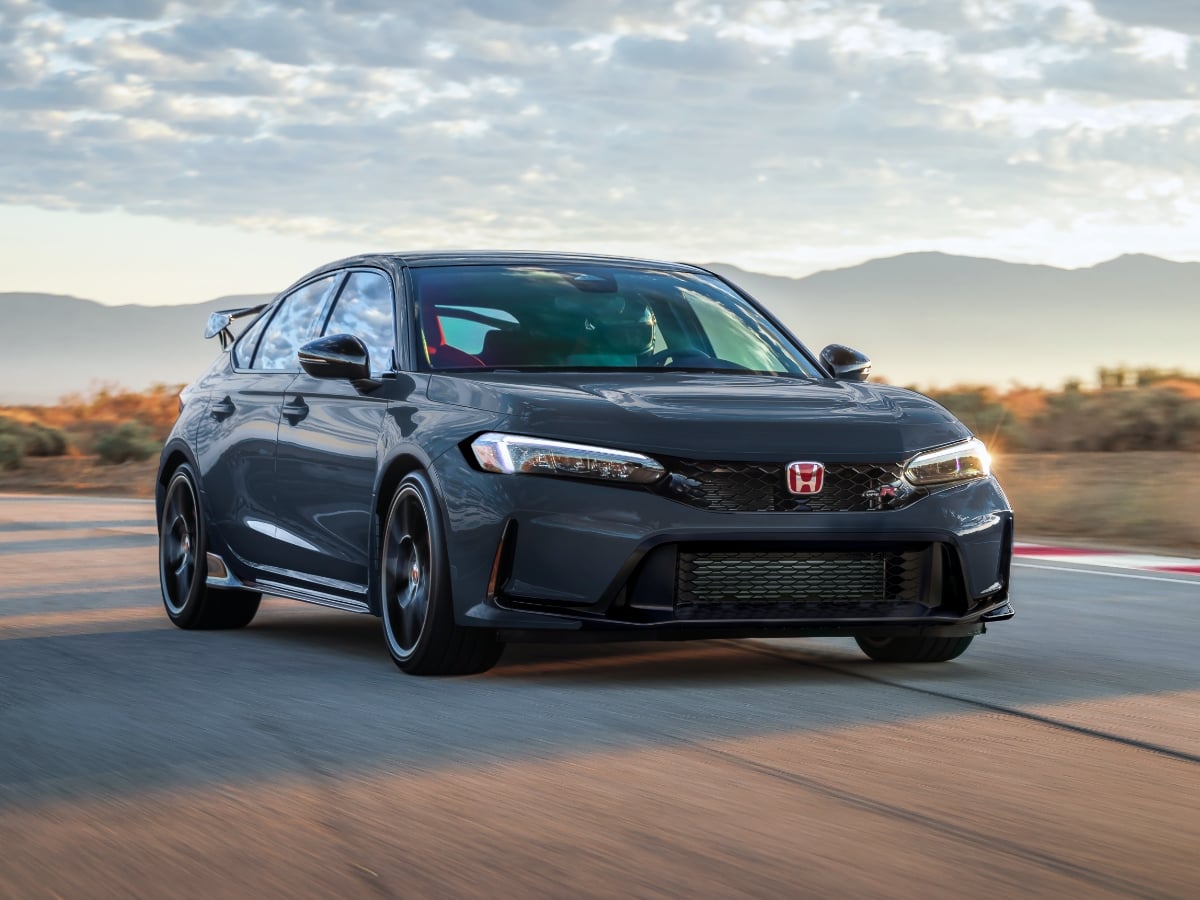
The 2027 Civic Type R goes on sale in October 2026, and it starts at $49,990, including the $1,295 destination charge.
Read the Full Article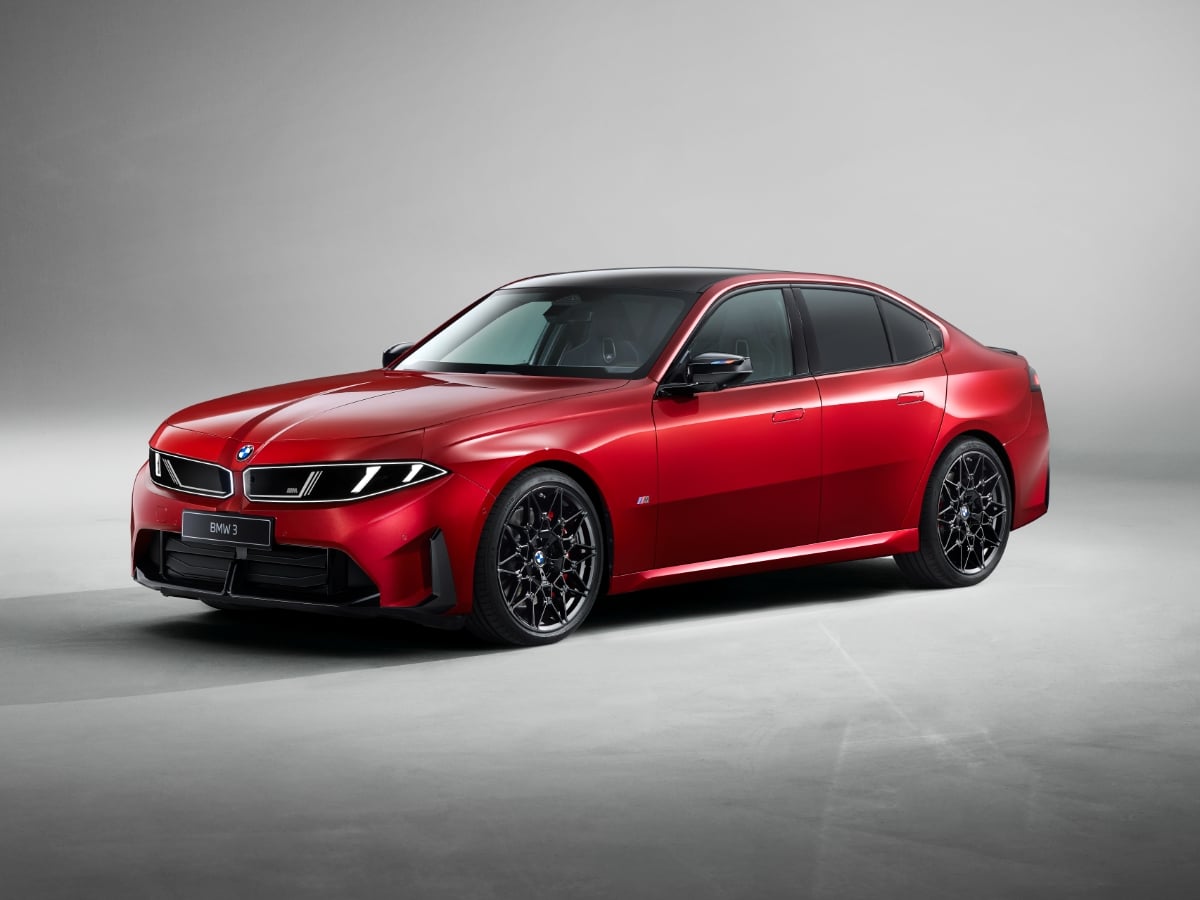
Part of BMW’s Neue Klasse (new class) rollout of redesigned models, the 2027 BMW 3 Series is all-new and goes on sale in the first quarter of 2027.
Read the Full Article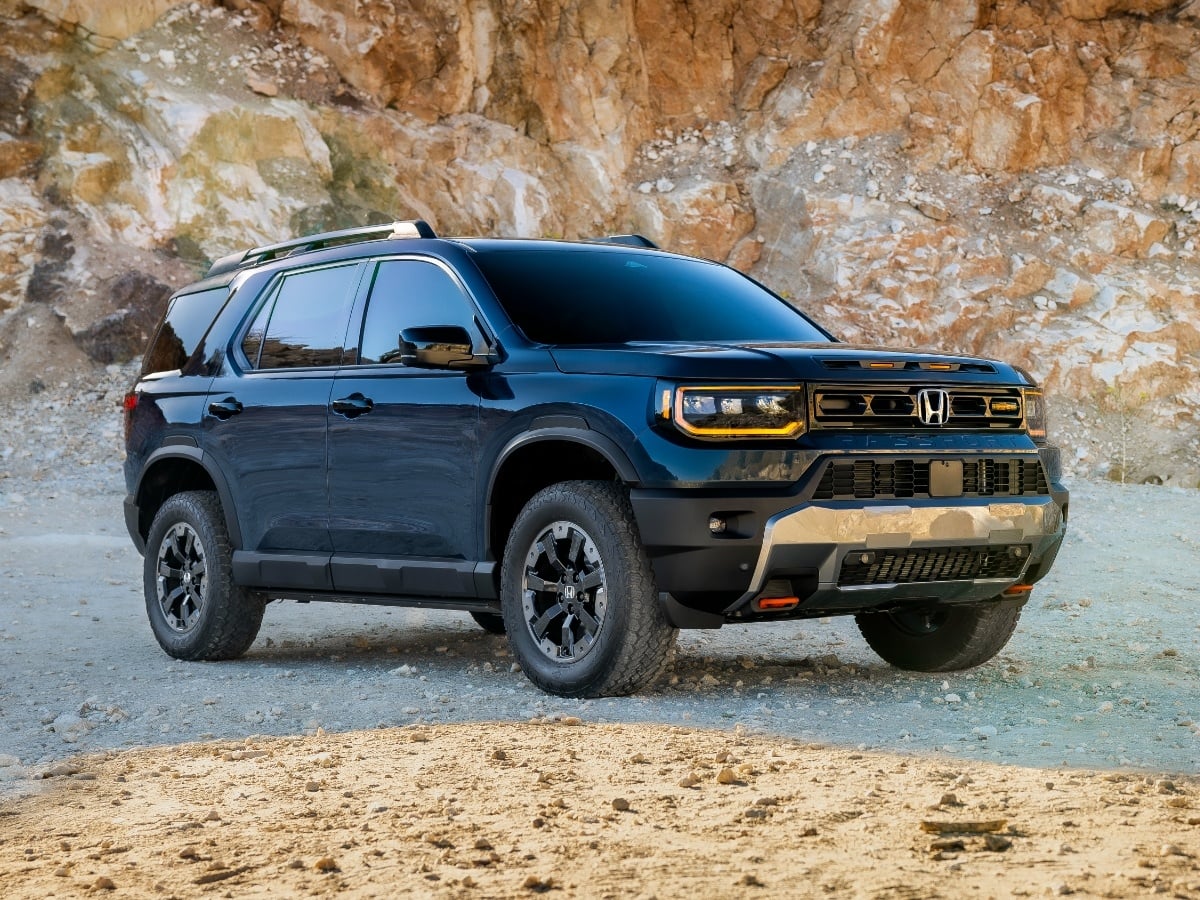
Updates to the 2027 Honda Passport TrailSport include a reworked suspension, improved steering, subtle styling enhancements, and added standard equipment.
Read the Full Article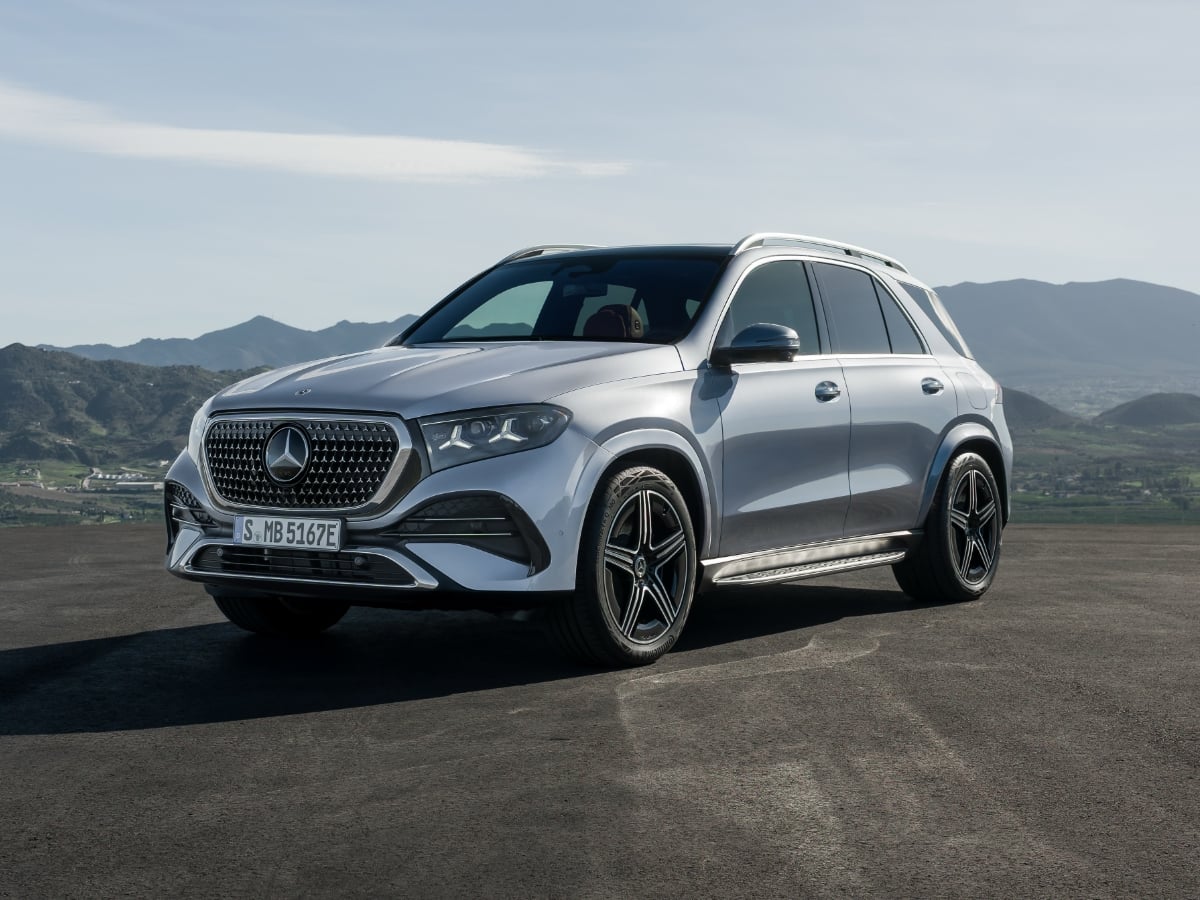
The midsize 2027 Mercedes GLE remains available in original and spicy Coupe recipes, now with standard 4Matic all-wheel drive (AWD), MBUX Superscreen technology, and a panoramic glass sunroof for ...See More
Read the Full Article