See answers to common EV questions, tax incentives, charging maps & more.
Explore EV
16 - 17
23 - 26
420 - 550
8 speed, Automatic w/OD
Twin Turbo Premium Gasoline I-6, Twin Turbo Regular Gasoline I-6
All Wheel Drive
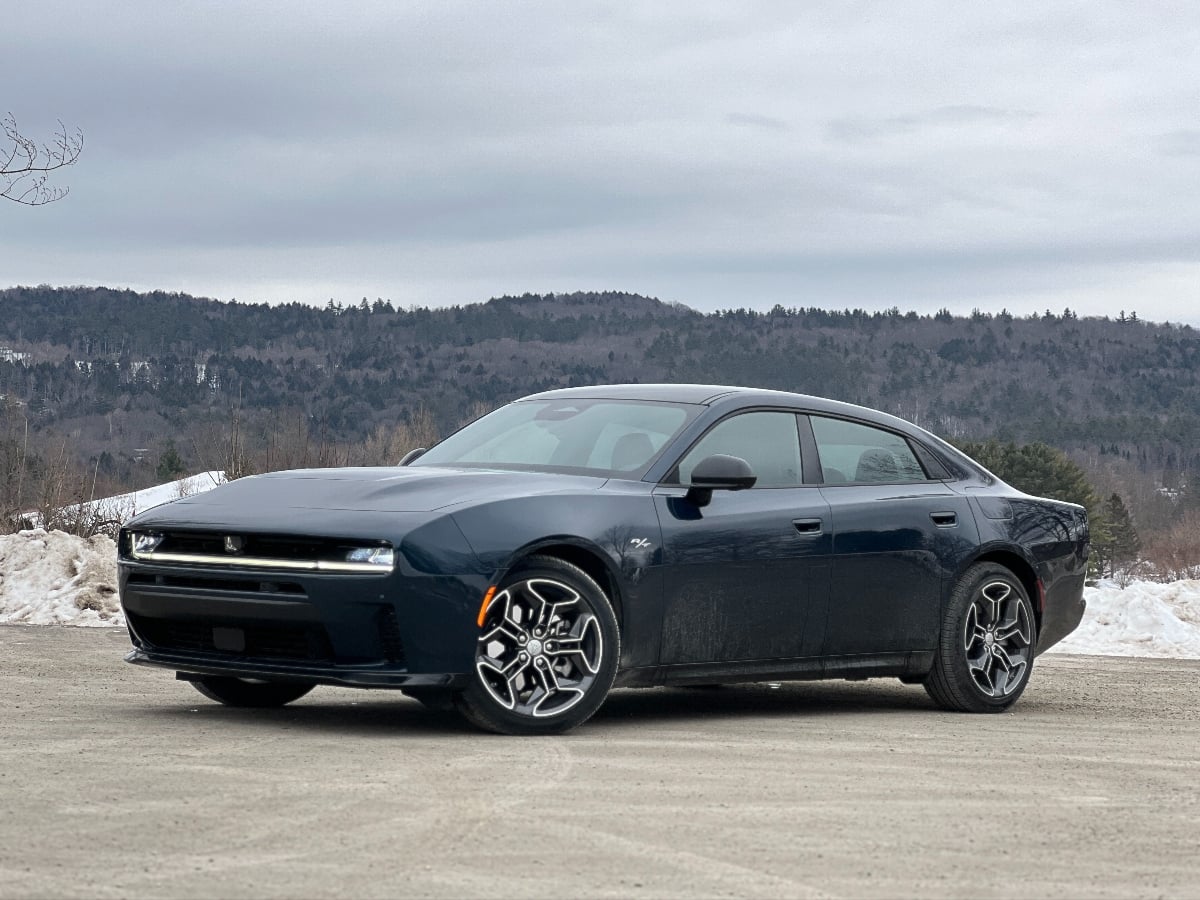
Photo: Beverly Braga
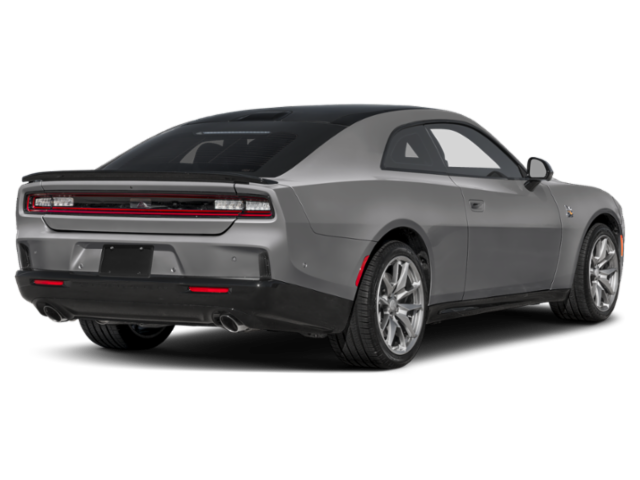
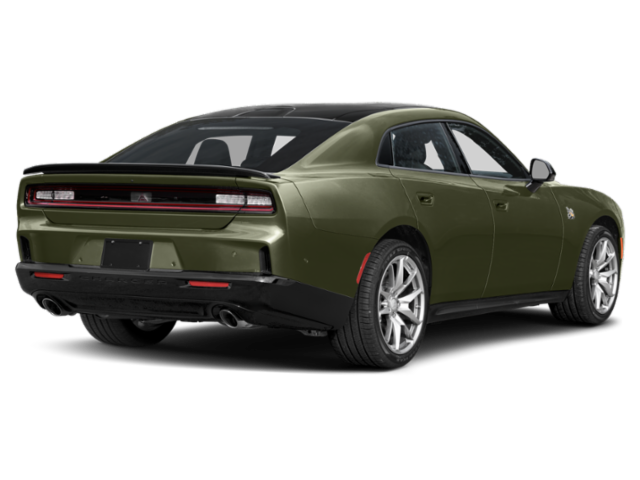
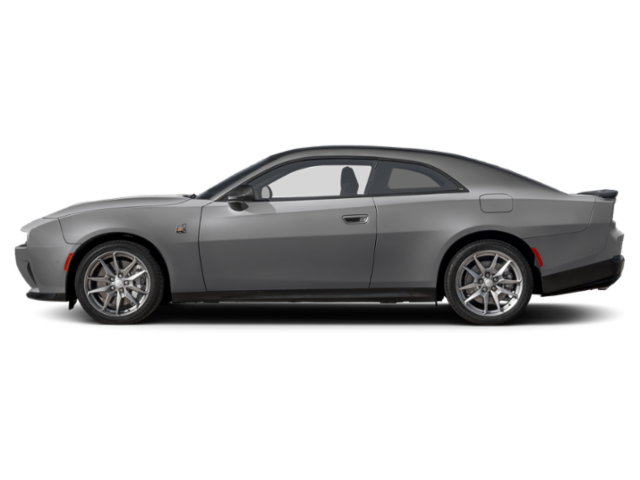
American muscle cars are not typically marketed as a family's daily driver, but the 2026 Dodge Charger, a large four-door sedan, changes that. When Dodge introduced the all-new eighth-generation Charger in 2024, the automaker initially offered only coupe versions of both the gas-powered and all-electric models. For 2026, two additional doors arrive, along with the Scat Pack trim level for the gas-powered Charger.
During a media event earlier this year, Dodge representatives noted that the automaker developed the four-door Charger on a platform with "no sacrifices." Standard all-wheel drive (AWD), sedan-level spaciousness, turbocharged performance, and a starting manufacturer suggested retail price (MSRP) below the current industry average of $51,595 make the vehicle a fit for all seasons, everywhere.
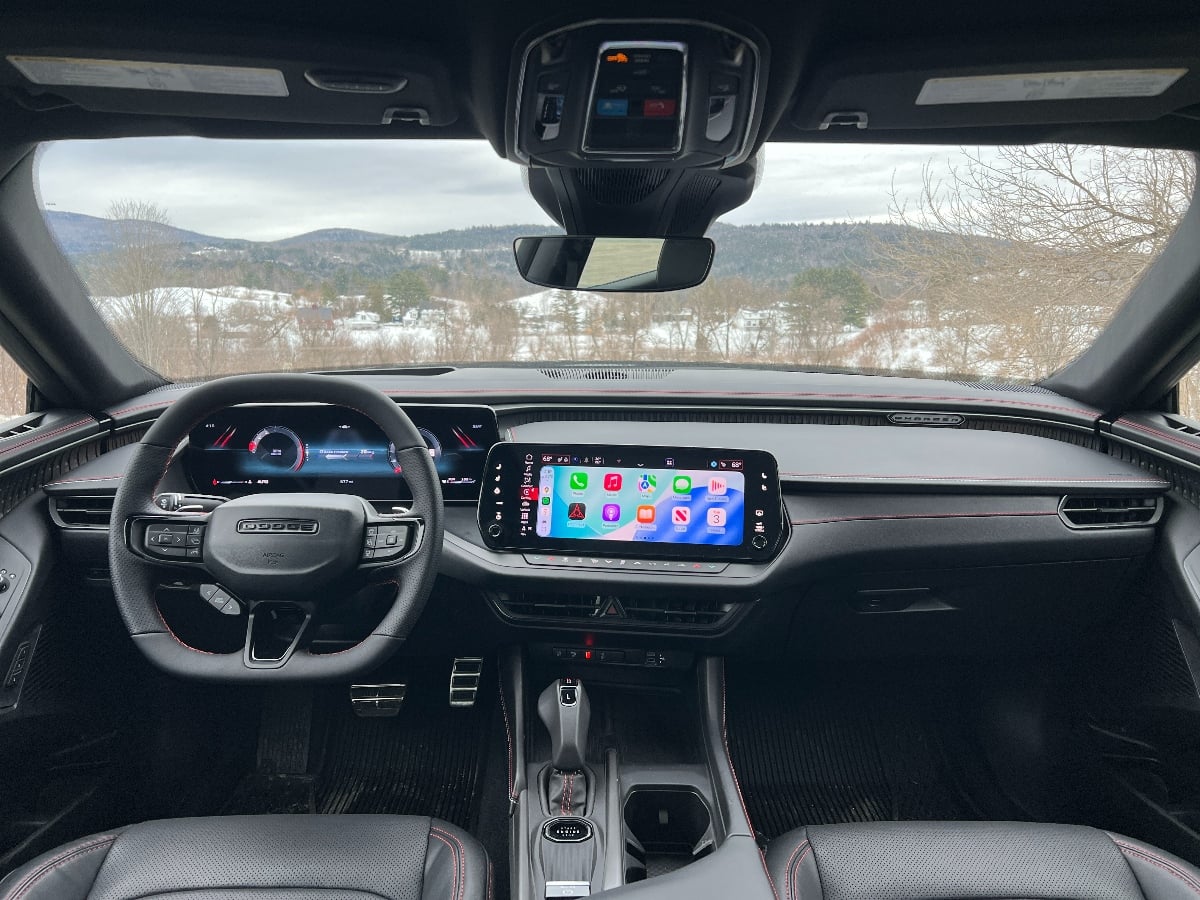
Photo: Beverly Braga
But does it really? To be frank, high-powered vehicles focus on performance, dynamics, and handling. Everyday luxuries like road-trip-friendly comfort and rear passenger headroom are not necessarily at the top of the engineering priority list. They are important to consumers, sure, but are not instrumental in, say, achieving a 3.9-second zero-to-60-mph time, as with the four-door Charger Scat Pack.
Put its 550 horsepower and 531 pound-feet of torque on ice, though, and all of that is neutralized, which is exactly what I did during a New England winter. As one of the first automotive journalists to get behind the wheel of the Dodge Charger R/T and the four-door Charger Scat Pack, I tested both trims on- and off-road. The New Hampshire-based Team O'Neil Rally School, as its name suggests, was where the real ice capades took place, with a road course, skid pad, and slalom.
The Charger R/T Plus four-door wore an After Dark exterior hue, which fit right in with the gloomy, overcast skies. It came with factory add-ons such as a full glass roof, an Alpine 18-speaker sound system, and premium paint at an extra cost, bringing the total price to $62,870, including the $1,995 destination charge. The Charger Scat Pack with Redeye premium paint and the destination fee added came to $59,685. Both are four-door models, which carry a $2,000 markup over their two-door variants.
While many U.S. residents live in areas that rarely, if ever, see snow, others experience it. And for those who do, despite warm summer temperatures, the cold, frigid, icy roads will eventually arrive. Rain will show up as a precursor that can make conditions slippery as well. So, can a potent muscle car do the all-weather dance without looking clumsy? To the surprise of no one at Dodge, the answer is yes.
First, what is under the hood? The 2026 Charger is equipped with an eight-speed automatic transmission paired with either a standard (S.O.) or high-output (H.O.) version of its newly dubbed SIXPACK powertrain. This 3.0-liter “Hurricane” twin-turbocharged engine produces 420 hp and 468 pound-feet of torque, while the H.O. version delivers 550 hp and 531 pound-feet of torque. Top speeds are 168 mph and 177 mph, respectively, though that was wishful thinking when driving on ice.
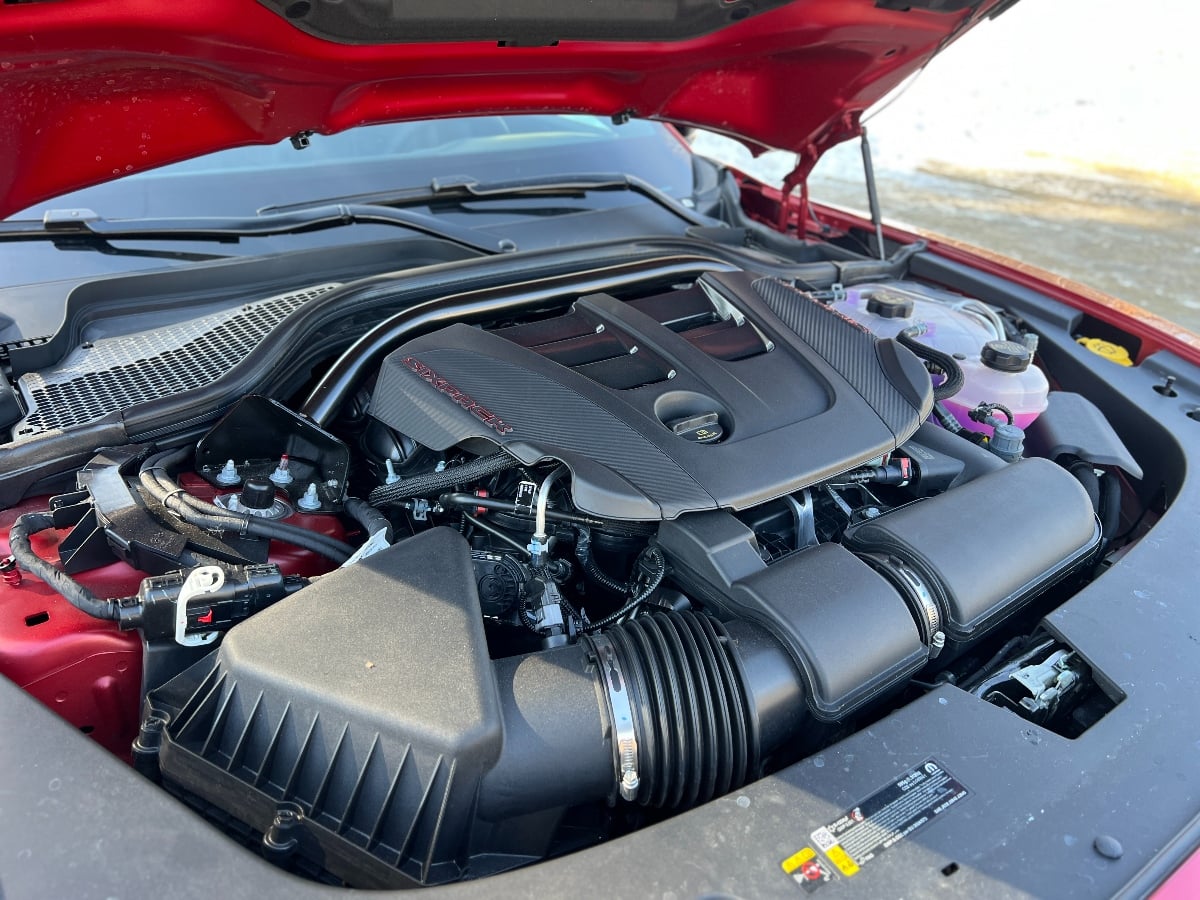
Photo: Beverly Braga
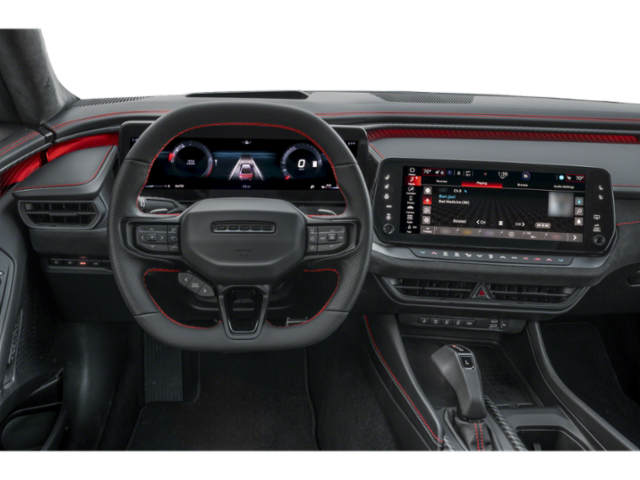
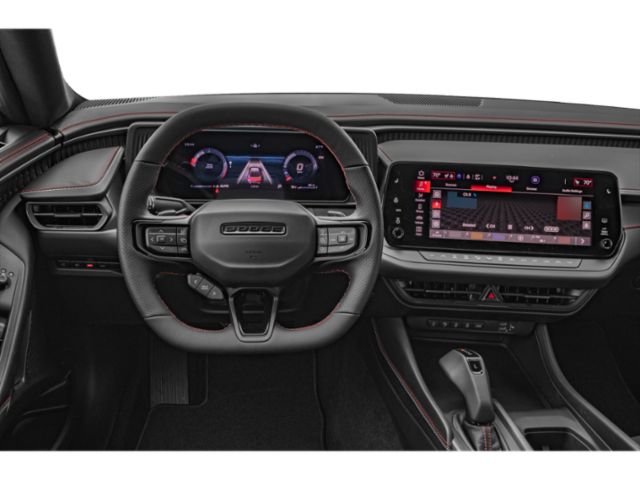
With great power comes five drive modes (Auto, Eco, Wet/Snow, Sport, and Custom). Notably, although AWD is standard, Sport allows the option to switch to full rear-wheel drive (RWD). The vehicle must be at a complete stop to switch to RWD, while the other drive modes can be toggled via steering wheel mounted controls. For driving on snow, Dodge equipped all of the test cars with Pirelli winter tires. On the street course, the vehicles wore the standard all-season treads.
How the drive modes perform on the snowpack depends on your driving skill level. I mean genuine skill, not what your confidence boasts. For example, if you are like me and do not want to crash a car that is not yours, or any car, for that matter, the Wet/Snow mode, which provides a 50/50 torque split between the front and rear axles, will offer the stability to keep you shiny side up. That is great on the road but not ideal on a closed-course skid pad, where I tried to throw the R/T's 4,471 pounds around. Sure, I was able to start a drift, but the safety nannies kicked in before I could have any real fun.
Sport mode changes the mood with its 30/70 torque split and auto-deactivation of traction control. Back on the skid pad, with careful throttle and brake inputs, my snowy slide lasted much longer. So, of course, switching to RWD would bring all kinds of fishtailing freedom, yes? True, but I left that to an instructor. Even under his guidance, RWD put the Charger into a spin. A limited slip differential is standard, so RWD is not all godspeed and good luck. After a couple of runs, he had the vehicle drifting in the right direction.
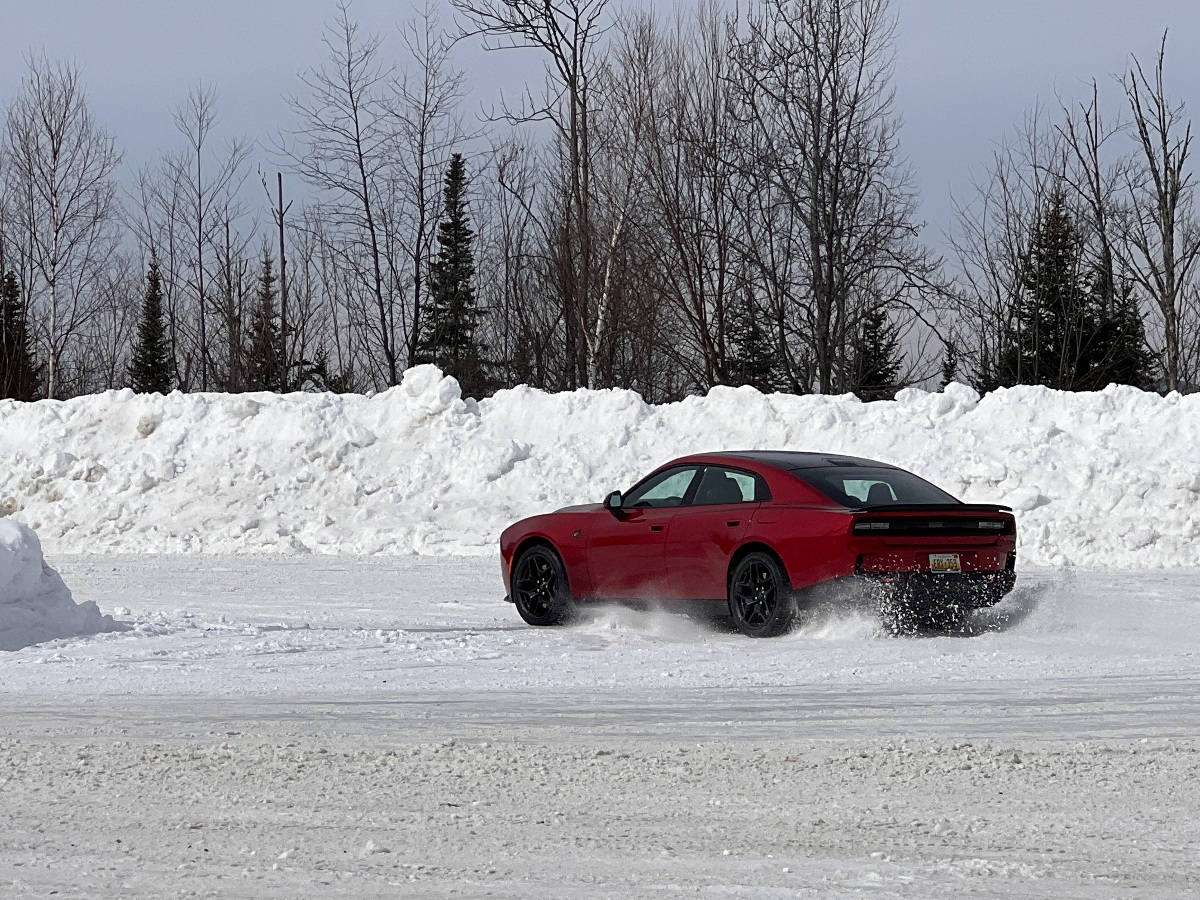
Photo: Beverly Braga
Repeating the process on the slalom and road course produced similar results. Wet/Snow kept me tightly within the lines, Sport allowed me a much wider berth in the corners, and RWD was the most fun. But RWD was also above my comfort level. With more time with the vehicle, that would have improved, but not in an hour or so of snow play.
As for its town-and-country road handling, the Dodge Charger was surprisingly comfortable and compliant. When switching through the drive modes on paved surfaces and on meandering roads, the changes in engine note, throttle response, and steering are more noticeable.
The Scat Pack in auto mode delivers a sporty suspension without the stiffness. On the road, the Scat Pack's affinity for performance becomes evident. Punching the throttle and hearing the growl of the H.O. engine is a joyful aural experience. But when coasting or maintaining speed, the background drone becomes tedious. The R/T, on the other hand, behaved more like a touring car both in sound and stance.
The Dodge Charger is the most fun I have had in a non-luxury sedan in a long time. Possibly ever. In those waning days of winter, who knew that 50 grand could get me 400-plus hp and roomy seating for four? The Charger seats five, but let's be honest about that middle seat. All that in a legitimate, family-friendly sedan?
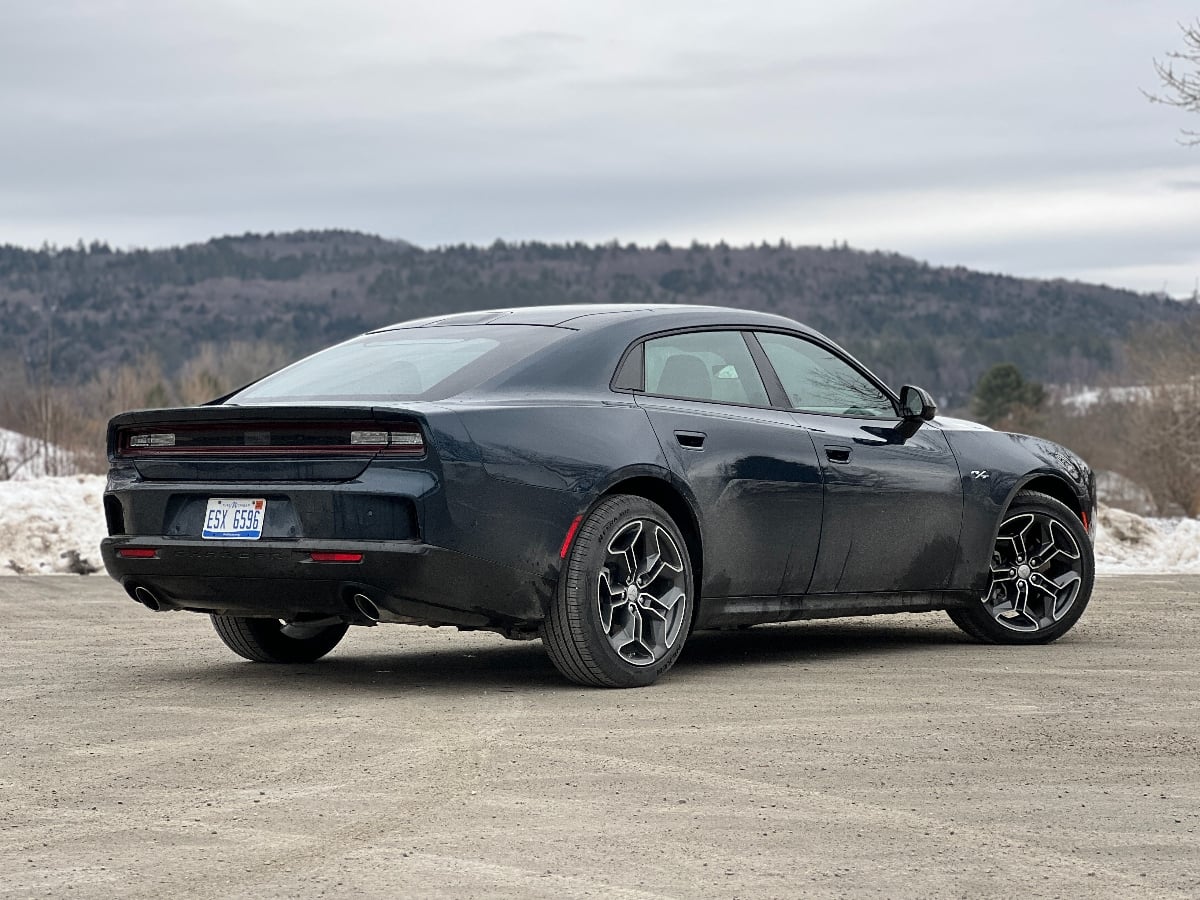
Photo: Beverly Braga
The Charger's only true rival is the Ford Mustang, which competes on price and specifications. You can get a Mustang GT Fastback with 480 hp, a V8 engine, a six-speed manual transmission, and a starting MSRP under $50,000. But it is a two-door-only muscle car with questionable rear seat comfort. It is also offered as a convertible and in several trims. The Charger has a simple lineup of R/T and Scat Pack trims, available as two- or four-door models, with either gasoline or electric powertrains.
Just two choices, but plenty of pros and cons to weigh. However, if you are looking for a purpose-driven, performance-oriented sedan, there is only one to consider.
A seasoned content creator and communications professional, Beverly Braga previously managed product communications for Kia and Mazda. On the editorial side, in addition to jdpower.com, Beverly has developed and produced numerous video series for Hagerty and has written for Capital One, CarGurus, Digital Trends, The Drive, Motor1, and The New York Daily News.