
Winter is here, and snow is imminent in many parts of the country. For those who live in colder climates, there is always the possibility of getting your vehicle stuck when there is significant accumulation. When that happens, it is essential to know the proper steps of how to get a car out of snow and safely back on the road.
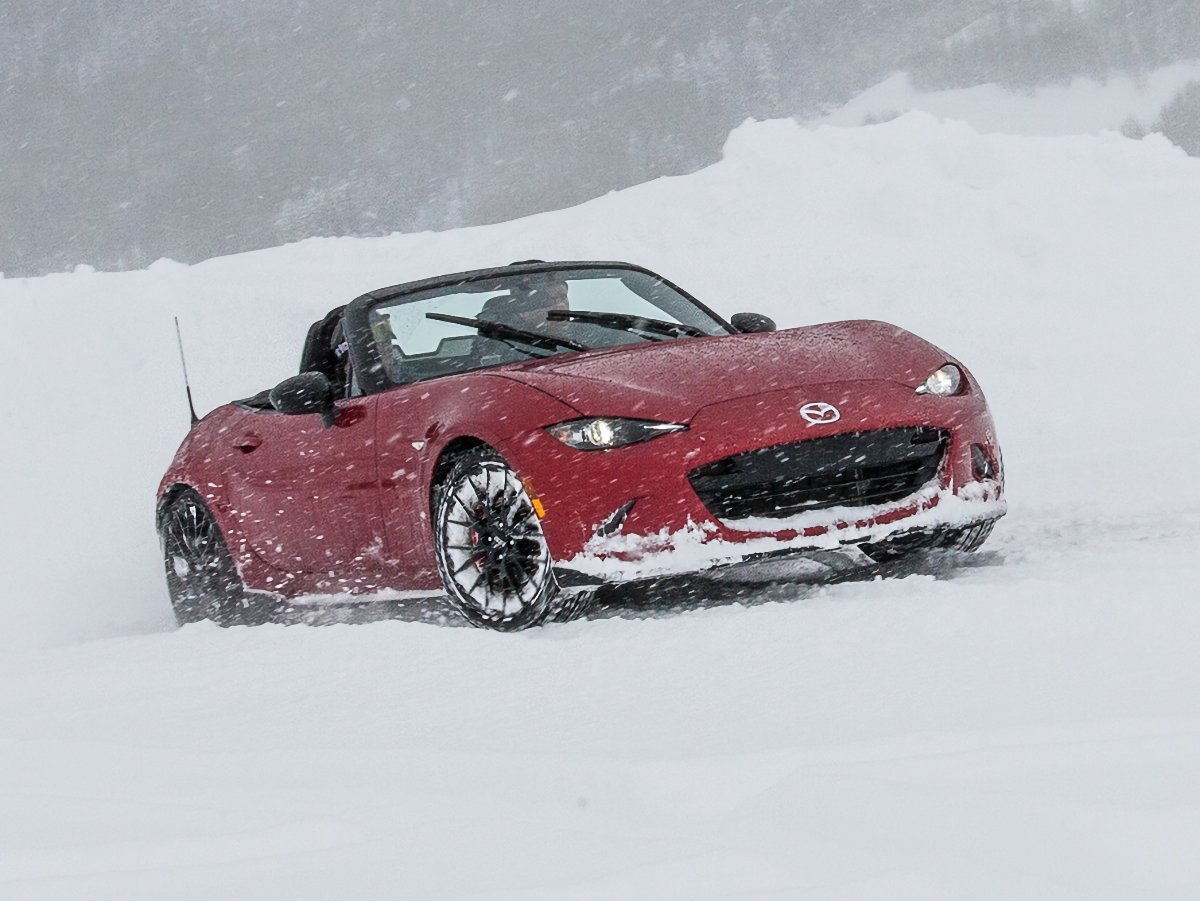
When a car gets stuck, your first instinct may be to give the vehicle gas and attempt to power the wheels out of the snow. But without traction, the wheels will spin in place and melt the snow beneath them, and it will refreeze as ice. The more you spin, the more stuck you become. The best thing to do is to stay calm and evaluate the situation. Whether your vehicle is front-wheel drive, rear-wheel drive, or all-wheel drive determines which wheels you will want to free first.
Check the tailpipe to make sure there is no snow blocking the opening. If there is an obstruction, the exhaust fumes will have nowhere to escape except back into the vehicle’s cabin, which could create a dangerous cloud of carbon monoxide for occupants. Of course, that’s not an issue for the people in the photos accompanying this article, is it?
In heavy snowfall, a shovel can be your best friend. It is always good to have one in the vehicle. In most cases, you can free a car if you remove the snow around the tires and under the chassis. Start with the tires that propel the vehicle (i.e., the front tires of a front-wheel-drive car). Dig around each tire until you expose the pavement. Pavement will give the tires the traction they need to roll. If there’s ice under a tire, use a shovel to break it up. Shoveling out in this manner can be physically taxing but is generally the most effective way to get a car out of snow.
If shoveling does not allow adequate removal of snow and ice under the tires, it may be necessary to create traction by other means. Laying down sand, kitty litter, or even topsoil around the tires may give the tire tread just enough of a dry surface to bite and take hold of, preventing wheel spin and propelling the car forward. If these granular materials are not available, another option is to put floor mats from your car’s interior under the wheels. The dry, grippy surface may give the tires the traction they need to roll forward.

If shoveling is not working, another approach is to melt the snow and ice around the tires. Do not use hot or boiling water as the extreme temperature change could result in tire damage. The hot water can also refreeze, causing the vehicle to get even more stuck. Instead, use rock salt to melt the ice under your tires. If rock salt is not readily available, table salt is a suitable substitute. You can try using windshield washer fluid or antifreeze in the absence of salt, but sparingly. Too much of these fluids can mix with the snow and create slush, which will result in a wet and slippery mess with little traction. Melting the ice may take several minutes, depending on how thick it is.
Letting air out of your car’s tires puts more tread in contact with the ground. This action will give the tires more grip and traction. But make sure you don’t over-deflate them. Flat tires will make the situation worse. If a tire pressure gauge is handy, or the vehicle has a tire pressure monitoring system (TPMS), release no more than five to seven pounds per square inch (PSI) of air from each tire. If a tire is at 35 psi, lower it to around 28 psi.
Also, engage all relevant systems that may be present on your vehicle, including four-wheel-drive, a locking differential, and a driver-selectable snow mode. Together, these systems will give the wheels their best possible chance to escape. But be sure to turn the traction control system (TCS) off. This advice may sound counter-intuitive, but TCS cuts power to the wheels when it detects spin. And you may actually need a little spin when trying to establish traction.
Steering left and right repeatedly while giving the vehicle gas could help it find an open spot on the pavement to give it traction. If you’ve removed enough snow from around the wheels, the back and forth turning may grind the last bit of snow and ice away to expose much needed dry ground. But if this method does not yield a result within 30-45 seconds, it is time to try something else.

If you can drive forward even a few inches, try rocking the vehicle back and forth between Drive and Reverse. This tactic can potentially jar the car out of the rut with a series of quick directional changes. It entails giving the vehicle a considerable amount of gas between shifting. But beware, as this is not an easy maneuver and can be harsh on the transmission and the drivetrain. If you are not confident you can do this safely, do not attempt it. It is not worth the cost of a transmission repair.
If you live in an area that sees plenty of winter weather, it is essential to know how to get a car out of snow. There are several methods to help you get unstuck. Also, installing proper snow tires ahead of the winter months may prove an effective preventative measure. But when all options fail, or the effort is just too cumbersome, calling roadside assistance is the safest and best way to move forward. Just keep in mind that others may be thinking the same thing, which means help may not arrive immediately.



The new 2027 BMW i3 boasts an estimated range of up to 440 miles, 400-kilowatt DC fast charging capability, bidirectional charging to a home or the grid, and next-generation technology.
Read the Full Article
Facing renewed competition in the full-size, light duty pickup truck segment, the 2027 Ford F-150 receives subtle styling updates, a new standard engine, broader availability of its 5.0-liter V8, and ...See More
Read the Full Article
The 2027 Civic Type R goes on sale in October 2026, and it starts at $49,990, including the $1,295 destination charge.
Read the Full Article
Part of BMW’s Neue Klasse (new class) rollout of redesigned models, the 2027 BMW 3 Series is all-new and goes on sale in the first quarter of 2027.
Read the Full Article