See answers to common EV questions, tax incentives, charging maps & more.
Explore EV
No data
No data
305 - 420
10 speed, Automatic
Gas V8
Four Wheel Drive, Rear Wheel Drive
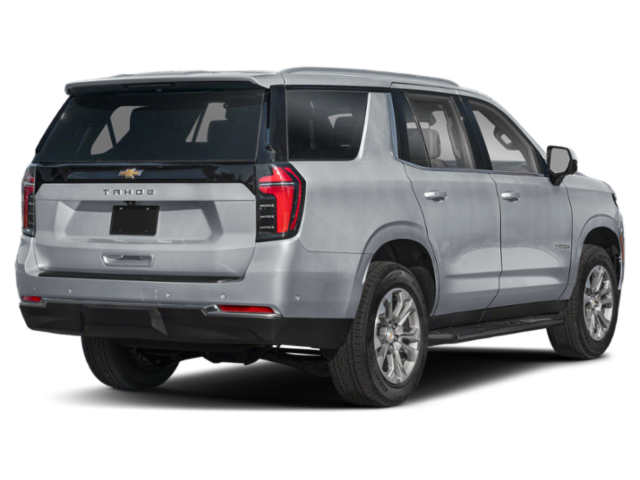
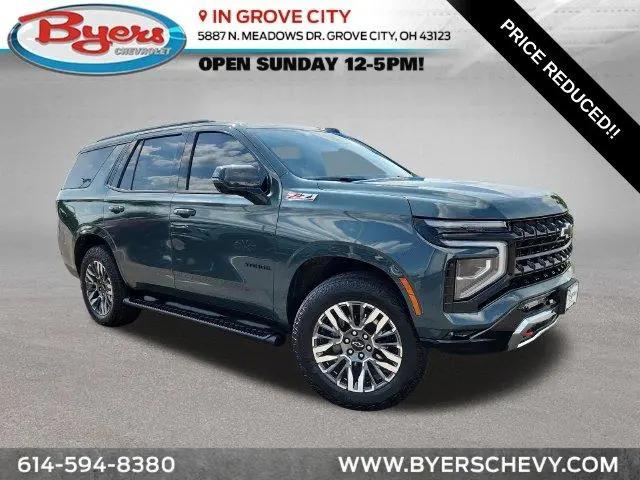
For those who want more capability or space than a large crossover can provide, a truck-based, full-size SUV like the 2025 Chevrolet Tahoe still makes sense (as long as you’re prepared for the heftier price at the dealer and the pump). For 2025, the Tahoe gets a substantial update, especially inside, where it gains the same design scheme and technology as the Silverado EV to keep it fresh in a year when two competitors—the Ford Expedition and Nissan Armada—are redesigned.

Photo: James Riswick
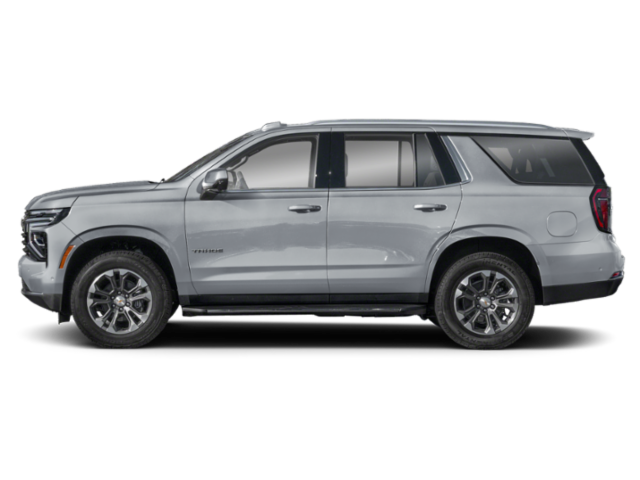
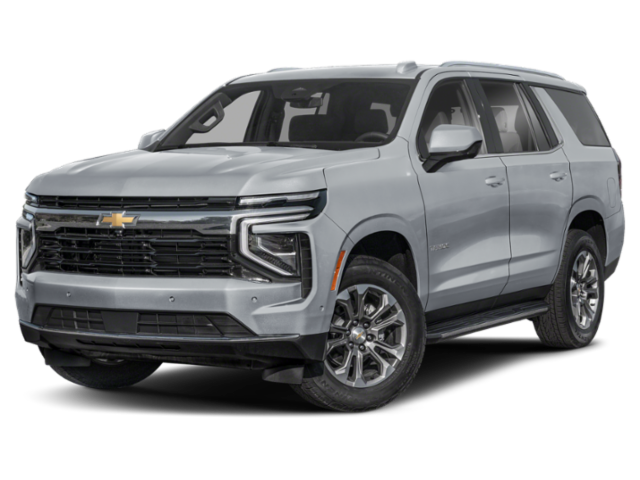
Exterior changes for 2025 are subtle; I had to do a lot of back-and-forth between pics of the 2025 and 2024 models to spot them (the split LED accent lights hiding the lowered headlights is the main difference). The rear sees the tacked-on bit of trim above the license plate replaced by a sizeable black trim piece that blends into the window. To these eyes, it’s better. The interior changes are more substantial, but I’ll dive into those in detail below. Other changes include:
The 2025 Chevrolet Tahoe lineup starts with the LS and LT trim levels before branching off into different directions: the sport-look RST I tested, the luxury-look Premier, the off-road-oriented Z71, and the extra-luxurious High Country. Each includes or offers several mechanical features that can dramatically differ how the Tahoe drives, including engines, suspensions, and wheels.
JD Power previously published a review of the 2021 Chevrolet Tahoe Z71. This review focuses on the RST trim, the Tahoe’s updates for 2025, and how they potentially impact its overall consumer appeal.
For this 2025 Tahoe review, Chevrolet provided a test vehicle with RST trim and many options. The highlights include:
The RST Capability package is key as it adds the adaptive air suspension and magnetically controlled dampers (the air suspension was previously exclusive to the Z71 and High Country). The Comfort package includes heated second-row seats, a power-folding third-row seat, driver memory settings, a heated steering wheel, upgraded exterior lighting, and a 10-speaker Bose sound system.
Options amounted to $12,385, bringing the test vehicle’s price to $83,880, including the $1,995 destination charge to ship the SUV from the General Motors (GM) assembly plant in Arlington, Texas, to your local dealership.

Photo: James Riswick
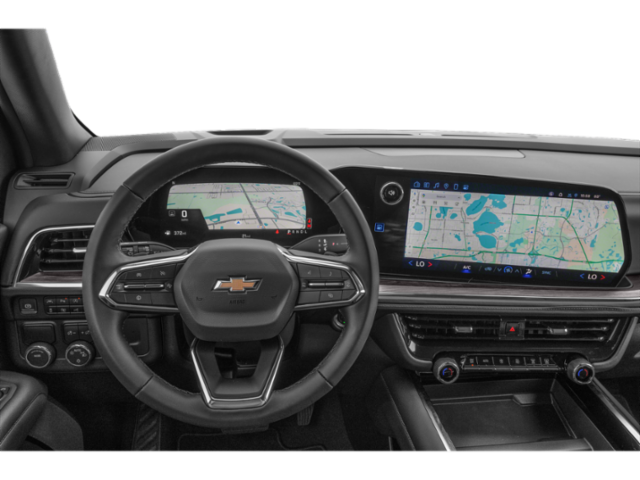
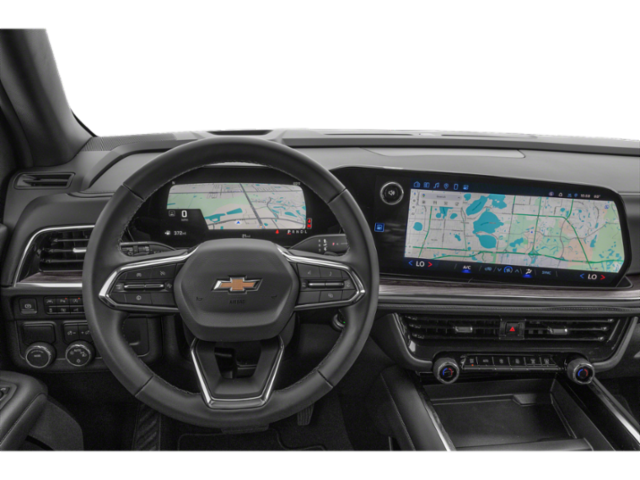
The 2025 Tahoe’s interior should look familiar if you’ve looked inside a Silverado EV, Equinox, or any of Chevrolet’s new or recently redesigned models. It’s hardly original, but it’s still an improvement over the old design, built with some quality materials. Still, it was more function than fashion. The scale now tips in the other direction.
The new touchscreen is the revised interior’s showpiece. While it measures 17.7 inches diagonally, it stretches to every corner of the definitely-not-a-rectangle housing. The volume knob is even within its borders. Simply put, it looks cool. It works well too, but more on that below.
Importantly, though, Chevrolet hasn’t abandoned physical controls. To be sure, there are fewer buttons, most notably for the infotainment system, but you still control most climate functions with buttons and knobs. Chevrolet did not touch the array of buttons and knobs to the steering wheel’s left that control the lights, 4x4 system, drive modes, and trailer brake controller.
Thankfully, Chevy ditched the ridiculous push-and-pull shifter controls, replacing them with GM’s intuitive, space-saving electronic column shifter. The weird tiny bin to the right of the old touchscreen is also gone, and I can’t imagine anyone missing it. Chevy enhanced the more useful storage areas below, most notably to accommodate a reworked wireless charging pad found in all but the base LS trim. A smaller adjacent bin contains USB-A and USB-C ports.
Passenger space remains a plus. The rear seats are all quite flat, but full-size adults can fit comfortably in both rows. I’m 6-foot-3 and had sufficient leg- and headroom in the third row, where I also enjoyed a nice view out (unlike the dungeon-like Chevy Traverse). Getting into the third row is also easy, albeit once you hoist yourself onto the running board, thanks to the captain’s chairs that distinctively fold and flip forward.

Photo: James Riswick
Every 2025 Tahoe comes with the same pair of vibrant displays. The 11-inch digital instrument panel has many design/layout options, providing the driver with as much or as little information as they’d like. It’s a substantial improvement over the bland old analog gauges that flanked a much smaller screen. That said, it can’t match the new Expedition’s instrument panel that spans half the dashboard.
The 17.7-inch touchscreen looks great and is refreshingly easy to use. The radio controls, menu structure, and vehicle controls are simple and well-organized. The permanently docked menu icons atop the screen let you quickly move between functions and menus. The built-in Google elements, including an enhanced version of Google Maps, increase usability further. Also, unlike Chevy’s electric vehicles, Apple CarPlay and Android Auto are still present with this tech interface.
The Tahoe (and its GMC Yukon sibling) continues to offer a unique engine for the segment: a diesel-powered six-cylinder. For 2025, it gets significantly increased power and torque: 305 horsepower (up 28) and 495 pound-feet (up 35). That torque figure is tops for the Tahoe engine lineup.
Fuel-economy estimates for this new engine were not available at the time of writing. Still, they should be similar to the 22-mpg combined rating the Environmental Protection Agency (EPA) estimated for the 2024 model with four-wheel drive.
While diesel prices fluctuate, especially by region, opting for this engine should save you money at the pump. Potentially a lot of money (more on that in a moment). My experience with the previous version of this engine showed that its ample torque made the Tahoe feel suitably muscular for whatever you threw at it while being surprisingly quiet. During my time with that test vehicle, I had to double-check that it did indeed have the diesel engine listed on the window sticker.
The standard Tahoe engine for 2025 is a 5.3-liter V8 good for 355 hp and 383 pound-feet of torque. That is a weak-sauce amount compared to the smooth, efficient, turbocharged six-cylinders that come standard in the Ford Expedition (400 hp, 480 pound-feet) and Jeep Wagoneer (420 hp, 468 pound-feet).
This time, my RST test vehicle had the 6.2-liter V8 engine upgrade that’s good for 420 hp and 460 pound-feet of torque. That’s more competitive, and there’s no calling the Tahoe slow when that engine is under that broad, flat hood. Still, it falls short of those competitors’ torque (and the diesel) and those same competitors’ vastly more muscular engine upgrades.
Fuel economy is the more significant issue. In 211 miles of driving, I averaged 15.6 mpg, which effectively matches the EPA’s 16-mpg combined figure. According to the EPA’s average annual fuel-cost estimates, the 6.2-liter V8 could cost you $1,200 more than the diesel to fill yearly or $1,300 more than the Jeep Wagoneer. It’s also $1,000 more than the 5.3-liter V8.
Chevrolet says it “updated” the Tahoe’s independent rear suspension for 2025 to improve the ride and handling. The RST is also now available with the dynamic duo of adaptive air suspension and magnetically controlled dampers. Great news, in theory.
While I certainly detected that the sophisticated suspension components were ably controlling body motions over big road undulations and around corners, another new-for-2025 feature—the big 24-inch wheels—effectively rendered moot any possible ride-quality improvements.
Look, I get it; big wheels look cool. Unfortunately, with them, you get less rubber and air to soften impacts. Unless you live somewhere with perfect pavement, avoid these wheels. Otherwise, you’ll feel sharp impacts from bumps you hadn’t previously noticed coursing from the wheels, through the stout truck frame, and into your spine. After an hour of the big 24s interacting with the seams between California’s concrete highway slabs, I was done.
Worse, the big wheels cost almost as much as the fancy suspension ($2,225 versus $2,550). You might as well toss five grand out the window. In my experience with previous model years, including an RST with 22-inch wheels, I can confirm that the Tahoe can have a comfortable, well-controlled, and ultimately impressive ride. In other words, it can be much better than I experienced in my test vehicle.

Photo: James Riswick
The 2025 Chevrolet Tahoe isn’t all new, but it’s definitely improved—even if it was impossible to know what, if anything, the supposed suspension updates did. The interior is more attractive and modern without betraying functionality. Adding the air/magnetic suspension option to the RST is a good thing too. Just don’t go mucking it up by also opting for the silly 24-inch wheels.
James Riswick has tested and reviewed cars since 2007, serving as an editor at Edmunds.com and Autoblog. He has attended an auto show every year since he was two and wanted to be an automotive journalist since high school. He resides in Southern California with his wife, preschooler son, and two elderly dogs. He owns a 1998 BMW Z3, a 2013 Mercedes-Benz E350 Wagon, and a 2023 Kia Niro EV.