
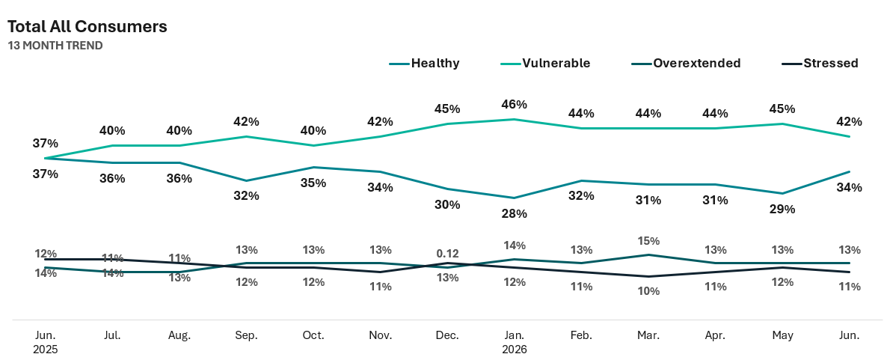
- The total share of financially healthy consumers in the U.S. is 34% in June, as most continue to struggle
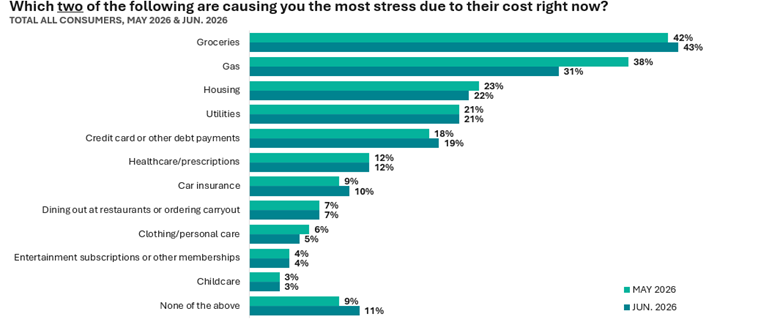
- While grocery and gas prices continue to place the greatest strain on consumers, stress around gas prices have subsided slightly
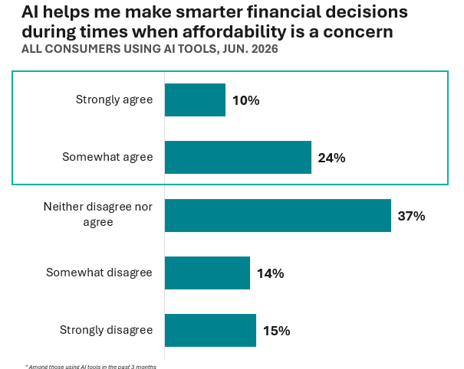
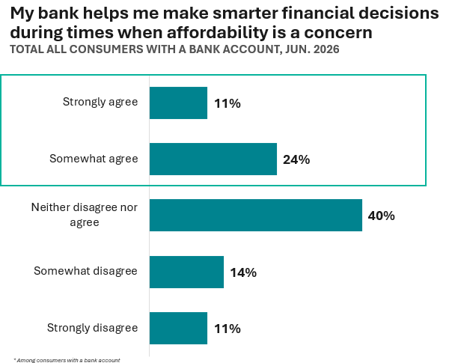
- More than one-third (34%) of consumers credit AI with helping them make smarter financial decisions, on par with banks (35%) as a key source of financial advice
While the financial health[1] of consumers in the United States is showing modest signs of improvement, significant pressure remains. The share of healthy consumers is 34%: the highest since November of 2025, but Americans are still cutting back on both discretionary and essential spending.
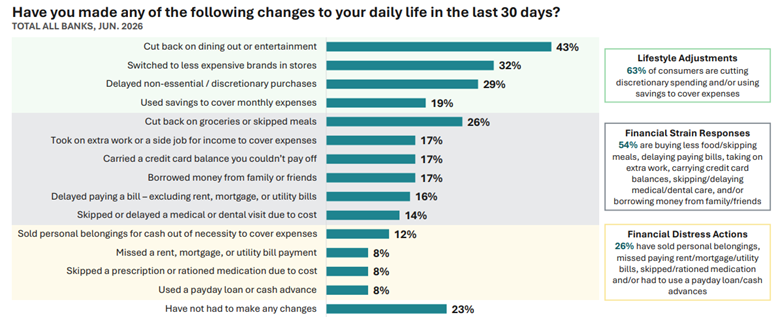
Overall, 77% of consumers say they’ve made changes to their day-to-day spending to address mounting costs, and interestingly, AI is closing in on banks as a trusted source for smarter financial decisions. More than one-third (34%) of consumers credit AI, just one percentage point behind the 35% who credit their bank as a key source of financial guidance.
As financial challenges persist, it begs the question: Just how big a role will AI play in the future of consumer finance?
Financial Health Ticks Up Slightly
In June, the total share of financially unhealthy consumers, defined as those who are financially vulnerable, overextended or stressed, was 66%. While certainly not ideal, it does mark the lowest number of financially unhealthy consumers since November of 2025.
Affordability Concerns are Persistent
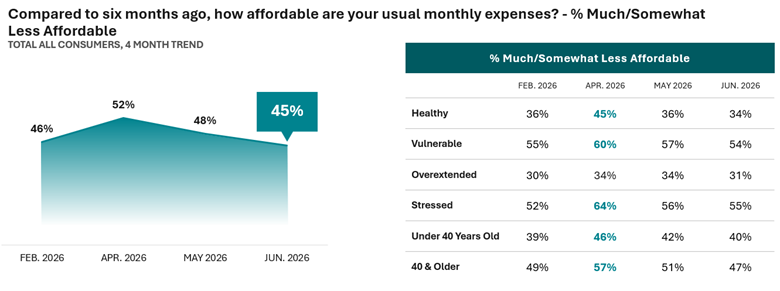
The total number of consumers who say monthly expenses feel less affordable than they did six months ago declined slightly to 45%. That reflects the lowest level since February, with the biggest improvement among consumers 40 and older (down 4 percentage points since May).
Most consumers continue to modify their spending habits, with 77% reporting changes to their day-to-day expenses in June, down 4 percentage points from May. Cuts are prevalent both in lifestyle adjustments (63%) and financial strain responses (54%), while 26% have taken financial distress actions, which include selling personal belongings to cover expenses (12%), missing rent, mortgage or utility payments (8%) and skipping a prescription or rationing a medication due to cost (8%).
While grocery and gas prices continue to place the greatest strain on consumers, stress around gas prices have subsided slightly. Overall, 43% say that the high cost of groceries is causing the most stress, up 1 percentage point from May. Gas, however, is down 7 percentage points to 31%.
AI Gets a Seat at the Table
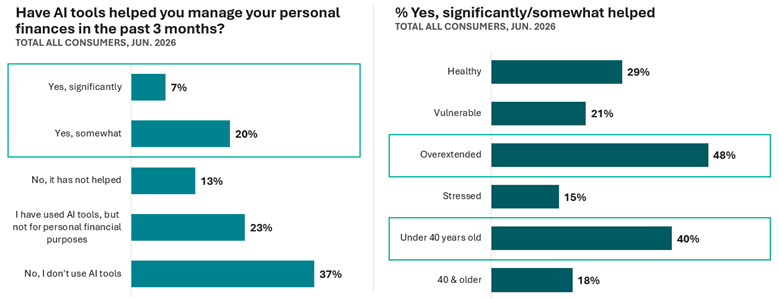
With financial concerns still prevalent, consumers are looking for advice anywhere they can and have found some refuge in AI. Overall, 40% of consumers say they have sought help from AI to manage their personal finances, with 27% having found AI somewhat or significantly helpful. Those rates were highest among consumers under 40-year-old and those that are overextended.
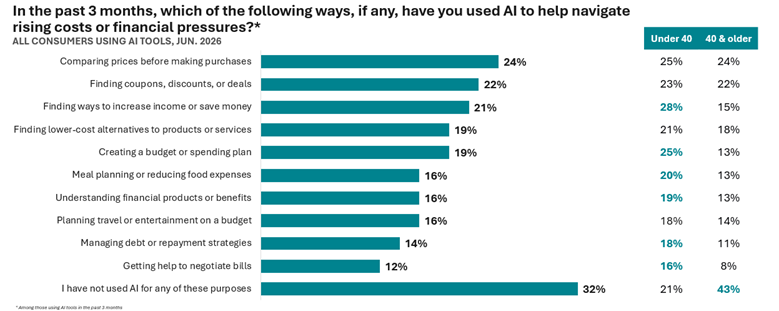
When asked how they have used AI in the past three months to navigate rising costs or financial pressure, consumers say they use AI to compare prices before making purchases (24%), followed by using it to find coupons, discounts or deals (22%) and uncover new ways to bolster their income or save money (21%).
Consumers are just as likely to credit AI as they are their bank or credit card issuer for helping them make smarter financial decisions during affordability challenges. Overall, 35% agreed to some extent that banks help them make smarter financial decisions, while 34% agreed that AI did the same.
Customers Seeking Support
Consumers are proving that they are very open-minded in how they navigate this very choppy financial terrain. Whether it’s their bank, a family friend, or even AI, consumers want answers on how best to manage their finances during times when affordability is a concern.
That’s why it’s such a vital time for financial institutions to step in and build relationships. AI is ubiquitous and the ultimate catch-all shortcut for modern times, but there are limitations to its power. Some banks have decades of institutional knowledge not only in the financial services sector, but with a consumer’s personal finances to help inform them how to move forward. Banks that build meaningful bonds with their customers will be the ones that can show that they offer the best of both worlds in technology and interpersonal relationships.
Find out More
This Banking and Payments Intelligence Report is based on responses from 4,000 consumers nationwide and was fielded in June 2026. It was authored by Jennifer White, managing director of financial services intelligence at JD Power. Please contact us at the numbers below to connect with Ms. White or to learn more about the underlying research.
Media Contacts
[1]JD Power measures the financial health of any consumer as a metric combining their spending/savings ratio, creditworthiness, and safety net items like insurance coverage. Consumers are placed on a continuum from healthy to vulnerable.