
- New account openings are up across all financial services products, with younger customers driving the growth
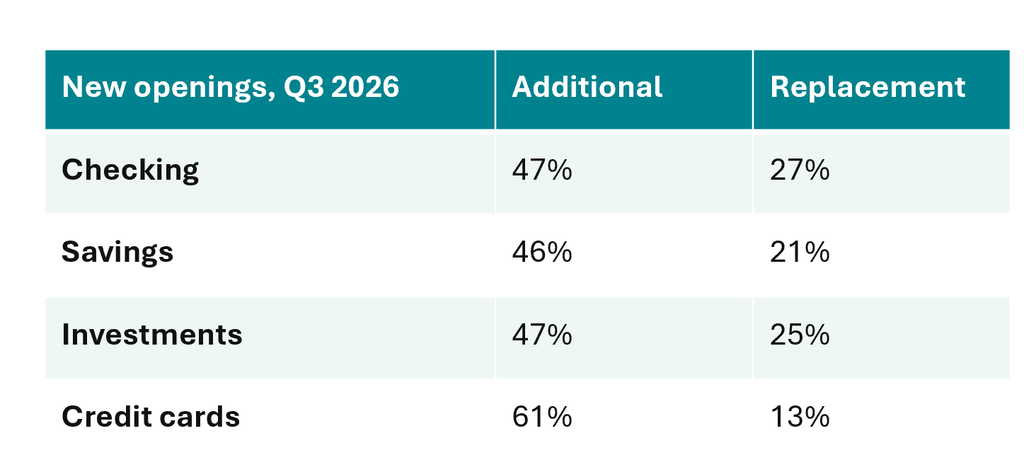
- 61% of credit cards, 47% of checking and investment, and 46% of savings are secondary accounts as opposed to replacements for existing accounts
- Customer credit profiles for new checking and loan account openings show evidence of financial strain
More new secondary accounts are being opened across all categories of banking, credit card, investment and loan products as younger customers chase value and more control over everyday finances.
According to the Q3 JD Power Signals Intelligence for Financial Services report, customers from Gen Y and Gen Z1 account for the majority of new account openers across all five product lines: checking, savings, credit cards, investment accounts and personal loans. A deeper look reveals many of these accounts are being opened by customers in a position of financial strain.
The report tracks new customer acquisition and attrition rates across all categories of financial services, and sheds light on the key demographic and behavioral details defining this industry-wide transformation.
Young Customers Spark New Account Openings
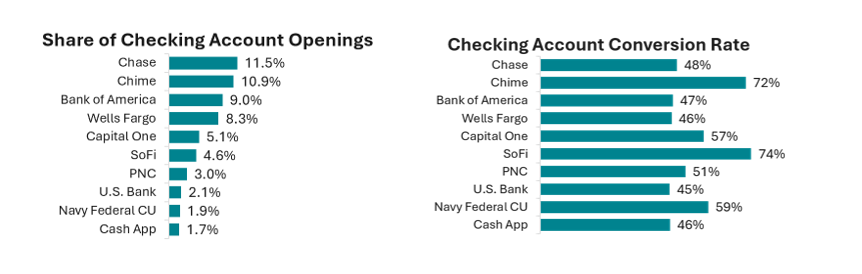
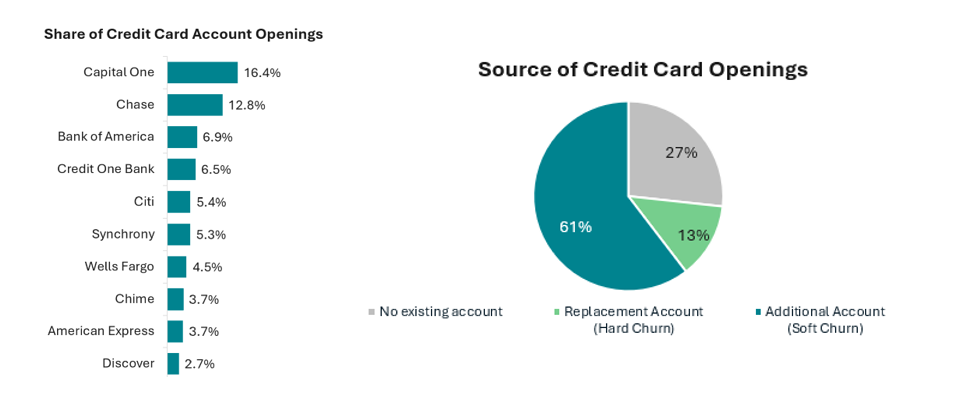
Overall, the rate of new account openings rose modestly across all product lines from Q1 2026 to Q3 2026. Checking accounts saw the largest increase, followed by savings accounts. Major banks gained share over several product lines, with Chase (up 3.0 percentage points) and Bank of America (up 2.8 percentage points) getting boosts in checking accounts and credit card accounts.
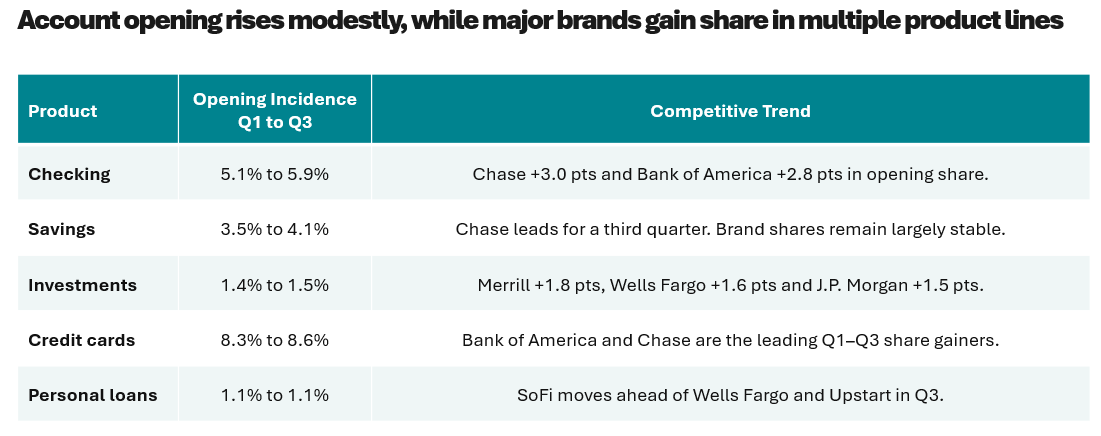
Gen Y and Gen Z customers are leading this new account growth. Of the new openers in Q3 2026, customers from these two age groups accounted for 74.3% of checking accounts, 70% of savings accounts, 68.1% of new investment accounts and 57.6% of personal loans and 55.7% of credit cards.
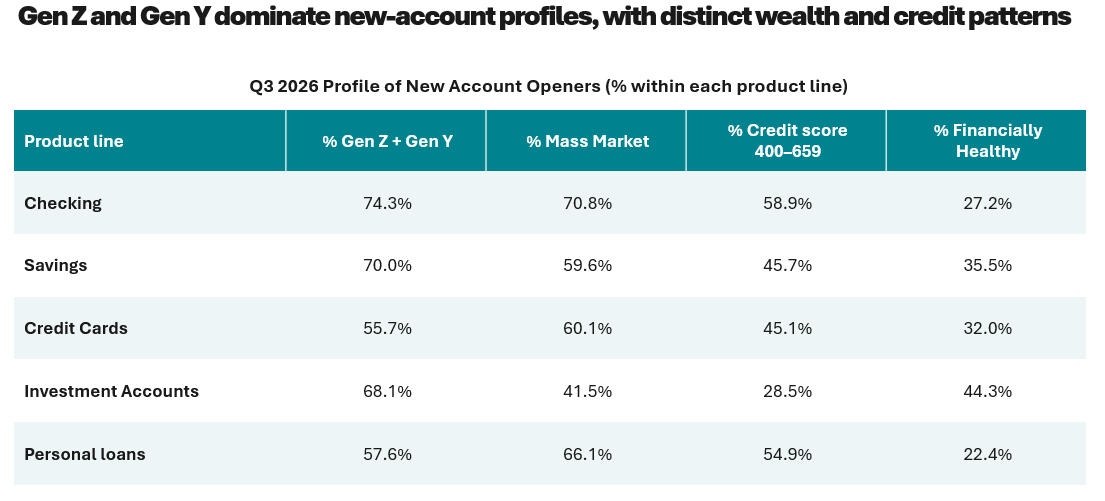
One noteworthy trend in the demographics of new account openers across financial services products is the high frequency of customers with subprime credit scores opening new checking and personal loan accounts. More than half (58.9%) of new checking account openers and 54.9% of new personal loan account openers have credit scores ranging from 400-659, which is below the prime threshold. This could suggest that new checking and personal loan customers are pursuing these new accounts from a position of financial strain.
The Fight for the Next Account
Across checking, savings, investments and credit cards, secondary accounts substantially outnumber replacement accounts that are being opened to establish a new primary relationship. Overall, 61% of new credit card account openings are additional accounts, compared to 13% that are replacement cards. While that seems intuitive for credit card customers, who often take advantage of balance transfer offers or perks like cash back, rewards or store discounts, the trend is also evident among other financial product lines. In checking, 47% of openings are additional accounts versus 27% that replace an existing account, with similar splits across investment (47% additional vs. 25% replacement) and savings (46% vs.21%).
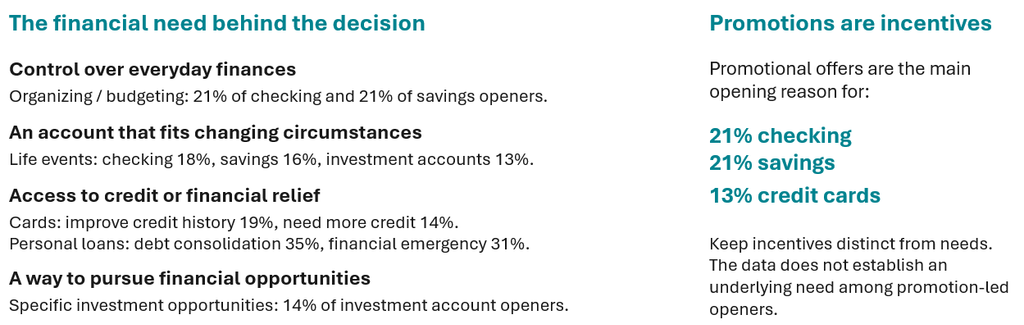
The customer rationale for opening these accounts varies. Among checking and savings account openers, 21% of customers say these new accounts are for budgeting or organizational purposes. But for personal loan and credit card customers, financial relief is a major factor. More than one-third (35%) of personal loan borrowers say they are consolidating debt, while 31% are facing a financial emergency. In credit cards, 19% are looking to improve their credit history, while 14% need access to more credit.
Redefining a Modern “Primary” Financial Partner
The consumer financial landscape has shifted. Customers are looking for solutions across a wide range of financial needs, and they are increasingly shopping for additional accounts to help fill perceived gaps in their current mix. For the financial institutions at the center of this trend – especially the big national banks – that means customer messaging cannot be siloed to one product anymore. Instead, financial institutions need to find a way to demonstrate to customers that there are cross-market solutions to their financial needs.
That’s important at a time where the notion of a “primary” relationship is starting to feel antiquated. With so many additional accounts being opened across all product lines, the idea of customers eschewing all other options – from traditional banks to fintechs – seems like a lofty ambition. But financial institutions can still consolidate their customers’ accounts by understanding their financial motivations and tailoring their offerings so that their next additional account stays in-house. With so many emerging market dynamics at play, brands that can build those relationships with their customers are the ones that stand to truly thrive.
Signals Intelligence By-the-Numbers
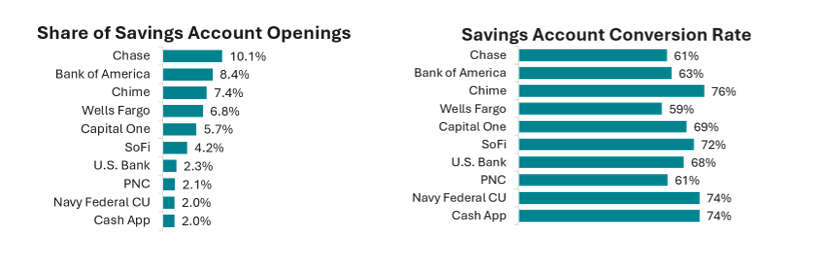
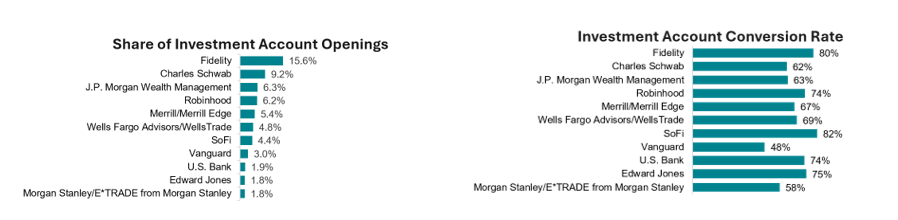
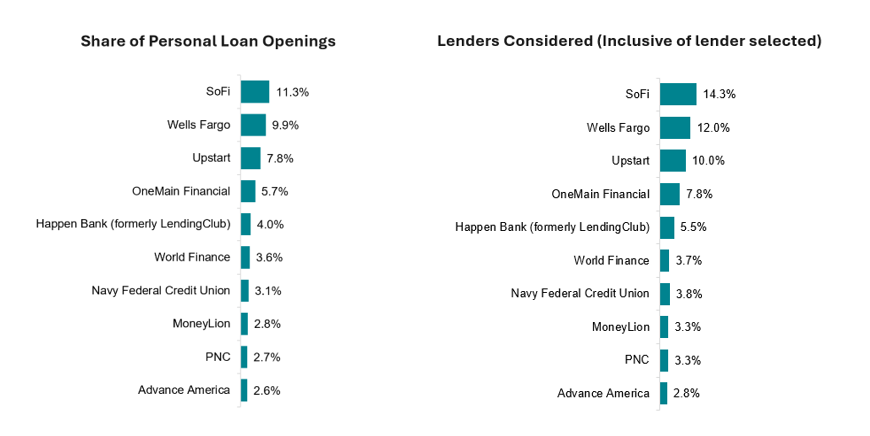
In addition to analyzing the key trends influencing customer behavior across banking, investment and lending business lines, the JD Power Signals Intelligence for Financial Services report also tracks by-the-numbers changes in new account acquisition, consideration, and conversion on a quarterly basis. Following are some key data points for Q3 2026:
Checking Accounts:
Savings Accounts:
Investment Accounts
Credit Cards
Personal Loans
Find out More
This Financial Services Intelligence Report is based on over 230,000 responses collected as part of the JD Power Signals Intelligence for Financial Services report between July 2026 and September 2026. It was authored by Jennifer White, managing director, financial services intelligence at JD Power. Please contact us at the numbers below to connect with the team or to learn more about the underlying research.
Media Contacts
1 JD Power defines generational groups as Pre-Boomers (born before 1946); Boomers (1946-1964); Gen X (1965-1976); Gen Y (1977-1994); and Gen Z (1995-2008). Millennials (1982-1994) are a subset of Gen Y.