
Mercedes-Benz is taking a significant stride into the future by introducing VAN.EA. This innovative, scalable, modular architecture will be the foundation for all new vans from the German automaker starting in 2026.
The versatility of VAN.EA will underpin the production of both commercial and private vans in the midsize and large segments. It's a customer-centric design focusing on the needs of various individual users, from commercial operators in need of a flexible premium workhorse to private users seeking a luxurious van for personal use.
"The VAN.EA will be introduced starting 2026, providing us with a platform to consolidate our midsize and large vans down to a single architecture. This move significantly reduces the complexity of our product portfolio, while also promising maximum added value for customers and sustainable profitability," said Mathias Geisen, Head of Mercedes-Benz Vans.
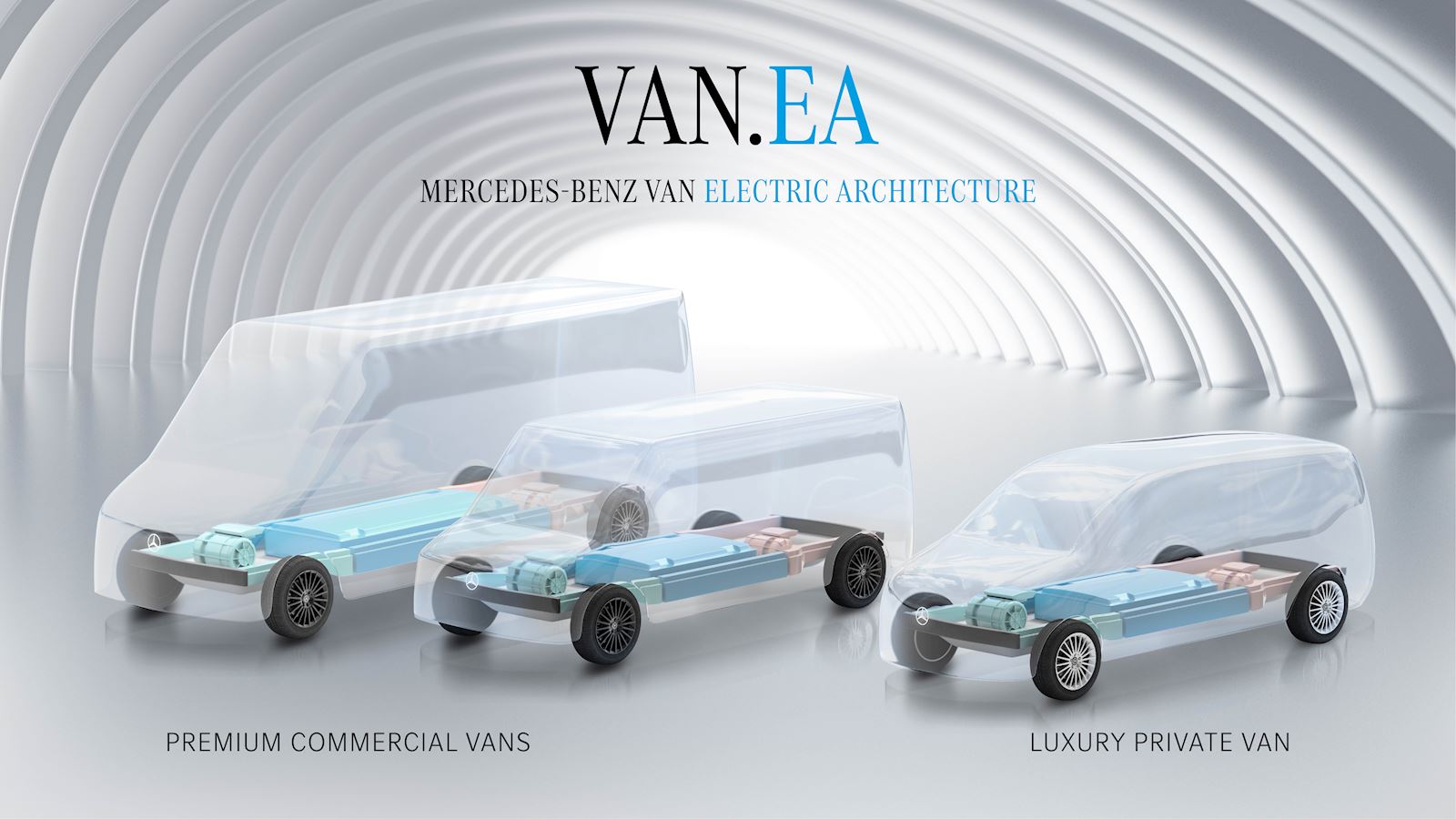
In terms of design and functionality, VAN.EA targets efficiency and performance across various vehicle aspects, including aerodynamics, drivetrain, tires, and chassis. The objective is to ensure optimal battery capacity and high range, balancing vehicle weight and costs. A modular and scalable architecture also allows for scale effects, leaner and faster processes, and efficient resource utilization in both development and production.
Mercedes' new architecture comprises three distinct blocks: the front block housing the electric powertrain and front axle, a center block that scales the vehicle length and accommodates the standardized battery case with variable high-voltage battery capacities, and the rear module offering versions with or without an electric motor to cater to all-wheel-drive or front-wheel drive requirements, respectively.
VAN.EA's versatility extends to two primary types of vans - the privately positioned VAN.EA-P and the commercial VAN.EA-C. The VAN.EA-P is envisioned as a luxury van with the Mercedes-Benz Operating System (MB.OS), making it "always on" and equipped to handle various daily challenges. With a planned range of over 310 miles, the VAN.EA-P comes with SAE Level 2 automated driving at launch, with plans for SAE Level 3 by the decade's end.
On the commercial side, the VAN.EA-C promises functionality, range, payload, and cargo space for customers across different industries, offering a variety of configurations and upfitter solutions. With SAE Level 2 automated driving at launch and SAE Level 4 planned for the end of the decade, Mercedes-Benz Vans aims to capitalize on the business potential of driverless transportation.
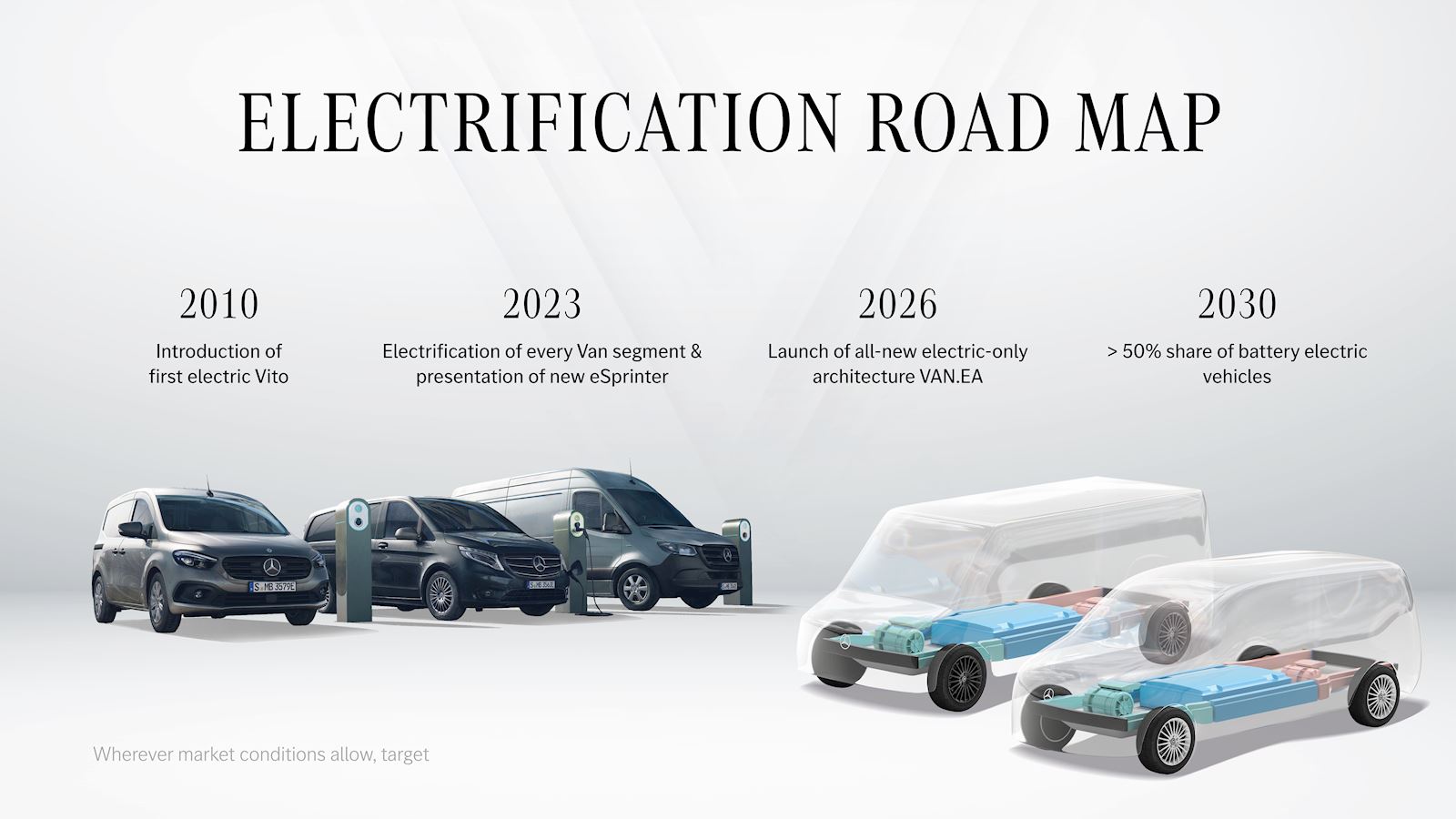
"VAN.EA, developed as a purpose-built electric vehicle, fully leverages the new technology's advantages, aligning with our target of over 50% BEV share by 2030 and a significant reduction in CO2 emissions across new vans' entire lifecycle," remarked Andreas Zygan, Head of Mercedes-Benz Vans Development.
Mercedes-Benz Vans anticipates continued growth, particularly in Europe and the United States, where it sees substantial potential for premium commercial large vans. In the U.S., Mercedes-Benz Vans aims to increase sales substantially by 2030 and expand the lineup with VAN.EA-based commercial and private vans.
Moreover, the company plans to redefine the RV industry standard by introducing a new line of fully electric midsize and large camper vans based on VAN.EA3, in collaboration with international RV business partners. Recognizing the growing Last-Mile Delivery market, Mercedes-Benz Vans also intends to offer a factory-built VAN.EA Last Mile Delivery-specific version.
To support these ambitious goals, Mercedes-Benz Vans is restructuring its global production network, with the Jawor plant in Poland set to manufacture the first pure electric Light Commercial Vehicles (eLCVs). The plant aims to set new benchmarks in productivity, lean operations, and sustainability in manufacturing premium eLCVs worldwide—the VAN.EA-based large vans will be produced net carbon-neutral, aligning with the sustainability principles at all Mercedes-Benz Vans' owned plants. Furthermore, the plant intends to meet 100% of its energy needs through renewable energy, with an energy mix encompassing photovoltaics, wind power, geothermal and solar thermal energy, air heat pumps, and biogas as a contingency for peak times.
In addition to the eSprinter and the Sprinter vans with ICE drivetrains, the large cab chassis based on VAN.EA will be produced in Düsseldorf, Germany. The Ludwigsfelde plant, the second of two plants in Germany, will continue to produce the Mercedes-Benz Sprinter and Mercedes-Benz eSprinter and will evolve into a competence center for eVan customization, particularly for Recreational Vehicles. Mercedes-Benz Vans will also manufacture VAN.EA-based midsize vans in its Vitoria, Spain plant.
With a history dating back to 2010 when it pioneered the locally CO2-emissions-free vans in the European market with the Vito E-CELL, Mercedes-Benz Vans has consistently strived for leadership in electric mobility. In 2023, Mercedes-Benz Vans offered fully electric variants in every segment, from small to midsize and large vans. The introduction of VAN.EA marks the next significant step in this electrification strategy. Mercedes-Benz Vans held a market share of over 20% in Europe in 2022 for electric large and midsize vans, with more than 40,000 eVans sold. The company is confident of maintaining this momentum, anticipating further robust growth in the electric segment.
In essence, the VAN.EA represents a new era in electric mobility for Mercedes-Benz Vans. The forthcoming architecture showcases the automaker's commitment to an "electric-only" future while also delivering on customer expectations for versatility, efficiency, luxury, and range. As such, it redefines the standard for both commercial and private vans, setting the stage for a cleaner, more sustainable, and more connected future for van users worldwide.


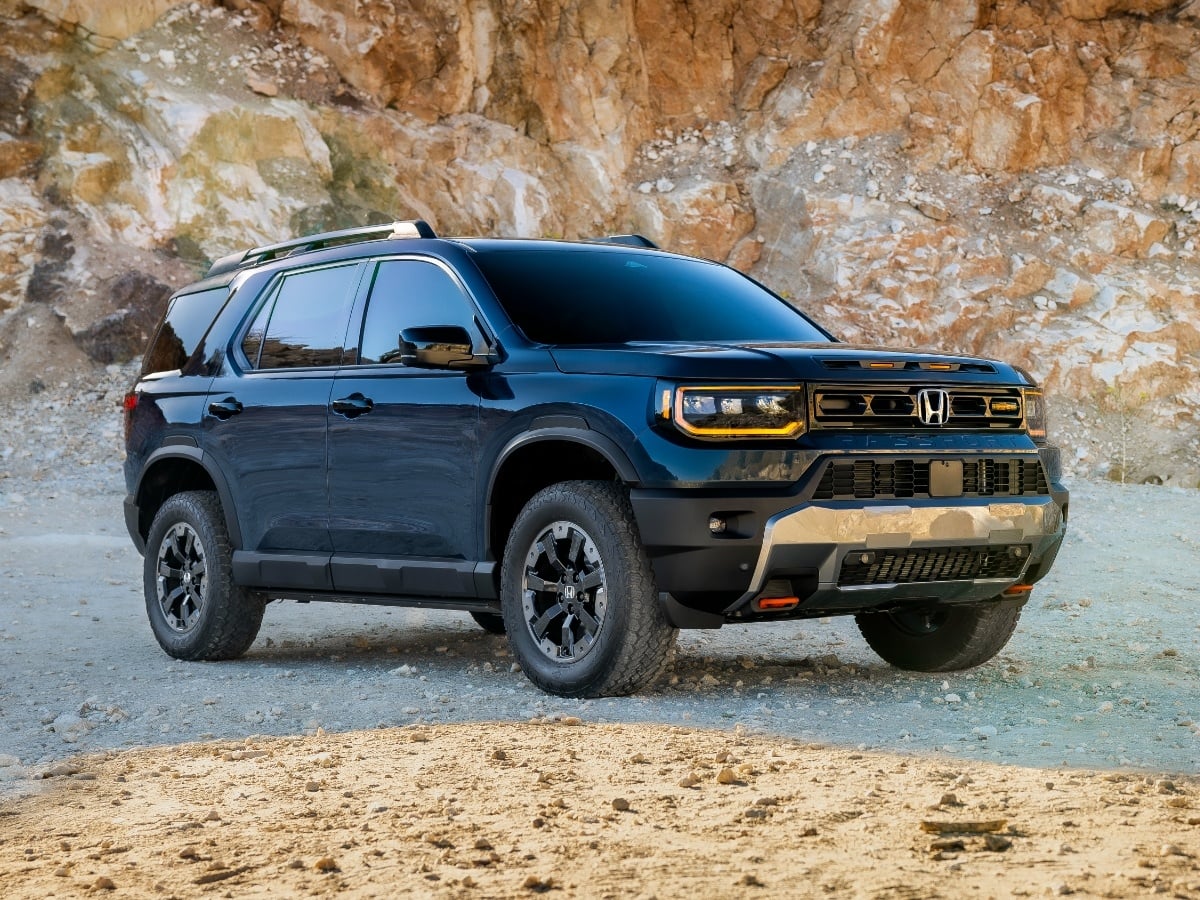
Updates to the 2027 Honda Passport TrailSport include a reworked suspension, improved steering, subtle styling enhancements, and added standard equipment.
Read the Full Article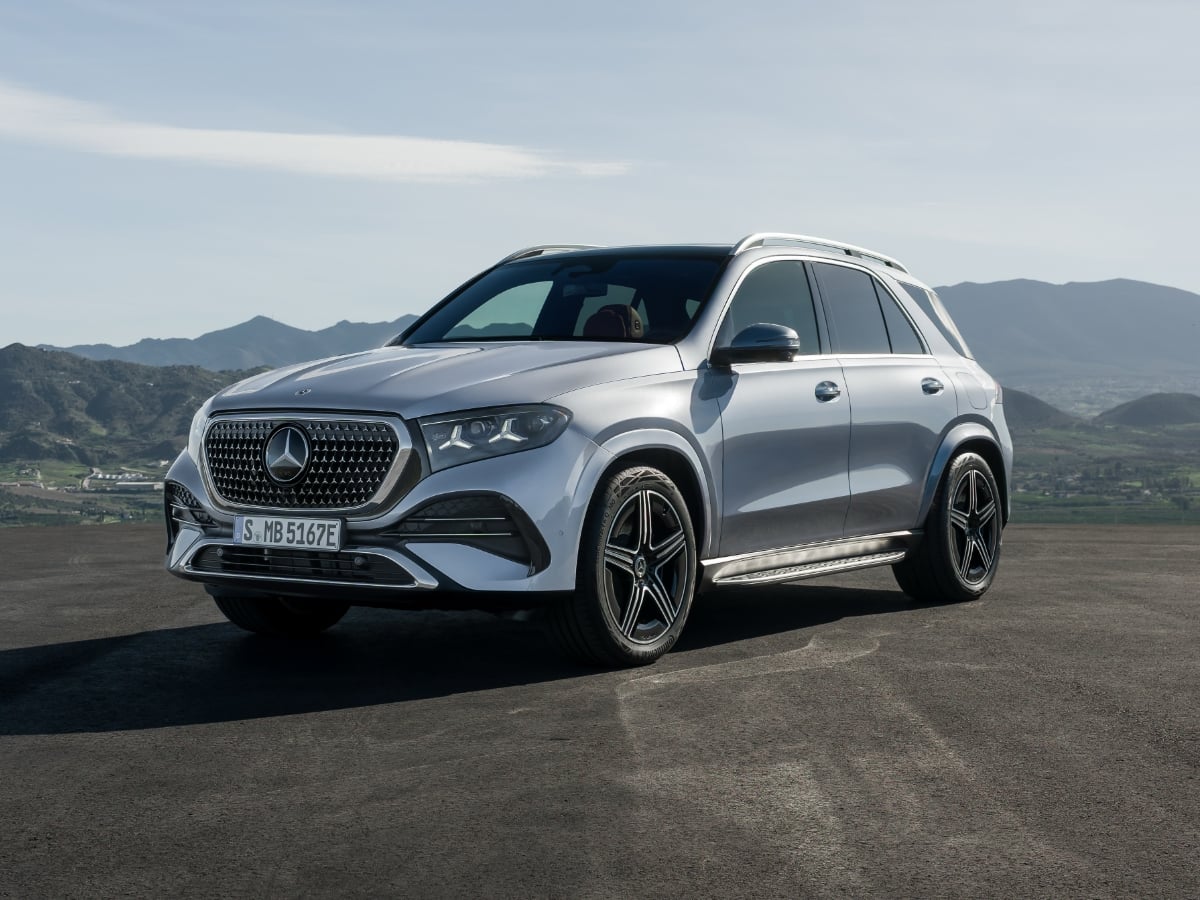
The midsize 2027 Mercedes GLE remains available in original and spicy Coupe recipes, now with standard 4Matic all-wheel drive (AWD), MBUX Superscreen technology, and a panoramic glass sunroof for ...See More
Read the Full Article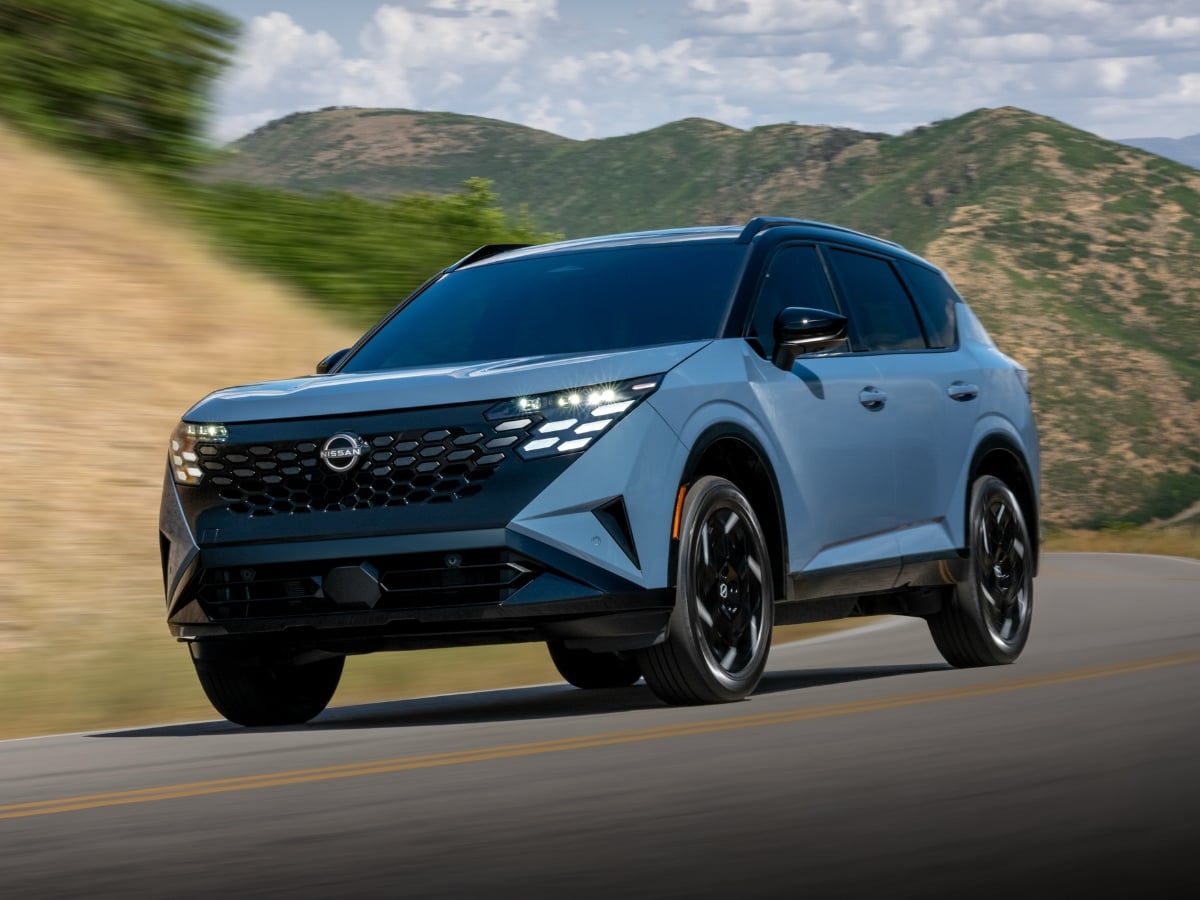
Nissan is about to introduce an innovative new SUV. The 2027 Nissan Rogue Hybrid has a gasoline engine, but it does not power the wheels. Instead, electric motors at each axle provide propulsion, ...See More
Read the Full Article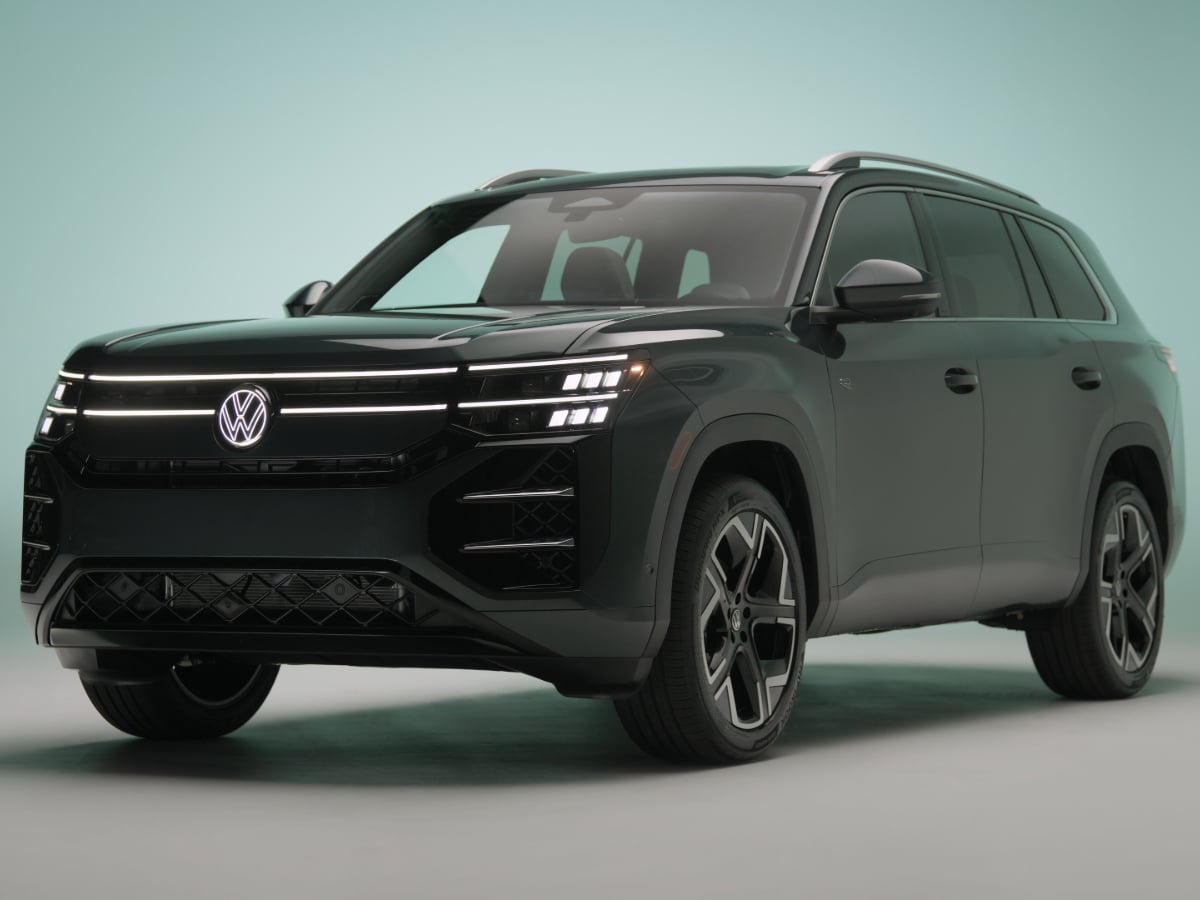
Adding European flair to the otherwise vanilla midsize three-row family SUV market, the redesigned 2027 Volkswagen Atlas debuts with a sharper exterior, an upgraded cabin, more power, and new ...See More
Read the Full Article