
The quirky Hyundai Kona is now five years deep into its first generation, though it got a light makeover for 2020. To keep it competitive, Hyundai is releasing an all-new version for 2024, including a fresh Kona Electric. The Korean automaker says it first developed the new SUV as an electric vehicle (EV), which is backward from how the previous Kona started. Hyundai promises the new Kona is part of its plan to bring 11 new EV models to market by 2030. It also says it will sell the new model alongside its growing Ioniq sub-brand.

We'll likely continue to see the SE, SEL, and Limited trims as more mainstream options. However, Hyundai hasn't announced full trim level details for the new Kona. That said, Hyundai promised a sportier N Line variant and outlined two range options for the Kona EV, including standard and extended-range batteries. The Kona EV SUV comes with 400-volt electrical architecture, which provides fast charging speeds, but at a different rate than the Ioniq 5 can reach with its 800-volt underpinnings. Production of the new Kona SUV begins later in 2023, with some color choices starting as late as November.
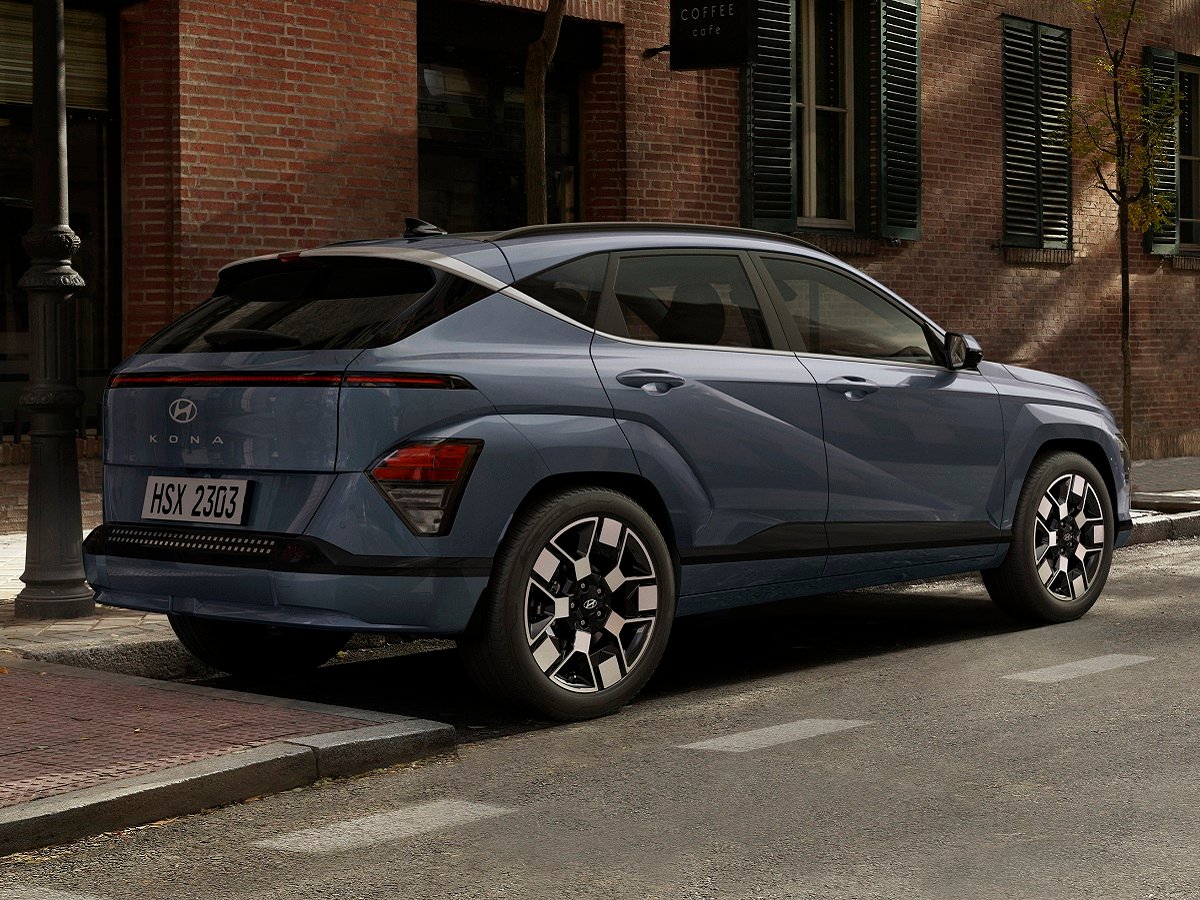
Hyundai retains the Kona's distinctive face for 2024 but refines the look with less cartoonish features. The slim upper light units still house the LED daytime running lights, but the light now forms a single bar instead of the previous model's upward-swept shape. Hyundai mounts the actual headlights lower in the front bumper and integrates them into a cleaner, vertically oriented housing.
The new Kona's body picks up sculpted shapes similar to those used on the new Tucson. The rear end now features the Kona name spelled out across the liftgate. Its wheelbase is 2.4 inches longer than before; Hyundai says it gives the SUV a more sophisticated look and improves ride quality. The new look resembles the futuristic pixelated styling used on the Ioniq 5 but is less pronounced on the Kona's exterior. The SUV features front trunk (frunk) storage, active aerodynamic flaps, and exterior outlets for its vehicle-to-load (V2L) system.
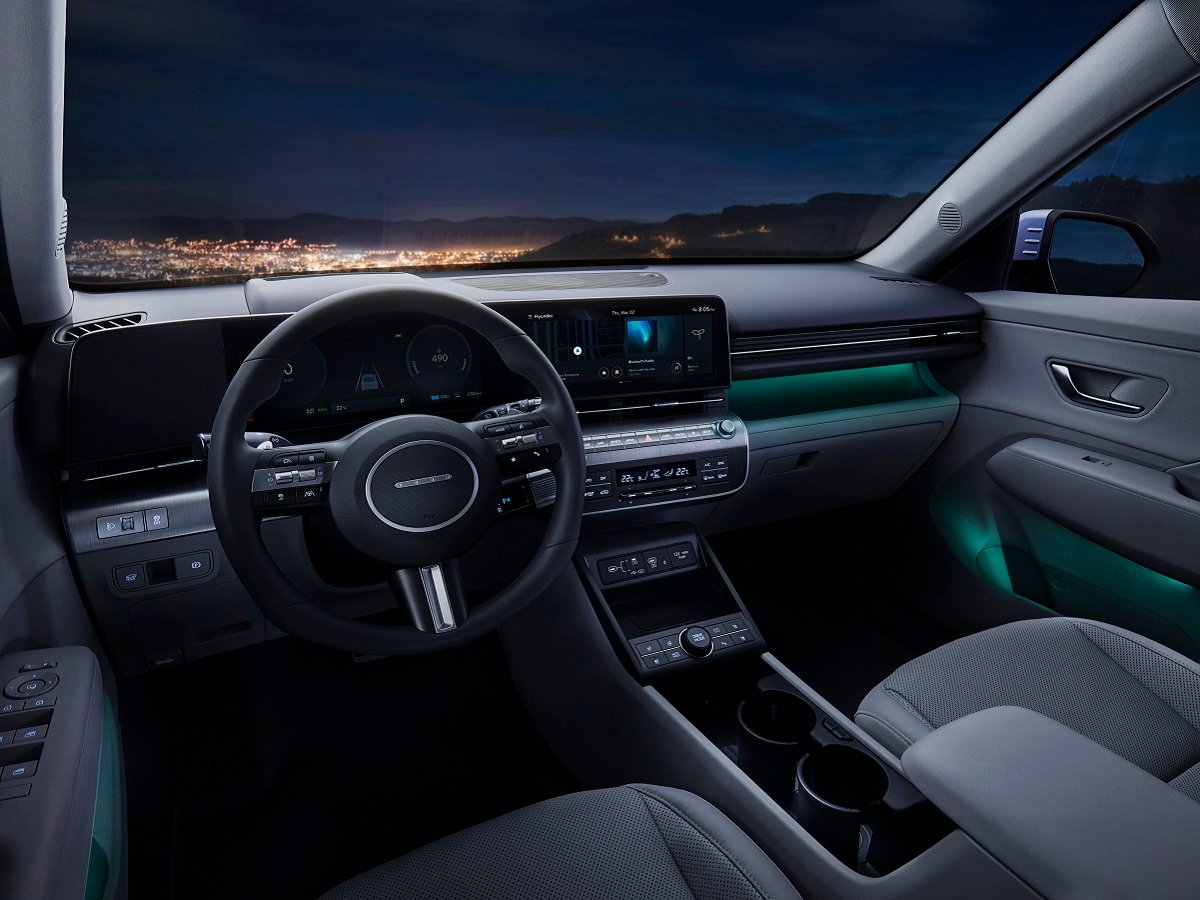
Though it moved to a more futuristic look with the new Ioniq models, Hyundai retains a more traditional look for the Kona. There's a standard center console with cupholders and an armrest, while the back seats are nothing unusual. The front seats offer a "weightless" design that Hyundai says distributes pressure and improves comfort on longer drives. The rear bench uses a curveless shape for what the automaker says is better comfort and support.
Front-seat headroom improves slightly, from 39.6 inches in 2023 to 39.9 in 2024. Rear headroom improves by a half-inch to 38.2 inches. Legroom improves somewhat in front, from 41.5 inches to 41.7, and rear legroom jumps from 33.4 inches to 36.4. That increase is primarily due to the Kona's longer wheelbase, which helps improve interior space.
Hyundai offers two powertrain options for the 2024 Kona EV. The base standard-range option makes 153 horsepower and 188 pound-feet of torque. Hyundai pairs it with a 48.4-kWh battery. Meanwhile, the long-range model offers a 65.4-kWh battery, 214 hp, and 188 pound-feet of torque. The new Kona EV's range estimates reflect testing using the European WLTP standard. The ratings may change when the EPA estimates range. The charging door features a unique cold-weather opening system that helps prevent freezing in temperatures as low as minus-30 degrees Celsius.
The Kona EV uses 400-volt architecture, which Hyundai claims enables a 10-to-80 percent charge in 41 minutes on a fast charger. It offers V2L functionality, which allows charging external power equipment and even other EVs in some cases. Those charging numbers are strong by today's standards, but the number of 800-volt vehicles is growing. The Kona's 300-plus-mile range is impressive, but charging times are becoming more critical as faster chargers and more advanced vehicles hit the market.
Hyundai updated the SUV's drive modes with a new i-Pedal function that offers one-pedal driving in most situations. The new adaptive regenerative braking system automatically adjusts regenerative intensity based on the driving scenario.
Hyundai says the new Kona has several features not available on other models in its class. A new driver monitoring system uses internal cameras to check for drowsiness or distracted driving. The automaker's Remote Smart Parking Assist system enables remote entry and exit of tight spots. The SUV also has a blind-spot camera system that displays a view of the vehicle's blind spots in the gauge cluster.
The forward-collision warning system now offers automatic emergency steering functions, intersection turn assistance, and lane-change assistance, while the updated Highway Driving Assist 2 system offers advanced adaptive cruise control functions. The list of other standard features is long and includes blind-spot warning with rear cross-traffic warning, automatic high-beam headlights, speed limit assist, and more.
The 2024 Kona is too new to have crash-test data from either the National Highway Traffic Safety Administration or the Insurance Institute for Highway Safety. Updated features for the 2024 model may help it earn a Top Safety Pick award, but the Institute's new test criteria are more stringent than before.
Hyundai equips dual 12.3-inch displays in the new Kona EV, both mounted into a single housing for a panoramic look. The 12.3-inch gauge cluster offers configurable views with vehicle information, audio settings, and more, while the infotainment display offers Apple CarPlay and Android Auto, Bluetooth, and more. The available head-up display offers a 12-inch display on the windshield with safety information, speed, and other data.
Hyundai offers connected services through its app, which allows owners to lock/unlock and start the SUV and view other information, such as service needs. The new Kona is Hyundai's first with its new Connected Car Navigation Cockpit. The automaker says it brings advanced graphics and unity between the vehicle's displays. A Bose stereo, USB-C ports, 12-volt power outlets, and a surround-view parking monitor are available.
Interestingly, the Kona Electric features a virtual sound system that Hyundai says makes driving more engaging. It generates a unique sound inside that follows the vehicle's driving speed, acceleration, and other characteristics. The driver can adjust the volume and customize the sound inside the cabin, but don't expect crazy exterior sounds like Tesla's "fart mode" and other outlandish features.
The Kona Electric competes with a slew of affordable EVs, including the Chevrolet Bolt EV. Unfortunately for the Hyundai, it's not eligible for federal tax credits, giving the cheaper-to-start Chevy a significant advantage. Buyers may also consider the newer and more futuristic Hyundai Ioniq 5, though it costs almost $8,000 more. The Volkswagen ID.4 is another excellent alternative. The Nissan Leaf is yet another option, but its range is too short for most. The closest competitor is the Kia Niro EV, which offers similar specifications for a bit more money.
Hyundai is the source of information in this article. It was accurate as of March 8, 2023, but it may have changed since that date. Always confirm product details and availability with the automaker's website or your local dealership.
Chris Teague is an experienced writer in the automotive and technology fields. In addition to JDPower.com, his work appears at Forbes, The Drive, Autoweek, and others.


Although both the 2026 Toyota Corolla and Toyota Camry share Toyota engineering and many standard features, they target different buyers. To see how they compare in value, reliability, performance, ...See More
Read the Full Article
Both the 2026 Toyota Corolla and the 2026 Mazda Mazda3 come with comprehensive safety features and connected services, along with large infotainment screens and premium audio. To see how their ...See More
Read the Full Article
Touchscreens are almost universal in modern cars. However, not all display types are the same. An increasing number of the latest cars use something called an OLED display. But what exactly is OLED, ...See More
Read the Full Article
Although the 2026 Toyota Corolla and the 2026 Nissan Sentra target buyers with similar goals, they take different routes. To see how those approaches translate into real world value, reliability, ...See More
Read the Full Article