
The 2023 Lexus RZ is the Japanese luxury brand’s first dedicated battery-electric vehicle (BEV). This is a big deal because although Lexus is a premium segment leader in the number of gas-electric and plug-in hybrid models it offers, it lags behind other premium brands such as Audi, BMW, Mercedes-Benz, and Tesla with pure electric ones. Lexus General Marketing Manager Greg Kitzens says Lexus will have a full lineup of global EV models by 2025. The brand’s goal is to offer 100 percent BEVs globally by 2035.
Recently, I drove the new RZ over 65 miles of rain-soaked residential streets, two-lane highways, and interstate freeways north of San Diego, California.
Lexus will sell the new RZ in all 50 states. The automaker’s target is to sell 4,900 RZ crossover SUVs during the 2023 calendar year. The RZ is currently on sale, and units are starting to arrive at dealers.
At the start of production, just one model series—the RZ 450e—is available in Premium and Luxury grades. Both come standard with all-wheel drive (AWD). Including the $1,150 destination charge, the price of the Premium is $59,650, and the Luxury is $65,150.
For this review, I drove a 2023 Lexus RZ 450e optioned with a Cold Weather package (headlamp washers and windshield wiper deicer), illuminated front badge, dimmable Dynamic Sky Panorama Glass Roof, and Iridium premium paint. Including the $1,150 destination charge, the total came to $66,600.
Competitive electric SUVs studied by Lexus during the development of the RZ include the Audi E-tron, Jaguar I-Pace, Tesla Model Y, and Volvo XC40 Recharge. Other competitors in the Lexus RZ’s price range include the Cadillac Lyriq, Genesis GV60, and Volvo C40 Recharge.

Photo: Ron Sessions
The midsize Lexus RZ crossover EV SUV slots between the smaller NX and slightly larger RX. Sizewise, the RZ is 3.5 inches shorter nose to tail and 3 inches lower road to roof than the RX while offering similar passenger and cargo space. In profile, the rakish RZ is sleeker, more streamlined, and less blocky-looking than the RX, with a coupe-like roof and sharply sloping rear window. Premium models roll on standard 18-inch alloy wheels, while the Luxury grade gets 20-inch wheels.
Optional is an illuminated front Lexus logo that looks cool at night and indicates charging status.
Optional bi-tone paint, introduced earlier this year on the Toyota Crown, will also be available on the Lexus RZ. The striking but controversial color scheme brings gloss black paint from the nose to the liftgate, contrasted with blue or gray paint on the fenders, doors, and rear quarters, emphasizing the RZ’s spindle-shaped body theme.
There is no wiper for the liftback window, which Lexus says improves aerodynamics (a claimed Cd of 0.29 makes the RZ the slipperiest Lexus yet) and range. Instead, the RZ employs a pair of vortex generators at the rear edges of the roof that Lexus says creates air currents that help keep the rear glass clear of dust, dirt, and road grime. How it will work for accumulated snow remains to be seen.
Considering its smaller size than the RX, the RZ interior is surprisingly roomy, offering more generous headroom and legroom for front- and rear-seat passengers. The RZ’s cabin is also leather-free, the base Premium trim featuring bio-based NuLuxe seat trim, and the upgraded Luxury model covering its seats in synthetic Ultrasuede. The interior design is clean and modern, free of traditional added-on adornments such as wood and aluminum. However, the RZ does amp up interior excitement at night, with intricate shadow interior lighting patterns projected on the door trim panels.
A 10-inch head-up display for essential driving information is standard in the Luxury trim and part of a $1,425 Technology package in the Premium model, including Lexus Digital Key and an advanced automated parking system.
Another exciting feature of the Lexus RZ is its dimmable Dynamic Sky Panorama Glass Roof. It’s a $550 option and only available with the range-topping Luxury trim. The feature comprises two glass panels with a Low-E coating to reduce radiant heat and an electrostatic middle membrane between the glass that provides a dimming function. You activate it by pushing an overhead button adjacent to the base of the rearview mirror. When dimmed, the Dynamic Sky roof glass transitions from transparent to translucent, allowing plenty of light but reducing glare and harshness. In addition, the dimming function replaces a physical shade that Lexus says would add weight and reduce headroom.
Further innovation is evident in the RZ’s radiant cabin heating. There are two radiant heater grids under the dash to warm the legs and lower extremities of the driver and front passenger: one beneath the steering column and the other where the traditional passenger-side glovebox would be in other vehicles. The radiant heating complements the regular climate control system, which uses waste heat generated by cooling the underfloor lithium-ion electric propulsion battery.
There’s plenty of storage in the RZ, but not all in traditional locations. The cabin has no glove box, but the bin under the dual-hinged center armrest is especially deep and long. Under the hood, the RZ doesn’t offer a frunk (front trunk) as in some EVs but provides generous hidden storage bins beneath the cargo floor. They’re useful for storing the charging cord, laptops, purses, and other valuables. There is no spare tire. Instead, the RZ has a tire-sealant kit and inflator.
Cargo space is 23.7 cubic feet with the rear seat up and 55.6 with the back seat folded flat. It’s accessible via a power-operated liftgate with an under-bumper hands-free kick sensor.
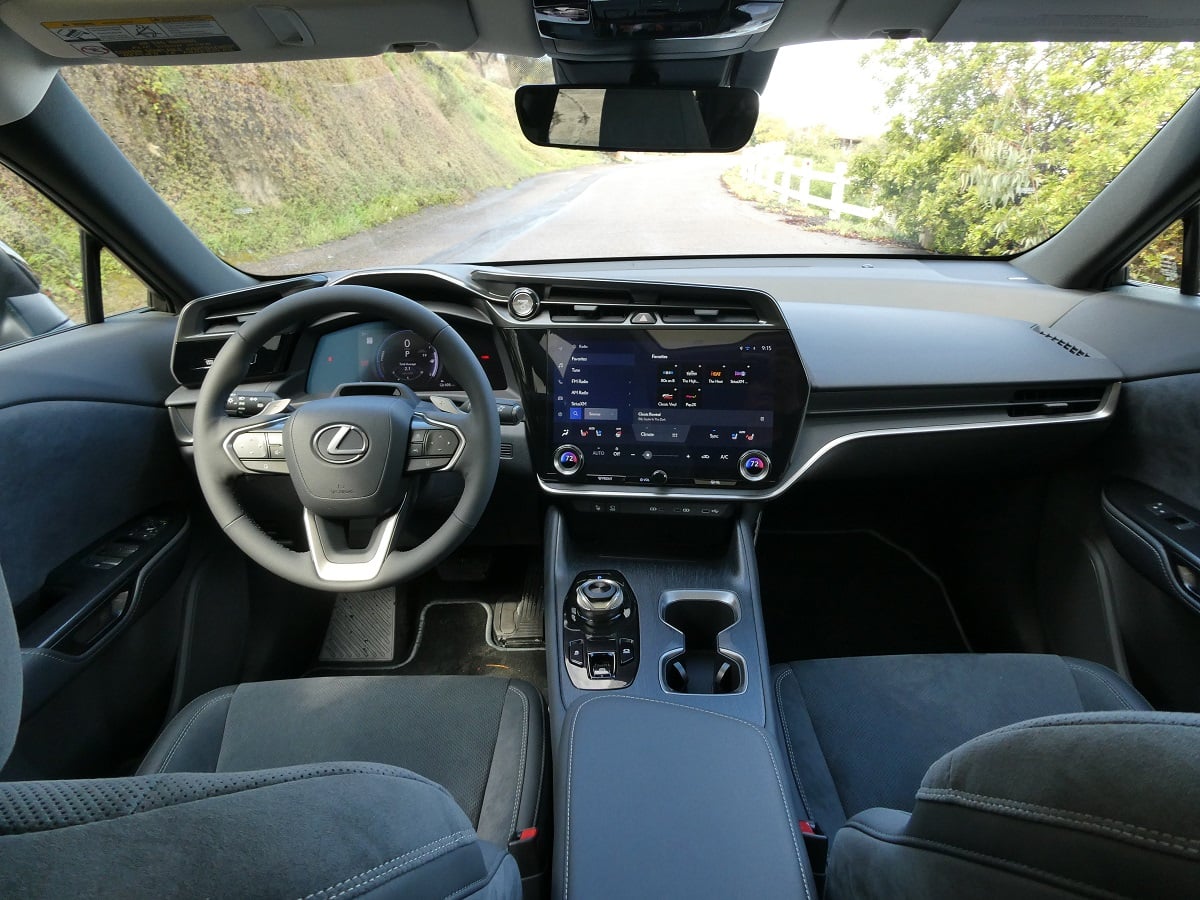
Photo: Ron Sessions
The new RZ uses the latest iteration of the Lexus Interface infotainment system. It relies heavily on the standard 14-inch touchscreen and voice prompts for most interactions. Hard controls are limited to a single rotary knob for power on/off, volume control, and steering wheel buttons. Wireless Apple CarPlay and Android Auto are standard and easy to set up. You can also pair two phones with this system.
There are a lot of functions, menus, and sub-menus packed into that screen, and it takes some time to learn where some features reside. Unfortunately, there is no dedicated home button if you get lost, and the “Back” button is a tiny arrow in the upper left corner that’s easy to miss while you’re dealing with traffic or on a bumpy road.
The enhanced voice control that responds to conversational commands with the “Hey, Lexus” prompt wins the day when you opt for a Drive Connect subscription. That subscription also includes cloud navigation, continuously updated with Google point-of-interest data for more accurate searches.
On the safety front, the base Premium trim comes with the latest Lexus Safety System+ 3.0, blind-spot warning, rear cross-traffic warning, and active parking assistance with automatic braking and rear pedestrian detection.
Luxury trim adds semi-autonomous Advanced Park, Lane Change Assist, intersection turn assistance, and traffic-jam assist. That last feature requires a Drive Connect subscription.
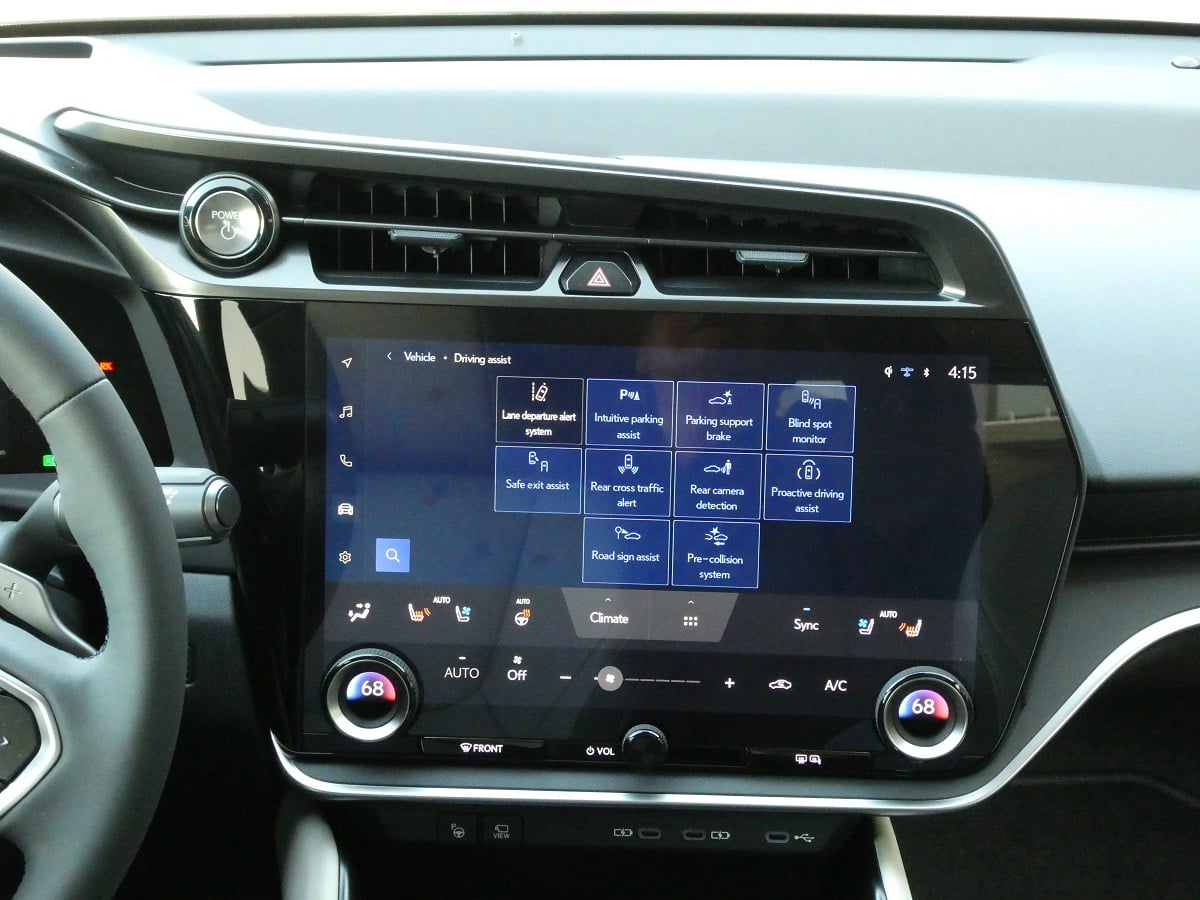
Photo: Ron Sessions
All advanced driver assistance systems worked as advertised in my short time behind the wheel of the Luxury-trimmed RZ test vehicle. However, I did get one false pre-collision system alert driving over a deeper-than-normal dip in the pavement, and an intersection turn assistance alert from a car passing in front of me as I stopped at a T-intersection.
Also, with the adaptive cruise control activated while driving on a curvy two-lane road, the RZ slowed appropriately about 2-4 mph for curves, increasing my comfort level with the system.
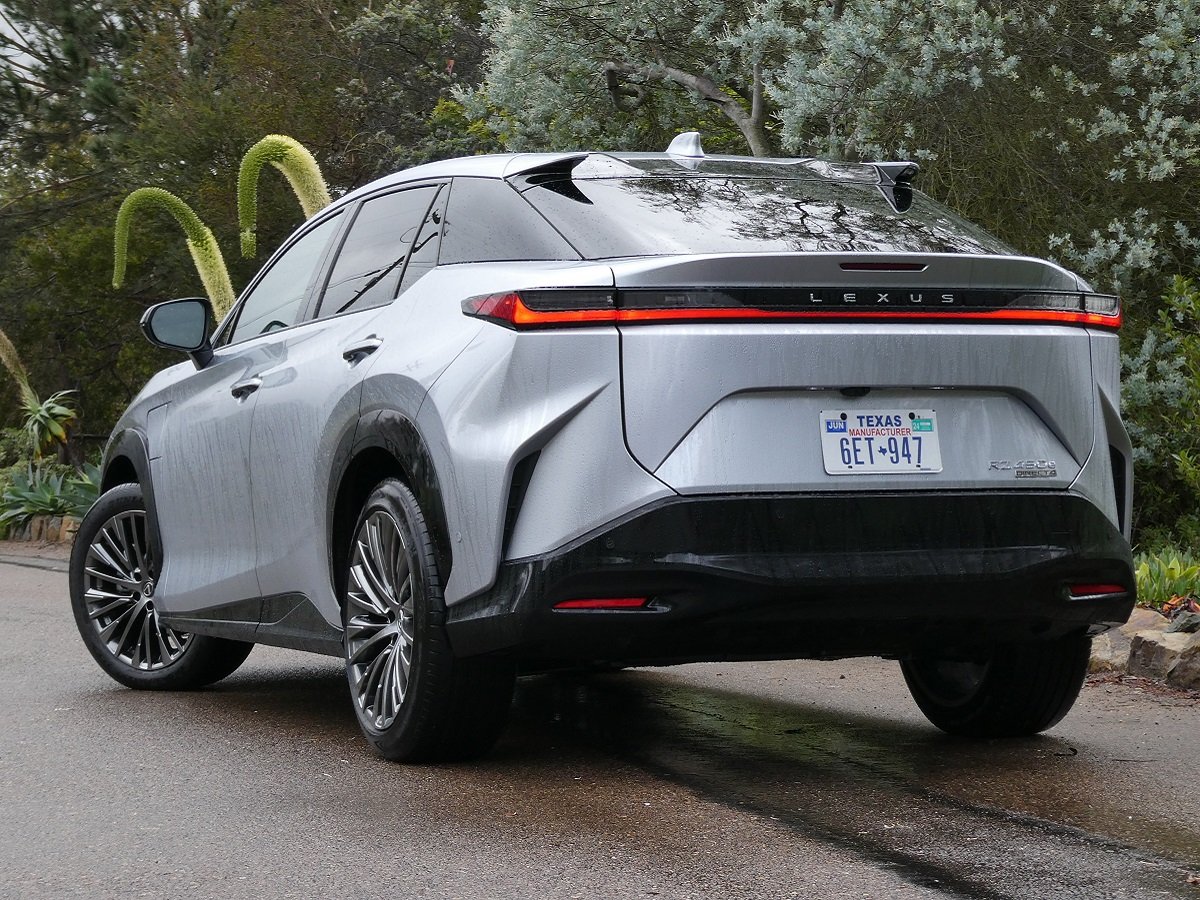
Photo: Ron Sessions
The Lexus RZ shares its vehicle architecture and most of its underpinnings with the Toyota bZ4X and Subaru Solterra. As previously mentioned, AWD is standard. The RZ uses the Direct4 AWD system that debuted in 2022 in the RX. The e-axles at the front and rear are complete, self-contained power units. Lexus claims the system can vary drive torque infinitely from 100 percent front to 100 percent rear in response to driving conditions.
The total system output is a competitive but not segment-leading 313 horsepower. The RZ uses two permanent-magnet synchronous electric motors, a 150-kW unit up front shared with the front-wheel-drive Toyota bZ4X and an 80-kW one shared with the AWD bZ4X at the rear. According to Lexus, the new RZ can accelerate from zero-to-60 mph in 5 seconds flat. Again, that’s not segment-leading, but more than ample performance, and it is quicker to 60 mph than any version of the Lexus RX.
Like the Toyota bZ4X, the Lexus RZ packs a 71.4-kWh lithium-ion propulsion battery. With the 18-inch wheels standard on the Premium trim, the EPA-estimated driving range is 220 miles—in the ballpark of what several competitors offer. However, the RZ’s range shrinks to 196 miles when you upgrade to the 20-inch wheels that are optional with Premium trim and standard on the Luxury model. Again, a 196-mile range is among the lowest in the premium EV SUV segment.
You can recharge the RZ’s battery with the onboard AC charger at a maximum input of 6.6 kW. According to Lexus, the charging time to take the battery from zero to 100 percent is around 50 hours using a 120-volt outlet or 9.5 hours with a 32-amp 240-volt outlet. Lexus says you can charge the RZ to 80 percent with a DC fast charger up to 150 kW in about 30 minutes. However, neither the RZ’s AC nor DC charging times are class-leading, especially compared to the Genesis GV60, which offers a faster onboard AC charger and much quicker 350-kW fast-charge times.
On the busy roads of Southern California, the RZ proved to be an agile and responsive partner. Instant electric motor torque allows the RZ to slot into open spaces in traffic quickly. The brake response is immediate, with good feedback and modulation. Although the road feel is muted, the RZ’s steering offers good precision and control. Like all Lexus vehicles, the RZ’s ride is pleasingly compliant, offering reasonable vertical control and flat cornering. I never heard a peep from the generously sized 235/45R20 front and 255/40 rear tires on the Luxury-trimmed test vehicle, even on the more twisty road sections. The cabin is appropriately hushed with double-pane acoustic glass, extra sealing, and an active noise-cancellation system working through the vehicle speakers.
The RZ comes with the usual selectable driving modes, including Normal, Eco, Sport, and a new one called Range. The appropriately named Range mode aims to extend the RZ’s driving range. In this mode, the AWD system stays in rear-wheel drive as much as possible, and the smaller-output rear e-axle primarily powers the RZ. In Range mode, the system limits air conditioning as well. Drivers can access all drive modes via the vehicle settings menu in the center display instead of a dedicated button or control wheel on the dash or center console, as in many other vehicles. Although it eliminates some dash clutter, accessing it in a hurry is less convenient. The shifter for selecting Drive, Reverse, Park, and so on is a slick, nicely weighted rotary knob on the center console.
Using the paddles behind the steering wheel, the driver can determine the level of regenerative braking to help extend the battery range. Four levels are available, the most aggressive slowing the RZ’s forward momentum considerably, which is great when driving down a twisty road that would otherwise necessitate lots of foot-pedal braking. But the top setting won’t bring the RZ to a complete halt; the driver must do that with the foot brake.
A steer-by-wire version with amazingly quick-ratio low-speed steering and a two-handle yoke instead of a conventional steering wheel will be available later, but not for the 2023 model year.
With the new RZ, Lexus dips a toe in the luxury SUV EV space with a sharp-looking, comfortable-driving offering packed with ample performance, technology, and exciting features. Driving range and charging speeds, however, are not class-leading.
The brand has long prioritized durability and reliability over state-of-the-art technology. But, if history proves little else, it’s a sure bet the company will soon find ways to improve the RZ’s modest driving range and charging speeds with its proven technology.
Ron Sessions is a seasoned vehicle evaluator with more than three decades of experience. He has penned hundreds of road tests for automotive and consumer websites, enthusiast magazines, newsletters, technical journals, and newspapers.


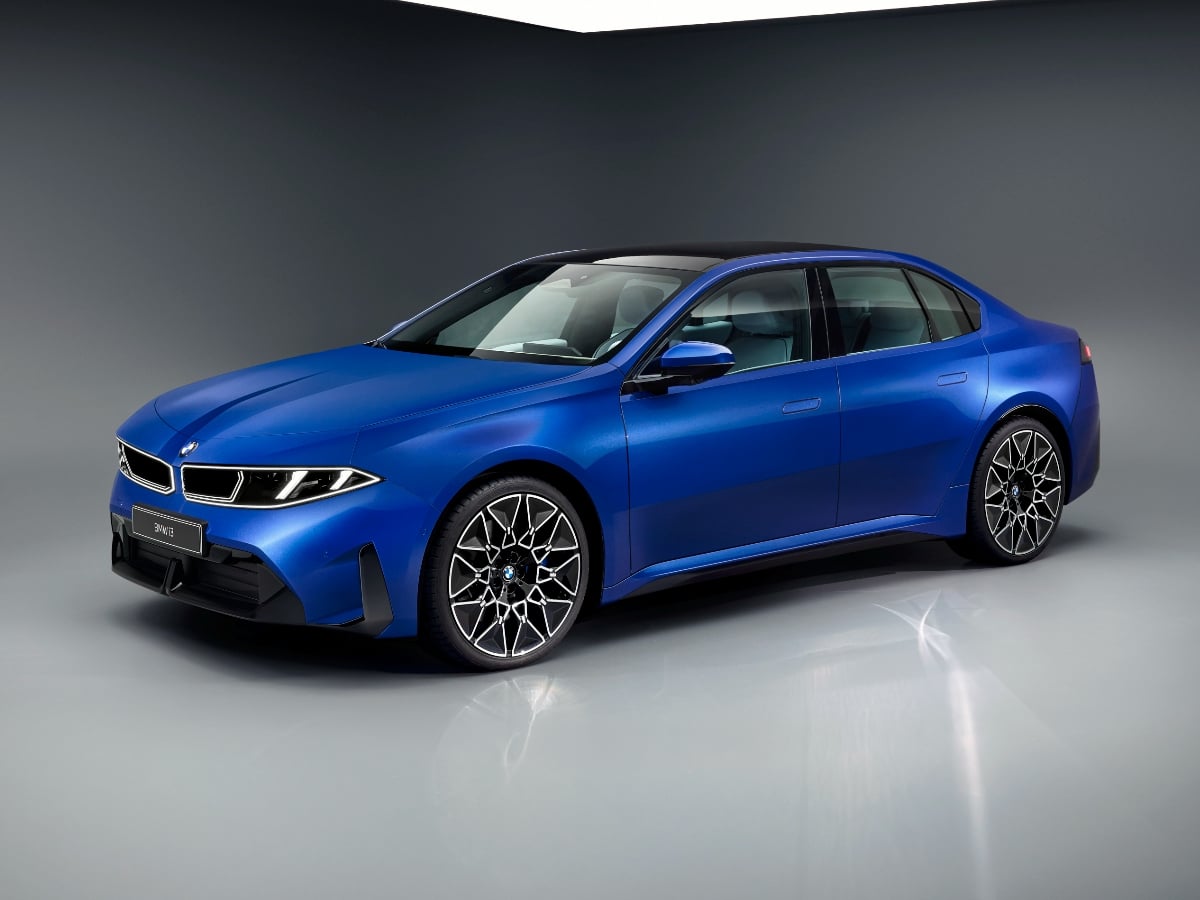
The new 2027 BMW i3 boasts an estimated range of up to 440 miles, 400-kilowatt DC fast charging capability, bidirectional charging to a home or the grid, and next-generation technology.
Read the Full Article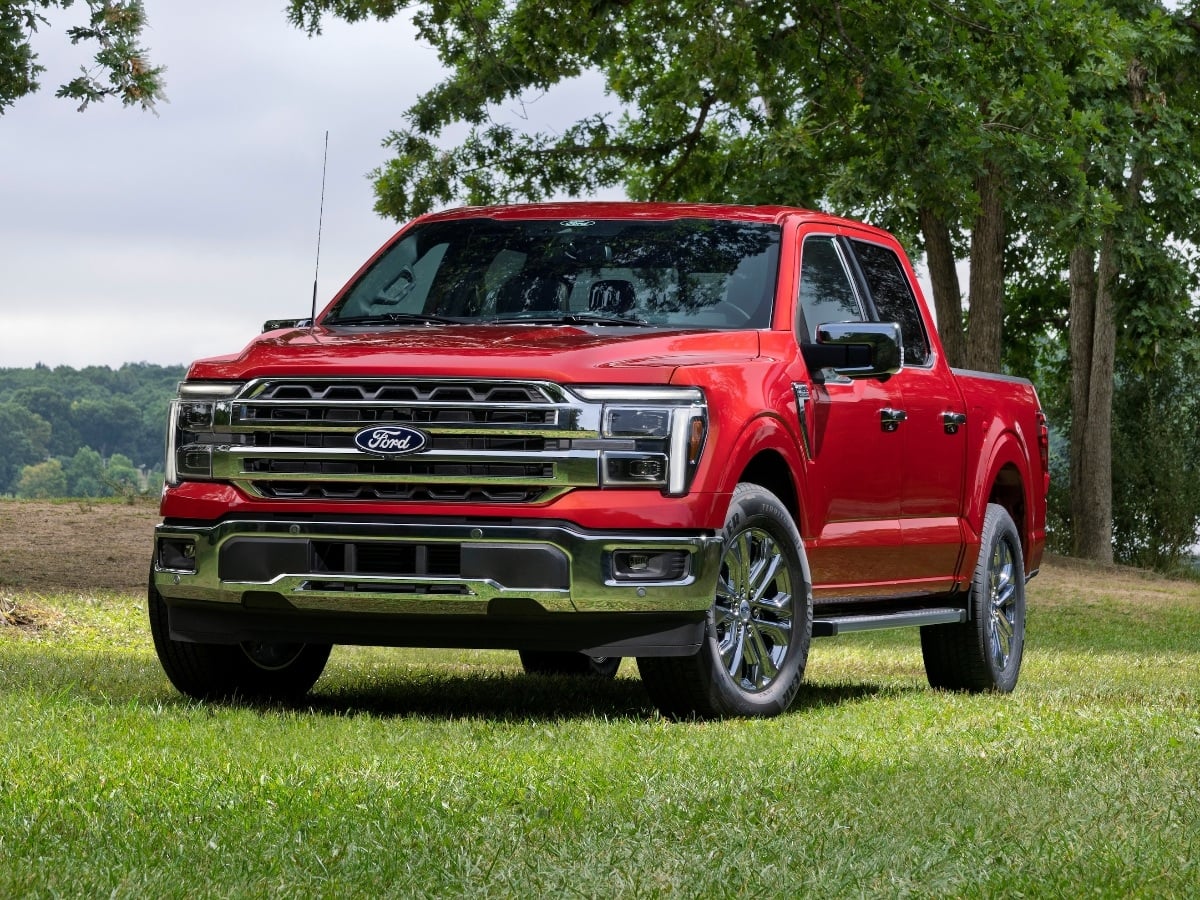
Facing renewed competition in the full-size, light duty pickup truck segment, the 2027 Ford F-150 receives subtle styling updates, a new standard engine, broader availability of its 5.0-liter V8, and ...See More
Read the Full Article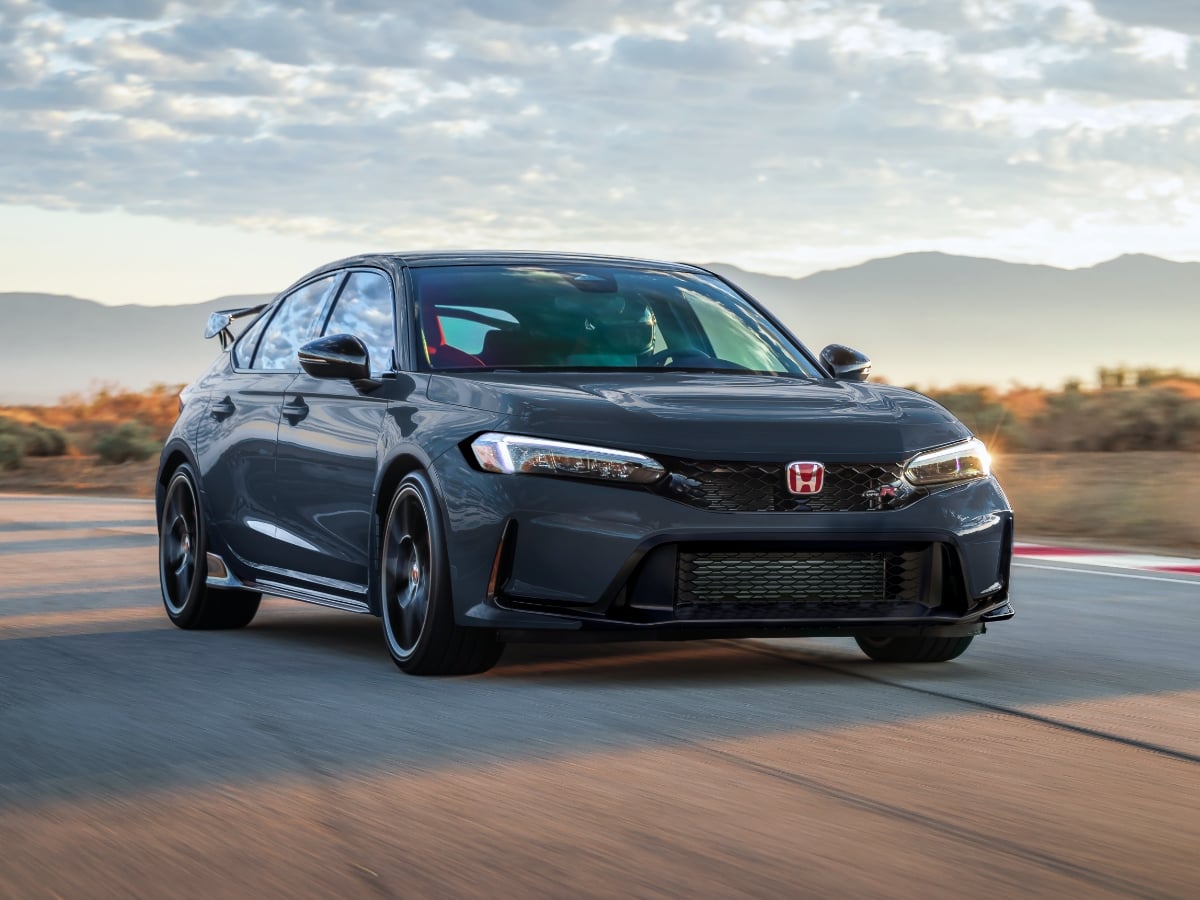
The 2027 Civic Type R goes on sale in October 2026, and it starts at $49,990, including the $1,295 destination charge.
Read the Full Article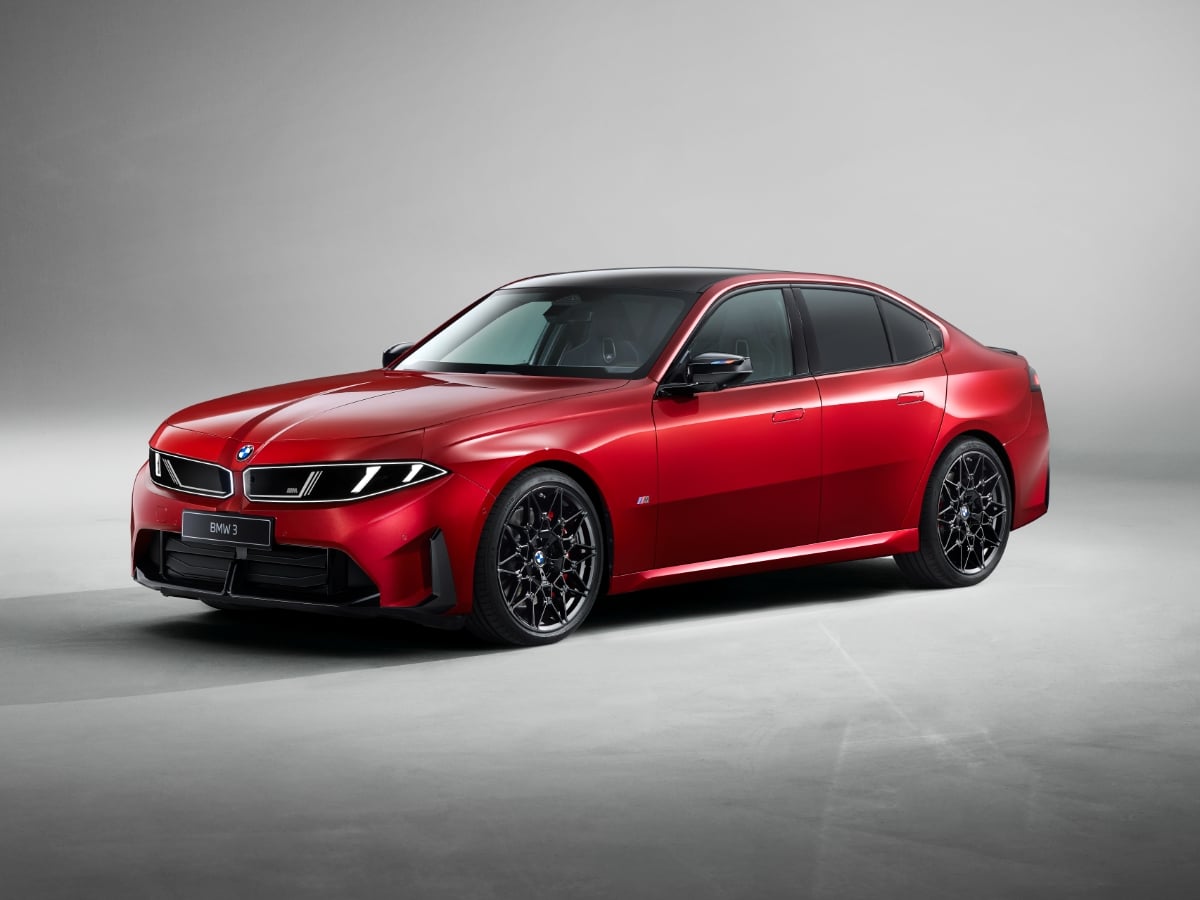
Part of BMW’s Neue Klasse (new class) rollout of redesigned models, the 2027 BMW 3 Series is all-new and goes on sale in the first quarter of 2027.
Read the Full Article