128 - 131
105 - 109
233 - 338
1 speed, Automatic
Electric
All Wheel Drive
The stakes in the electric SUV segment continue to rise, with more and better models hitting the roads almost every month. When Subaru launched its first electric vehicle (EV), the Solterra, for the 2023 model year, its middling range and power figures made it a hard sell. For the 2026 model year, Subaru is giving the Solterra a comprehensive revamp that not only makes it more competitive on paper but also makes it more enjoyable to drive.

Photo: Tim Stevens
Though this new Solterra resembles the old one, it receives numerous updates and changes for 2026, including:
For 2026, the Subaru Solterra is available in four trim levels: Premium, Limited, Limited XT, and Touring XT. Starting prices range from $39,945 to $47,305, including the destination charge.
For this 2026 Solterra review, Subaru provided a test vehicle equipped with Touring XT trim and the following options:
The test vehicle's manufacturer's suggested retail price (MSRP) was $48,275, including the $1,450 destination charge to ship the crossover from the Aichi, Japan, assembly plant to a local dealership.

Photo: Tim Stevens
When Subaru launched the Solterra in 2023, the electric crossover SUV did many things well, but some might argue that it fell short in terms of style. The Solterra shares a platform with the Toyota bZ4X—renamed bZ in 2026—and the styling of that first Solterra looked more like a Toyota than a Subaru.
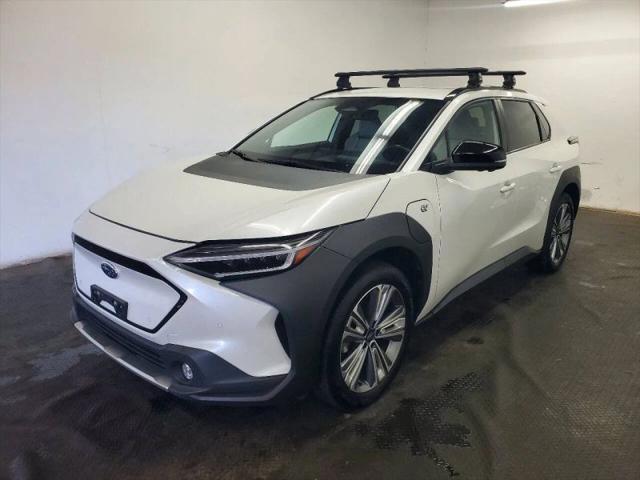
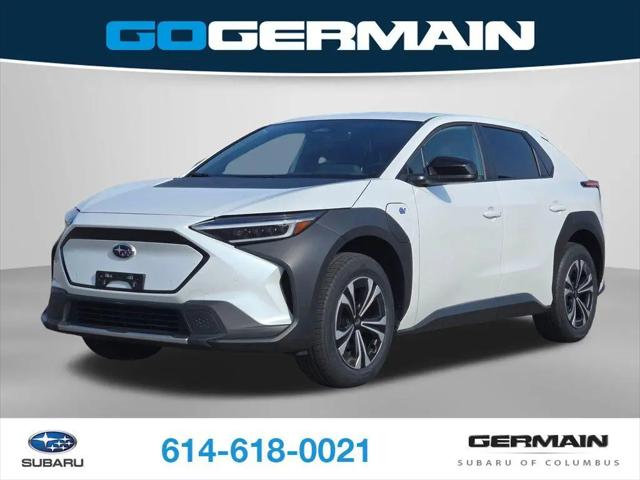
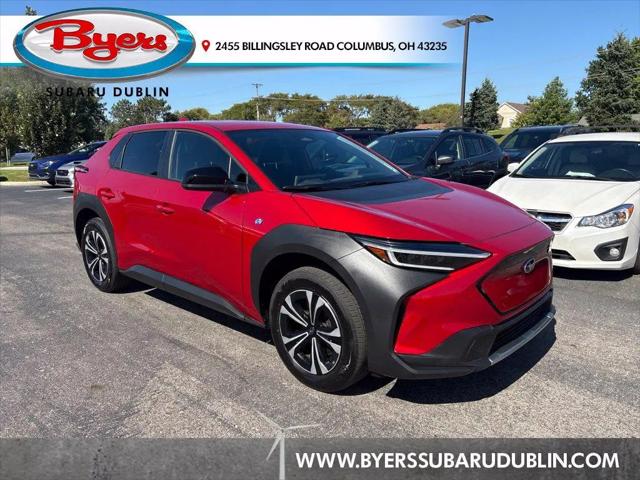
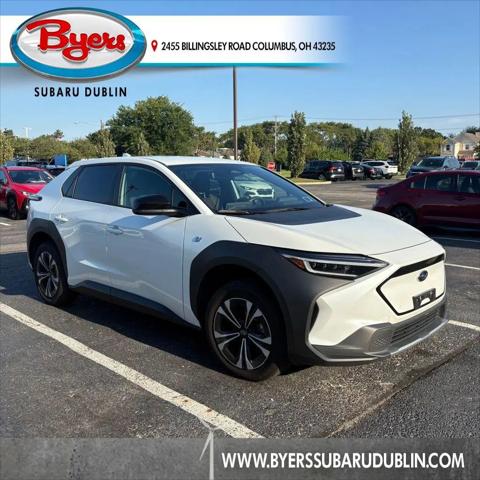
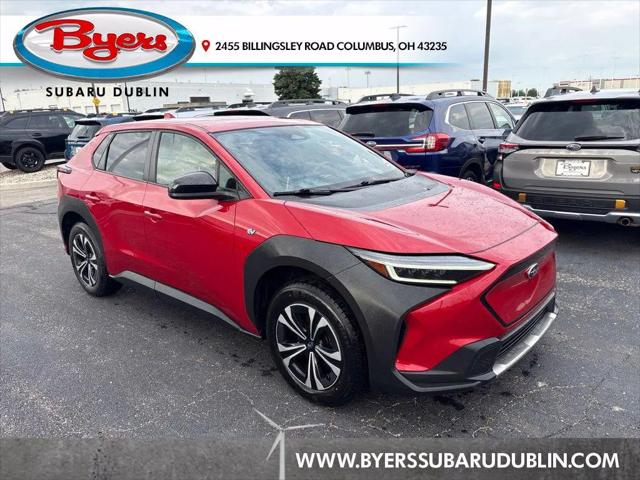
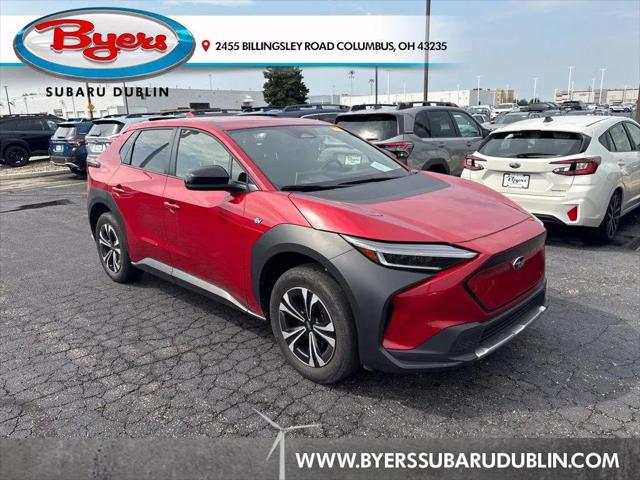
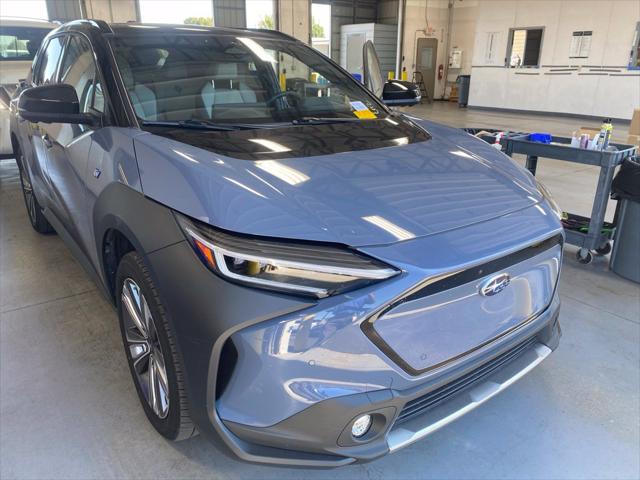
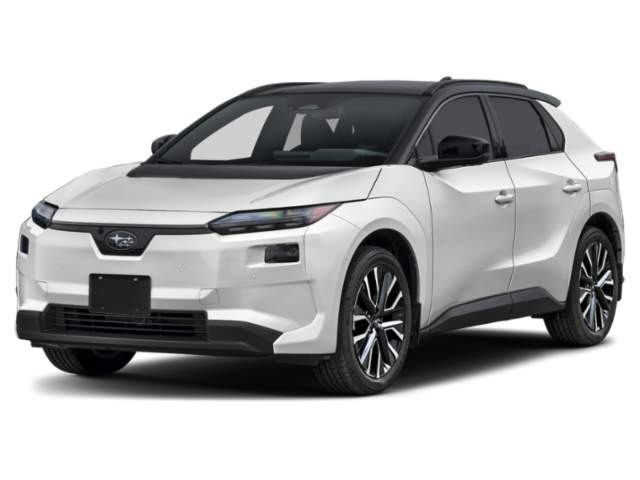
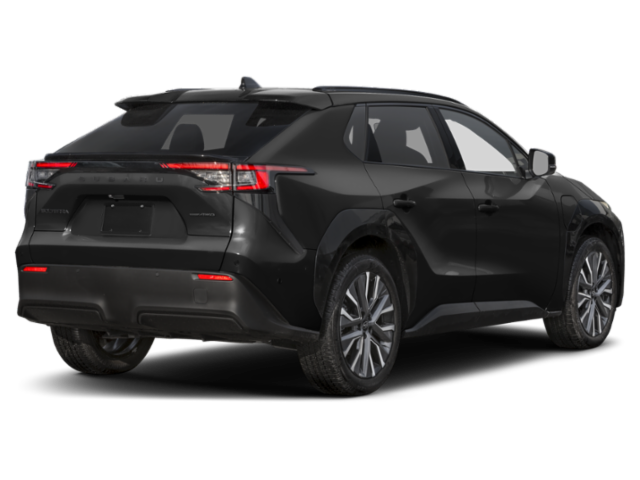
For 2026, the Solterra features an entirely new front end, with redesigned headlights and daytime running lights. The six daytime running lights on each side subtly reference the six stars in Subaru's Pleiades logo. That logo is prominently displayed on the new nose, now also illuminated.
The cumulative effect results in a noticeably different look, one that still isn't exactly your typical Subaru, but does a better job of setting itself apart from its country cousin, the bZ.
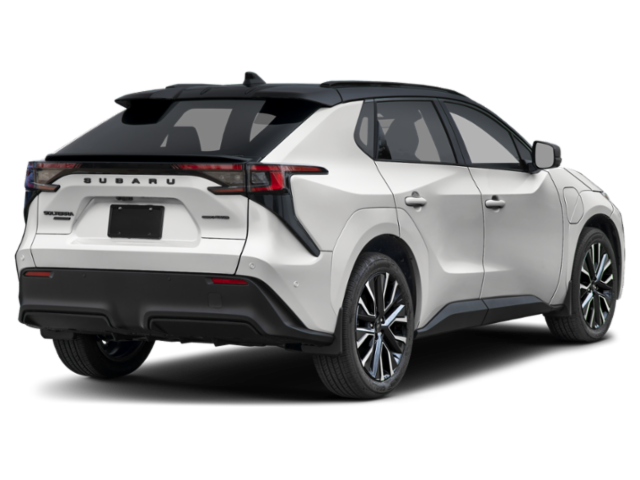
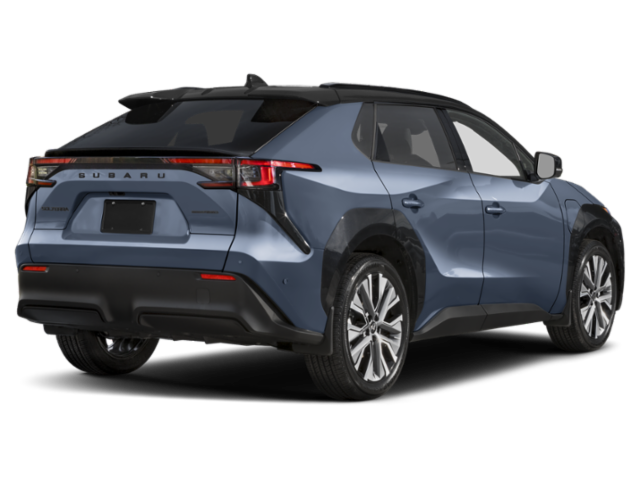
For 2026, Subaru updates the color palette slightly by introducing two new colors: Astro Black Mica and Midnight Tide Mica. It also switches from unpainted black plastic fenders to painted black fenders on some colors, or body-matching fenders on others. It's a curious choice, but it gives a more premium look to the vehicle.

Photo: Tim Stevens
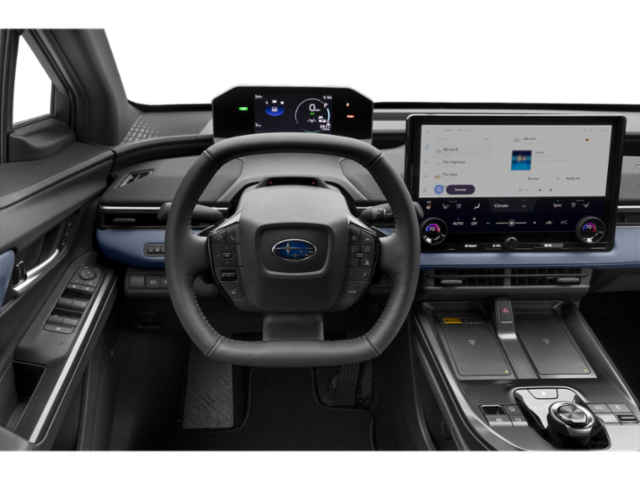
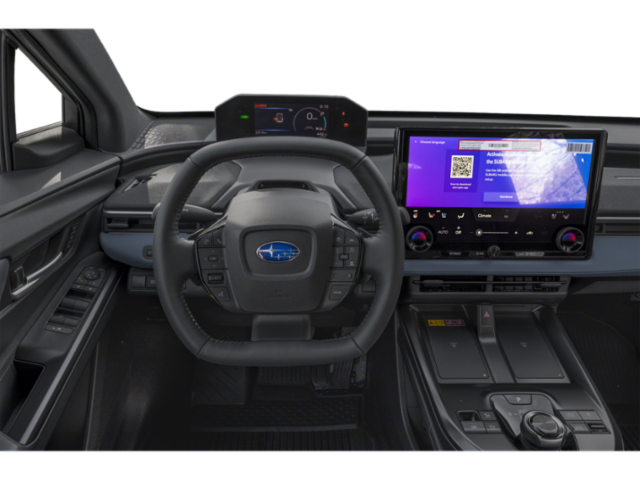
While the Solterra’s exterior changes are subtle, the interior receives much more significant updates. The center console and dashboard are completely redesigned, starting with the area between and in front of the seats. This part of the interior is now dominated by a pair of wireless chargers, ensuring that both you and your co-driver can stay fully charged, even when using the standard wireless Android Auto and Apple CarPlay.
Subaru slightly moved the rotary shifter back to create more room, resulting in a cleaner space between the seats. This also allows for additional space for the new 14-inch display that extends from the dashboard.
The additional digital space here doesn't significantly alter the software experience, which remains clean, responsive, and easy to navigate, although it lacks visual flair. That touchscreen is where you'll access many of the Solterra's climate controls, including the ability to toggle the heated and ventilated seats that come standard on the Touring XT trim. However, it thankfully includes a couple of chunky knobs within the display itself for adjusting the temperature.
The Solterra also features physical buttons for primary functions, such as changing drive modes, and a volume knob is located just below the display.
Additionally, a small digital gauge cluster is placed low on the dashboard beneath the windscreen. This makes it easy for taller drivers to see it above the steering wheel, which worked well for me. However, some shorter drivers in the test program had difficulty finding a comfortable position for the small diameter wheel that still provided a clear view of the gauges.

Photo: Tim Stevens
While many long-time EV owners will tell you that the 226 miles of Environmental Protection Agency (EPA) range on a charge offered by the original Solterra is enough, more is always better when you're trying to persuade someone to make the EV switch. That's the most significant advancement of the 2026 Solterra, which now offers 288 miles of range on a single charge, according to the EPA.
That charge now uses a Tesla-style NACS port, replacing the previous CCS port. The Solterra's charging speed also increases significantly, reaching up to 150 kilowatts.
The new Solterra's range increase comes despite the battery pack growing only from 72.8 kWh to 74.7 kWh. Subaru achieved this by significantly boosting the system’s efficiency, including new motors, which increase power output to 338 horsepower in the XT trims. That's sent to all four wheels, giving the Solterra Subaru's typical all wheel drive.
The SUV also features Subaru's X-Mode for off-road driving, which enhances the Solterra's performance on low traction surfaces. Activating X-Mode also provides a terrain-focused camera view, utilizing that larger 14-inch display to show the trail ahead and around the vehicle, projecting lines to indicate precisely where your tires will go.
Annoyingly, this display only works when you're going 5 mph or below. Crossing speeds of up to 6 mph causes the camera view to disappear, and it doesn't automatically return when you lower your speed. Although this feature is cool, it's very frustrating to use.
Subaru set up a short off-road trail to demonstrate the Solterra's capabilities when the pavement ends, and it performed well on loose terrain and grass. Its hill descent control made a steep decline easy, and it even handled a moderate articulation test reasonably well.
The SUV's 8.3 inches of ground clearance allowed it to clear most obstacles easily, while the battery protection ensured everything ran smoothly even when the ground clearance was insufficient.
While the Solterra proved itself as a capable off-roader, it's clearly a vehicle designed more for on-road journeys, and that's where I spent most of my time behind the wheel. The extra power in the XT trim that I drove made for a more spirited drive, but still, this isn't an SUV that launches forward with too much excitement.
A relaxed throttle curve and smooth power application create a vehicle that feels eager but not overly rapid. Likewise, even at its maximum regenerative braking setting, the Solterra isn't very aggressive when you lift off the accelerator. The maximum regen is well below the one-pedal drive modes available on many other EVs, so you'll still need to use the brake pedal.
The Subaru's steering ratio is quick, helping this roughly 4,400-pound SUV (almost as heavy as a base Subaru Ascent) feel relatively nimble. However, its relaxed handling and body roll result in a less engaging cornering experience. Plus, its traction and stability control system cuts power early and often, the moment it detects even slight wheelspin or slippage.
In other words, there's little point in rushing the Solterra, but taking it slow results in a pleasurable drive. The suspension is firm but not harsh on bumpy roads, and the sound insulating glass ensures quietness, even at highway speeds.
On the highway, you can try out the Solterra's standard EyeSight system, which includes features like automatic emergency braking, lane keeping assistance, lane centering assistance, and adaptive cruise control (ACC) with stop-and-go capability. It also has a driver monitoring system, which did a good job of prompting me to look ahead whenever I got a little distracted by the scenery in the Colorado Rockies, without being too bothersome.
The ACC system smoothly brought the Solterra to a complete stop when I encountered traffic outside of Denver and automatically accelerated again when the traffic started moving. The lane centering system kept it centered in the lane on the highway, while on secondary roads, the lane departure system allowed me to enjoy the corners without being too intrusive.
Again, the new Solterra is rated for a maximum of 288 miles on the base Premium trim. During my testing of the sportier Touring XT, which included significant mountain climbing, I averaged 3.3 miles per kWh, resulting in a theoretical maximum range of 247 miles.

Photo: Tim Stevens
At a glance, the 2026 Subaru Solterra looks much the same as the 2025 model. However, the familiar silhouette masks a major overhaul underneath, with changes that address many of the issues that kept the original SUV off consumers' shopping lists.
The Solterra's increased power puts it closer to competitors like Hyundai's Ioniq 5 and the Tesla Model Y, although its range still lags behind theirs. Still, the updated version of Subaru's first EV is now a serious contender. It's worth a look for both the brand's loyal fans and potential buyers.
Tim Stevens is a veteran automotive and technology journalist with over 25 years of experience covering a wide range of topics, from smartphones to supercars. In addition to JDPower.com, his expert perspectives have appeared in numerous national and international outlets, including print, online, and broadcast television.