See answers to common EV questions, tax incentives, charging maps & more.
Explore EV27 - 28
32 - 34
190
1 speed, CVT w/OD
Intercooled Turbo Regular Unleaded I-4
All Wheel Drive, Front Wheel Drive
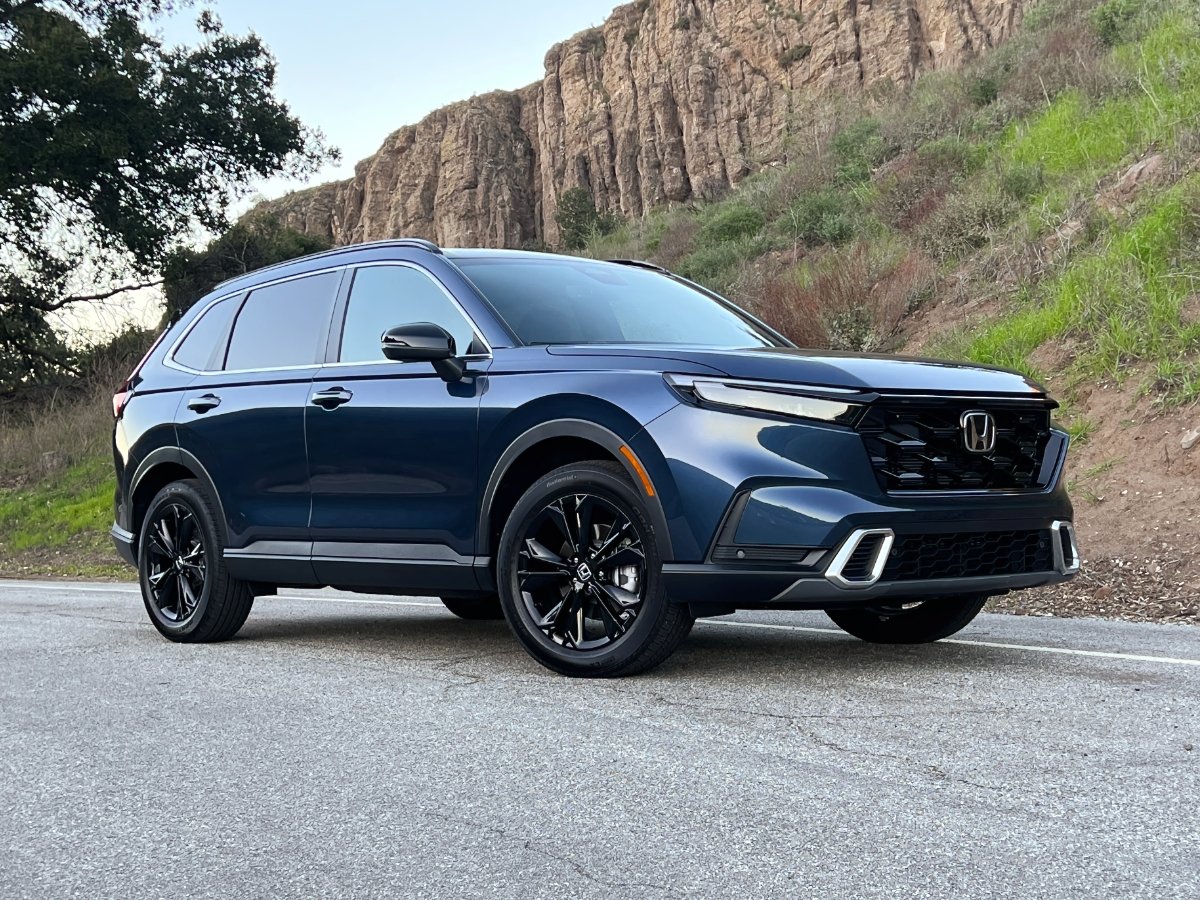
Photo: Christian Wardlaw
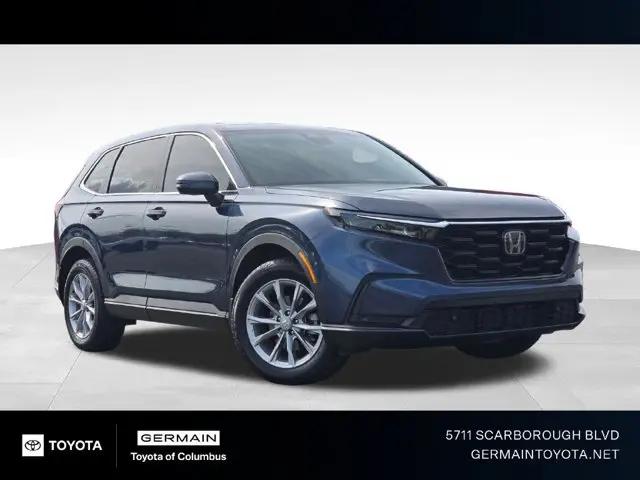
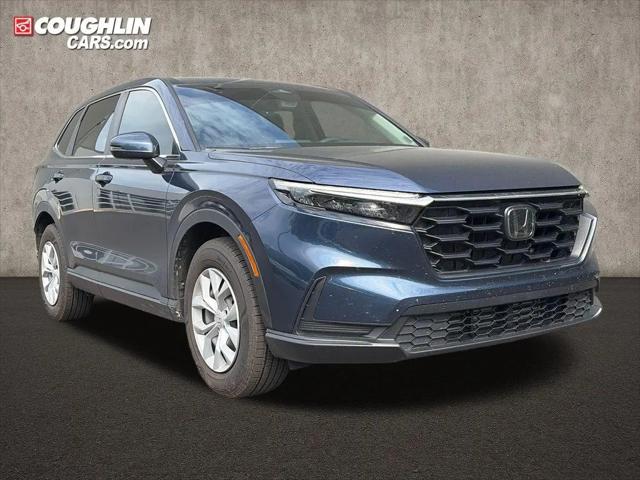
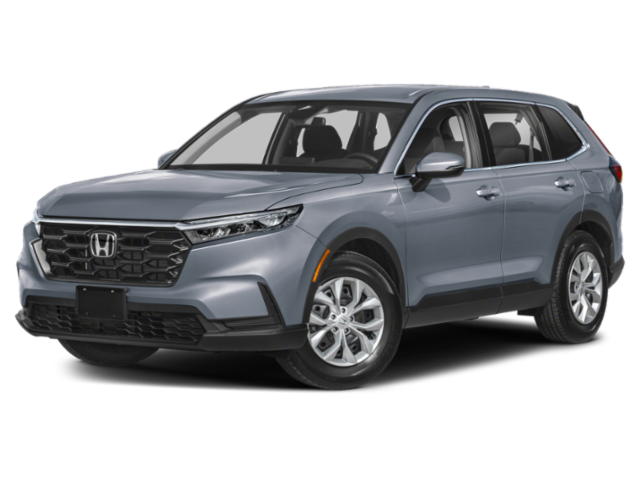
The Honda CR-V competes in the Compact SUV market segment. According to data collected from verified new-vehicle buyers for the JD Power 2022 Automotive Performance, Execution and Layout (APEAL) Study, 52 percent of new Honda CR-V buyers are female (vs. 49 percent for the segment), and the median age of a new CR-V buyer is 59 years (vs. 57).
As part of the APEAL Study, owners rated the previous-generation CR-V in 10 primary categories. Listed below in descending order, you'll find their preferences, from their favorite things about the vehicle to their least favorite:
In the 2022 APEAL Study, the previous-generation CR-V ranks 16th out of 17 Compact SUV models.
In the following sections, our independent expert analyzes a CR-V Sport Touring with standard equipment and no options. The test vehicle's price was $40,395, including the $1,295 destination charge.

Photo: Christian Wardlaw
One of the appealing things about compact crossover SUVs is that they're easy to enter and exit. You slide in and out, rather than drop yourself in and lift yourself out like with a car. And with rear doors that open to nearly a 90-degree angle, loading passengers into the CR-V's back seat is simple, provided you have the necessary clearance.
Settle in behind the steering wheel and you'll notice how easy it is to see out of the new CR-V. Whether you're looking forward, reversing, checking traffic in your mirrors, or backing out of slant parking and looking over your shoulder, it is effortless to maneuver this SUV. Honda even designed the top of the dashboard to eliminate reflections on bright, sunny days.
New front-seat designs debut in the new 2023 CR-V. Honda says they improve the driver's posture and reduce fatigue, and I say they're terrific. Every CR-V offers standard 10-way power adjustment for the driver, and the EX-L and Sport Touring versions swap cloth upholstery for leather.
Another feature with EX-L and Sport Touring trim is a 4-way power-adjustable front passenger seat. While it is always preferable to have a height adjuster for this seating location—even if it's a manually operated lever—the CR-V's new seats are comfortable and supportive enough that I'll give the SUV a pass on this omission.
Dual-zone automatic climate control is standard in every new 2023 CR-V, along with heated front seats. In addition, a heated steering wheel is standard in the CR-V Sport Touring. However, unlike some rivals, Honda does not offer heated rear or ventilated front seats in the CR-V.
Rear-seat comfort is exceptional. My Sport Touring test vehicle had rear air conditioning vents, two rear USB charging ports, and cross-your-legs spaciousness. The new CR-V is family-friendly, whether at the reverse-facing child safety seat phase or the lanky teenager phase of life. But more than four people will be a squeeze.
Storage space is generous, but there is room for improvement. For example, the traditional cable-actuated shifter (which I prefer) means Honda can't provide a storage tray underneath the center console. The automaker also missed an opportunity to provide a shelf on the dashboard, which it could hide behind the attractive wire mesh trim. In addition, the driver's seat doesn't offer the person sitting in the left rear seating location a storage pocket.
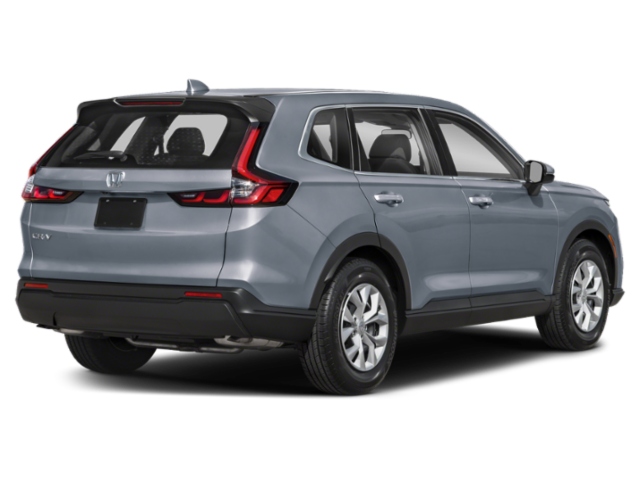
Honda doesn't need to improve when it comes to cargo space. Open the liftgate and you'll find between 36.3 and 76.5 cubic feet of volume—as much as some midsize SUVs.

Photo: Christian Wardlaw
Honda offers two different versions of its HondaLink touchscreen infotainment system in the new CR-V.
The CR-V EX and CR-V Sport have a 7-inch touchscreen infotainment system. It includes:
Upgrade to the CR-V EX-L for a 9-inch touchscreen infotainment system. It adds the following features:
The CR-V Sport Touring gets a handful of added features, improving on the 9-inch touchscreen system with:
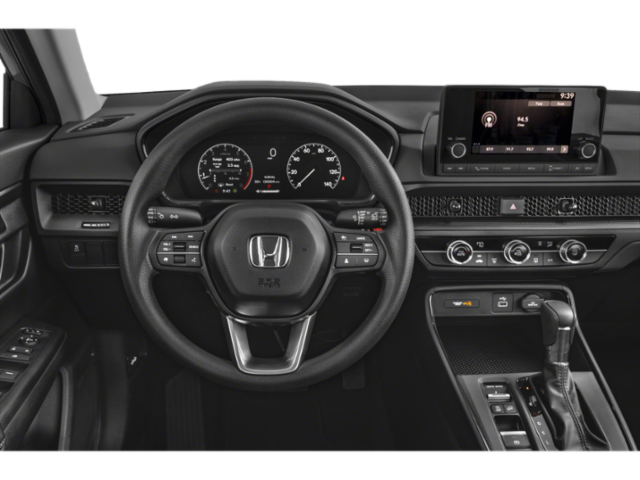
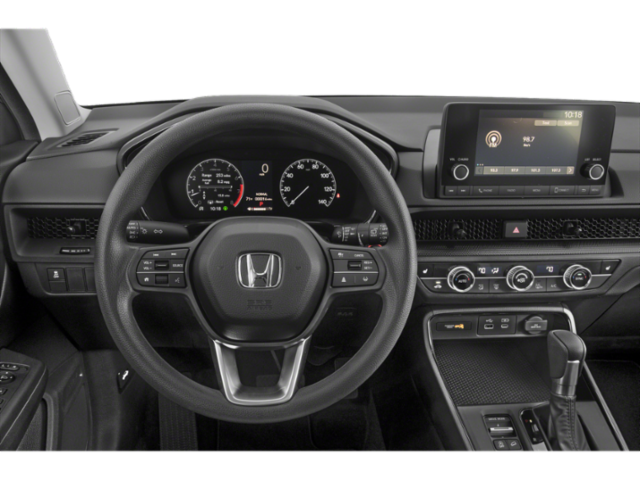
My test vehicle had the larger 9-inch system with all the bells and whistles. I had no trouble connecting my phone to Bluetooth, wirelessly running Apple CarPlay, or streaming music via Pandora. While a tuning knob to match the volume knob would appeal to my sense of visual symmetry, the tuning buttons under the volume knob are a functional substitute.
The CR-V's native voice-recognition technology is not conversational, which means it does not meet the expectations of a modern consumer. Instead, you need to follow the onscreen prompts for it to work, and that's distracting. The prompts are helpful, though, and the system is user-friendly, so it's relatively easy to figure out.
In addition, the CR-V Sport Touring's Bose Centerpoint surround-sound system delivers decent fidelity and volume for the compact crossover SUV class.

Photo: Christian Wardlaw
Honda equips the EX and EX-L trims with an upgraded version of the previous-generation CR-V's powertrain. The turbocharged 1.5-liter 4-cylinder engine has a new turbocharger and provides earlier access to the engine's peak torque. Additionally, the continuously variable automatic transmission (CVT) gets new step-shift programming for a more natural sound and feel. Output measures 190 horsepower at 6,000 rpm and 179 pound-feet of torque from 1,700 rpm to 5,000 rpm.
Choose the CR-V Sport or Sport Touring and you'll get a fourth-generation version of Honda's two-motor hybrid drivetrain as standard equipment. It pairs an Atkinson-cycle 2.0-liter 4-cylinder engine with a lithium-ion battery pack and two electric motors mounted side by side. One of the motors serves as the transmission. The other motor offers low-speed electric driving for short distances and electric motor assistance the rest of the time.
The total hybrid drivetrain output measures 204 hp, and the electric motor supplies 247 pound-feet of torque from zero to 2,000 rpm. In addition, Honda eliminates much of the hybrid drivetrain's incessant droning with a new Linear Shift Control design that makes the CR-V sound and feel like it has a conventional automatic transmission. Whatever Honda modified works well, resulting in a substantially improved driving experience compared to the previous-generation CR-V Hybrid.
All-wheel drive (AWD) is optional for all 2023 CR-V trims except the Sport Touring, in which it is standard. Honda says it has improved the AWD system for 2023; it now delivers up to half of the power to the rear wheels. In addition, a new Snow driving mode joins Normal and Econ, and the CR-V boasts a new hill-descent control system. Hybrids get an exclusive Sport driving mode.
Other updates help to make the new CR-V more enjoyable to drive. The SUV's torsional rigidity is up 15 percent, enhancing the ride and handling, while the variable-ratio steering offers improved feel and accuracy. The Sport Touring trim also has standard 19-inch wheels.
Having driven both the CR-V turbo and the CR-V hybrid, my preference is the hybrid. Where the turbo engine suffers a little bit of lag when accelerating from a stop, the electrically assisted hybrid drivetrain does not. In addition, the hybrid provides just the right amount of power and doesn't moan and groan as the previous-generation CR-V Hybrid did.
Furthermore, like most Hondas, the new CR-V is good to drive. It offers predictable, secure, confidence-inspiring handling no matter the situation, and you may find yourself going faster than expected. The steering is excellent, the regenerative brakes feel terrific under your foot, the Sport Touring's tires provide good grip, and the CR-V demonstrates a relatively flat cornering attitude. It is utterly competent whether you're flinging it about or not.
However, the CR-V's suspension can feel a step or two behind what's happening at the road surface. For example, when driving over a bump followed by a dip on Malibu Canyon Road, the suspension reacted too softly, especially at the front of the SUV. I felt the same issues when driving on Encinal Canyon Road, where undulating pavement produced more vertical body motion than is preferable.
At lower speeds, when driving on city streets, the CR-V can feel busy, conveying a little more detail about the imperfections in the pavement than you might like. And when you drive over speed bumps and speed humps at higher speeds, some suspension noise makes its way into the cabin. The CR-V feels structurally solid when encountering sharper impacts, but this SUV could be softer around town and firmer at higher speeds.
Overall, the new CR-V Sport Touring is excellent to drive, but it could be a little softer in town and a little firmer otherwise.

Photo: Christian Wardlaw
With this redesign, Honda makes numerous safety-related updates. They include an enhanced Advanced Compatibility Engineering (ACE) body structure, new airbags to limit further the potential for injury, standard rear-seat reminder and rear seat belt reminder systems, and a driver monitoring system.
In addition, the 2023 CR-V gets new wide-view camera and radar units for the Honda Sensing collection of advanced driver assistance systems (ADAS). In the 2023 CR-V, Honda Sensing includes:
Compared to the previous-generation CR-V, the new Honda Sensing technology is dramatically improved. For example, it is more accurate and smoother in operation, and Honda has dialed down the steering wheel wobble it uses to indicate an unintentional lane departure.
However, compared to the best ADAS packages in the class, the Honda remains a little too obvious about its semi-autonomous inputs. For example, when using the adaptive cruise control, the CR-V's braking draws the driver's attention when other vehicles cut into the gap ahead or when the SUV is trying to reduce speed when descending a grade.
In addition, Honda Sensing is a step behind in recognizing when vehicles enter or depart the gap ahead and accelerates the CR-V back up to the pre-set speed too slowly.
Honda Sensing issued just one false alert while I used it. When driving on a mountain road, I came upon a minivan parked on the side of the highway, but right in the middle of a curve. The CR-V's tech identified the parked vehicle as an obstacle, issued a warning, and momentarily activated the automatic emergency braking system before recognizing that I was turning into the curve and would not plow into the motionless minivan.

Photo: Christian Wardlaw
Behind the CR-V's rear seat, you'll find 36.3 cubic feet of cargo space. Lower the rear load floor panel in the EX and EX-L and that volume grows to 39.3 cubic feet.
One nice thing about the CR-V's cargo hold is that you can easily load full-size suitcases on their sides and still close the liftgate. In addition, they don't block the view to the rear. Honda also provides deeper wells on each side of the load floor to help secure items and two hooks for holding plastic grocery bags.
You can fold the back seat to create 76.5 cubic feet of cargo space if you don't need to carry rear passengers. That is the same volume you'd get in a typical midsize 2-row crossover SUV.
According to the EPA, a 2023 Honda CR-V Hybrid with AWD should get 37 mpg in combined city/highway driving. My CR-V Sport Touring test vehicle averaged 28.7 mpg on the evaluation loop, coming in 8.3 mpg short of expectations. Its 14-gallon fuel tank translates to just over 400 miles of range, or fuel stops every 350 miles or so.
The hybrid's real-world result is disappointing because a CR-V EX-L I previously evaluated averaged 29.1 mpg on the same evaluation route. To its credit, the Sport Touring returned 36.5 mpg when driving solely on city and suburban streets, but that's still 3.5 mpg less than what the EPA says it should get in urban environments.
In short, do not expect to match the EPA fuel-economy estimates unless you put the new CR-V Hybrid into Eco mode and drive it as though an egg is resting underneath the accelerator.
At this writing, neither the National Highway Traffic Safety Administration (NHTSA) nor the Insurance Institute for Highway Safety (IIHS) has performed crash tests on the new CR-V, so I cannot definitively answer this question. However, Honda's improved ADAS operate with more accuracy and refinement than before, and the automaker engineered the CR-V to maximize driver and passenger protection in a collision.
For the 2023 model year, Honda CR-V prices range from $31,610 to $39,100, not including the $1,295 destination charge.
The Chevrolet Equinox ranks highest in the Compact SUV segment in the JD Power 2022 Initial Quality Study (IQS). The Kia Sportage and the GMC Terrain are the next highest-ranked models.
In the 2022 APEAL Study, the Kia EV6 ranks highest in the Compact SUV segment. The Hyundai Ioniq 5 and the Hyundai Tucson are the next highest-ranked models.
Other competitors to the 2023 CR-V include the Mazda CX-50, Nissan Rogue, and Toyota RAV4.
 Photo: Christian Wardlaw
Buyers have many choices when shopping for a compact crossover SUV. Every mass-market brand builds one, and some of the Honda CR-V's rivals are more appealing in appearance, more capable off-road, more technologically advanced, more fuel-efficient, or offer a better value proposition.
The 2023 Honda CR-V is an impressive entry in the segment, and I like it quite a bit. It exudes quality, is enjoyable to drive, is comfortable for everyone aboard, and has plenty of cargo room. However, it is among the more expensive offerings in the segment, the tech merely meets rather than exceeds standards for the class, and the fourth-generation hybrid powertrain falls well short of the expectations set by official EPA ratings.
So, instead of being the choice among compact crossovers, the new 2023 Honda CR-V is one of many choices.
Christian Wardlaw is a veteran digital automotive journalist with over 25 years of experience in test-driving vehicles. In addition to JDPower.com, his work has appeared in numerous new- and used-car buying guides, newspapers, and automotive industry trade journals. Google him to learn more.