See answers to common EV questions, tax incentives, charging maps & more.
Explore EV15 - 19
24 - 30
292 - 485
8 speed, Automatic w/OD
Premium Unleaded V-8, Regular Unleaded V-6
All Wheel Drive, Rear Wheel Drive

Photo: Christian Wardlaw
The Chrysler 300 competes in the Large Car market segment. According to data collected from verified new-vehicle buyers for the JD Power 2023 Automotive Performance, Execution and Layout (APEAL) Study,
owners rated Large Cars in 10 primary categories.
Listed below in descending order, you’ll find their preferences, from their most favorite thing about the vehicles to their least favorite:
In the 2023 APEAL Study, the 300 did not rank due to insufficient data. The similar Dodge Charger ranked highest among Large Cars.
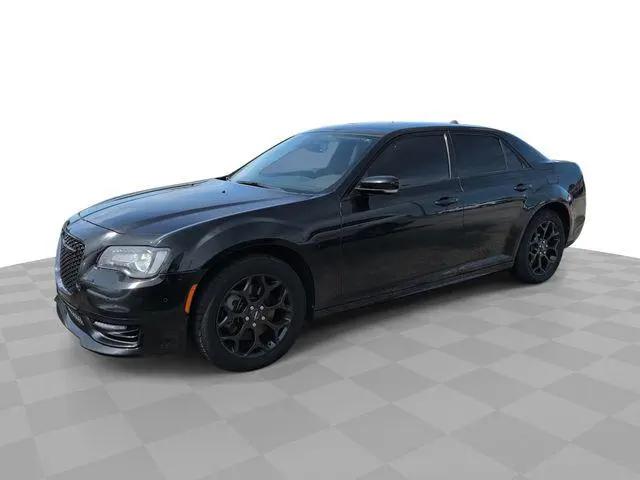
In the following sections, our independent expert analyzes a Chrysler 300C, which was fully equipped and carried a sticker price of $56,595, including the $1,595 destination charge.

Photo: Christian Wardlaw
Getting into a Chrysler 300 is relatively easy. The car sits higher off the ground than some sedans, and the doors open wide, though their detents are weak. Expect them to unexpectedly close if you’ve parked the car on the slightest of inclines.
The 300C has sport-bolstered heated and ventilated front seats, but the added support is more about looks than keeping you in place through corners, so don’t worry about feeling confined. You sit high on the soft but supportive chairs, and the 300 feels like a traditional, full-size car from behind the steering wheel.
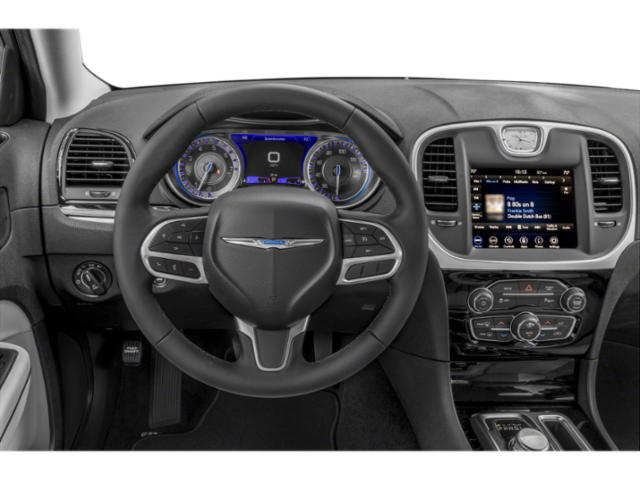
Chrysler wraps the 300C’s seats in high-quality Laguna leather and decorates the cabin with silver contrast stitching, carbon fiber trim, and metallic pedal covers. Padded surfaces hide much of the underlying inexpensive plastic, and while the interior design is dated, the control layout is logical.
Storage space is somewhat impractical, as there isn’t a tray or a slot designed to hold a smartphone, let alone recharge one wirelessly. However, the heated and cooled front cupholders are a surprise-and-delight feature.
The rear seat room is unexpectedly tight, and the plastic front seatbacks don’t help as they are unkind to your knees and shins. Furthermore, the seat cushion and backrest angles promote slouching, making it uncomfortable to ride back there.
The 300C has heated outboard cushions, giving passengers something to smile about on cold days. On hot days, they benefit from air conditioning vents and will appreciate the rear smartphone charging ports regardless of the season.

Photo: Christian Wardlaw
The Chrysler 300’s age shows regarding its infotainment system. It uses a previous-generation Uconnect 4C system with an 8.4-inch touchscreen, and while the shortcut tiles at the bottom of the screen make navigating menus easy, the graphics are decidedly dated.
Nevertheless, the system offers all the modern amenities:
With most trim levels, you can upgrade Uconnect 4C to a navigation system, and the 300C includes a 19-speaker Harman Kardon premium sound system that, with all sound settings centered, puts too much emphasis on bass.
Pairing an iPhone to the system was easy, and while the USB data port is inconveniently located in the storage area under the center armrest, using Apple CarPlay proved otherwise effortless. The voice recognition system performs decently but ranks well behind the best cloud-based digital assistants in other cars.
Exclusive to the 300C, Uconnect 4C provides access to an SRT Dashboard where you can change driving modes, track and reference performance data, and more. I’d gladly swap this for a surround-view camera, which is unavailable for the 300.

Photo: Christian Wardlaw
Most Chrysler 300 models have a 3.6-liter V6 engine making up to 300 horsepower, paired with an eight-speed automatic transmission and rear-wheel drive. You can get all-wheel drive with Touring and Touring L trim levels.
The Chrysler 300S V8 has a 363-hp 5.7-liter Hemi V8 under its hood, exclusively powering the car’s rear wheels through an eight-speed automatic.
My limited-production 300C test vehicle added significant performance compared to the 300S V8, thanks to an SRT-sourced 6.4-liter Hemi V8 producing 485 hp and 475 pound-feet of torque. In addition, the rear-drive, automatic-only 300C has a limited-slip differential, an active exhaust system, an adaptive damping suspension, upgraded brakes, and forged aluminum wheels.
In some ways, the 2023 Chrysler 300C represents a revival of the old Chrysler 300 SRT, which departed the lineup after the 2024 model year. The performance is impressive, with Chrysler estimating a 4.3-second zero-to-60-mph acceleration time, a 12.4-second quarter-mile time, and a 160-mph top speed.
As you might guess, the 300C is a laugh-riot to drive. From the moment you press the engine start button and the 6.4-liter Hemi roars to life to the end of your journey when you twist the rotary transmission knob to Park, piloting this Chrysler is like time-traveling to an era when big cars and V8 engines were the rule instead of the exception.
Best of all, unlike many postwar-era American performance cars, the 300C isn’t a sloppy mess to drive. Granted, it’s not as taut and communicative as the best modern sport sedans in the Auto driving mode. Still, the softness in the suspension and laziness in the drivetrain are in keeping with the Chrysler 300’s wannabe luxury car image.
You can always switch the 300C into Sport or Track mode, which firms the car up, produces faster reflexes, and adds a louder soundtrack to the proceedings. However, when you select one of these modes, a stability control warning light illuminates to remind you that you’ll need to exercise maximum driving talent to keep the car on the road.
A Custom mode also allows you to mix and match different dynamic traits to personal preferences. But there’s no escaping the booming exhaust note, which grows tiring on the freeway.
Loud, fast, fuel-swilling, rear-drive cars like the 2023 Chrysler 300C are fading fast, and their electrified replacements are starting to arrive in droves. The EVs are equally speedy and fun to drive in their own way and ultimately cost less to operate.
But for traditional car enthusiasts, the transition to EVs is hard to accept. If you count yourself in that camp, you still have time to scratch that V8-powered sedan itch, but not much.

Photo: Christian Wardlaw
Optional on other 300 trim levels, the Safety Tec Plus Group is standard on the 300C. It equips the sedan with:
You need to upgrade to the Touring L or 300S to option the car with blind-spot warning and rear cross-traffic warning systems, which are standard on the 300C. Front and rear parking sensors are also available.
The Chrysler 300 does not have semi-autonomous driving technology. Some may find this a blessing, others a curse. In my opinion, it was refreshing to drive a new vehicle that wasn’t trying to override my inputs. Even the lane-keeping assistance system is unintrusive; it is there when you need it and otherwise stands guard in the background.
However, I would have liked a lane-departure warning vibration through the steering wheel in addition to the small warning light within the instrumentation. Also, using the low-resolution reversing camera is like trying to drive with your reading glasses on. Thankfully, the 300C’s parking sensors and rear cross-traffic alert back it up with audible alerts.

Photo: Christian Wardlaw
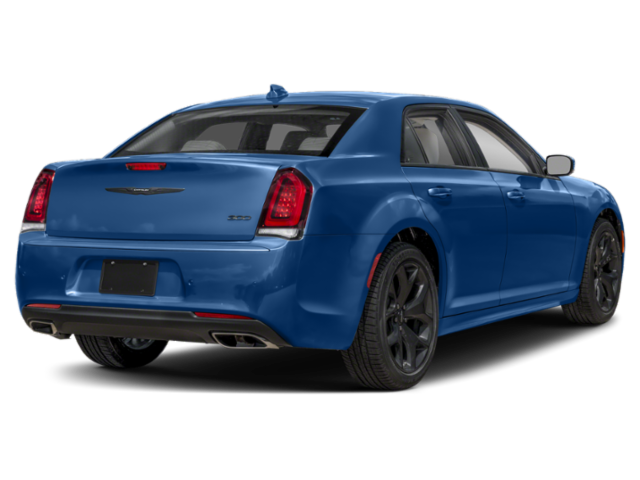
Pop the 300’s trunk lid using the button on the dashboard or the remote keyless fob, and it opens wide without power assistance. It holds 16.3 cubic feet of cargo, and the test car’s trunk had a light and hooks for grocery and shopping bags.
Enclosed lid hinges allow you to pack the trunk full without concern that you might crush the contents, and an interior handle enables you to swing the lid shut without touching the dirty exterior of the car. A hands-free, power-operated trunk lid is not available on the Chrysler 300.
In combined driving, according to the EPA, when equipped with its standard 3.6-liter V6 engine, the Chrysler 300 returns 23 mpg with rear-wheel drive. With all-wheel drive, the official rating is 21 mpg.
Select the available 5.7-liter V8 engine, and the 300S gets 19 mpg. The 300C test car’s larger 6.4-liter V8 earns a rating of 18 mpg in combined driving.
The test car averaged 17.5 mpg on the evaluation loop. That result, and the 300’s 18.5-gallon fuel tank, mean a 300C offers over 320 miles of maximum driving range. However, you’ll likely need to stop for gas every 275 miles or so.
According to the National Highway Traffic Safety Administration (NHTSA), the Chrysler 300 earns an overall safety rating of four stars out of five. The car provides four-star protection for front-seat occupants in both frontal- and side-impact testing, while rear-seat passengers benefit from 5-star side-impact ratings. A 4-star rollover resistance rating rounds out the NHTSA test results.
The Insurance Institute for Highway Safety (IIHS) has not subjected the Chrysler 300 to its latest frontal-impact and side-impact tests. The ratings the car earned in past evaluations, which carry over to cover the 2023 models, are generally favorable. The exceptions are a Poor rating for headlight performance and a Marginal rating for small overlap frontal-impact crash protection for the driver.
In its final year of production, the Chrysler 300 costs between $35,515 and $55,000. In addition, Chrysler charges a $1,595 destination charge.
Few traditional full-size sedans are available, and after the 2023 model year, only the Toyota Crown will remain in the segment.
In the JD Power 2023 Initial Quality Study (IQS), the Nissan Maxima ranks highest in the Large Car segment. In the 2023 APEAL Study, the Dodge Charger ranks highest in the Large Car segment.

Photo: Christian Wardlaw
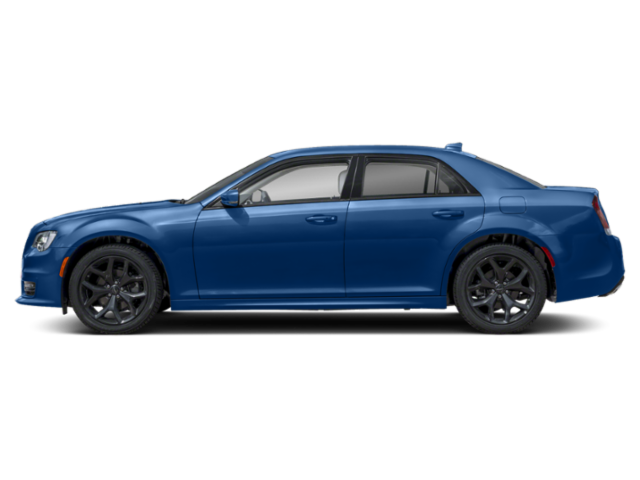
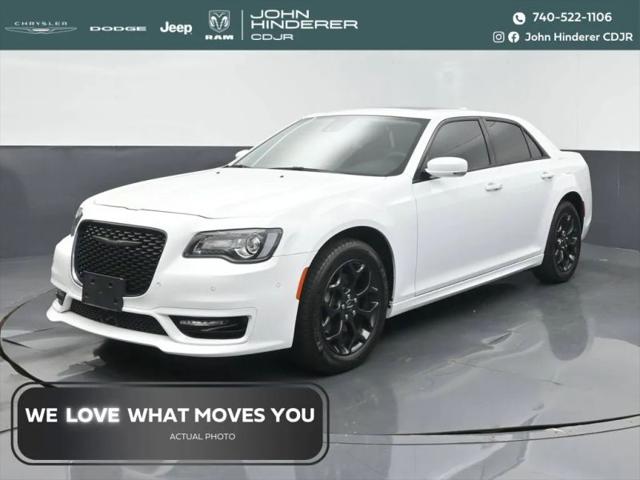
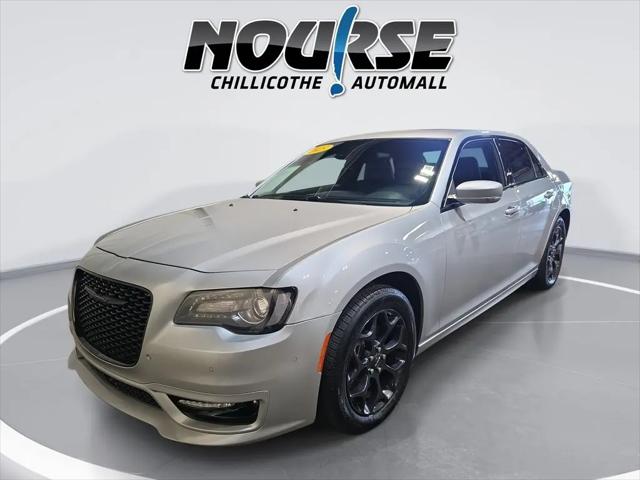
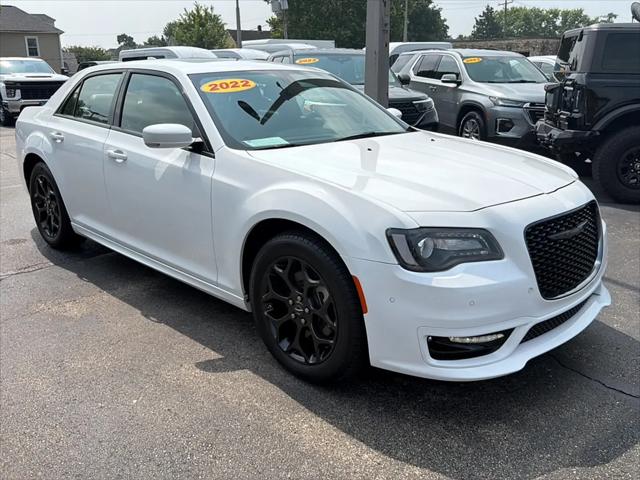
There is an enduring appeal to the endearing Chrysler 300. Classic rear-drive proportions, a custom and upscale look, a roomy interior and trunk, and available V8 performance have made it a favorite of customers seeking something traditional instead of typical to drive.
But the 300 is past its expiration date and now makes way for what’s next from the automaker. You can bet it won’t have a Hemi V8 engine under the hood. But whatever replaces the Chrysler 300 will likely offer superior performance, if not outright attitude.
Christian Wardlaw is a veteran automotive journalist with nearly 30 years of experience test-driving vehicles. He began his career at Edmunds and now owns Speedy Daddy Media, Inc., an automotive content creation company serving several automotive publishers. In addition to JDPower.com, his work has appeared in numerous new- and used-car buying guides, newspapers, and automotive industry trade journals.