See answers to common EV questions, tax incentives, charging maps & more.
Explore EV19
25 - 26
271
6 speed, Manual w/OD, 8 speed, CVT w/OD
Intercooled Turbo Premium Gasoline H-4
All Wheel Drive

Photo: Christian Wardlaw
The Subaru WRX competes in the Compact Sporty Car market segment. According to data collected from verified new-vehicle buyers for the JD Power 2022 Automotive Performance, Execution and Layout (APEAL) Study, 72 percent of new Compact Sporty Car buyers are male (vs. 62 percent for the industry), and the median age of a new Compact Sporty Car buyer is 49 years (vs. 54).
As part of the APEAL Study, owners rated the Compact Sporty Car in 10 primary categories. Listed below in descending order, you'll find their preferences, from their most favorite thing about the vehicle to their least favorite:
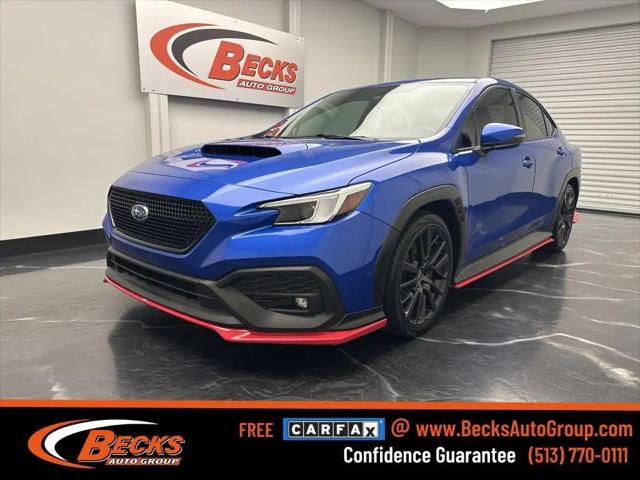
In the sections that follow, our independent expert analyzes a WRX GT. It had no options, so the price of the test vehicle came to $43,390, including the $995 destination charge.

Photo: Christian Wardlaw
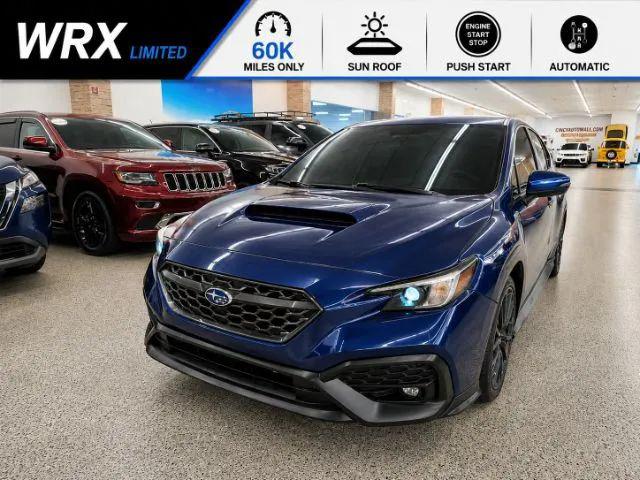
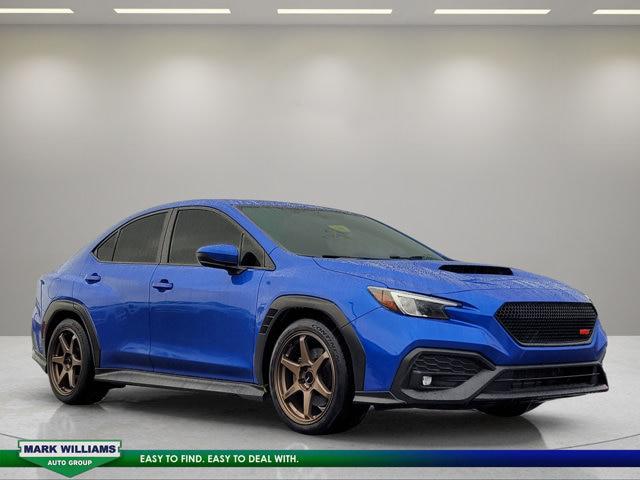
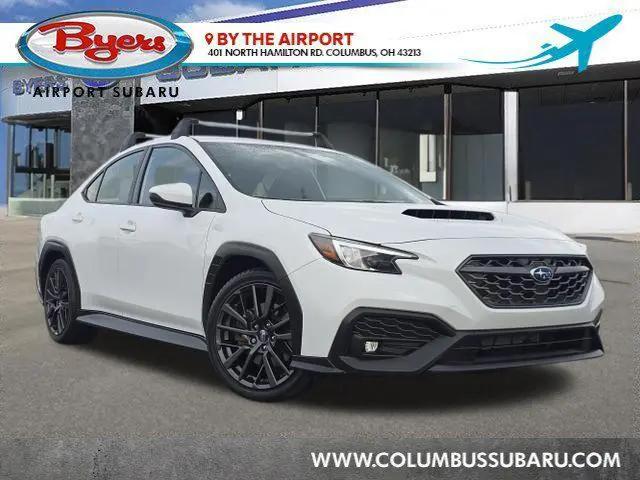
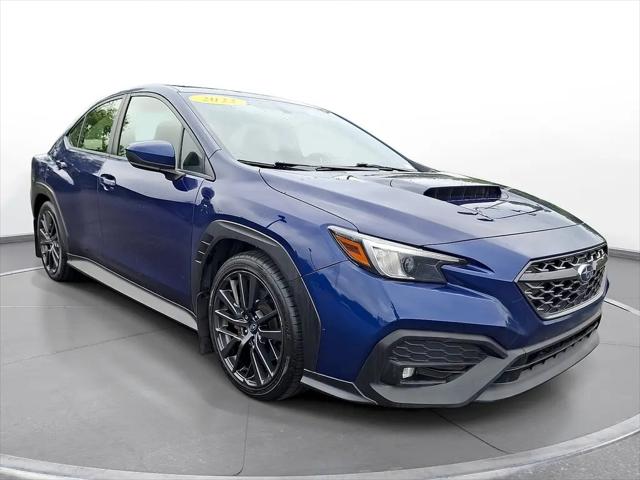
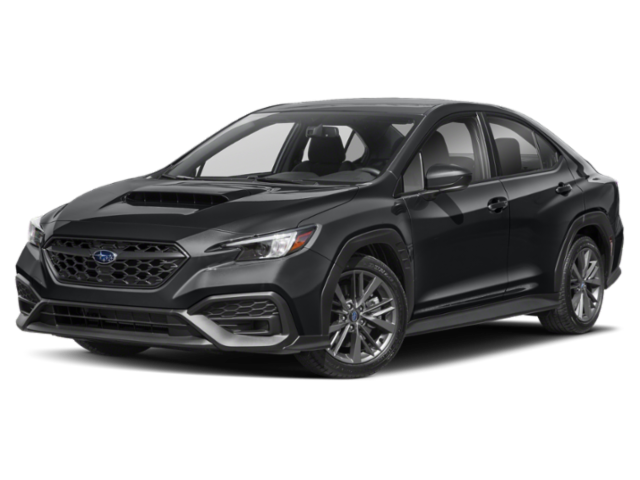
Usually, I don't comment on exterior styling in these reviews. According to JD Power data across all makes and models, this factor is almost always at the top of the list of a vehicle owner's favorite things because people don't buy cars, trucks, and SUVs that they find unappealing. So, if you like how the new WRX looks, it doesn't matter what I have to say about it.
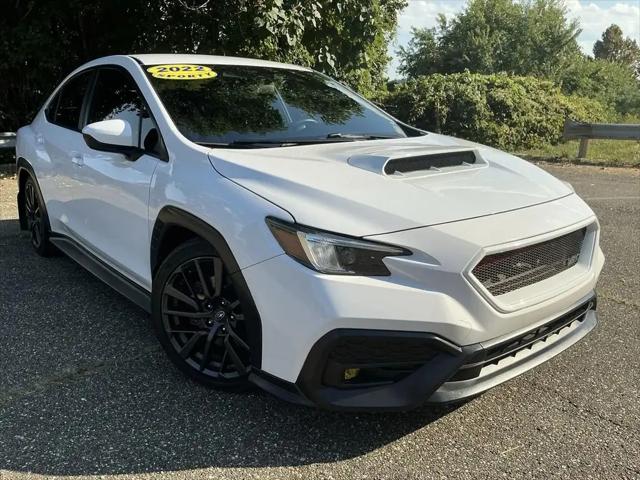
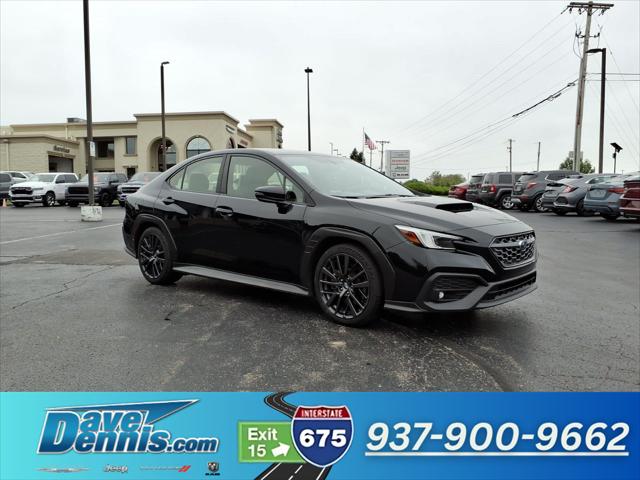
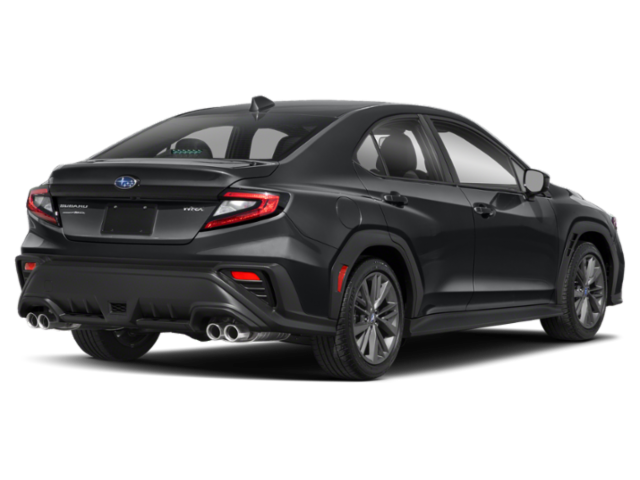
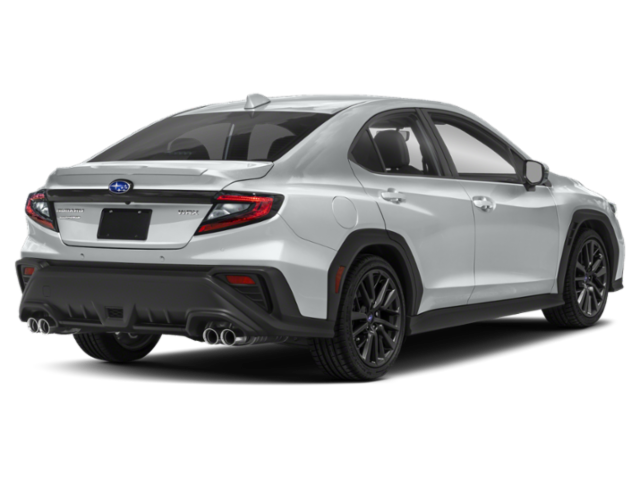
However, the WRX's rugged new body cladding is difficult to overlook. Subaru's official take is that the wheel-arch and lower body trim has "an aerodynamic texture that reduces air resistance." But when you go to the automaker's consumer website, about half the photography depicts the car on dirt or gravel, including a dramatic drifting sequence in the sand when the WRX page loads. Therefore, you might conclude that the cladding is also there to protect the bodywork from damage while visually playing up the WRX's rally-racing roots.
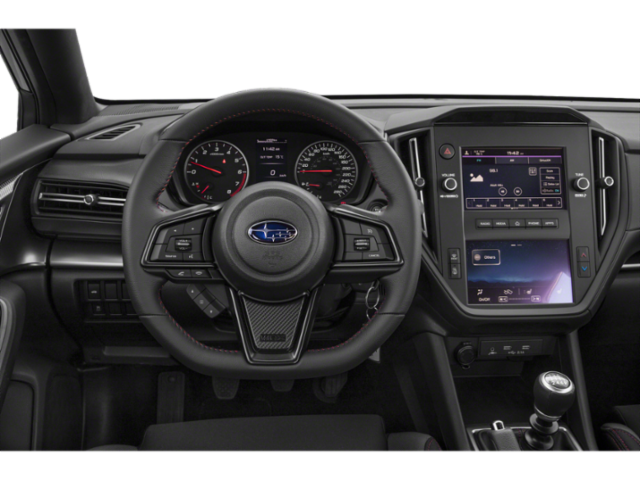
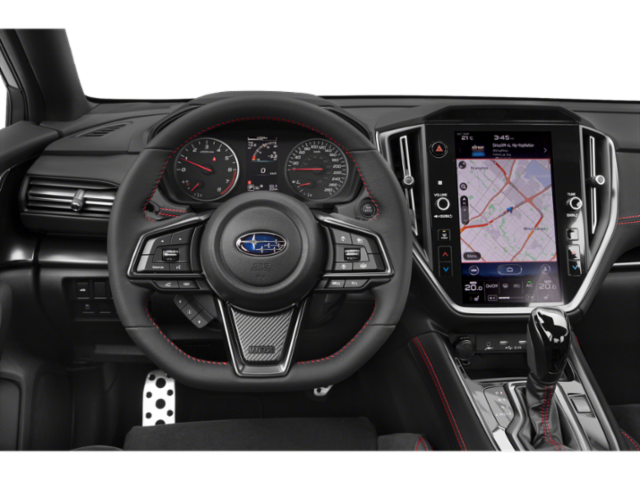
Open the driver's door and you'll find an interior with traditional Subaru design themes and components but with hints of genuine style. For example, the air vent detailing looks unusually fancy, and the WRX GT test car's simulated suede with contrast stitching, carbon fiber-patterned trim, and metallic pedals add a slightly upscale vibe.
Furthermore, though it remains visually busy, the WRX's interior is less cluttered. That's because most versions of the new WRX get a large, 11.6-inch touchscreen display with embedded climate controls while losing the upper data panel that many Subarus have at the base of the windshield. The WRX doesn't go completely high-tech, though. It still has analog gauges, and you'll even find an old-school trip computer reset button on the dashboard.
With GT trim, you get exclusive Recaro front seats wrapped in artificial suede with red contrast stitching. They relentlessly hold you in place when you're hustling the car, and they can create some extra effort when you're getting into and out of the WRX. However, thanks to 8-way power adjustment for the driver, it's easy to find a snug but still comfortable position behind the leather-wrapped, flat-bottom steering wheel.
Unfortunately, since you cannot get the WRX GT with a manual transmission, and you cannot get Recaro seats in anything but the GT, the performance-bolstered seats are a bittersweet offering.
The WRX's back seat is unexpectedly comfortable, lacking only a set of air conditioning vents to get my highest praise. The cushion sits high off the floor with good leg support, there is just enough legroom and foot space for my 6-foot frame, and the front seatbacks feature soft, padded material that is kind to knees and shins. I have longer legs and a shorter torso, so headroom is fine for me. People with shorter legs and a longer torso may disagree.
As is typical with compact cars, storage is in relatively short supply. Subaru provides just enough bins and trays to prevent it from becoming a serious problem.
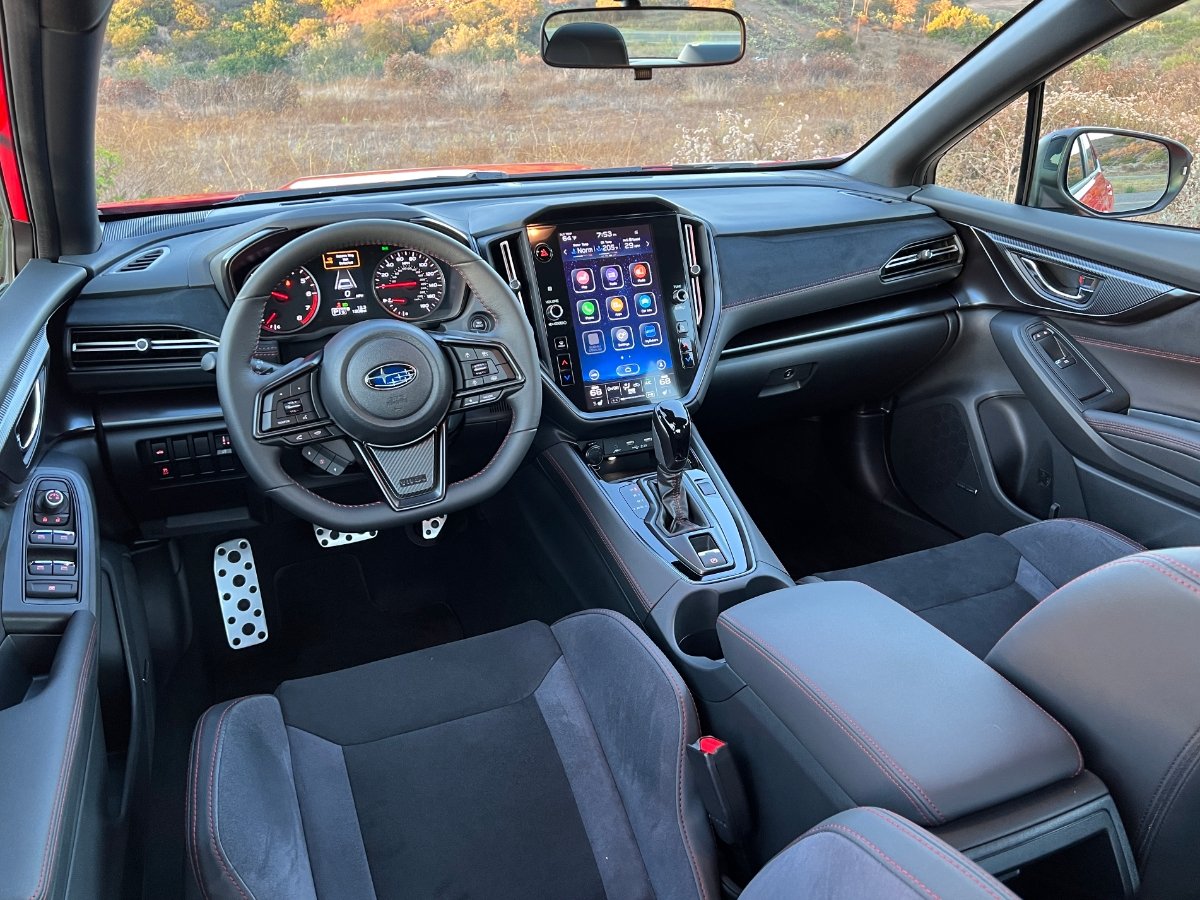
Photo: Christian Wardlaw
The standard Starlink infotainment system in the base trim of the new 2022 WRX provides two 7-inch touchscreens and a smattering of buttons and knobs to control the stereo, access main menus on the screens, and adjust the single-zone automatic climate control system's temperature.
Highlights of the 7-inch infotainment system include:
Starting with the WRX Premium, a single high-definition 11.6-inch touchscreen display is standard, mounted in portrait orientation. It embeds the controls for the dual-zone automatic climate control system and retains stereo volume and tuning knobs as well as temperature adjustment buttons. A navigation system is an available option, with voice recognition.
The larger touchscreen is similar to what Subaru uses in other models, including the popular Outback. However, the version in the WRX is the first one offering split-screen viewing capability so that you can see navigation and music data simultaneously. That simple change resolves one of my complaints about using Subaru's latest infotainment system.
However, the voice-recognition system still leaves much to be desired. When I requested directions to the nearest Starbucks, there was a long pause before it offered them. When I asked for directions to the closest Chipotle, it responded by telling me that since I had no destination set, it could not search ahead on my route. That's a new one.
When I said I needed to go to a hospital, it was unable to help me. It took a few tries to get directions to the White House; I had to say "one-six-zero-zero" instead of "sixteen hundred" for the address and "District of Columbia" instead of "Washington, D.C."
By voice, I successfully changed the cabin temperature and switched to a new satellite radio channel. However, asking the system to find reggae music resulted in directions to Bradgate, Iowa, population of 75 per the 2020 census. As a result of this testing, I recommend running Apple CarPlay or Android Auto and forgetting about the embedded navigation and voice-recognition system.
Starting with Limited trim, the WRX comes with an 11-speaker Harman Kardon premium sound system. I thought it sounded good, but I didn't listen to it much. I was too busy enjoying the mechanical symphony produced by the WRX's drivetrain.

Photo: Christian Wardlaw
Subaru swaps the previous WRX's turbocharged 2.0-liter 4-cylinder boxer-type engine for a turbocharged 2.4-liter boxer, or flat-4, power plant. The larger-displacement engine in the new 2022 WRX makes three extra horsepower for 271 at 5,600 rpm. Torque is unchanged at 258 pound-feet between 2,000 and 5,200 rpm.
With base, Premium, and Limited trim, a 6-speed manual transmission with improved shift quality is standard. A new Subaru Performance Transmission is optional for these versions of the car and standard with GT trim. It's a CVT that Subaru promises will provide better off-the-line acceleration, faster shifts, rev-matching downshifts when you're braking, and improved response when exiting a corner.
The 6-speed manual gearbox pairs with a continuous AWD system that splits power evenly between the front and rear wheels. Choose the CVT, and the AWD system features variable torque distribution. Active torque vectoring is standard with every WRX.
The WRX's fuel economy declines a bit for 2022. The Environmental Protection Agency (EPA) rated the 2021 model to get between 21 mpg (CVT) and 23 mpg (manual) in combined driving. For 2022, the official EPA fuel-economy ratings are 21 mpg with the CVT and 22 mpg with the stick shift.
Additional changes include a new quick-ratio, dual-pinion electric steering system offering what Subaru claims is faster response to driver inputs and better road feel. The track-tuned suspension pairs with 17-inch (base trim only) or 18-inch wheels wrapped in summer performance tires. A new electronic brake booster improves pedal feel, Subaru says.
With GT trim, the WRX gets an exclusive adaptive damping suspension and SI-Drive with Drive Mode Select. This feature allows the driver to choose between Comfort, Normal, Sport, Sport+, and Individual driving modes. Using the Individual setting, a driver can customize the behavior of the powertrain, AWD system, steering feel, suspension firmness, and EyeSight safety feature sensitivity.
Since the new WRX is barely more powerful and weighs about the same as it did before, the new 2.4-liter engine doesn't dramatically improve seat-of-the-pants acceleration. But it sounds terrific, making that familiar Subie burble at idle and when you press the go pedal.
The Subaru Performance Transmission, however, is fantastic. (I can't believe I characterized a CVT that way.) Oh sure, on occasion, you can detect uneven power delivery when the transmission upshifts. But most of the time, it behaves like a traditional automatic. The paddle shifters are even enjoyable to use.
You won't be blown away by how deeply the engine's turbocharged thrust pushes you into the WRX's driver's seat, and you may find the GT's powertrain more rewarding if you roll into the throttle instead of mashing down on the accelerator pedal. There's nothing frenetic about how the new 2.4-liter and the CVT deliver the power, which lends a certain maturity to the car. Please don't misunderstand me; the WRX is undeniably quick to rush to speed. But it's also easy to lament the passing of the more hyper STI.
The more apparent improvements are the WRX's platform and architecture. The car feels exceptionally stout, and in combination with the other dynamic improvements, the robust foundation enhances the car's sensation of solidity and responsiveness to inputs. Furthermore, the test car's 245/40 Dunlop Sport Maxx GT 600A tires proved sensationally good at gripping the pavement. But they also contribute to road roar at highway speeds, blending with exhaust boom to fill the WRX with plenty of noise.
Before heading into the Santa Monica Mountains near Los Angeles to thoroughly exercise the new WRX on the kinds of roads that Subaru engineered it to conquer, I puttered around my local suburb in Comfort driving mode. It makes the WRX feel soft and pillowy without absorbing the bumps and cracks in the pavement and is not satisfying.
Switching to Normal mode and driving the car over sets of speed humps and bumps underscored how stiff the new WRX's underlying structure is. However, the powertrain response is too lazy in this mode.
Sport mode is more satisfying for urban and suburban driving but still isn't satisfactory for tackling twisty two-lane roads. In this environment, Sport+ mode is what you want. In this setting, the WRX utterly flies. It doesn't feel excessively firm or glued to the road, yet it inspires absolute confidence in its driver and covers ground deceptively quickly. You can put this car exactly where you want it, and the GT's adaptive suspension instantly attenuates dips, bumps, and uneven sections of pavement. The WRX GT never loses its poise and is an incredibly graceful dance partner.
However, there are three things of note related to the WRX's driving dynamics:
Overall, the redesigned 2022 Subaru WRX GT's performance has few nits to pick. But hardcore enthusiasts are still going to want an STI version.

Photo: Christian Wardlaw
To get Subaru's EyeSight collection of safety features, you must equip the WRX with the CVT. Add that transmission to the car, and EyeSight comes with it, installing:
With Limited and GT trim, the WRX has blind-spot warning and rear cross-traffic warning systems and steering-responsive headlights that swivel with the steering angle to illuminate corners after dark better. The WRX GT gets an exclusive rear automatic braking system.
Subaru says that for 2022, EyeSight has a wider angle of view and improved software for better performance, the lane-departure warning and lane-keeping assistance systems operate with greater refinement, and the new electronic brake booster improves automated braking smoothness. Overall, this updated version of EyeSight aims to make the tech feel more natural to the driver.
With the technology placed in its default settings, the lane-departure warning and lane-keeping assistance systems were a regular source of irritation. Between the visual indicators shown on the windshield, the warning messages in the driver information center, and the audible alerts, you may find yourself genuinely surprised by how often you wander across lane markings.
More concerning, however, was the lane-keeping assistance system's attempt to steer the car into a left-turn lane at a higher rate of speed. If you drive north on Pacific Coast Highway north of Malibu, you'll find an RV camping area on the beach across the road from towering sand dunes. While traveling at about 60 mph, the WRX tried to steer itself into the left turn lane for this camping area rather than continue straight in the lane of travel. That had never happened in any test car before.
As for the newly enhanced adaptive cruise control and lane-centering assistance technology, it works well. Also, Subaru has done a much better job organizing the WRX's driver information center to communicate the operational status of EyeSight features quickly.

Photo: Christian Wardlaw
The WRX's trunk is small, at 12.5 cubic feet of cargo space, but the car includes a 60/40 split-folding back seat to expand room as necessary. Subaru hides the hinges so that they won't crush your stuff, but the trunk opening is narrow at the bottom, meaning you'll need to be a little more creative when packing it full. The inner part of the lid has a sound-deadening liner, but Subaru declines to provide grab handles for swinging it closed.
According to official EPA fuel-economy ratings, the 2022 WRX gets 21 mpg in combined driving with the CVT and 22 mpg with the 6-speed manual transmission. I averaged 19.4 mpg on the test-driving loop, reflecting just how much fun I had driving the new WRX. Based on my experience and the WRX's 16.6-gallon fuel tank, it can travel 322 miles after each fill-up. You'll likely find yourself stopping to replenish before the trip computer shows 300 miles of travel.
As I write this review, neither the National Highway Traffic Safety Administration (NHTSA) nor the Insurance Institute for Highway Safety (IIHS) has performed crash tests on the new WRX. However, it is worth noting that the previous-generation model, based on a design dating back to 2014, was named a Top Safety Pick by the IIHS in 2021. Considering Subaru builds the new 2022 WRX on an even more robust platform, chances are good it will retain this rating.
The 2022 Subaru WRX costs $29,605 in base trim, $32,105 in Premium trim, $36,495 in Limited trim, and $42,395 in GT trim. Subaru also tacks on a $995 destination charge to ship it to your local dealership from the Gunma, Japan, factory that builds it.
In the JD Power 2022 Initial Quality Study (IQS) and the 2022 APEAL Study, the Mini Cooper ranks highest in the Compact Sporty Car segment. The Subaru WRX's more likely rivals include the Honda Civic Si and upcoming Civic Type R, Hyundai Elantra N, Mazda Mazda3 2.5 Turbo, upcoming Toyota GR Corolla, and Volkswagen Golf GTI and Golf R.
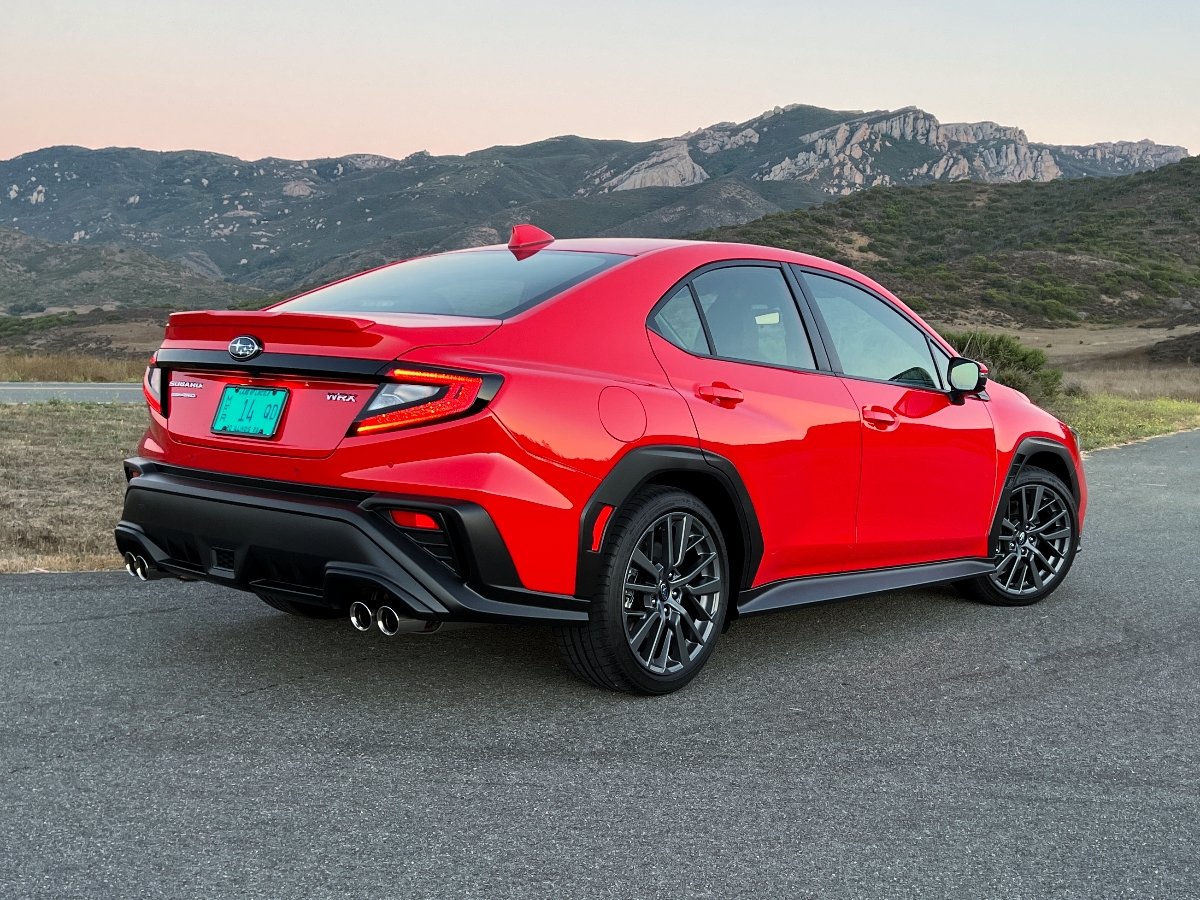
Photo: Christian Wardlaw
The redesigned 2022 Subaru WRX is a blast to drive and has plenty of character. From the strange body cladding and practical sedan body style to its bleating boxer engine and brilliant handling, it is a worthy sport compact car. That assessment stands true even if you get the Subaru Performance Transmission instead of the 6-speed manual transmission. Better yet, it's ready for any kind of weather as long as you swap the summer performance tires for winter rubber.
However, both the infotainment system and safety technology are sources of irritation, and the new WRX is slightly less fuel-efficient compared to the old WRX. Plus, Subaru canceled the raucously wild STI version. These deficiencies, combined with the unusual exterior styling and lack of a significant power upgrade, could inadvertently bolster resale values of the previous-gen WRX.
Christian Wardlaw is a veteran digital automotive journalist with nearly 30 years of experience in test-driving vehicles. He has held editorial leadership roles with Edmunds, JD Power, the New York Daily News, and others. In addition to JDPower.com, his work has appeared in numerous new- and used-car buying guides, newspapers, and automotive industry trade journals including Autotrader, Capital One Auto Navigator, CarGurus, Kelley Blue Book, WardsAuto, and more.