News & Insights

Tagged:
Clear filters
Content Type
Topic
Industry
Segment
A german road representing the new car market

Insights

Are private buyers driving Germany’s new-car market forward? 

With another month of new-car registrations growth in Germany, one force appears to be driving the market forward. But how are powertrains and brands performing in the country? Tom Hooker, Autovista24 journalist, explores the figures.  Deliveries of new cars in Germany rose by 2.7% year on year in April, reaching 249,163 units. According to KBA data, private buyers helped drive this growth. Registrations in this sector climbed by 8.2% to 88,182 units.   However, private buyers […]
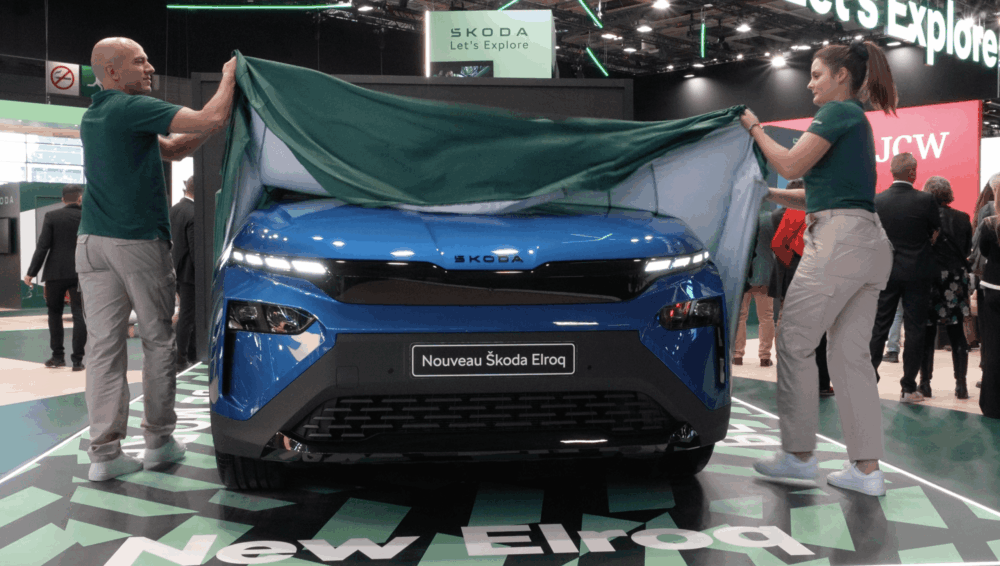
Skoda vehicle being unveiled at a motor show by two people

Insights

What is an Autovista24 Launch Report?

This content previously appeared on the Autovista24 website. Every year, dozens of new cars are launched across Europe. Each bring their own benefits to buyers and the wider automotive market. Autovista24 analyses many of these vehicles in the monthly Launch Report series. Special content editor Phil Curry explains the valuable insights on offer. Carmakers are constantly developing vehicles for the automotive market. This results in either brand-new nameplates or next-generation versions of existing models. These new cars each aim to offer drivers something different in an increasingly crowded market. This could be through their design, interior options, technological advances or driving characteristics. While many vehicle reviews will focus on these traits, the Autovista24 Launch Report offers something unique. These monthly vehicle overviews combine a standard review of the car alongside detailed expert analysis and residual value (RV) forecasts. These combined insights elevate the Launch Report to a key piece of information for automotive industry decision makers. https://youtu.be/ZP3RBB0_jfk Launch Report breakdown Each Launch Report features an interactive dashboard that provides analysis and RV comparisons against three competitors. This information is compiled by experts from key European markets, including Austria, France, Germany, Italy, Spain and the UK. The Dashboard features an overview of a vehicle’s strengths, weaknesses, opportunities and threats. These areas of examination provide a balanced analysis. The strengths segment will look at the best elements of a car, while the weaknesses will point out areas that could be improved. The opportunities section looks at the potential of the model in the automotive market. For threats, the experts look at possible competition, and market conditions that could impede success. Examining residual values Autovista Group experts will also benchmark RV performance against three direct market competitors. These forecast values are determined after 36 months, and market-specific mileages. The study shows the recommended retail price for the model and trim level in question. It also provides the expected value after the time and mileage conditions. This is presented together with the RV, expressed as a percentage of the retained original price. This allows buyers to understand the vehicle’s potential future value. They can then factor this into their purchase decision. This is especially important for fleet buyers, who can understand the financial potential of new models, especially around the average de-fleeting period. This RV information is provided by each market participating in the Launch Report feature. The data is specific to that country, allowing for a more precise and region-specific understanding of vehicle performance. Providing the review Alongside the interactive dashboard, each Launch Report also includes a detailed review of the model itself. This summarises the comments and thoughts of Autovista Group editors, along with Autovista24’s research and experience. The review provides an analysis of the vehicle and adds more context for the dashboard analysis. They are written by experienced motoring journalists and provide a balanced view of each model. This includes more information on design, practicality and driving characteristics. Overall, the Launch Report provides buyers with the complete picture of a vehicle. Alongside the written article, Autovista24 also produces a number of Launch Report videos. These give a visual overview and a detailed look at new models. Alongside this, there is also a breakdown of forecast residual values in select European markets.
Wooden car with protective shield o protect from accident and damage

Insights

What should automotive remarketing and aftersales companies focus on in 2026?

This content previously appeared on the Autovista24 website. What trends have defined 2025 for automotive remarketing and aftersales companies, and what lies ahead? Paul Marklew, enterprise sales director at Autovista Group, speaks with Tom Geggus, editor of Autovista24. How has 2025 been for remarketers? What trends have defined this year for them? Remarketers, such as dealers, auctions and advertising portals, have seen a slow 2025 that has made trading conditions challenging. With current economic uncertainties, including reduced consumer sentiment, there are fewer cars being bought and sold. Profit margins are being squeezed significantly as dealers compete for the buyers that are in the market. This trend is reflected when looking at residual values (RVs) across the vehicles. Since the COVID-19 pandemic, most markets across Europe have seen a pretty dramatic increase in RVs. Dealers have also enjoyed increased profit margins. Now we are seeing a rationalisation of the market. Values are dropping towards pre-pandemic levels, at quite a fast rate in some cases. This has resulted in lower profit margins when the vehicles finally go into stock. Additionally, consumers are holding on to their cars for a little bit longer. This has reduced the amount of stock in the market. How does this compare to the year the aftermarket has had? Aftersales, like part suppliers for example, are still some of the more profitable parts of dealer businesses. The margins in the car are a bit more difficult, but servicing and maintenance continue to be profitable. The businesses dealing with aftermarket parts, which are normally more affordable than OEM parts, are seeing an increase in business. This comes as they move towards increased digitalisation and an improved buyer experience. So, aftersales and remarketing are really experiencing the same meta trends in different ways. Remarketing and consumers As you mentioned, RVs did soar during the COVID-19 pandemic, and now we are seeing a normalisation. How have remarketing companies dealt with this change? For starters, there has been a focus on cost and buyer experience. AI and digital car-buying journeys are coming into the mix a lot more. There is also a focus on the consumer experience, and there is a lot of competition in this area. This is because you can only compete so far on price and remain profitable. Consumers are spending less time in the dealership and more time online. Consequently, some of these online advertising portals, for example, are becoming increasingly important to the journey. So, dealers are trying to capture people online a lot more now, and they are trying to give consumers choice. Previously, we saw businesses introduce online-only models, particularly during COVID-19. Those models had mixed success and varied longevity. But in the end, the businesses that were more successful with this, created choice for customers. These buyers can complete as much of the buying journey online as they would like. Then, if they would like to come into a dealership to complete the transaction, that is available to them. Closed remarketing ecosystem So how do these digital systems lock in buyers? Information is king in this area. Dealers are looking at new ways of providing information to consumers, including agentic AI on their websites. This helps customers do the research in the dealer ecosystem, keeping them on their website. Then they are more likely to convert that into a sale in the end. We are seeing this in the wholesale environment as well. Traditionally, in places like the UK, physical auctions were the way to buy cars. But since COVID-19, the digital acquisition of stock is becoming more common. Platforms that allow dealer-to-dealer customers to purchase stock digitally, either from other dealers, OEMs, or fleet companies, are becoming more common. The key factors in that are going to be getting the pricing right and accurately describing the vehicle condition. Electric vehicle remarketing Another hurdle for remarketing and aftersales is electric vehicles (EVs). How can the relatively low RVs of these vehicles be managed? The depreciation happens, at scale, in the first life of the vehicle. A lot of first-life EVs go into fleets and leasing. Realistically, that loss is being handled by the businesses that are then remarketing the cars. But EVs do remain a point of uncertainty. In some markets, they are difficult to insure. In others, they are difficult to source parts for. In some countries, they do not have the best charging infrastructure. Some of the markets, like the UK, are bucking these trends. RVs are low, but this is mainly due to the fast development of EV technology. There is also a knowledge gap to overcome, with dealers looking to upskill themselves. Yet, EVs are selling pretty well in the UK, even used models. As long as the dealers buy at the right price, they are not having much difficulty selling them. There are always going to be deviations from that trend, but overall, the UK EV market is pretty strong. What about in other countries? What we are seeing a lot of in mainland Europe is the shifting from one country to another. Many used EVs have low RVs within one country, like Germany, for example. But the vehicles are moved to the Nordics, for example, where the used EV market is strong and RVs are less disrupted. So, if you remarket your vehicle in a country with a low RVs, that is what you will experience. However, if you move it to a country with a stronger used EV market, you avoid absorbing those financial outcomes. Creaking supply chains One problem the industry has dealt with this year is disrupted supply chains. How have aftersales businesses managed? This seems to be a problem more for vehicle manufacturers. For non-OEM parts, business is actually looking pretty good. There are several factors at play. More insurance companies are looking to control costs. Before, they may have had policies that focused on like-for-like replacements. Those become difficult policies to manage during supply chain disruption as the costs of these parts rise. Increasingly, they are looking at viable aftermarket alternatives and, in some cases, recycled parts. When we look at OEM parts and how businesses are trying to adapt to this, digitalisation is a key trend. We are seeing more e-commerce journeys at play. There is also an increase in purchase channels. Dealers are looking at how they can sell parts directly to consumers online. Again, having the right data to facilitate picking the right part for the right car is key. Opportunities and challenges So, moving into 2026, where do you see the biggest opportunities and challenges for remarketing and aftersales companies? I am sure we will see more overseas investment resulting in the consolidation of dealerships. When the top line is pressured, reducing costs is key. So, dealers are going to do that by investing in growing their businesses through acquisition. There is going to be investment in digitalisation to reduce costs. They are going to make sure they have good quality data to make sure that they are making the right purchasing and selling decisions. We will also keep seeing vehicles moving around countries in mainland Europe, ensuring businesses get the best possible price. This is because the desirability and profitability of certain vehicles are different from country to country. The aftermarket will see something quite similar. Digitalisation, consolidation, and the reduction of costs to ensure profitability. For example, we are seeing a lot of parts wholesalers grouping together to share costs. This is not necessarily acquisition, but the forming of powerful buying groups to create economies of scale. So, both sides of the market will need to manage the bottom line, where there is less flexibility in the top line. This means AI, digitalisation, and economies of scale.
Power cable pump plug in charging power to electric vehicle EV car.||||||

Insights

How are the latest EV battery developments impacting automotive fleets?

This content previously appeared on the Autovista24 website. From repair to solid-state advancements, electric vehicle (EV) batteries are a complex equation for fleets. How can these businesses better understand and work with the technology? Autovista24 journalist Tom Hooker assesses the latest battery advancements. The battery-electric vehicle (BEV) share has grown across Europe this year. In major new-car markets such as France, the fleet sector is a driving force behind electric registrations. Fleet-oriented incentives have helped encourage uptake, as in Germany. This shift makes it vital for those in the sector to understand the batteries powering their vehicles. In turn, they can make smarter purchasing decisions, optimise maintenance and retain the highest profit margins when defleeting. Cloud-based battery management Digital battery health certificates and data can provide clarity for both private consumers and fleets. It can also help increase transparency, streamline remarketing and maximise residual values. From February 2027, EV batteries sold in the EU must have a Battery Passport. The digital identity will be similar to a vehicle logbook, where battery charge cycles, energy efficiency and degradation trends must be included. How can fleets stay informed until then? One solution is a cloud-based battery management solution that supports the resale of EVs. ‘Together as leaders in mobility and technology, we have the unique opportunity, especially for EVs, to use remarketing and the right point of resell to make not only a transaction out of it but make it a data-driven business model,’ outlined Christiane Soppa, director of business development at Bosch, at Fleet Europe Days. Bosch conducted a pilot programme together with European mobility and car rental company Drivalia. This involved monitoring the data of approximately 100 vehicles between January and June 2025. ‘The heart of an EV is the battery. So, we took the heartbeat of the EV and put it online. The target was to take away the EV friction we have in remarketing. We looked at stress factors and anomalies based on very simple data,’ explained Soppa. Drivalia CEO Roberto Sportiello. From transaction to database There are three steps to the process. Once the EV is connected, data can be collected. Bosch was able to track battery temperature, voltage, charging behaviour and driver usage. This provided a real-time picture of the power-storage unit. Second, a cell-by-cell digital twin of the battery was created in the cloud. This combined AI machine learning with data taken from 150,000 vehicles tracked by Bosch worldwide to regularly review its algorithm. Third, the system detected anomalies and any battery issues. ‘The twin can completely monitor the battery. By spotting issues very early, you can redesign the right point of resell. We take the battery measurements, the state of health and anomalies before the decision point when you sell the car, not afterwards,’ she stated. ‘That is turning remarketing from a transaction to a database strategy. As a fleet manager or a leasing company, this is changing everything, because you suddenly get into the driver's seat,’ Soppa continued. Bosch was also able to produce a certificate at any time, revealing driving behaviour, anomalies, and charging history. ‘You could even use this data to discuss with your clients early, to change their behaviour. Decision making is not a best guess or dependent on lifetime and mileage anymore. It is based on data. What we see from all the pilots we did in the past years, in Bosch and all the data we have, sales can be boosted by up to 4% on average for resale,’ she commented. However, Soppa highlighted that this requires monitoring of the battery to optimise the point of resale. ‘This is a very important digital platform that will permit the company more in the future to retrieve and collect data from the fleet, and let the company adjust it as best as possible,’ highlighted Drivalia CEO Roberto Sportiello. Is battery repair the solution? While Bosch’s tool can be used to boost resales, another way to maximise profit margins within a fleet is to reduce maintenance costs. So, what options do fleet managers have in this instance? According to Gablini Automotive Group, the cost of repairing a battery pack is around 80% lower than replacing it. This makes battery repair more financially attractive while supporting circular economy goals. ‘To be sustainable, we cannot throw away a 10-year-old vehicle. We should keep it on the road. Because, if we throw it away, the environmentally friendly behaviour of EVs will not be there anymore,’ stated Daniel Pataki, general manager of Gablini Automotive Group, at Fleet Europe Days. Gablini Automotive Group general manager Daniel Pataki. ‘The question is if we can repair the battery packs in case of any failure, because OEMs are not interested in selling battery packs. They are interested in selling new vehicles,’ he said. Pataki explained how demand for battery repair is growing. As old EVs are getting cheaper, people are beginning to use them as an entrance point to the EV sector. However, he highlighted that an EV with a faulty battery has a resale value of close to zero. Repair constraints Pataki presented a diagram of a dismantled EV battery pack. He explained that if one cell has a lower voltage than the rest, this affects the entire battery’s performance. By replacing the module containing that cell, the EVs' range will improve. The battery management system and thermal management system can also be replaced. ‘If one sensor gets broken in a battery pack and you cannot repair it via the OEM, you should replace the battery pack due to the fault of a €10 sensor. This is not sustainable. You should be able to repair this,’ said Pataki. However, he explained that there are some constraints. There are still no standard criteria for technicians looking to repair high-voltage batteries. Pataki said that OEMs do invite technicians to their headquarters to get a certificate. ‘According to our experience of more than 12 years, 85% of faulty battery packs were economically repairable. That means only 15% of the battery packs coming to us needed to be replaced,’ he noted. Pataki pointed out that buying parts from the OEM will mean reduced margins compared with individual battery repair. For a 14-hour job, a profit margin of around 40% to 60% can be achieved Pataki calculated. He highlighted that the solution opens up profit potential within the after-sales process. ‘You will provide sustainability. You will gain customer satisfaction because all customers will come back to you for battery repair. We can reduce waste, we can extend the lifespan of vehicles, we can have high-margin jobs in the workshop, and we can make the customer happy,’ outlined Pataki. Battery market domination So, the fleet sector needs to be aware of current battery developments, such as real-time data analysis and battery repair. However, it is equally important to know what to expect in the future. Currently, the EV market is dominated by lithium iron phosphate (LFP) and nickel manganese cobalt (NMC) batteries. From January to August 2025, these two chemistries accounted for over 90% of the megawatt-hours installed across the global passenger car market, according to EV volumes data. However, the market’s composition could change over the next few years. Mix and match approach ‘What we see is quite a detailed chemistry layout. In the US, you have the nickel cobalt aluminium (NCA) component that is mainly used by Tesla. While in Europe, you have NMC batteries. In China, you have the majority of vehicles or batteries that are LFP batteries,’ said Octavian Chelu, advisory director at Frost&Sullivan at Fleet Europe Days. ‘You might think the picture is quite clear. The US, Europe and China use a certain technology. It is not that easy. When we look towards the future, what we see happening mainly is the fact that carmakers are going to match certain batteries, technologies and chemistries depending on the type of vehicle and its use, he added.’ ‘Carmakers are going to try to mix and match from now on. This is something that is going to be keeping revenue from the remarketing business because it needs to juggle very well between different types of technologies, different battery markers, the degradation of those batteries and how much the residual value is going to be impacted by all of that,’ Chelu explained. ‘We have NMC and LFP; those are the main two technologies being used today. However, we also see a lot of heavy research and development, encouraged by all major governments worldwide, because they want to break dependencies,’ Chelu highlighted. ‘We are trying to find alternatives, so that our batteries and our vehicles are not going to be dependent on one source,’ The next battery technologies Chelu explained that sodium-ion batteries are the next technology being tested. In China, the first vehicles using this technology have already been seen. There are also solid-state batteries in development. However, he believes both chemistries will not completely wipe out LFP’s market share. ‘We are still going to be dependent on precious materials for quite a while. There are pluses and minuses with all these new technologies,’ he said. Chelu estimated that in the future, sodium-ion batteries are likely to be 30% to 50% cheaper than their LFP counterpart. They also perform extremely well in cold temperatures. This means vehicles using the chemistry can have better charging cycles. However, sodium-ion batteries have a lower energy density than LFP units. So, models using the chemistry instead of LFP on a like-for-like basis will have less range. Yet, this does mean the emerging technology is slightly safer, due to it being less reactive. Chelu noted the emerging technology could be well-suited to last-mile deliveries, but less so for long-range vehicles. Meanwhile, solid-state batteries are safer and more stable than LFP ones, with no flammable liquid electrolyte. Chelu also pointed to a higher energy density, enabling longer distances and faster charging. However, the new technology will be much more expensive to begin with. ‘Sodium-ion is the next to come in line, not to replace LFP batteries, but as a new technology. Solid-state batteries are not going to happen before 2028 and probably will be fully commercial by 2030,’ Chelu concluded.

Smart driving

Insights

How are AI and automation transforming automotive remarketing?

This content previously appeared on the Autovista24 website. Today, nearly every business is using artificial intelligence (AI) and automation in some form. The automotive remarketing sector is no exception, with efficiency and data-driven decisions key to fleet efficiency and profitability. Tom Hooker, Autovista24 journalist, reviews its current applications and future impact. As AI continues to develop, so too do the use cases within the automotive industry. From production to in-vehicle applications, logistics to fleets, there are many applications for the technology. Automotive executives anticipate big things from AI, even within the next three years. The technology is expected to increase the perceived value of products by 22% and the value of digital services by 37%, according to IBM. This acceleration in automotive AI applications underlines the industry’s push for smarter, more connected, autonomous, and software-defined vehicles.  Carmakers are partnering up with AI specialists to maximise their knowledge and potential in this field. These collaborations include Hyundai Motor Group and Nvidia, Stellantis and Mistral AI, and Volkswagen Group and Amazon Web Services. Unsurprisingly, AI and automation also present key growth opportunities in the remarketing sector. This involves reselling used vehicles, typically owned by businesses or fleets, through wholesale channels. This often occurs before hitting the retail market. In this space, AI can enable predictive pricing, automated inspections, automatically adjusted inventory management, and automatic sourcing. These tasks help to maximise turnaround speed and recovery value, two of the major goals in remarketing. So, how are remarketing companies currently using AI, what benefits are they seeing, and what could the future hold? AI sourcing To benefit from high resale margins and fast-turning stock, the right amount of quality vehicles must be quickly sourced. ScaleVoice and AURES Holdings are already using AI to source vehicles and improve response times. From left to right: Mike Allen, AURES Holdings member of the supervisory board. Martin Rezab, ScaleVoice chief revenue officer. The two companies presented their Voice AI solution at the Fleet Europe Days. The AI agents can reportedly handle outbound and inbound calls, schedule trade-ins and update systems in real time. Voice AI conducts proactive sourcing to find hidden opportunities in the marketplace. It grades adverts by predicted profit margin, stock turn and competitiveness, such as targeting private sellers with price drops. The solution can then contact the seller and schedule dealership appointments. It also uses reactive sourcing. This means responding to incoming web form leads in under 30 seconds to catch customers in a selling mindset. Unlike a human agent, the AI can do this anytime on any day of the week. The insights gathered can then be used for future marketing and sales operations. In a 60-day test that compared human agents to Voice AI, the latter generated 7,277 appointments. This returned a 49.2% conversion rate. ‘We had a round robin of leads, one half of the leads went to us [Voice AI], and the second half went to people, and they measured the volume of people that showed at branches. We outperformed people by two percentage points,’ highlighted ScaleVoice chief revenue officer Martin Rezab. How to automate at scale Other companies in the remarketing and leasing space are building AI-first cultures. One of these is the car leasing service Lizy, which has embedded automation steps into multiple processes. A quarter of Lizy’s remarketing workload is handled without human intervention, with AI performing over 45,000 actions every month. This includes tasks such as pricing and workflow optimisation. New processes are automated across the company weekly. For example, its paper mail and email workflows have been automated, freeing up time for employees to work on more challenging tasks. ‘We have two types of companies today. We have companies that are writing emails and recording meetings with AI. Then, you have companies that are actually fully automating their back-end processes with AI,’ explained Lizy CEO Sam Heymans. Sam Heymans, Lizy CEO. ‘It is fine if you are in that first category today, but if, in five years, you are still only doing that, I think you will really suffer. I think for the leaders of our industry, we should make sure that we adopt AI and embrace it, because it will be shaping the future of automotive,’ he added. AI inspection An essential part of the defleeting process is inspecting vehicles. This can determine residual values and sales channel selection, while reducing risk by identifying damage, wear or missing equipment. However, this can be a particularly time-consuming process, especially for fleets processing hundreds or thousands of cars at once. Automated inspection tools can help by reducing lead times and improving accuracy. From left to right: Marina Picard, Stellantis head of supply chain, business unit pre-owned vehicles. Bertrand Chataing, Autobiz Group chief sales and development officer. Carcheck.AI, developed by Stellantis and Autobiz Group, can use a smartphone camera to create a digital scan of a vehicle. In just a few minutes, it calculates the costs of reconditioning the model before resale. According to Autobiz Group, the system is already being tested at Stellantis fleets in Hordain, France and Madrid, Spain. It is expected to save up to three weeks in the vehicle resale process. Automated fleet workflow system BCA Europe and Alphabet International displayed another example of automation at the Fleet Europe Days event. The pair demonstrated a fleet workflow system integrated into an auction platform across European markets. From left to right. Tobias Münch, BCA Europe chief commercial officer. René Lorr, Alphabet International head of international operations. The solution optimises fleet visibility across logistics, pricing, sales, and post-sales. In turn, delivering detailed information, a smooth buyer experience, and fast vehicle remarketing. Real-time tracking is also possible, meaning shortened delivery times, improved operational control, and boosted stock rotation. ‘It has been deployed in nine markets. It consists of two main components. One is the workflow system, and that covers the process over the entire vehicle lifecycle. The second one is the auction platform,’ outlined Alphabet International head of international operations René Lorr. ‘We found a way to build up every unified process into one single workflow. I think it is the backbone of the remarketing process by Alphabet, because this system connects the people, the data and the processes together, and it brings it to a very efficient and value-driven system,’ concluded BCA Europe chief commercial officer Tobias Münch.

Displaying 12 of 15 insights