News & Insights

Tagged:
Clear filters
Content Type
Topic
Industry
Segment
|

Insights

The Automotive Update: What fleets learnt about electromobility at Flotte

This content previously appeared on the Autovista24 website. Fleets flocked to Flotte in Germany, with industry experts taking to the stage to share vital insights. Autovista24 editor Tom Geggus finds out what happened at the event in the latest Automotive Update podcast. In this episode, Dr Christof Engelskirchen, chief economist and director of professional services, Europe, JD Power, shared his Flotte insights. This includes electrification, the role of fleets, and the opportunities and risks for these businesses. Subscribe to the Autovista24 podcast and listen to previous episodes on Spotify, Apple and Amazon Music. Fleets and Flotte Taking place between 25 and 26 March in Düsseldorf, Germany, Flotte welcomes Germany’s fleet industry experts and decision makers. Among them was a team from JD Power, including Dr Christof Engelskirchen, who gave a presentation at Flotte. His session was titled ‘E-mobility in the headwinds – fleets as a beacon of hope and risk factor’. Speaking with Autovista24 editor Tom Geggus, he outlined some of the major points from this presentation. Of all the topics that could be presented to a room full of fleet professionals, one stood out: electrification. Fleets play an important role in the push towards electric vehicles, while the technology presents big risks and opportunities. Fleets behind the steering wheel In major EU new-car markets, electrification continues to be a subject in the headlights. Battery-electric vehicles (BEVs) currently make up under 30% of new-car registrations in each of Germany, France, Italy and Spain, according to ACEA. ‘That is a long way to go when you consider what the EU has been prescribing, which used to be a 100% tailpipe CO2 emission reduction by 2035 and is now becoming a 90% reduction,’ Engelskirchen said. ‘So, we have that gap that needs to be bridged.’ One of the biggest markets in the region, contributing heavily to the powertrain development, is Germany. With a large fleet industry making a significant proportion of registrations, these businesses will be vital to electrification. Weighing things up at Flotte There are sizeable opportunities for fleets within this transformation. Engelskirchen outlined that one of the biggest opportunities is the additional volume that is running through leasing companies and banks. Other buyers, such as private consumers and other companies, may not want to hold BEV asset risks. But this is not a result of disliking the powertrain. It is because it is not their core business to manage asset risks. Instead, this is the business of banks and leasing companies, Engelskirchen outlined. Leasing companies are now shifting their portfolios from what was 95% internal-combustion engine vehicles towards a greater balance. By 2035, it is conceivable that these fleets will have changed massively in favour of BEVs. However, this transition brings about its own risks. ‘You do need to get your head around the different residual value and depreciation profiles of electric vehicles. It is very dynamic,’ said Engelskirchen. ‘It certainly requires additional variables to consider in your risk management.’
3D Thermal Image of Minivan Car Model|||||

Insights

How AI, data and telematics are transforming commercial vehicle fleet operations

This content previously appeared on the Autovista24 website. Commercial fleets have access to more accurate data, stronger system integration, and advanced artificial intelligence (AI) applications. How exactly will this improve efficiency and enhance fleet decisions? Autovista24 journalist Tom Hooker investigates. The face of global light-commercial vehicle (LCV) fleets is changing rapidly and becoming increasingly technological. Today, fleets have multiple data points, software systems and AI tools at their disposal. At this year’s Commercial Fleets Summit 2026, industry experts focused on the different ways these technologies can benefit businesses. This ranged from enabling predictive maintenance to AI-based driver coaching. However, unless developments like these actually resolve key fleet concerns, they will remain inconsequential. So, can a more connected fleet really improve on important metrics such as return on investment (ROI), productivity and uptime? Fleet productivity and the wider ecosystem For some, the future of connected fleets is about much more than the vehicle itself. ‘Today is not about having the best van. It is about having the integration of the whole system,’ explained Jeronimo Saiz, head of fleet operations at Kia Europe. ‘You need to look at not only purchasing the van, but also having the telematics, a fantastic upfit and the best financing partner. It is a huge advantage. You are going to save money with energy consumption, route planning, how and where you service the vehicle, and how you forecast,’ he added. From left to right: Ben Varey, commercial fleet expert at Nexus Communication. Jeronimo Saiz, head of fleet operations at Kia Europe. Thomas Herzog, head of key account management international, MAN Truck & Bus AG. Thomas Unger, chief marketing officer at Sortimo. Steven Schoefs, head of strategic relations at Nexus Communication For this advantage to come to fruition, fleet connectivity across the whole ecosystem is vital. Telematics partners, maintenance partners, and the vehicle itself all need to work together. However, for many, that potential is yet to be realised. ‘Most of the large fleets are not yet fully connected. We are not getting the very best out of what we could. Connectivity, together with AI, should drive savings, more efficiency and better fleet management,’ projected Saiz. Yet any advantages may not just appear in the balance sheet. With the help of AI, a more connected LCV fleet may present other material benefits. ‘When you talk about normal wear and tear, this is what I think could be the biggest advantage of AI, to reduce [unnecessary] stops,’ highlighted Thomas Herzog, head of key account management international, MAN Truck & Bus AG. ‘Yes, we make revenue in our workshops. But if we can reduce it and help to have the van only stop working once per year, then that is beneficial for all of us,’ he added. ‘What we are facing is the chance with AI to escape from routine work and daily routines to have more time and capacity to interact with customers.’ AI agents in fleets Some of the most advanced fleets are using AI to help operations. However, the effectiveness of these agents is still reliant on data from the field. ‘How do we see fleet management in the future? At the centre, there should be an AI agent that brings the data of various systems together,’ stated Fabian Seithel, associate vice president of sales and business development EMEA at Geotab. Fabian Seithel, associate vice president of sales and business development EMEA at Geotab ‘Today, data is siloed far too much. That makes it very difficult for AI to act. A lot of it depends on input. So, the future should be an AI agent acting independently but supervised by a fleet manager who sets the tone for the agent,’ he commented. A clear shift This marks a clear shift away from using multiple telematic systems and towards more unified and automated operations. ‘Telematics started with track and trace a long time ago. Then it moved to data extraction: I want to know the fuel level [of a van in my fleet] or a fault code. But now, we are in the AI-powered phase,’ Seithel said. These systems can observe, plan, act and evaluate. For fleets, this means they can identify a problem, decide what to do and trigger the next step. Seithel cited maintenance as a clear example, outlining Geotab’s analysis of data from 5.8 million vehicles. The aim was to understand breakdown patterns and engine faults, providing an actionable risk model for fleets. ‘So, we quantify the risk of breakdown, such as 50%, then a fleet can use those predictions. Some fleets are more risk averse then others. For example, maybe in December, a delivery fleet takes the risk of a 50% breakdown to get as many parcels out as possible. We cannot drive the decision, but we can quantify the risk and explain it using contextual data,’ he explained. Another use case presented was a video-based AI coach. Observing driver behaviour, the coach could give instructions in real-time. For example, it can suggest removing a distraction or taking a break. Goldmine of fleet data Some experts argued that a major issue commercial fleets face is getting concrete value from multiple data points. ‘Every fleet is sitting on a goldmine of data. The issue we have across the industry is getting the value out. That data is a challenge for us, because the industry keeps calling what we call faster clipboards,’ said Danielle Walsh, founder and CEO of Clearly. ‘Back in the day, we held a physical clipboard and wrote down what was wrong with our fleet and how it could be managed. We then moved to the electronic age, putting data into a spreadsheet or an electronic form,’ she said. ‘That moved into the connected age, with a lot of connectivity, and we created dashboards or spreadsheets in the cloud. Now, we are in the intelligence era, and we are stuck,’ Walsh stated. She highlighted that on paper, a vehicle may appear to be in an acceptable condition. Yet, once maintenance, fuel, and finance data are combined, the story can change. Perhaps the vehicle needed servicing, not replacement, for example. ‘You can do three things when you connect your data. First, you can see what drives your cost. Is it across driver behaviour, the maintenance or the asset? Second, you know when to replace the asset, not when the lease says so. Instead, drive the decision by data. Third, make decisions on data, not policy,’ said Walsh. Ultimately, better fleet data should not just confirm prior assumptions but inform what decisions are made. Tactical fleet electrification After fleet managers discover the recommended outcomes, the next step is to act. However, when it comes to electrification, there are barriers to overcome in building confidence in these decisions. ‘The fleets responsible for ordering the vehicles have environmental, social and governance (ESG) targets, net-zero targets, or regulations asking them to electrify faster,’ outlined Alfred Richard, co-founder and CEO of Nelson. Alfred Richard, co-founder and CEO of Nelson ‘However, you have an operations manager slowing down the entire process because they are afraid of the productivity loss. How do you convince managers at the head office level and site level?’ he questioned. The solution may be connected fleet software. With more transparency and openness, the gap between aspirational fleet managers and hesitant site teams could be bridged. Before making decisions, Richard argued that fleets need to simulate real-world scenarios using a digital twin. Driver profiles, charging needs and route patterns all matter. ‘Simulation is a powerful thing. When you know what is happening, when you can control your current usage, you may anticipate what comes next. Thanks to all the existing data layers, you can build a digital twin of your fleet and simulate scenarios,’ he said. This can also help avoid oversimplified fleet strategies. Richard warned that when talking about the transition to electric LCVs, there is no one-size-fits-all solution. ‘You can run scenarios on the digital twin and see what the priority is. The goal is to know your fleet’s EV suitability at a global scale, but also have information driver by driver. It is not about electrifying everyone. It is about electrifying the suitable drivers,’ he said. Connected fleets are moving into a more active and autonomous phase. Fleet managers still want control, but less clutter. Accessing actionable insights coming from one unified source will be key. Those who can achieve this will have a distinct advantage over others.
line soundwave abstract background with voice music technology|

Insights

The Automotive Update: EU reveals Industrial Accelerator Act proposal

This content previously appeared on the Autovista24 website. What can be expected from the much-anticipated Industrial Accelerator Act (IAA)? Plus, an exclusive report from the Commercial Fleets Summit. Tom Geggus, Autovista24 editor, presents the Automotive Update podcast. This episode takes a look at the recently unveiled IAA and what it could mean for the European automotive industry. Also, Autovista24 journalist Tom Hooker dials in from the Commercial Fleets Summit, hosted in Brussels. Subscribe to the Autovista24 podcast and listen to previous episodes on Spotify, Apple and Amazon Music. EU reveals the Industrial Accelerator Act The European Commission has proposed the long-anticipated Industrial Accelerator Act. Central to the legislation is the enhancement of localised EU industrial competitiveness and promotion of low-carbon production methods. The IAA aims to increase local value creation and strengthen the region’s industrial base. This comes amid perceived unfair global competition and dependencies on non-EU suppliers. The act will look to boost manufacturing's share of EU GDP to 20% by 2035. However, the IAA also outlines that the EU should remain open to outside investment. A Q&A published by the European Commission highlighted that low-carbon requirements will be created for steel and aluminium used by the automotive industry. ‘Made in the EU’ standards will also apply to aluminium. Provisions will also apply to electric vehicles and their components. The proposal builds on previous EU legislation, further streamlining the deployment of clean technologies across numerous European industries. For the automotive sector, the proposal follows last year’s Automotive Package announcement. The IAA will be negotiated by the European Parliament, and the Council of the European Union, before its adoption.  Commercial Fleets Summit reveals The Commercial Fleets Summit is a two-day international event held in Brussels. It focuses on a wide range of key issues and trends impacting the global commercial vehicle sector. Several key themes have already emerged at this year’s event, centred specifically on light-commercial vehicles. These included environmental regulation, fleet electrification, plus the incorporation of connected vehicles and use of artificial intelligence (AI). In terms of electrification, discussions centred on issues surrounding charging infrastructure efficiency. ‘There is less talk about if fleets are going to electrify. Instead, it is more about how fast, and how they are actually going to achieve that,’ stated Autovista24 journalist Tom Hooker, from the event. ‘Charging infrastructure is being seen as both a bottleneck and an opportunity. You then obviously have the interaction with the electricity grid, and this is certainly emerging as a new consideration,’ he added. The event also touched upon the future for commercial fleets. Looking ahead, these could be further integrated with digital ecosystems, with brand loyalty becoming less of a factor. Instead, digital-led frameworks could become increasingly important when selecting vehicle type and brand. Additionally, technology and AI will play an increasingly crucial role. ‘I think one of the first AI use cases will be helping fleet operators to manage and reduce fuel costs,’ Hooker said. ‘This, in turn, is having a high return on investments in some other areas. One thing I think I will hear more about later, is route optimisation and energy efficiency gains.’
Curve of the highway to the destination. Concept of enjoying the trip and the beauty of the landscape|

Insights

Spain’s new-car market remains strong as new incentives take shape

This content previously appeared on the Autovista24 website. February provided plenty of positives for Spain’s new-car market. But as the nation’s market continues to grow, is electrification progressing as planned? Autovista24 web editor James Roberts examines the latest numbers.  February saw a second consecutive month of growth for the buoyant Spanish new-car market. In total, 97,082 new vehicles took to the country’s roads, 6,755 more than 12 months prior. This ensured a 7.5% year-on-year increase, according to the latest ANFAC data. With only December 2025 blotting an unbroken streak of year-on-year gains for Spain’s new-car market, February resumed a familiar trend. Industry body ANFAC highlighted that all channels achieved growth in the month, particularly the rental sector, which saw a 22.6% uptick. ‘After a hesitant start in January, February is once again a positive month for vehicle sales,’ stated Félix García, director of communication and marketing at ANFAC.‘Last month, the rental car channel was the one that grew the most, accounting for almost one in five sales of passenger cars. It is a logical increase to renew the fleet for the Easter period. Without these sales, the growth of individuals and companies is flatter compared to February 2025.’ This ‘good pace,’ as highlighted by ANFAC, prevailed when assessing the first two months of 2026. Combined January and February totals amounted to 170,185 passenger cars. This ensured a unit upswing of 7,542 compared with the same period in 2025, a healthy 4.6% boost. Hybrids remain top new-car choice Hybrids, made up of both full and mild hybrid powertrains, remained the top seller in February. In total, 46,592 new hybrids joined Spain’s car parc in the month, according to ANFAC. This robust total returned a 17.1% year-on-year increase and a 48% market share. This was just 0.6 percentage points (pp) down on January’s record, suggesting hybrid popularity is not ebbing. It was even up by 3.9pp year on year. Spanning the opening two months of 2026, hybrid cars held a dominant 48.3% market share, up 3.7pp year on year. Across January and February, 82,189 new hybrids made their way to customers in Spain. Spain’s BEV market share issue Amid this preference for hybrids, ANFAC highlighted that EVs, including battery-electric vehicles (BEVs) and plug-in hybrid vehicles (PHEVs), continue to be a ‘key segment.’ However, is this consistently strong sector in danger of stagnating, especially when it comes to BEV uptake?   February saw 8,889 new BEVs take to Spain’s roads. This equated to a 45.4% volume increase, carving out a 9.2% market share, up 2.4pp. After two months of the year, the BEV market share stood at 9%, 2.2pp up year on year. This comes as volumes reached 15,361 units, establishing a 38.1% year-on-year upswing. One reason for new-BEV buying reticence could be uncertainty. Spain’s relatively successful trend of EV adoption had been enabled by a long-standing incentive framework, the MOVES plan. This was introduced in 2019, funded by the EU’s NextGenerationEU recovery funds, and managed in conjunction with Spain’s regional governments.  The issue with incentives The last iteration, MOVES III, came to an end on 31 December 2025. Its replacement, the Auto 2030 Plan (Auto+), announced at the beginning of December, aims to centralise and simplify EV incentives. It will mobilise up to €400 million in public and private investment between 2026 and 2030 to increase electrification in Spain. It will offer varying discounts on BEVs and PHEVs, spanning direct purchases, leasing and renting arrangements. The subsidies will be applied retroactively to vehicles purchased since 1 January in Spain. However, the government website has not yet confirmed publication. According to Carwow, Full implementation of the Auto 2030 Plan is not expected until at least May this year.  In late January, the Ministry of Economy, Trade and Business proposed amendments to the Auto 2030 Plan, according to La Tribuna. Addressing industry concerns, the change reportedly re-centres the scheme around cars manufactured within the EU. This would make the plan more closely aligned with the system used in France, as reported by electrive. One result of the amendments could be the discouragement of some models made in China from eligibility. This could bring additional uncertainty into the market. An added complication relates to Chinese carmakers investing in Spanish manufacturing, such as Chery and BYD. Spain’s need for clarity ‘Although the Auto+ plan has already been announced, and there are brands that have committed to bringing forward the discounts, there is no doubt that the official publication of clear and agile regulatory bases is essential to increase confidence,’ stated Tania Puche, GANVAM’s director of communication. Raúl Morales, communications director of FACONAUTO, added: ‘For another month, electrification has driven the market, once again exceeding 20% ​​market share in new registrations. This is partly due to the announcement of the retroactive application of the Auto+ Plan, which provides aid to electric vehicles. ‘What we need now is for the regulatory framework for this plan to be published as soon as possible, so that buyers continue to have certainty and electrification can continue to increase its registration numbers,’ he continued. Whatever the outcome, industry bodies are urging further clarity around electrification uptake measures to boost sales in the country. ‘It is urgent to reactivate the tax deduction in personal income tax for the purchase of electric vehicles and the bonus for the installation of charging points, measures that have been overturned in congress for the second time in two months,’ Puche stated. PHEVs still proving popular As BEV uptake looks to push through to new heights, PHEV popularity has helped lift Spain’s overall plug-in sector. Since a notable triple-digit percentage volume surge in May 2025, the powertrain has continued to sell well. In February, 12,092 new PHEVs left forecourts in Spain, equating to a 75.2% year-on-year increase. Across the first two months of this year, PHEVs have seen 20,832 registrations and a 71.6% volume lift. This has ensured a 12.2% market share, up 4.7pp year on year. This strong start to 2026 and the enduring appeal of the powertrain have boosted overall plug-in deliveries. Spanning January and February, combined BEV and PHEV registrations reached 36,193 units. This marked a significant year-on-year climb of 55.6%. This also brought some meaningful market share capture, with the powertrains accounting for 21.3% of overall registrations, up 7.2pp. The combination of electrified registrations, including hybrids, BEVs and PHEVs, took the dominant slice of the Spanish new-car market. Across the opening two months of 2026, a total of 118,382 new electrified vehicles were registered in the country. This 23.7% upswing ensured a market share of 69.6%, a new high, and a 10.7pp increase. Petrol remains a key player With many headlines surrounding EV volume growth, it is easy to ignore the prevailing appeal of petrol within Spain. At first glance, sales have taken a year-on-year nosedive. Fewer new petrol-powered options are available as the industry moves towards net-zero. However, when it comes to market share, the fuel type is clinging on in Spain. In February, 22,534 new petrol vehicles reached customers, a 19.5% year-on-year dip. Although this continued the trend of double-digit monthly declines, the reality is more nuanced. Combining January and February’s new-car registration totals, petrol accounted for 23% of the market, with 39,067 registrations. Although volumes were down 20.8% year on year, the fuel type commanded the second-highest market share after hybrids. Petrol was 14pp higher than BEVs, and 10.8pp above PHEVs. While petrol retained influence in Spain’s new-car market, diesel continued its descent. The fuel type saw just 7,226 new vehicles registered across January and February. This underlined a significant 28.6% year-on-year drop and a meagre 4.2% market share, down 2pp. Total internal-combustion engine (ICE) new-vehicle registrations, including petrol and diesel, totalled 46,293 in January and February. This provided a 27.2% market share, down 9.3pp year on year, but still 5.9pp above EVs. One of the big questions now is whether plug-in sales will overtake ICE volumes in Spain this year.
Agent signs a contract for the purchase or Leasing of a new car. New car keys in the foreground.

Insights

What is car financing?

This content previously appeared on the Autovista24 website. Car financing is key to the automotive ecosystem. It can heavily influence how cars are bought and sold, plus, it provides consumers with multiple purchasing options. But what exactly is it? Tom Hooker, Autovista24 journalist, explains how the process works from start to finish. Finding a vehicle purchase can be difficult for buyers. Car financing allows customers to possess a vehicle without paying for its full value upfront. It converts a large, one-off purchase into a series of predictable payments. In turn, it plays a vital role in how cars are priced, sold, and managed across the automotive industry. https://www.youtube.com/watch?v=wZqEZdeIVUk Car financing simultaneously prices the value of the vehicle today and its forecast residual value (RV). It also determines the cost and risk of lending money over time. The payment method links the car itself to an agreement. This sets how the car is paid for, who takes on the financial risk and who earns money from the deal. Furthermore, it establishes when the value of the car is recovered. This could be retrieved upfront, gradually through monthly payments, or at the end of the contract. Why does car financing exist? For many consumers, tying up money in a depreciating asset may not be a desirable financial decision. Car financing solves this by spreading the cost over time. It aligns payments with consumer income, usage, and expected vehicle depreciation. Meanwhile, for manufacturers and dealers, it can support consistent demand. Customers may be more willing to buy when monthly payments feel manageable, instead of paying one lump sum. This can allow dealers to sell higher-value vehicles and avoid sales declines. It can also enable them to have more influence over what models customers choose through finance offers. From a commercial standpoint, car financing is a framework made up of different structures that allocate risk in different ways. Some finance products prioritise ownership, while others prioritise usage. Sometimes, RV risk sits with the lender, and in other cases, it remains with the customer. These RVs directly influence pricing competitiveness, profitability, and used-car market performance. Accurate RV forecasting can support lower monthly payments and healthier margins. Conversely, poor forecasting could lead to stock imbalances or value erosion later in the vehicle lifecycle. Where do finance and insurance fit in? In most retail transactions, the finance product is sold by the dealer on behalf of a finance provider. Some finance providers are captives, and others are independent finance houses. These providers supply the funding that allows dealers to present finance agreements to customers. Once a customer has chosen a vehicle, the focus shifts to the design of the finance agreement. This turns the vehicle price into a specific, personalised offer. This stage aims to bring everything together into a single agreement. The contract must meet lender requirements and comply with regulations. Clarity is particularly important, as this part of the process is often unfamiliar to customers. Ultimately, car financing can influence which vehicles sell and how often customers return to dealerships. It also plays a vital role in residual value management and how risk is distributed across the automotive ecosystem. As vehicle prices rise, financing could play an increasingly important role in shaping the automotive industry.
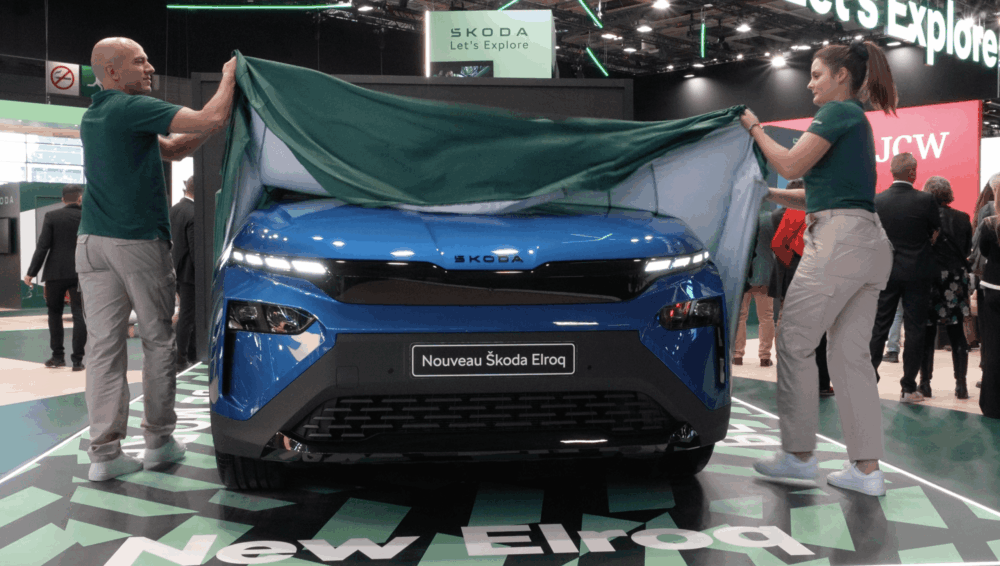
Skoda vehicle being unveiled at a motor show by two people

Insights

What is an Autovista24 Launch Report?

This content previously appeared on the Autovista24 website. Every year, dozens of new cars are launched across Europe. Each bring their own benefits to buyers and the wider automotive market. Autovista24 analyses many of these vehicles in the monthly Launch Report series. Special content editor Phil Curry explains the valuable insights on offer. Carmakers are constantly developing vehicles for the automotive market. This results in either brand-new nameplates or next-generation versions of existing models. These new cars each aim to offer drivers something different in an increasingly crowded market. This could be through their design, interior options, technological advances or driving characteristics. While many vehicle reviews will focus on these traits, the Autovista24 Launch Report offers something unique. These monthly vehicle overviews combine a standard review of the car alongside detailed expert analysis and residual value (RV) forecasts. These combined insights elevate the Launch Report to a key piece of information for automotive industry decision makers. https://youtu.be/ZP3RBB0_jfk Launch Report breakdown Each Launch Report features an interactive dashboard that provides analysis and RV comparisons against three competitors. This information is compiled by experts from key European markets, including Austria, France, Germany, Italy, Spain and the UK. The Dashboard features an overview of a vehicle’s strengths, weaknesses, opportunities and threats. These areas of examination provide a balanced analysis. The strengths segment will look at the best elements of a car, while the weaknesses will point out areas that could be improved. The opportunities section looks at the potential of the model in the automotive market. For threats, the experts look at possible competition, and market conditions that could impede success. Examining residual values Autovista Group experts will also benchmark RV performance against three direct market competitors. These forecast values are determined after 36 months, and market-specific mileages. The study shows the recommended retail price for the model and trim level in question. It also provides the expected value after the time and mileage conditions. This is presented together with the RV, expressed as a percentage of the retained original price. This allows buyers to understand the vehicle’s potential future value. They can then factor this into their purchase decision. This is especially important for fleet buyers, who can understand the financial potential of new models, especially around the average de-fleeting period. This RV information is provided by each market participating in the Launch Report feature. The data is specific to that country, allowing for a more precise and region-specific understanding of vehicle performance. Providing the review Alongside the interactive dashboard, each Launch Report also includes a detailed review of the model itself. This summarises the comments and thoughts of Autovista Group editors, along with Autovista24’s research and experience. The review provides an analysis of the vehicle and adds more context for the dashboard analysis. They are written by experienced motoring journalists and provide a balanced view of each model. This includes more information on design, practicality and driving characteristics. Overall, the Launch Report provides buyers with the complete picture of a vehicle. Alongside the written article, Autovista24 also produces a number of Launch Report videos. These give a visual overview and a detailed look at new models. Alongside this, there is also a breakdown of forecast residual values in select European markets.
Wooden car with protective shield o protect from accident and damage

Insights

What should automotive remarketing and aftersales companies focus on in 2026?

This content previously appeared on the Autovista24 website. What trends have defined 2025 for automotive remarketing and aftersales companies, and what lies ahead? Paul Marklew, enterprise sales director at Autovista Group, speaks with Tom Geggus, editor of Autovista24. How has 2025 been for remarketers? What trends have defined this year for them? Remarketers, such as dealers, auctions and advertising portals, have seen a slow 2025 that has made trading conditions challenging. With current economic uncertainties, including reduced consumer sentiment, there are fewer cars being bought and sold. Profit margins are being squeezed significantly as dealers compete for the buyers that are in the market. This trend is reflected when looking at residual values (RVs) across the vehicles. Since the COVID-19 pandemic, most markets across Europe have seen a pretty dramatic increase in RVs. Dealers have also enjoyed increased profit margins. Now we are seeing a rationalisation of the market. Values are dropping towards pre-pandemic levels, at quite a fast rate in some cases. This has resulted in lower profit margins when the vehicles finally go into stock. Additionally, consumers are holding on to their cars for a little bit longer. This has reduced the amount of stock in the market. How does this compare to the year the aftermarket has had? Aftersales, like part suppliers for example, are still some of the more profitable parts of dealer businesses. The margins in the car are a bit more difficult, but servicing and maintenance continue to be profitable. The businesses dealing with aftermarket parts, which are normally more affordable than OEM parts, are seeing an increase in business. This comes as they move towards increased digitalisation and an improved buyer experience. So, aftersales and remarketing are really experiencing the same meta trends in different ways. Remarketing and consumers As you mentioned, RVs did soar during the COVID-19 pandemic, and now we are seeing a normalisation. How have remarketing companies dealt with this change? For starters, there has been a focus on cost and buyer experience. AI and digital car-buying journeys are coming into the mix a lot more. There is also a focus on the consumer experience, and there is a lot of competition in this area. This is because you can only compete so far on price and remain profitable. Consumers are spending less time in the dealership and more time online. Consequently, some of these online advertising portals, for example, are becoming increasingly important to the journey. So, dealers are trying to capture people online a lot more now, and they are trying to give consumers choice. Previously, we saw businesses introduce online-only models, particularly during COVID-19. Those models had mixed success and varied longevity. But in the end, the businesses that were more successful with this, created choice for customers. These buyers can complete as much of the buying journey online as they would like. Then, if they would like to come into a dealership to complete the transaction, that is available to them. Closed remarketing ecosystem So how do these digital systems lock in buyers? Information is king in this area. Dealers are looking at new ways of providing information to consumers, including agentic AI on their websites. This helps customers do the research in the dealer ecosystem, keeping them on their website. Then they are more likely to convert that into a sale in the end. We are seeing this in the wholesale environment as well. Traditionally, in places like the UK, physical auctions were the way to buy cars. But since COVID-19, the digital acquisition of stock is becoming more common. Platforms that allow dealer-to-dealer customers to purchase stock digitally, either from other dealers, OEMs, or fleet companies, are becoming more common. The key factors in that are going to be getting the pricing right and accurately describing the vehicle condition. Electric vehicle remarketing Another hurdle for remarketing and aftersales is electric vehicles (EVs). How can the relatively low RVs of these vehicles be managed? The depreciation happens, at scale, in the first life of the vehicle. A lot of first-life EVs go into fleets and leasing. Realistically, that loss is being handled by the businesses that are then remarketing the cars. But EVs do remain a point of uncertainty. In some markets, they are difficult to insure. In others, they are difficult to source parts for. In some countries, they do not have the best charging infrastructure. Some of the markets, like the UK, are bucking these trends. RVs are low, but this is mainly due to the fast development of EV technology. There is also a knowledge gap to overcome, with dealers looking to upskill themselves. Yet, EVs are selling pretty well in the UK, even used models. As long as the dealers buy at the right price, they are not having much difficulty selling them. There are always going to be deviations from that trend, but overall, the UK EV market is pretty strong. What about in other countries? What we are seeing a lot of in mainland Europe is the shifting from one country to another. Many used EVs have low RVs within one country, like Germany, for example. But the vehicles are moved to the Nordics, for example, where the used EV market is strong and RVs are less disrupted. So, if you remarket your vehicle in a country with a low RVs, that is what you will experience. However, if you move it to a country with a stronger used EV market, you avoid absorbing those financial outcomes. Creaking supply chains One problem the industry has dealt with this year is disrupted supply chains. How have aftersales businesses managed? This seems to be a problem more for vehicle manufacturers. For non-OEM parts, business is actually looking pretty good. There are several factors at play. More insurance companies are looking to control costs. Before, they may have had policies that focused on like-for-like replacements. Those become difficult policies to manage during supply chain disruption as the costs of these parts rise. Increasingly, they are looking at viable aftermarket alternatives and, in some cases, recycled parts. When we look at OEM parts and how businesses are trying to adapt to this, digitalisation is a key trend. We are seeing more e-commerce journeys at play. There is also an increase in purchase channels. Dealers are looking at how they can sell parts directly to consumers online. Again, having the right data to facilitate picking the right part for the right car is key. Opportunities and challenges So, moving into 2026, where do you see the biggest opportunities and challenges for remarketing and aftersales companies? I am sure we will see more overseas investment resulting in the consolidation of dealerships. When the top line is pressured, reducing costs is key. So, dealers are going to do that by investing in growing their businesses through acquisition. There is going to be investment in digitalisation to reduce costs. They are going to make sure they have good quality data to make sure that they are making the right purchasing and selling decisions. We will also keep seeing vehicles moving around countries in mainland Europe, ensuring businesses get the best possible price. This is because the desirability and profitability of certain vehicles are different from country to country. The aftermarket will see something quite similar. Digitalisation, consolidation, and the reduction of costs to ensure profitability. For example, we are seeing a lot of parts wholesalers grouping together to share costs. This is not necessarily acquisition, but the forming of powerful buying groups to create economies of scale. So, both sides of the market will need to manage the bottom line, where there is less flexibility in the top line. This means AI, digitalisation, and economies of scale.
|||||

Insights

How is used-vehicle retail changing?

This content previously appeared on the Autovista24 website. Residual value (RV) pressure, emerging Chinese brands, growing profitability and the importance of battery-electric vehicle (BEV) sales. Autovista24 journalist Tom Hooker analyses how and why the landscape of used-vehicle retail is changing. Industry associations, automotive experts, and carmaker representatives gathered in Frankfurt for the Used Vehicle Retail Summit. The event covered various used-car market topics, including current RV trends, building consumer trust and the sale of BEVs. Europe’s residual value development EV Volumes director of content, Christian Schneider, explained how RVs have changed in Europe over the last few years. ‘During the pandemic, because of all the supply shortages, a lot of people were happy that RVs were growing through the roof,’ he explained. ‘But over the last two years, we have seen that across all fuel types, across most countries in Europe, RVs are dropping. They are coming back slightly to a pre-pandemic level, but we still see RVs across various parts of Europe that are above pre-pandemic levels. ‘We see supply and demand balancing a little bit more at the moment. We also see that there is a lot of economic pressure and economies are struggling. So, of course, that has an impact on RVs. For 2025 and 2026, we do not expect the pressure on RVs to get better,’ stated Schneider. Increased prices He also noted the impact US tariffs could have on the European used-car market. ‘What we are expecting, if the 25% automotive tariffs stay in place after July, is that the prices for European cars in the US will grow. That also will mean that European export volume to the US will shrink.’ EV Volumes director of content, Christian Schneider ‘But for OEMs, they are producing cars, and they must be sold somewhere. So that means in Europe, you will see increasing volume in our European brands over the next months and maybe even years. This is not a big thing for electric vehicles (EVs), because electrification in the US is not advanced.’ He highlighted that the bigger impact will be on internal-combustion engine (ICE) vehicles. Overall, if higher US tariffs remain after July, there will be additional risk to RVs. EV Volumes is also observing an increasing number of used BEV sales. However, RVs are dropping at an even steeper rate than the overall market. This is because more BEVs are entering the market than before. However, most of this volume is not coming from private buyers. Instead, it is being pushed through fleet channels. Furthermore, a lot of the incentives offered in European countries are only offered on the new-car market. These factors are generating an artificial oversupply for used-car markets. China’s growing influence Chinese BEV volumes are forecast to continue to grow in Europe over the next few years. Carmakers from China held a 7% share of the European new-car market in 2024. EV Volumes expects this to grow to 10% this year. Despite this, RVs of these models still trail behind BEVs originating from other regions. ‘In Germany, Chinese brands are performing nine percentage points (pp) lower than those from established Asian, European or US brands,’ highlighted Schneider. EV Volumes director of content, Christian Schneider ‘But we saw over time that this is getting smaller. Around one year ago, there was approximately a 14pp or 15pp difference between the brands. So, they are closing the gap, but we still see that the brand reputation takes significant time to fill up, especially for used-car buyers.’ In Spain, this gap is smaller, as the country’s domestic brands are not as strong compared to those in Germany. Used-car retail With overall BEV RVs struggling compared to other powertrains, and an increasing number of all-electric models entering the used-car market, how can dealerships survive? As AECDR secretary general Friedrich Trosse explained, a more effective dealership and communication strategy is needed to keep used-car buyers engaged. ‘The used-car market is going to be the low-income segment of BEVs, because we are never going to have something like a Volkswagen Beetle ever again that is affordable and has modern technology,’ he commented. For retailers, planning their overall used-car market strategy is also becoming more important, especially when compared to their new-car business. Left to right: Johan Verbois, Co-founder MA5 Used Vehicle Consulting group. Friedrich Trosse, Secretary General AECDR. Luis-Maria Perez-Serano, Chairman of the Board at CARA. Rodrigo Ferreira da Silva, Vice President and Chairman of CECRA ‘I think that used cars, for retailers and dealers, are an amazing opportunity. In some mature markets, the used-car business is double the size of the new-car business,’ outlined CARA board chairman Luis-Maria Perez-Serano. ‘You can achieve more money and higher margins. Many retailers are now earning more money from used cars than new cars. What is maybe even more important is that used cars are essential for customer retention. They play a major role as the first entry point for buyers,’ he said. However, Serano added that the used-car market is a complex business. Having a good digital interface is essential for dealers, and he believes more can be done to make the customer’s digital journey easier. This includes showing EV battery health checks online. Serano also discussed cross-border sales in Europe, and that despite the EU being considered as a single economic market, this is not yet the case for the used-car market. However, improving the facilitation of these sales could create opportunities for retailers who could maximise revenue by moving vehicles to other countries. Additionally, he stated that there is still a lot to do in terms of educating and training staff in used-car sales and remarketing. Missed opportunities in retail ‘I still see a lot of missed opportunities in every country. I know most markets have evolved into a more balanced ratio between using new and used cars, but the profitability has not been in the new cars as it has been over the past years,’ explained vice president and chairman of CECRA, Rodrigo Ferreira da Silva. He also highlighted the importance of the customer having access to accurate in-vehicle data. He advocated for the implementation of a car pass at a European level. This is a vehicle diagnostic report that provides a certificate to buyers at the time of sale, verifying the vehicle's mileage accuracy. It has been designed to fight against odometer tampering in the used car market. However, the service is currently only offered in Belgium and the Netherlands.

Displaying 9 of 9 insights