News & Insights

Tagged:
Clear filters
Content Type
Topic
Industry
Segment
Agent signs a contract for the purchase or Leasing of a new car. New car keys in the foreground.

Insights

What is car financing?

This content previously appeared on the Autovista24 website. Car financing is key to the automotive ecosystem. It can heavily influence how cars are bought and sold, plus, it provides consumers with multiple purchasing options. But what exactly is it? Tom Hooker, Autovista24 journalist, explains how the process works from start to finish. Finding a vehicle purchase can be difficult for buyers. Car financing allows customers to possess a vehicle without paying for its full value upfront. It converts a large, one-off purchase into a series of predictable payments. In turn, it plays a vital role in how cars are priced, sold, and managed across the automotive industry. https://www.youtube.com/watch?v=wZqEZdeIVUk Car financing simultaneously prices the value of the vehicle today and its forecast residual value (RV). It also determines the cost and risk of lending money over time. The payment method links the car itself to an agreement. This sets how the car is paid for, who takes on the financial risk and who earns money from the deal. Furthermore, it establishes when the value of the car is recovered. This could be retrieved upfront, gradually through monthly payments, or at the end of the contract. Why does car financing exist? For many consumers, tying up money in a depreciating asset may not be a desirable financial decision. Car financing solves this by spreading the cost over time. It aligns payments with consumer income, usage, and expected vehicle depreciation. Meanwhile, for manufacturers and dealers, it can support consistent demand. Customers may be more willing to buy when monthly payments feel manageable, instead of paying one lump sum. This can allow dealers to sell higher-value vehicles and avoid sales declines. It can also enable them to have more influence over what models customers choose through finance offers. From a commercial standpoint, car financing is a framework made up of different structures that allocate risk in different ways. Some finance products prioritise ownership, while others prioritise usage. Sometimes, RV risk sits with the lender, and in other cases, it remains with the customer. These RVs directly influence pricing competitiveness, profitability, and used-car market performance. Accurate RV forecasting can support lower monthly payments and healthier margins. Conversely, poor forecasting could lead to stock imbalances or value erosion later in the vehicle lifecycle. Where do finance and insurance fit in? In most retail transactions, the finance product is sold by the dealer on behalf of a finance provider. Some finance providers are captives, and others are independent finance houses. These providers supply the funding that allows dealers to present finance agreements to customers. Once a customer has chosen a vehicle, the focus shifts to the design of the finance agreement. This turns the vehicle price into a specific, personalised offer. This stage aims to bring everything together into a single agreement. The contract must meet lender requirements and comply with regulations. Clarity is particularly important, as this part of the process is often unfamiliar to customers. Ultimately, car financing can influence which vehicles sell and how often customers return to dealerships. It also plays a vital role in residual value management and how risk is distributed across the automotive ecosystem. As vehicle prices rise, financing could play an increasingly important role in shaping the automotive industry.
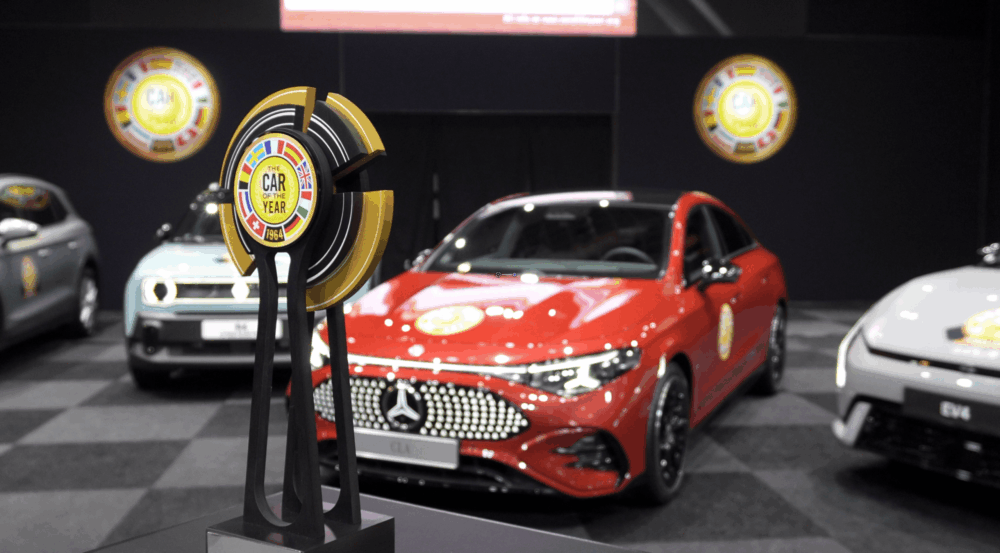
Car of the Year at the Brussels Motor Show 2026

Insights

Key highlights from the Brussels Motor Show 2026

This content previously appeared on the Autovista24 website. With model debuts and the European Car of the Year award, the Brussels Motor Show is an important automotive event. Autovista24 special content editor Phil Curry presents highlights from this year’s show. The Brussels Motor Show has grown in stature in recent years. Since the doors closed on the Geneva International Motor Show (GIMS) in Switzerland, automotive brands have shifted their focus to the Belgian event. As the first automotive event of 2026, the Brussels Motor Show also provided a look at potential upcoming market trends. Talks of fresh partnerships, new brands, plus continued fleet electrification highlighted Europe’s developing automotive market. Autovista24 looks at a selection of new models and interviews the winners of the European Car of the Year 2026.  https://www.youtube.com/watch?v=IJhAc0V5cTI Plenty to see at Brussels Motor Show The halls at the Brussels Expo were packed with carmakers, many bringing new or refreshed models to display. This included the Kia EV2, a new battery-electric vehicle (BEV) which completes the Korean brand’s EV line-up. By adding a small city-car model to its range, the company can cater to many different drivers. Kia also introduced an expanded GT model range, including the EV3 GT, EV4 Hatchback GT and EV5 GT. Opel used the show to reveal the new Astra, with an improved ‘Vizor’ headlight profile. This features an illuminated badge sitting central to new lighting strips. The Stellantis Brand also redesigned the interior to make it more comfortable. Subaru arrived at the event with two BEVs, the e-Outback and the Uncharted. Both cars feature all-wheel drive, keeping the brand’s offroad credentials intact. Mitsubishi used the show to highlight its new range, as it makes a European comeback. Models included the ASX, the Eclipse Cross, the Grandis and the Outlander PHEV. With the brand working in partnership with Renault, it will be hoping to re-establish a foothold in the European market. Another brand that will be working with Renault is Ford, which confirmed two new small cars will arrive in 2028. The carmaker brought its Ranger plug-in hybrid (PHEV), alongside a mix of passenger cars and light-commercial vehicles. Central to this was a remote-control car racing track, with drivers able to race using simulation rigs. Who won European Car of the Year 2026? The Brussels Motor Show is also the new home of the European Car of the Year awards. A shortlist of seven new models was judged by automotive journalists from across Europe, with points awarded to each. This year, the Citroen e-C5 Aircross, Dacia Bigster, Fiat Grande Panda, Kia EV4, Mercedes-Benz CLA, Renault 4 and Skoda Elroq made the shortlist. Of these, judges awarded the Mercedes-Benz CLA the most points, giving it the 2026 title. This was the first time the German carmaker won European Car of the Year since 1974. The result also broke a two-year winning streak for Renault. It saw its Scenic take the title in 2023, and the Renault 5 in 2024. ‘It really means a lot to me, and also the Mercedes-Benz team, many hundreds and thousands of people who worked to make this car happen. It is a great reward to get this trophy from journalists across the whole of Europe, especially with many countries voting the CLA in first place,’ Oliver Löcher, vice president, overall vehicle integration at Mercedes-Benz, told Autovista24. ‘In some aspects, the CLA is a pivotal car. It is the first on our new compact platform, on which we will now roll out derivatives, like the GLB, which we launched at Brussels. It is also the first car with our latest generation e-drive, featuring 800-volt, high-efficiency fast charging. It is also the platform for our new MBO operating system. The CLA is, therefore, the frontrunner of a new generation of Mercedes-Benz cars,’ he added. ‘This year will see a lot of new-car launches from ourselves, making it a very exciting and busy year. But for now, we have the CLA, and I am very happy to see it win the European Car of the Year,’ Löcher concluded. Awards come to Brussels Motor Show The European Car of the Year award continues to be coveted by carmakers. This was clear in the reaction of the Mercedes-Benz team, with celebrations continuing throughout the event. ‘Even though the European Car of the Year award has been running since 1964, it is still very relevant. For consumers, today they face a lot of new technologies, and even new brands that were not heard of some years ago,’ commented Søren W. Rasmussen, president of the jury at the European Car of the Year. ‘This means they need guidance, and the Award winner, and its finalists, all help guide consumers directly to the best cars in the market. It is, therefore, very important for carmakers to have this prize,’ he added. The European Car of the Year award was a staple of the Geneva International Motor Show. But moving to the Brussels Motor Show has allowed the award to provide a full year of benefits for the winner and the finalists. Yet while the Mercedes-Benz team celebrate winning the 2026 prize, attention has already turned to the 2027 award. ‘We now start looking into the cars which can be candidate cars for the prize next year. As we walk around this exhibition, we can see already now there are some very good cars which will be definitely on the long list, and may make the shortlist for the end of 2026,’ concluded Rasmussen.
Chinese flag with a headlight of a car||||

Insights

How are Chinese companies entering the European automotive sector?

This content previously appeared on the Autovista24 website. Currently, one of the major talking points in Europe’s automotive market is the entrance and expansion of Chinese companies. Autovista24 journalist Tom Hooker explores their plans and strategies in the region. A total of 116 exhibitors at this year’s IAA Mobility in Munich came from China. This was up from 70 in 2023, which in turn was more than double the figure in 2021. Chinese companies at the event ranged from high-volume car brands, battery producers, luxury marques and intelligent mobility solution providers. Cars made in China accounted for 6% of sales in the EU in the first half of the year. This was up from 5% in the first half of 2024, according to ACEA. Some of this share is the result of European brands manufacturing in the country, such as Cupra. However, China’s automotive expansion into Europe is undeniable. Marques including BYD, Xpeng and Hongqi have recently announced production plans, research centres or regional hubs in Europe. So, how are these companies entering the continent? What are the main challenges? Additionally, how important are events like IAA Mobility in increasing consumer awareness? High-volume Chinese brand Between January and July, Xpeng sold 234,374 electric vehicles (EVs) across the world, according to data from EV Volumes. While the majority were delivered in China, 4.2% were sold in Europe. Autovista24 asked Xpeng G9 product manager Chloe Ding how the brand plans to increase its sales in the region. Source: Xpeng ‘Of course, every company wants to give a very big sales volume in the European market, that is no doubt. For our products, we actually said, we are more concerned about how we choose to satisfy our users, because if we cannot satisfy them, we cannot be eager for big sales,’ Ding explained. ‘Sales is just a number target. Our target is in the product itself and how to make it better.’ She highlighted how Xpeng can learn something from Kia and Hyundai. The two non-European brands have created a foothold in the market. Ding then acknowledged how over-the-air updates and aftersales services are vital to customer satisfaction and trust. Dealer network importance ‘We have a plan for how to make our network in Europe bigger. There is no doubt that we would ask for more dealers to join our network,’ Ding outlined. ‘Also, we would provide aftersales services. We want to hear from our users, what they say we can improve, and what help they need. Most of our product details come from when we hear from our users.’ Christoph Ruhland, director of business development at Autovista Group, recently highlighted the differences in consumer habits between Europe and China. In Cracking the code: Chinese EV brands entering Europe, he recognised the importance of establishing a dealership network. ‘A few brands started with flagship stores, big stores in major European cities. This approach does not work in Europe; it works in China.’ With longer working weeks in China, consumers are more likely to buy a car in a mall on a day off. ‘Europeans, they want to buy cars at dealers. It is also important to have a strong dealer network for aftersales. So do not only think about sales, also think about aftersales,’ he added. Chinese brands' market positioning One major challenge for Chinese brands entering Europe is deciding how to position themselves. Some carmakers may focus on their cost-to-quality ratio, technology features, or luxury status. So, where does Xpeng sit? Source: Xpeng ‘We cannot have the same level of luxury brands like Audi and BMW. So, this car may be focused on the mass or mainstream market. But we believe that one day we will have many more customers, and our reputation will be established. So, one day we may have cars which will be seen as luxury,’ Xpeng P7+ product manager Eva Han told Autovista24. Attracting more customers can be achieved by appealing to different demographics and, in turn, different vehicle segments. ‘We have a rich car line for the Xpeng brand. In China, we have three different platforms, which run from high to low. Because the European market is one of the biggest markets worldwide, we will add more and more cars,’ commented Han. ‘The P7+ will be launched on the European markets in February 2026. This car only offers a two-wheel drive for the Chinese market. But, for the European market, we will add four-wheel drive,’ she stated. Chinese supplier growth Understanding the differences between Chinese and European consumer preferences is not only vital for carmakers but also for automotive suppliers and mobility solution providers. One such company is Desay SV. https://www.youtube.com/watch?v=BsqbZEVbRkQ The company presented many of its products at IAA Mobility. This included an AI-powered intelligent cabin platform, display solutions and full-stack advanced driver-assistance systems (ADAS) technologies. ‘I think the average age of users of vehicles in China is younger than in Europe. So, I think the Chinese consumers are more used to the smartphone-like digitalisation, and the digitalised features of the vehicles,’ head of Desay SV Europe Yang Yong told Autovista24. ‘European customers' demands are, to my understanding, more diversified, because of a longer automotive culture and history, and the long-lasting culture of horsepower, engine performance, braking and suspension.’ ‘So, I guess these are still more important to the European customers. But I believe digitalisation and intelligence will still be welcomed,’ Yong noted. These differences can mean that products are adapted for different regions. For example, in China, settings and vehicle information are largely accessed on the display. But Yong highlighted that users still want to have some mechanical buttons in Europe. Localising production The company recently celebrated the structural completion of its factory in Spain, joining other Chinese companies which have built foundations in Europe. Source: Desay SV ‘I think the requirement for localised production started from the COVID-19 period. Every OEM was talking about supply chain security, to make sure that if something happens in some regions, you will continue production in other regions,’ said Yong ‘For us, it is very important to show the customer and the people that we are very committed here, we are not a short-term business. We really want to be part of the industry and the ecosystem that we want to develop together,’ he added. The ‘China speed’ advantage One of the biggest advantages that Chinese companies can use to aid their European growth is fast development speeds. During Autovista Group’s recent webinar, Ruhland compared the BEV development speed in different regions, when the platform is already completed. ‘Europeans and Japanese need the longest, between 42 and 60 months. The US can do it a bit quicker, and Koreans can do it within three or four years. But Chinese OEMs can do it between 18 and 24 months. 18 months is now more or less the average,’ he said. Yong also highlighted this development speed when talking about Desay SV’s cabin display solutions. ‘I think everybody right now is talking about the so-called China speed, right? In this market, we have to cater to the ever-evolving requests from users and customers. We have to implement all these new requirements the quickest, with the best quality and cost, so that we can meet the requirements of the customers,’ he outlined. Can Chinese brands become memorable? One hurdle Chinese carmakers face is building a memorable brand. However, many marques are entering Europe using number-based naming conventions. This includes Avatr, a premium EV brand owned by Chinese OEM Changan. So, can they still stand out? ‘It is a tricky question. It can polarise opinion. In my opinion, Avatr is the brand, and it should be the bigger name and needs to be remembered,’ Avatr advanced senior exterior designer Pedro Ruperto Mallosto das Chagas told Autovista24 at IAA Mobility. https://www.youtube.com/watch?v=VCbzFmbWMu4 ‘All the cars are part of a family that needs to be consistent. The numbers are more like a quote to define the Avatr products in the range. So, the brand is more important than each specific car,’ he stated. Ruhland highlighted that unique selling points (USPs) can be a vital factor in building brand awareness. ‘Every Chinese OEM that wants to be successful in Europe needs to answer the question “why should a European car buyer that can already pick among 40 existing European brands, why should they buy a Chinese car?” If this European car buyer goes for a Chinese car, why then should they pick your brand?’ he asked. ‘The brand needs to have a core USP that is easy to remember and easy to communicate. I always recommend looking at how Hyundai and Kia did it 20 years ago when they started their very successful journey in Europe. ‘They came up with very long warranties,’ Ruhland said. ‘This could be a strong USP for a Chinese brand. Imagine a Chinese brand would say “our cars have a 10-year warranty, including battery.”’ ‘This would be a very strong message. This would boost residual values, and could really help create awareness,’ he commented. Designed to stand out One way to create a USP is through design. With a strong and consistent design language, customers can easily recognise a brand and its models. Source: Tom Hooker, Autovista24 ‘I think colour, material and finish (CMF) design is the big difference compared to other Chinese brands. We really lead the design with CMF; it is not just applied afterwards. When you look at the car, you can easily remember the design and intention,’ Avatr senior CMF designer Maud Balmisse told Autovista24. Chagas added that through the front fascia and light signature present on Avatr models, they are recognisable in China. The latter can be used as a clear way to distinguish your brand from others. ‘Light signatures are increasingly recognised or used in some respects. They are perhaps the most easily identifiable singular thing, but I would not say that they are necessarily the most important,’ Car Design Research director Sam Livingstone told Autovista24.
Waves of the equalizer. Audio wave talking. Voice speaking music sound line levels|Audio wave microphone icon. Voice recording podcast mic microphone button icon on black background.

Insights

The Automotive Update: The future of used-car retail and new model announcements

This content previously appeared on the Autovista24 website. What is shaping the future of used-vehicle retail? Could residual values (RVs) bounce back by the end of 2025? Which model announcements were made this week? Tom Geggus, Autovista24 editor, explores these topics in The Automotive Update podcast. This week, what impact will trade tension, increased battery-electric vehicle (BEV) volumes, and artificial intelligence (AI) have on used-car retail? Did RVs stabilise in June, and what role did new-car list prices and supply have? Plus, what major new model announcements made the headlines this week? Subscribe to the Autovista24 podcast and listen to previous episodes on Spotify, Apple and Amazon Music. Residual values impact retail Remarketing experts and industry insiders gathered in Frankfurt at the end of June for the Used Vehicle Retail Summit. As covered by Autovista24 journalist Tom Hooker, one of the biggest talking points at the event was RVs. EV Volumes director of content, Christian Schneider, outlined how values have fallen over the last two years. This followed a surge during the COVID-19 pandemic. Currently, supply and demand are gradually balancing. However, due to considerable economic pressure and struggling economies, the pressure on RVs is unlikely to let up in the immediate future. He went on to explore the additional RV impact of tariffs on the European used-car market. Schneider also talked about used BEVs, which are recording an increasing number of sales. However, the all-electric models are also seeing RVs fall at a steeper rate than the overall market. Can AI benefit retail? AI emerged as a key topic at the summit. McKinsey & Company partner Peter Cholewinski believes ‘a highly disruptive change is coming.’ This follows the release of an increasing number of large language models (LLMs). Agentic AI proved a key talking point. These models are designed to autonomously make decisions and act. However, very few companies can capture the value of this new technology due to its difficulty. McKinsey & Company project manager Dr Lisa Schrewentigges showed how an AI tool is helping an unnamed German dealer group. The product can tailor and personalise messages for customers and online leads. The tool was developed within six weeks and helped the dealer group record a 20% increase in conversion rates. Each sales representative also saw an additional 15 to 25 vehicle sales annually on average. Will RV declines continue? Despite a year-on-year %RV declines across seven European used-car markets, June’s Monthly Market Update revealed value stabilisation in some countries. Three key markets witnessed an uptick in RVs compared to May. However, four nations saw %RVs continue their decline. One factor which may have influenced this was a notable rise in new-car list prices. In June, six out of the seven markets saw list prices rise compared to 12 months ago. New model announcements The Polestar 7, a premium compact SUV, will be launched in 2028. Meanwhile, Geely launched its BEV SUV, the EX5, in Greece at an event in Athens. Ferrari revealed the new Amalfi, which replaces the Ferrari Roma. On 10 July, Mazda will unveil the third generation of the CX-5. Elsewhere, the next iteration of the Skoda Octavia will be launched at this year's IAA show in Munich, according to Car Magazine. Finally, Lancia will reprise the Delta HF Integrale next year, according to Autocar.
|

Insights

The Automotive Update: Europe’s leading BEV market, emissions pooling and CES 2025

This content previously appeared on the Autovista24 website. Early January 2025 has seen a flurry of major automotive news stories, from emissions pooling to CES. Autovista24 journalist Tom Hooker discusses the week’s biggest headlines. Which European market sold the most battery-electric vehicles (BEVs) in 2024? The UK reconfirms its phase-out date for the sale of new petrol and diesel cars. Carmakers are pooling their emissions figures to navigate CO2 targets. CES 2025 featured some important new automotive technology. Which model announcements made waves this week? Xpeng and Volkswagen announce a new joint charging network in China. Rolls Royce confirms the expansion of a UK production facility. Subscribe to the Autovista24 podcast and listen to previous episodes on Spotify, Apple and Amazon Music. The BEV battle The 2024 registration results for Germany and the UK have been released. The UK recorded growth across the year while deliveries in Germany declined. This drop was largely due to a slump in the BEV sector, which fell by 27.4%. This meant the country lost its title as Europe’s best-selling BEV market. The UK took the mantle instead, thanks to a 56.8% BEV surge in December. Meanwhile, the UK government confirmed it will bring the sales ban on new petrol and diesel models back to 2030. This deadline has changed on multiple occasions over the past few years. It was first announced in 2017, with a target date of 2040. In 2020 this was brought forward to 2030, before its push back to 2035, which was confirmed in 2023. Carmakers are ‘pooling’ CO2 emissions with Tesla and Polestar to meet the EU’s 2025 targets. This means manufacturers with lower electric vehicle (EV) sales can buy emissions credits from other brands that are comfortably meeting targets. Stellantis, Ford, Toyota and Mazda are set to pool with BEV manufacturer Tesla. Meanwhile, Polestar, Volvo Cars, Mercedes-Benz and Smart will pool their emissions together. CES 2025 and new models At CES 2025, Sony Honda Mobility confirmed it is now accepting online reservations for its Afeela model. However, the company is currently only accepting orders from customers in California. Honda presented a world premiere of two prototype models from its 0 Series. BMW also revealed new in-cabin technology to improve the user experience. These systems will appear in new models, including the Neue Klasse, from the end of this year. Elsewhere, Skoda unveiled its new Enyaq on Wednesday. Renault revealed the interior of its Twingo E-Tech prototype at the Brussels Motor Show. BYD also introduced the BYD Atto 2 to its European lineup. Toyota confirmed its new Urban Cruiser will be rolled out in late summer 2025. Genesis took the covers off its redesigned GV60 crossover SUV, with more details expected in the first quarter of this year. Xpeng and Volkswagen (VW) announced plans to jointly build one of the largest super-fast charging networks in China. With a target of over 20,000 charging piles operated by the carmakers across 420 cities, both Xpeng and VW customers will be able to access the services. Rolls Royce revealed expansion plans for its production facility in the UK on Wednesday. More than £300 million (€358 million) will be invested into its Goodwood site. This is the largest financial commitment made to the location since it opened in 2003.

Displaying 6 of 6 insights