
A car battery's lifespan can escape a car owner's consideration until the battery fails and renders the vehicle immobile. Often, this occurs at the most inopportune time and requires a call to roadside assistance and a tow to a service garage. It is imperative to understand your battery’s age and health. This article describes how long car batteries last, how to determine the age of your battery, and how to test its strength.

There are a few primary types of vehicle batteries, including lead-acid, AGM (absorbent glass mat), EFB (enhanced flooded battery), and lithium-ion. With the ability to last over 10 years, the lithium-ion battery has the longest lifespan. However, it is also the priciest option and is more common for hybrid and electric vehicles. AGM and EFB batteries last approximately 4 to 6 years while a lead-acid battery lasts 3 to 5 years.
There are several ways to determine the age of a car battery. The simplest is if you bought your car new. A brand-new car has a brand-new battery. So, your battery's age is the same as the time elapsed since you purchased the car.
Another straightforward way to determine battery age is to buy the battery new, as a replacement for one that went bad. In this case, you can refer to the original receipt for the date of purchase. If the receipt does not exist, a dealership or auto parts store may have a bill of sale on record and can provide the purchase date.
Many people buy used vehicles, which means they can't determine the battery's history or age unless the previous owner provides the documentation. When drivers don’t have documentation of their battery’s age, there is a more methodical approach to finding out when the battery was manufactured and shipped to the wholesale distributor.
The first step is to locate the battery under the hood and look for a sticker with date information printed in a recognizable convention. For example, "3/15" would simply mean the battery was manufactured in March 2015.
If there is no date sticker, the battery has a strip, engraving, or heat stamp with a decipherable alphanumeric code. Typically found on the battery cover and sometimes on the battery itself, this code can be several characters long, giving the date information in the first two characters in the sequence. The first character is a number between zero and nine that corresponds to the last digit in the year in which the battery was manufactured. For example, an eight refers to 2018. The second character is a letter that refers to the month the battery was made. The letters A through L directly correspond to January through December. For example, the letter 'C' refers to March. Putting it together, "8C" indicates a manufacturing date of March 2018. These characters can be interchangeable, so "8C" and "C8" mean the same thing.
If there is no code on the battery, you can estimate its age based on appearance. The amount of corrosion on and around the terminals is an indicator of age. The more there is, the older the battery.
The most common sign that a battery may need replacement is a slower-than-normal engine crank phase when you try to start it. It sounds as if the engine is struggling to start. If you notice this, you can also check battery strength by turning on the headlights while the car is off. Dim headlights are an indicator that the battery may be approaching the end of its life.
However, there are times when the battery fails due to cold temperatures or if you don't drive the car for a long time. These are not necessarily indicators of a dying battery. A jump start can rejuvenate the battery and bring it back to its normal strength level in such cases. But if the battery is old and weak, a jump start is not the solution. It may start the car for the moment, but the battery will likely fail again soon.
Whether the battery is getting old or there is evidence of imminent failure, getting a battery tested every six months after the three-year mark is a good idea. A battery test is usually a free service offered by an auto parts retailer or an auto service club such as AAA. A quick and simple reading lets you know if your battery is still running strong or needs replacement. Due to corroded connection points and the battery's weight, consider professional installation with proper disposal of the old battery over a self-installation.
If you prefer to conduct the battery test yourself, you can do so using a multimeter. Costing as little as $10, a multimeter is an instrument that measures amps, volts, and resistance from an electrical source. Ensure the vehicle is turned off, then attach the multimeter’s red probe to the battery’s positive terminal and connect the multimeter’s black probe to the battery’s negative terminal. If the battery is in good health, then the multimeter should display a reading in the range of 12.2 to 12.6 volts. However, anything less than 12.2 volts denotes the battery is not at full charge and requires recharging or replacement.
After testing the resting voltage, the next multimeter test is to measure the voltage when starting the vehicle. Here, a second person is required to turn on the ignition. As the vehicle turns on, the voltage drops. If it drops under 10 volts, charging or replacement is necessary. Once the car starts to idle after the crank cycle, the voltage should plateau in the 14- to 14.5-volt range. Should the voltage fall below 14, there is an issue with either the battery or the alternator.
Without a functioning battery, your vehicle won’t start. Thus, it is imperative to understand your battery’s age and health. You can expect your battery to last about three to five years. Following proper testing protocols and being aware of battery failure symptoms should hopefully give you enough foresight to recharge or replace your battery before getting stranded.



With a purposeful new design and some trail-ready upgrades, the 2027 Hyundai Tucson is pushing the brand's best-selling crossover SUV into more aggressive territory.
Read the Full Article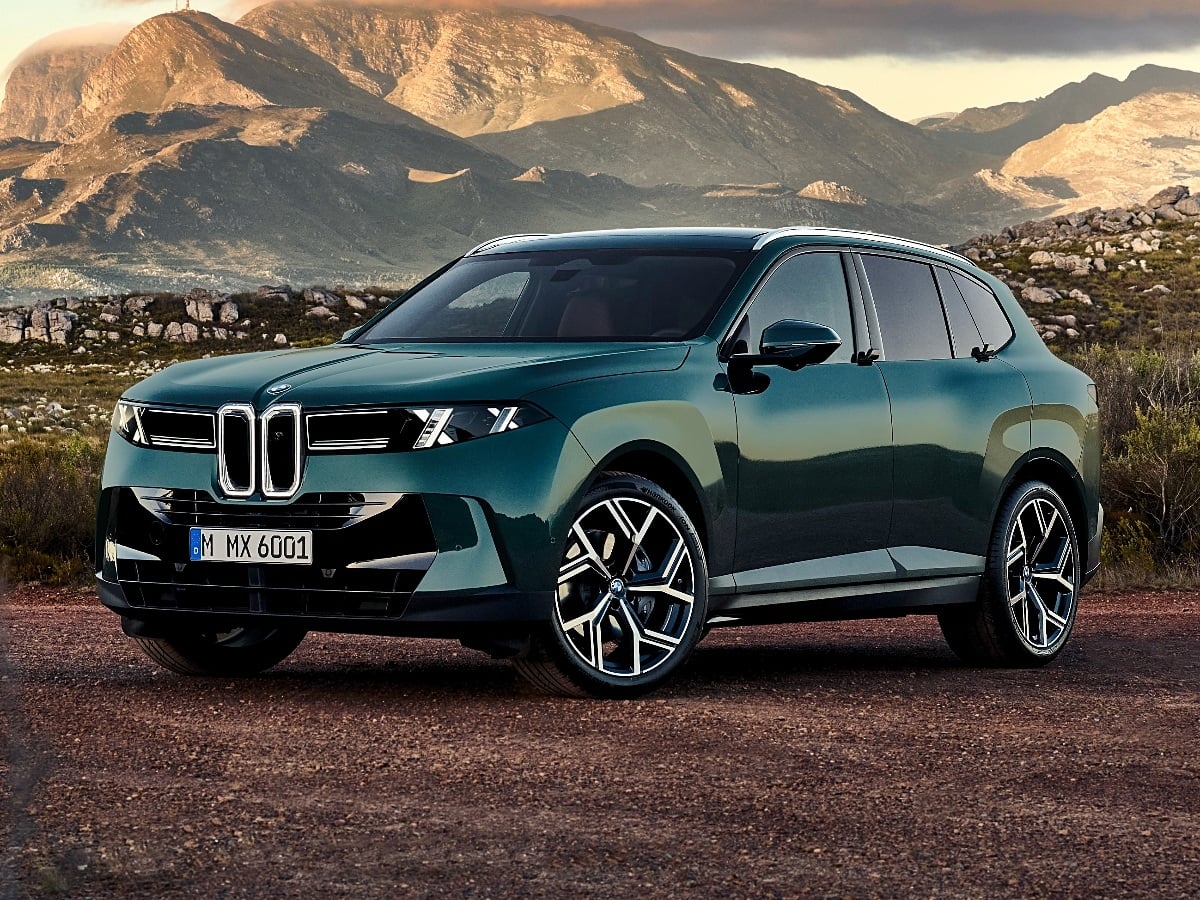
For more than 25 years, the BMW X5 has helped to define the luxury SUV segment. Now, the redesigned fifth-generation 2027 BMW X5 arrives with the automaker’s Neue Klasse styling, a roomier interior, ...See More
Read the Full Article
One of Lexus's most popular models, the NX crossover SUV is also one of the most affordable in the company’s lineup. The 2027 Lexus NX transitions to hybrid-only powertrains, and gets revised ...See More
Read the Full Article
The new 2027 BMW i3 boasts an estimated range of up to 440 miles, 400-kilowatt DC fast charging capability, bidirectional charging to a home or the grid, and next-generation technology.
Read the Full Article