
As a car owner, you’re likely to run into your fair share of engine issues. While some are rarer than others, you could experience oil leaks, overheating, and multiple other things. These problems vary in cost, and you need to be aware of how much the repairs will be.

It never hurts to be knowledgeable about any possible scenario, especially when it concerns something complex as the timing chain.
The timing chain is an essential component of your vehicle. It plays a very significant role and, thus, must be fixed as soon as possible.
An internal-combustion engine is a heat engine that converts energy from the heat of burning gasoline. When all is over, the burning gasoline turns into mechanical work, or torque, which applies to the wheels and creates vehicle movement.
Engines have pistons that move up and down inside metal tubes (cylinders). They, in turn, connect with the crankshaft that spins with their help. Depending on the vehicle, there may be between two or twelve cylinders with the corresponding number of pistons.
Modern engines undergo a specific cycle: combustion, intake, compression, and exhaust. Combustion pushes the pistons down from the top of the cylinder. As engines need air to burn fuel, during intake, valves open up and allow ambient air to come in. When the piston reaches the bottom, the valves close for compression and are then sent upward to absorb the intake charge. After that, what remains goes out of the automobile through the exhaust system.
As we’ve discussed how the engine works, you might wonder where exactly the timing chain factors in. Its primary function is coordinating the rotation of the crankshaft and camshaft. It allows the valves to open and close when each cylinder is fired.
The neatly organized cycle breaks if the timing chain fails to operate correctly. If the pistons and valves don’t fire or move, your engine will surely suffer significant damage. However, a few warning signs can help you react in time.
If something happens with the chain or it succumbs to wear and tear, you should be able to easily spot that there’s a problem because of well-pronounced symptoms. They are as follows:
Replacing a chain can get complicated quickly; thus, labor costs are way up there. You’ll have to bite the bullet and pay around $400 and $1,000 for installing a new one. Even though it’s costly, it’s better than the DIY-style option due to the risks and exhausting difficulty.
However, if you come to the auto shop too late, you might have to replace the whole engine. In this case, the replacement will set you back by $6,000, which is enough for some to send the automobile to a junkyard.
If you notice any symptoms, hurry and get to an auto shop as soon as possible. Timing is crucial because you could damage your engine if you leave the problem unchecked.
As the repairs are expensive, you might want to replace the chain yourself. We advise against that as the process is very complicated because you are dealing with the engine. Instead, leave all the work to a qualified mechanic, as any mistake could make things harder and increase the repair costs.



The new 2027 BMW i3 boasts an estimated range of up to 440 miles, 400-kilowatt DC fast charging capability, bidirectional charging to a home or the grid, and next-generation technology.
Read the Full Article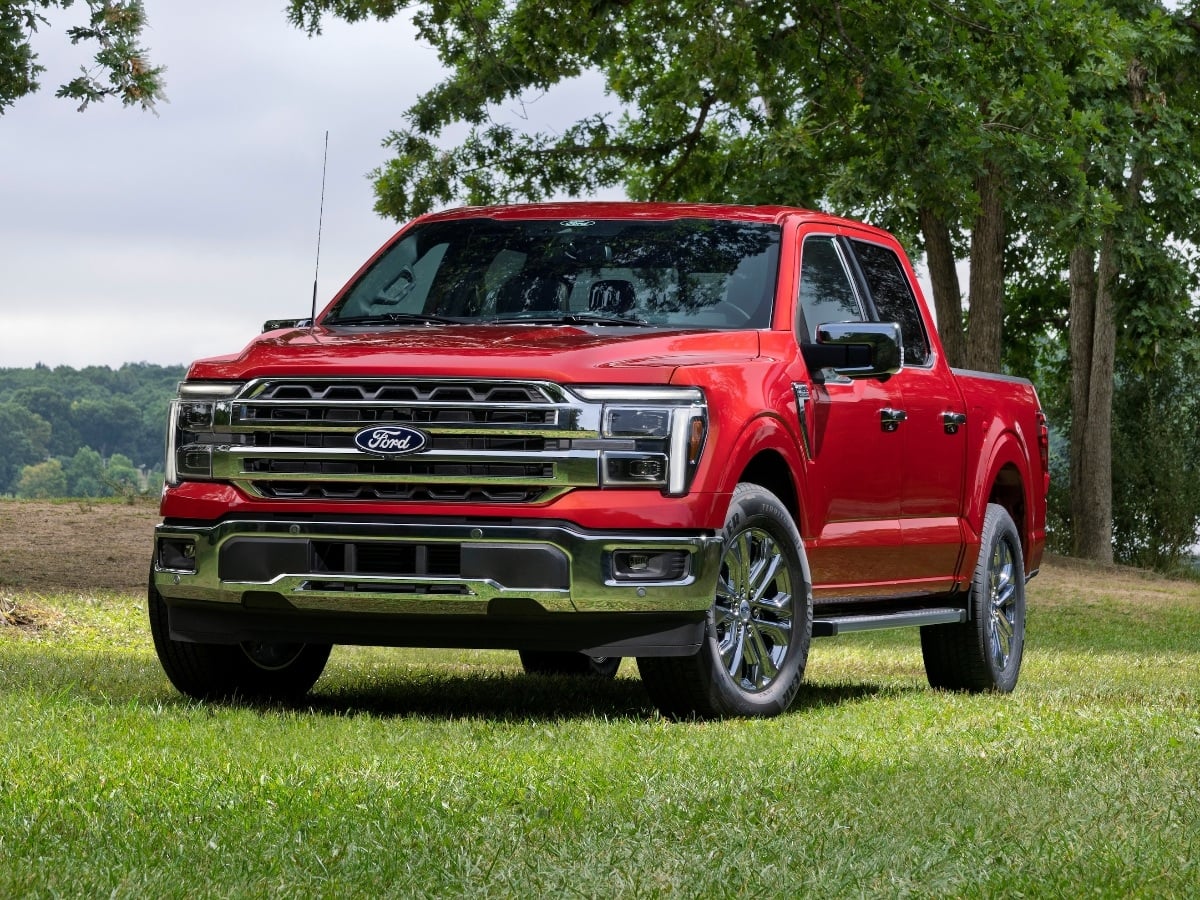
Facing renewed competition in the full-size, light duty pickup truck segment, the 2027 Ford F-150 receives subtle styling updates, a new standard engine, broader availability of its 5.0-liter V8, and ...See More
Read the Full Article
The 2027 Civic Type R goes on sale in October 2026, and it starts at $49,990, including the $1,295 destination charge.
Read the Full Article
Part of BMW’s Neue Klasse (new class) rollout of redesigned models, the 2027 BMW 3 Series is all-new and goes on sale in the first quarter of 2027.
Read the Full Article