35 - 38
35 - 38
231
6 speed, Automatic w/OD
Intercooled Turbo Gas/Electric I-4
All Wheel Drive
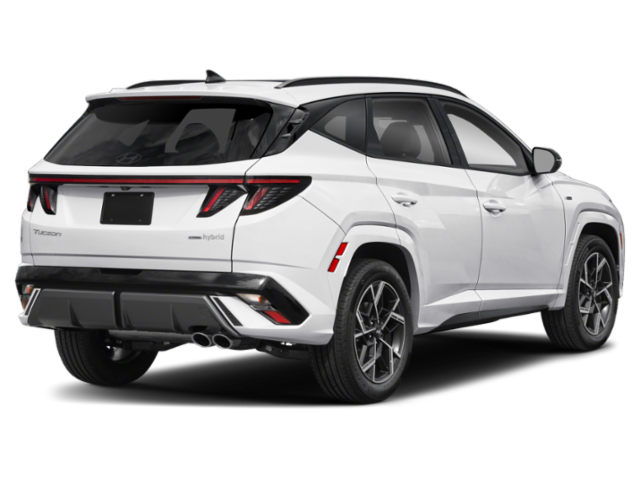
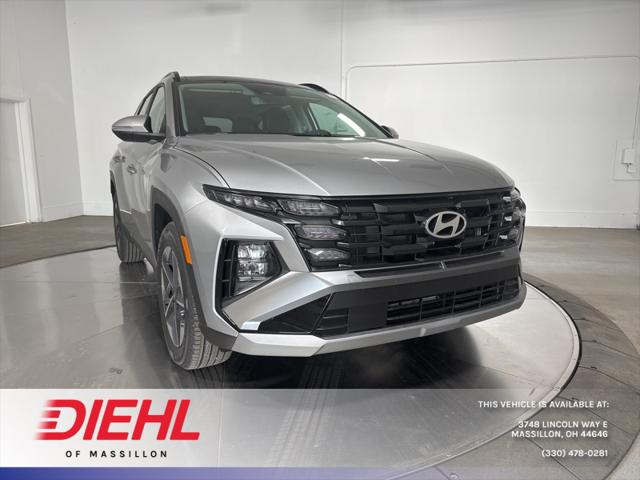
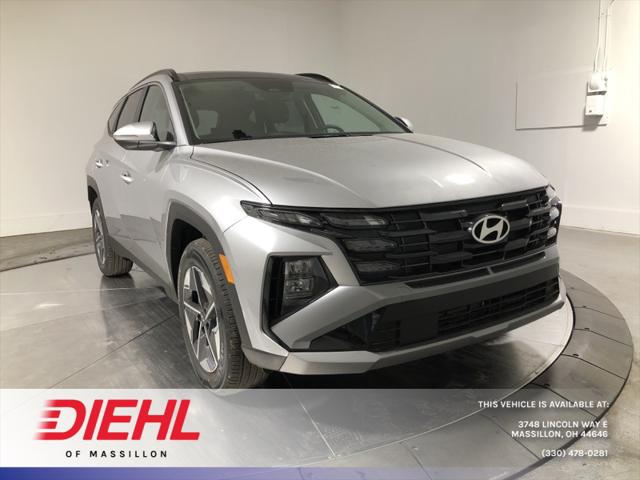
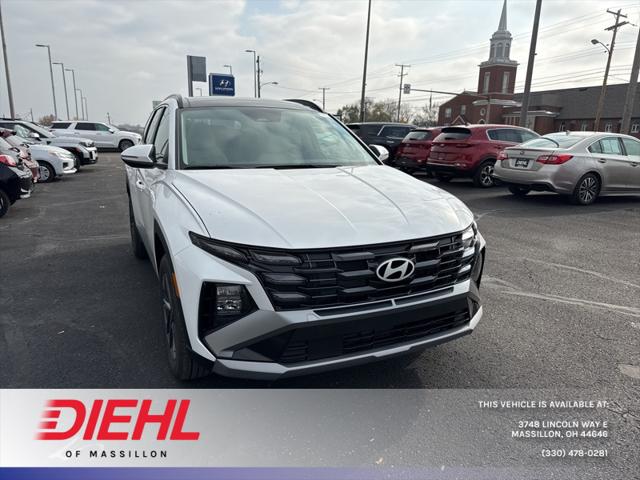
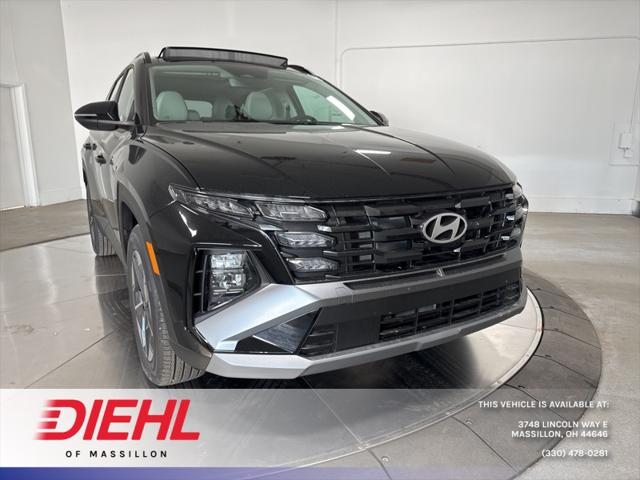
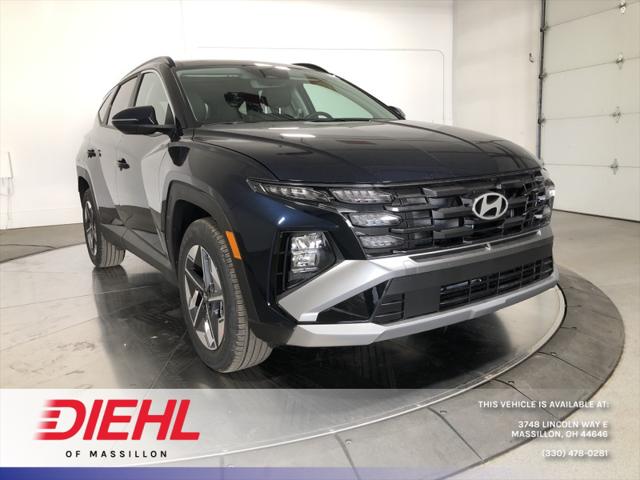
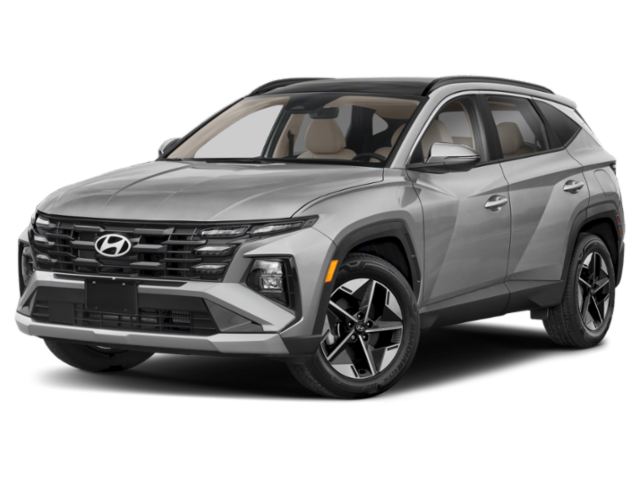
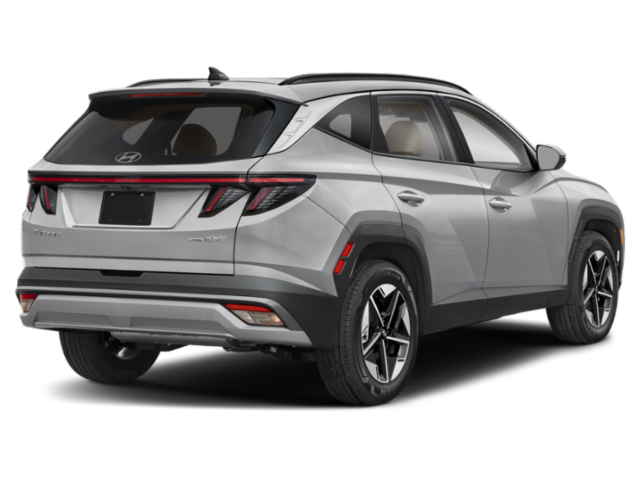
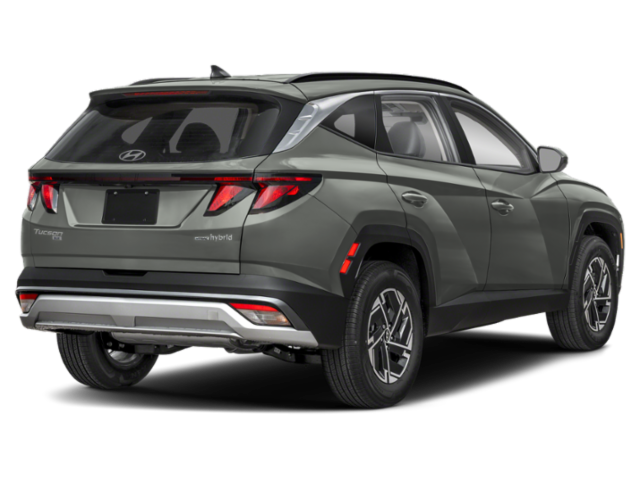
Innovative enhancements in several areas elevate the 2025 Hyundai Tucson, solidifying its position as a top contender in the competitive compact SUV market. The Tucson is an excellent choice for those searching for a tech-forward, high-value vehicle with space for up to five passengers. It continues to offer the consumer-friendly features that have placed it among the leaders in its class. For the 2025 model year, it offers bolder exterior styling, widescreen infotainment, and improved ride and handling for an even better driving experience.

Photo: Jack R. Nerad
Although not an all-new model, the 2025 Hyundai Tucson has many changes and enhancements. Highlights include:
The 2025 Hyundai Tucson comes in SE, SEL, SEL Convenience, XRT, and Limited trim levels. The conventional hybrids come in Blue, SEL Convenience, N Line, and Limited trims, while the plug-in hybrids (PHEVs) are available in SEL and Limited versions. Base prices range from the front-wheel-drive (FWD) Tucson SE at $28,355 to the Tucson Limited Plug-in Hybrid with all-wheel drive (AWD) at $45,450. These prices do not include the $1,395 destination charge.
JD Power previously published a review of the 2022 Hyundai Tucson Hybrid. This review focuses on the Tucson Hybrid’s updates for 2025 and how they potentially impact its overall consumer appeal.
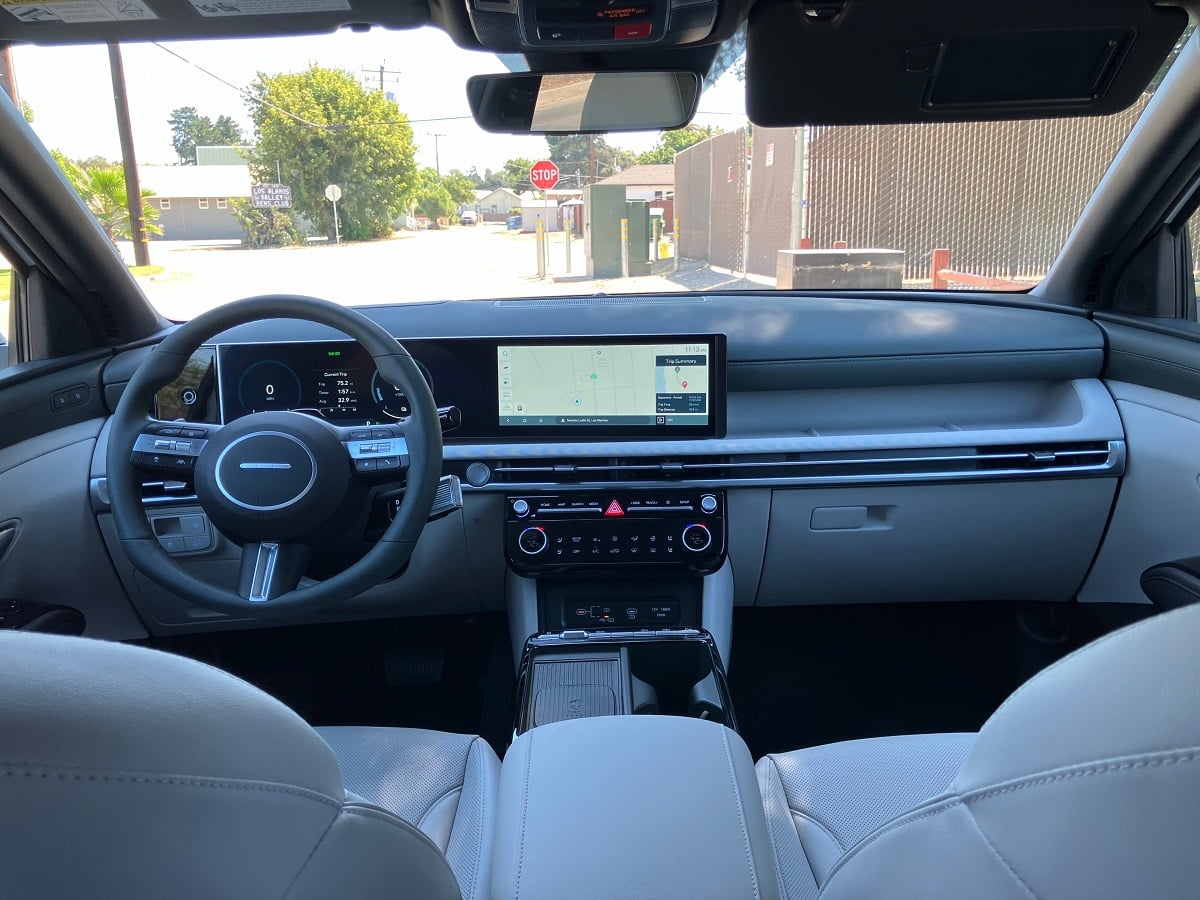
Photo: Jack R. Nerad
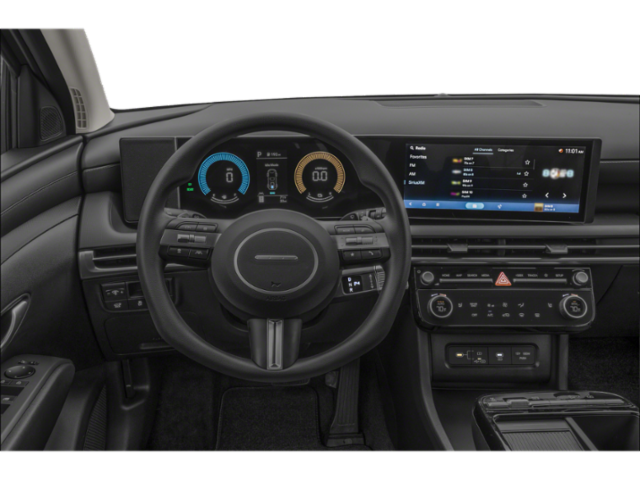
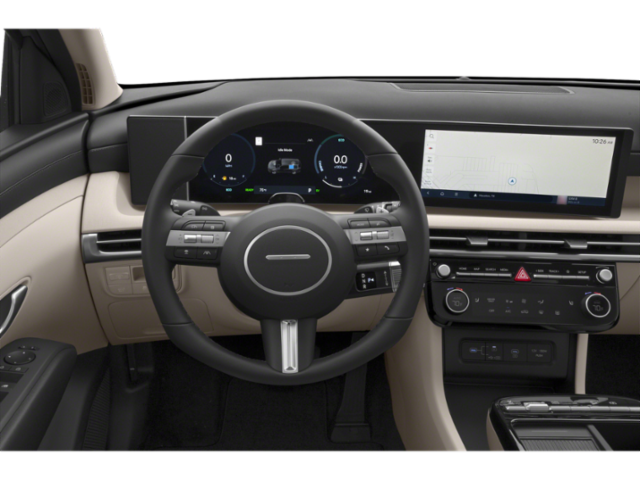
The standout feature of the 2025 Tucson is its completely redesigned interior, highlighted by a wider, more open, horizontally oriented dashboard. The impressive panoramic curved display seamlessly merges a 12.3-inch digital instrument cluster with an enlarged 12.3-inch infotainment screen, but that isn’t the only interior upgrade.
The return of physical knobs and switches for frequently used controls like audio volume, radio tuning, and climate functions is another welcome change. Though some might see this as a retrograde move, those of us who test many cars each month find that reaching for a physical knob in a known location is much more convenient when driving than trying to put our fingers in contact with an icon on a touchscreen. In the 2025 Tucson, Hyundai conveniently locates the new array of switches for media and climate controls under the infotainment display.
The 2025 Tucson’s interior redesign also introduces a dashboard tray above the glovebox. Although it’s not very deep, it’s handy for stashing lightweight items, especially when the vehicle is stationary. The Tucson Hybrid’s shift-by-wire control on the steering column also works intuitively. Additionally, its move to the steering column has freed up space in the center console area, allowing for a relocated 15-watt wireless charging pad. This lies conveniently close to the twin USB-C ports beneath the climate controls.

Photo: Jack R. Nerad
While the expansive dual-screen layout immediately catches your attention, the 2025 Tucson’s infotainment and instrumentation isn’t a one-trick pony. Even the base-level infotainment system in the Tucson SE is full-featured, with a curved panoramic screen, AM/FM/HD Radio, and a three-month trial of SiriusXM satellite radio. The uplevel system, as featured in the Hybrid Limited test vehicle, adds onboard navigation and voice recognition, while both systems feature wireless Apple CarPlay and Android Auto.
During my test drive in Central California, I was impressed by the system’s faster processing speeds and sharper graphics. Those upgrades make it even more user-friendly than the already impressive version in the 2024 Tucson, whose major failing was the lack of wireless Apple CarPlay and Android Auto. The new system eliminates that potential deal-breaker.
Both the base and uplevel systems offer the ability to receive over-the-air updates, which are limited in the base system but expand to include map and multimedia software enhancements in the upper trims. Hyundai equips the Limited trim with a standard eight-speaker Bose premium audio system that produces good sound reproduction and plenty of volume.
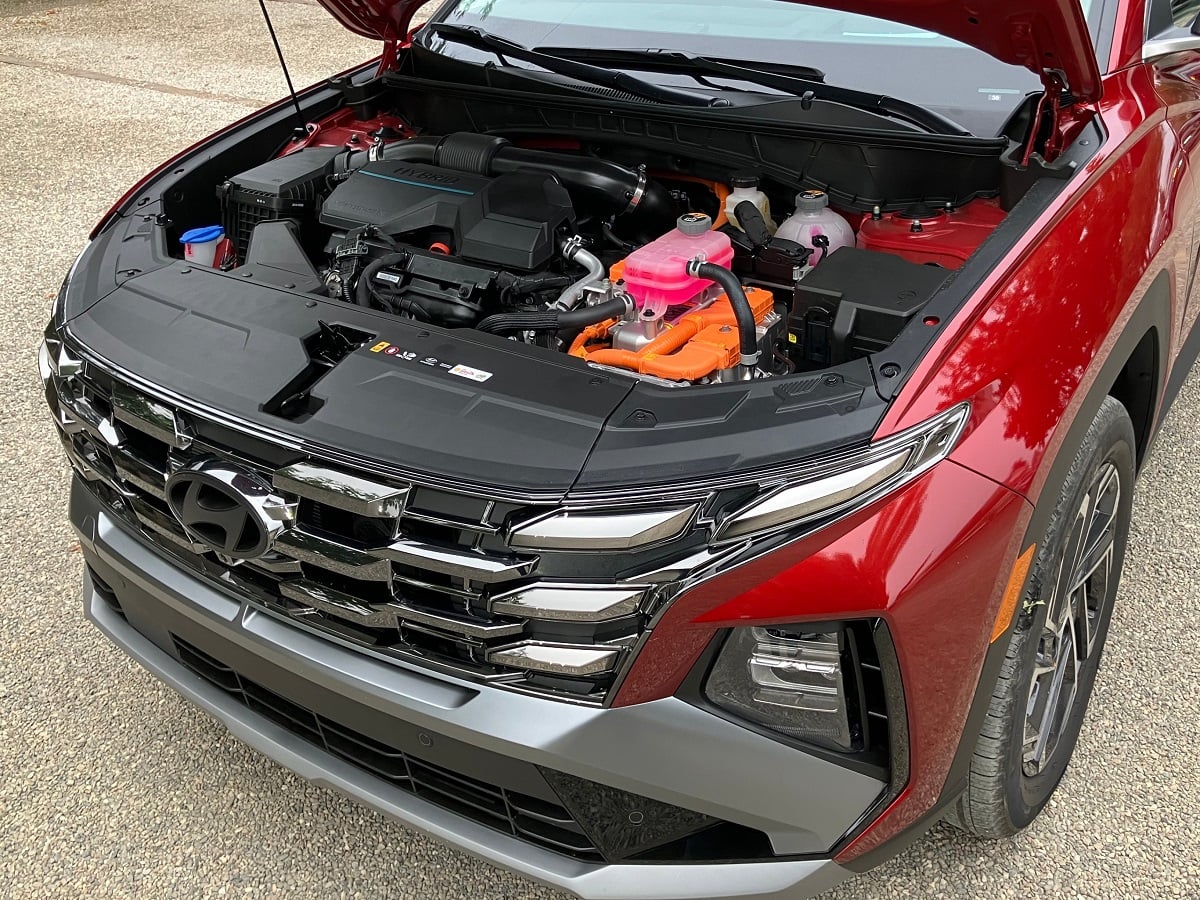
Photo: Jack R. Nerad
Vehicles with electric motor assist, like hybrids and PHEVs, use the motor’s instant torque to improve acceleration. Most of the time, that’s a good thing, but the sudden power surge can be unsettling for some vehicle occupants who don’t expect it. Babies in rear-facing child safety seats are particularly susceptible to discomfort in this situation, but the issue is not limited to infants. The 2025 Tucson Hybrid features a new Baby Mode in its My Drive sub-menu to address this.
Baby Mode limits the torque available at initial acceleration, allowing more as vehicle speed increases. This provides a smoother and more comfortable ride for babies and other passengers. Similarly, the 2025 Tucson also reduces the abruptness of initial torque when reversing. As I did, those who have experienced some difficulties modulating electric-motor acceleration when parking will appreciate this feature.
For 2025, Hyundai has extracted a bit more horsepower from the Tucson Hybrid’s driveline. The estimated total system output is 231 horsepower—an increase of five hp from 2024—while torque remains unchanged. The added horsepower is not especially noticeable, but the Tucson Hybrid continues to deliver a satisfying all-around driving experience.
The likable SUV feels lively at low speeds and cruises smoothly and quietly on freeways, like California’s iconic Highway 101, where I tested it. It is so smooth that I sometimes found myself cruising at extra-legal speeds.
As another drivability improvement, the Tucson Hybrid and PHEV now offer driver-adjustable levels of regenerative braking through the shift paddles. This allows drivers to fine-tune the braking feel to their preferences.
The 2025 Tucson Hybrid and PHEV models feature a sophisticated driveline that distributes torque to all four wheels and employs motor braking. The system enhances cornering and improves the Tucson’s ability to take evasive action in an emergency. During my evaluation, I found the Tucson Hybrid handles better than most of its competitors, and it delivered 33.5 mpg fuel economy.
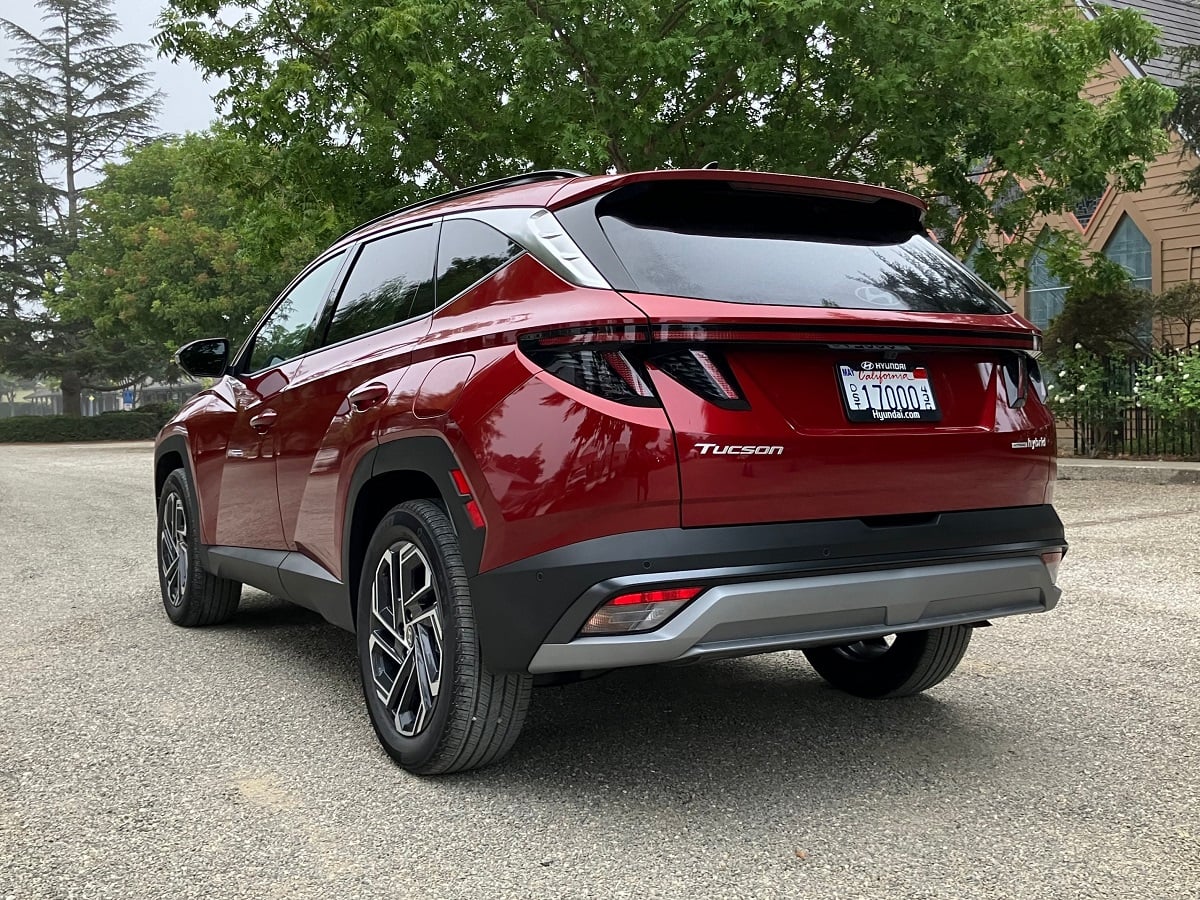
Photo: Jack R. Nerad
With impactful updates, the 2025 Hyundai Tucson enhances its standing in the competitive compact SUV market. The updated version presents a new, bolder face to the world, but the more important design changes are inside. Its panoramic array of digital displays, wide dashboard, and revised center console make it handier than ever. The new infotainment system responds more rapidly than the previous system and now features wireless Apple CarPlay and Android Auto, which work flawlessly.
While the conventional powertrain is carryover for 2025, the hybrid and PHEV variants offer added horsepower. In addition, the new Baby Mode brings added passenger comfort. The e-Motion technology in the Tucson’s AWD system also improves its agility.
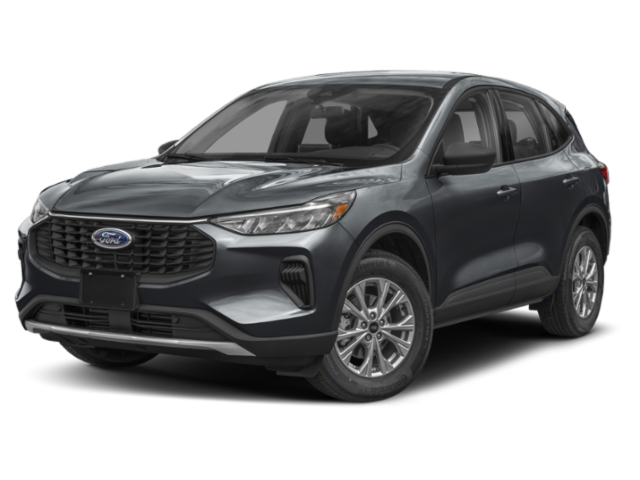
While rivals like the Ford Escape, Kia Sportage, and Toyota RAV4 offer a similar roster of powertrains, the Tucson distinguishes itself with the added security of a 10-year/100,000-mile powertrain warranty, solidifying its reputation as a reliable and formidable choice.
Jack R. Nerad has reviewed cars, trucks, vans, and SUVs for over three decades. He also managed the editorial efforts of MotorTrend, JD Power, and Kelley Blue Book. Jack currently hosts the Sports Byline Network program "America on the Road," available on Apple Podcasts, iHeart Radio, Spotify, Audacy, Amazon Music, and other outlets.