74 - 92
66 - 81
456 - 630
1 speed, Automatic
Electric
All Wheel Drive

Image: John Coyle
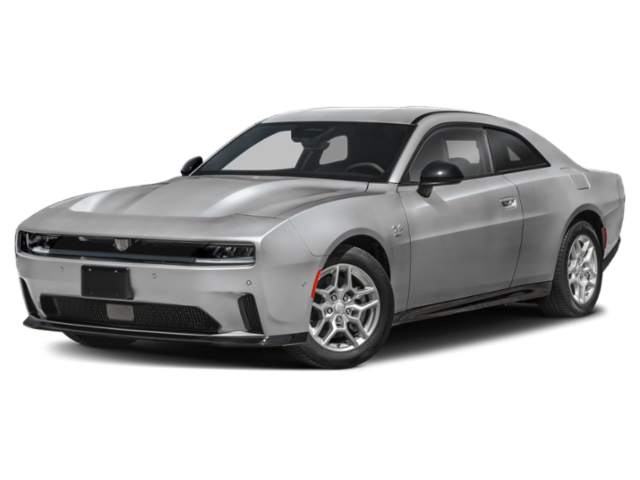
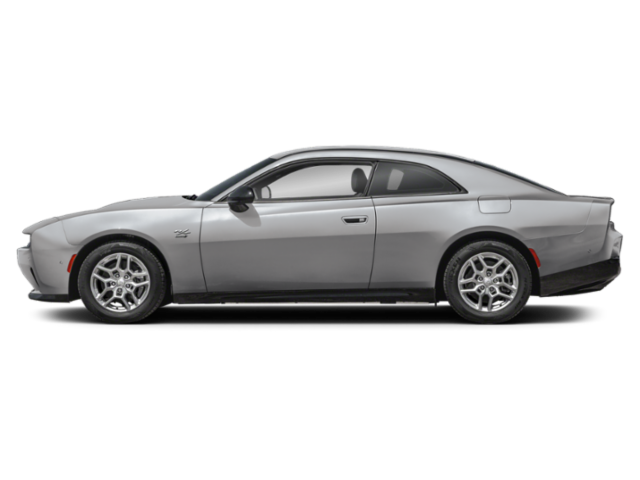
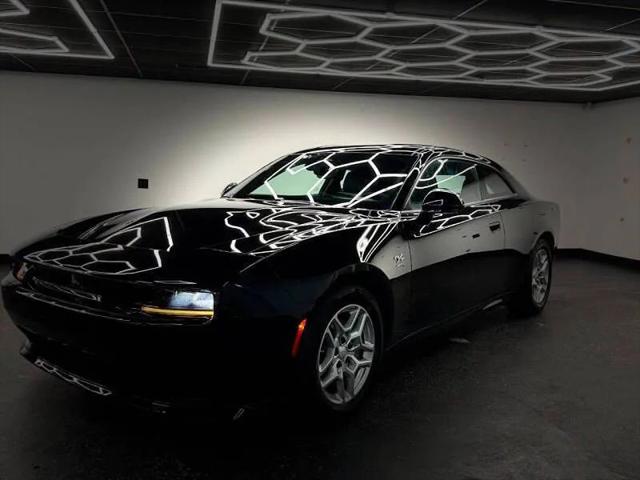
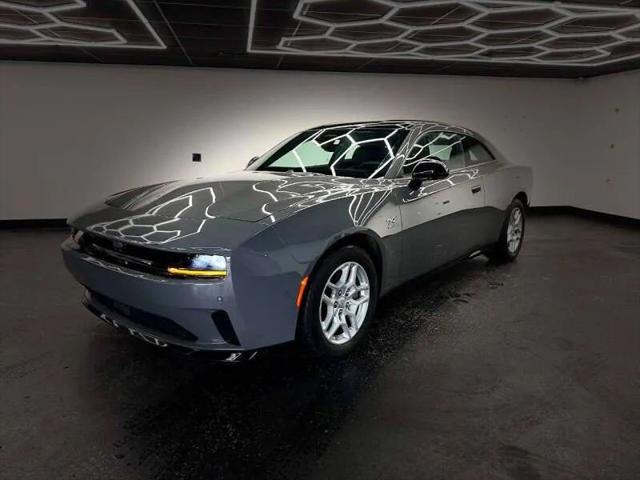
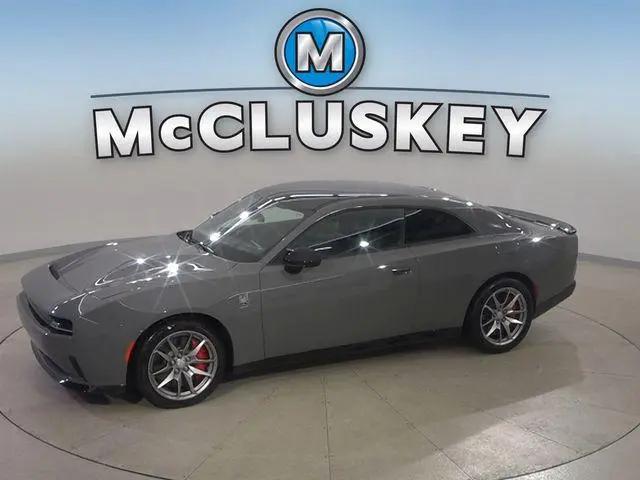
Two 2024 Dodge Charger Daytona models will be in showrooms by year's end. Both are dual-motor, all-wheel-drive (AWD), two-door hatchbacks. Eight colors are available. In keeping with Dodge tradition, they’re named with a wink, and include hues like Bludicrous, Peel Out, and White Knuckle.
The entry-level Charger Daytona R/T starts at $61,590, including destination, and its powertrain provides 496 horsepower and 404 pound-feet of torque. The R/T rolls on 18-inch wheels and has an estimated range of 308 miles. The more robust Charger Daytona Scat Pack boasts 670 hp and 627 pound-feet, 20-inch wheels, and a range of 241 miles. The cost of entry for the Scat Pack is $75,185.
For this review, Dodge provided me with a Charger Daytona R/T. Extras like After Dark Paint, a 16-inch digital gauge cluster, blacked-out exterior trim, an 18-speaker Alpine stereo system, and 20-inch wheels pushed the as-tested price to $70,970.

Image: John Coyle
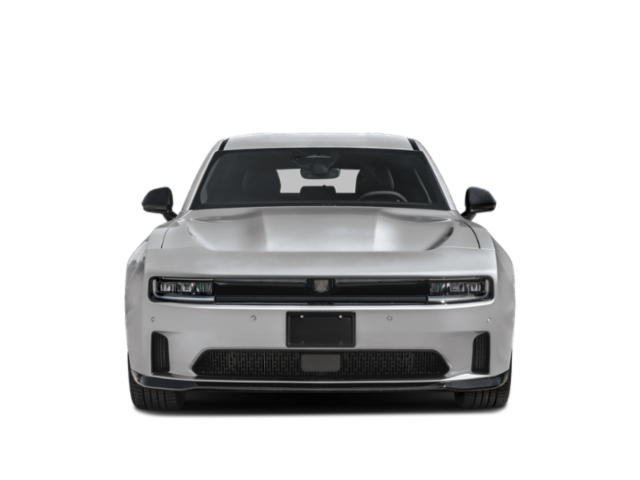
Despite the all-new platform, there's no mistaking the Charger Daytona for anything but a Dodge. The front fascia is a new-school play on the iconic second-generation car's. It features an R-Wing aerodynamic passthrough to help the widebody cheat the wind. More echoes of the 1968 Charger—think The Dukes of Hazzard—are evident at the rear roof pillar, which now incorporates a hatchback. Pop the frunk and a handy 1.5 cubic feet of cargo space is available.
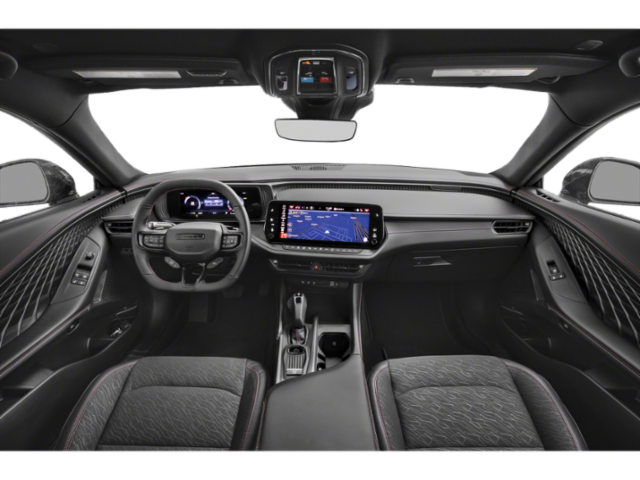
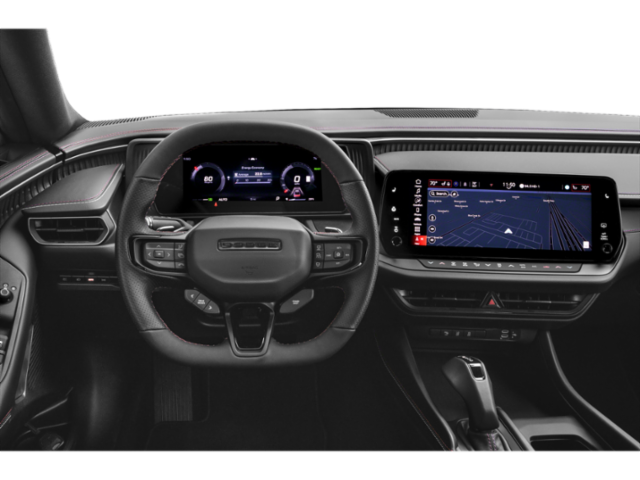
The Charger has always been a big car, and the ample space inside the cabin reflects that. My tester's full-glass roof amplified its airy feel. I particularly liked the squared-off wheel, which felt great, and the wraparound lighting, which gave the dashboard a free-floating look. Though the textured plastic in the door panels is hard, Dodge designed it to reflect the ambient lighting—not serve as a touchpoint.
In a nod to EV-chic minimalism, there are electronic push buttons instead of traditional door handles, and the climate controls are haptic buttons. The pistol-grip shifter is a happy throwback.
Large adults will be comfortable in the Charger's back seat, which is notable enough for a coupe. The 38.5 cubic feet of space when the seats are folded flat is even more surprising. When you open the hatch, the space looks cavernous. It adds some surprise practicality to this modern muscle car.
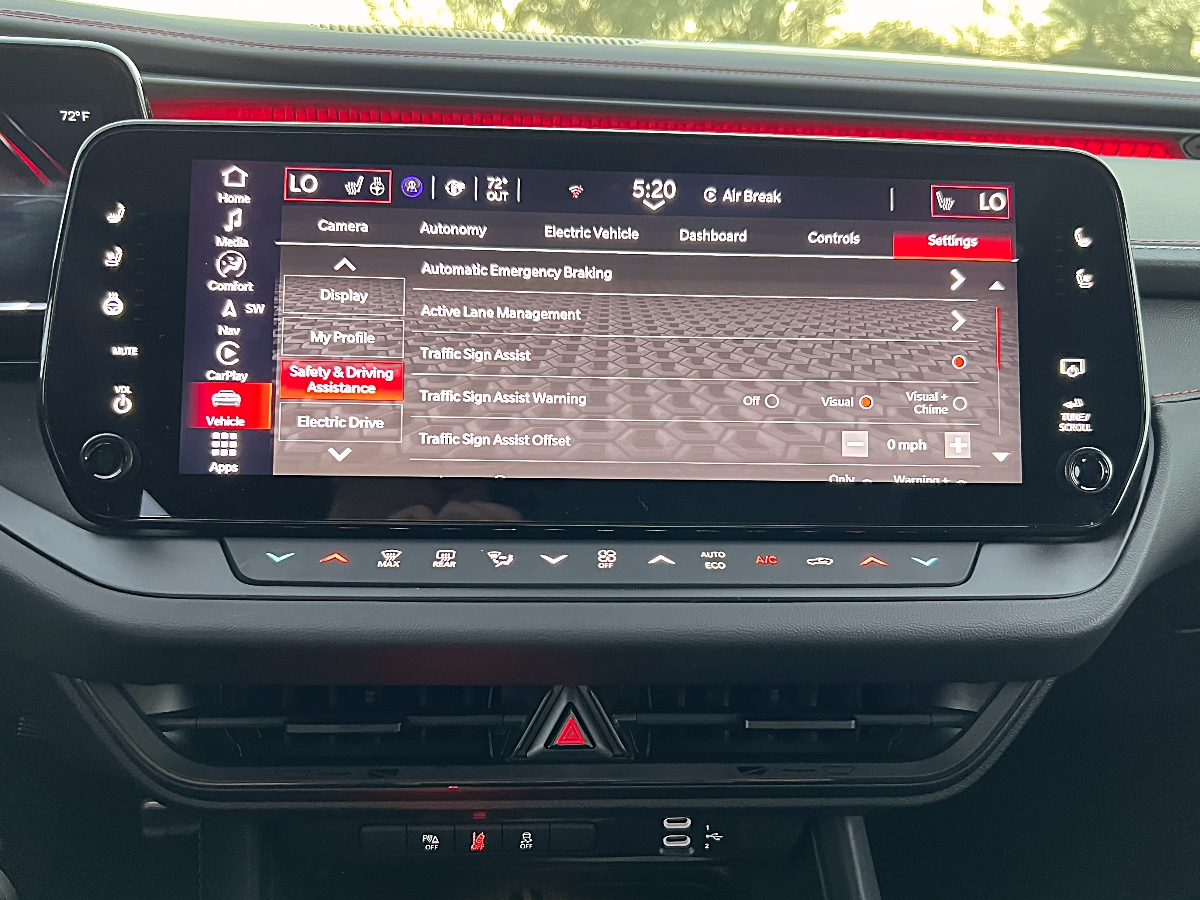
Image: John Coyle
Overall, I was pleased with the technology in the new Charger. While I'm familiar with Dodge's Uconnect 5, it's intuitive enough that few folks should experience a steep learning curve. Wireless Apple CarPlay and Android Auto connectivity is standard, and the Alpine 18-speaker stereo sounded great. Notably, Dodge places the 12.3-inch central touchscreen below the dashboard horizon, which increases visibility and reduces distractions.
A host of active safety technologies, including adaptive cruise control with stop-and-go capability, lane-keeping assistance, and blind-spot warning, are all standard. On the congested freeways of Phoenix, I found the adaptive cruise responded appropriately to aggressive drivers cutting into my lane. It was also silky smooth when it slowed and resumed to my selected speed. The lane-keeping assistance system wasn't overly intrusive, and while the blind-spot alarm was loud, it was accurate.
The voice-recognition function handled most basic commands well. Turning on the heated seats and setting the temperature was no problem. The system also quickly found my hotel, a Starbucks, and a McDonald's. Asking for directions to a hospital yielded several spas and a dermatologist, so there's room for improvement there. It was also musically challenged: The Beatles aren't exactly alternative rock.

Image: John Coyle
Wide-open spaces and long straightaways are a muscle car's natural habitat. Unfortunately, I didn't get much of either during my time behind the wheel of the Daytona R/T. But this machine felt like a proper party animal, in that it could have a good time anywhere.
For the first section of the drive—a congested stretch of suburban sprawl on the way to I-10—I kept the Fratzonic Chambered Exhaust in stealth mode. There was no sonic cover for squeaks and rattles to hide under, and I was impressed by what I didn't hear.
Dodge says the next-generation Charger’s chassis is 50-percent stiffer than the outgoing model's, and even over bumpy, broken pavement, the suspension soaked up imperfections without complaint. To its credit, the car didn't feel floaty or detached and communicated that the bones of this baby were well screwed together.
You might expect that the Charger isn't slow, with almost 500 hp on tap. And you'd be right; there's no lack of motivation here. Thanks to its electric powertrain, thrust is immediate, and forward progress is swift and drama-free. Unlike some previous flavors of the Charger, it isn't squirrely when you drop the hammer. The 5,838-pound curb weight also means it's not scary fast. For that experience, you'll need to jump to the Scat Pack and its 670 ponies.
On a tight, technical route, I was impressed with the Charger's composure, even if its wide stance made me mindful of the centerline. The low center of gravity—courtesy of the batteries under the floor—and the AWD system inspired confidence.
The PowerShot feature and the regenerative brakes aid driver engagement in the Charger. Push the button on the squared-off steering wheel and the PowerShot delivers a 40-hp boost in grunt for 10 seconds. It's completely unnecessary, of course. Then again, so are muscle cars in general.
Since the regenerative brakes feed energy back to the battery, they serve a practical purpose. They can also gamify the driving experience. On the most aggressive of the three settings—selected using paddles behind the steering wheel—they'll bring the car to a halt, offering the opportunity to practice one-pedal driving. It can make for some jerky stops and starts as you get the hang of it. The trick is judging when to release the throttle to ensure you stop where you planned to. And when you get it right? It's rewarding.
Of all the features Dodge has touted about the Charger Daytona, I was most curious about the Fratzonic Exhaust—the fake exhaust note. The shoutiest modes, which sound like a cross between an unhinged dragster and an Imperial Star Destroyer, are reserved for Scat Pack cars.
On the R/T, I found the synthetic retro-future underscore—a hybrid of Jetsons, Battlestar Galactica, and Giorgio Moroder-inspired internal-combustion cues—somewhat soothing. While underway, I was surprised by how quickly I became acclimated. Whether they add to the driving experience will be entirely subjective. Like the PowerShot, they're just there for fun. But they made me smile.
According to Dodge, when hooked to a Level 3 fast-charging station, the battery on the Daytona R/T can go from 20- to 80-percent charge in under 25 minutes. In mixed driving, I saw an average of 2.9 miles per kWh.