See answers to common EV questions, tax incentives, charging maps & more.
Explore EV26 - 42
32 - 36
163 - 250
1 speed, CVT w/OD, 8 speed, Automatic w/OD
Gas/Electric I-4, Intercooled Turbo Premium Gasoline I-3
All Wheel Drive, Front Wheel Drive

Photo: Christian Wardlaw
The Ford Escape competes in the Compact SUV market segment. According to data collected from verified new-vehicle buyers for the JD Power 2023 Automotive Performance, Execution, and Layout (APEAL) Study, 48 percent of new Compact SUV buyers are female (vs. 39 percent for the industry), and the median age of a new Compact SUV buyer is 58 years (vs. 56).
As part of the APEAL Study, owners rated Compact SUVs in 10 primary categories. Listed below in descending order, you’ll find their preferences, from their most favorite thing about the vehicle to their least favorite:
In the 2023 APEAL Study, the Escape did not rank among 23 Compact SUV models due to insufficient data.
In the following sections, our independent expert analyzes an Escape ST-Line Elite equipped with the following options:
The test vehicle’s price was $43,650, including the $1,495 destination charge.

Photo: Christian Wardlaw
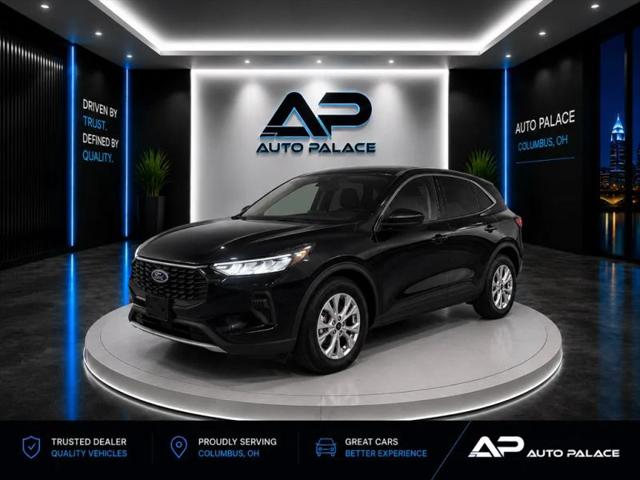
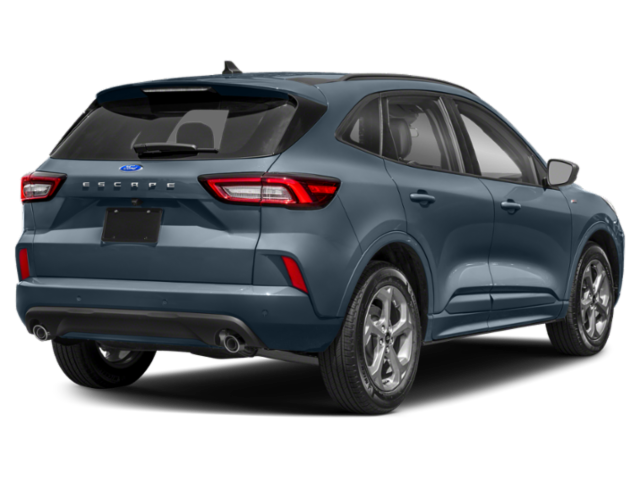
When Ford redesigned the Escape in 2020, it dared to suggest that the GT supercar and legendary Mustang influenced the styling. That might have been true, but it was next to impossible to see in the final product. With that said, the Escape’s look was soft, smooth, and inoffensive, and it remains that way for 2023.
However, as some people say, the devil is in the details. Here, Ford’s tweaks to the 2023 Escape have a net-positive effect.
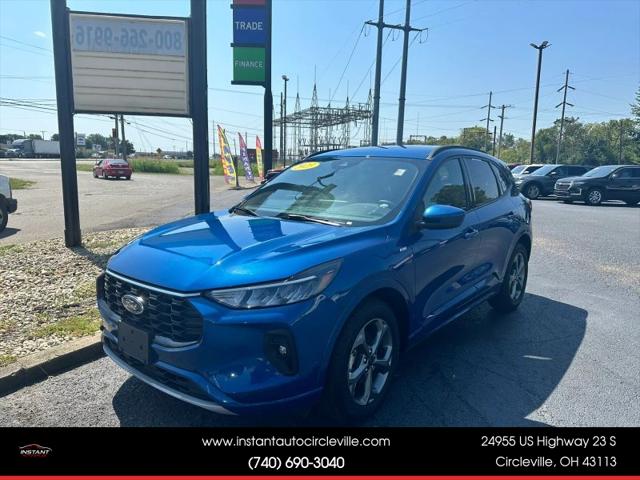
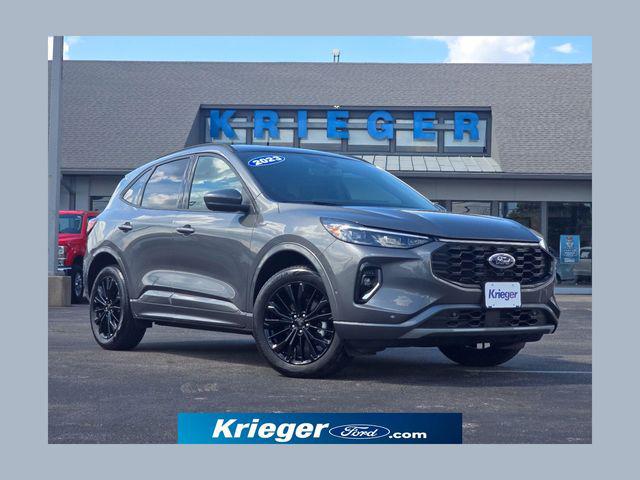
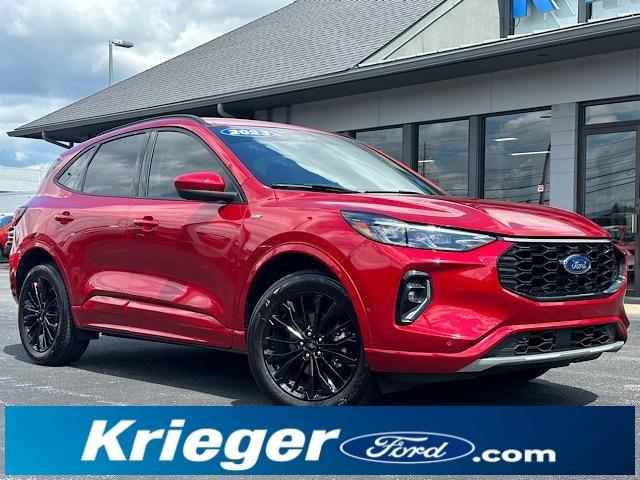
In front, you’ll find a restyled face that rids the Escape of its wide-eyed, smiling visage, replacing it with a more aggressive look featuring new headlights, a taller grille, a reworked fascia with a larger simulated skid plate, and bolder simulated air intakes on either side. Fresh wheel designs, paint colors, and a subtle update to the fake rear skid plate wrap up the styling changes.
In my opinion, the updates make the Escape more appealing, especially with ST-Line trim.
The 2023 Ford Escape lineup isn’t the same as last year. Before, you could get this SUV in S, SE, SEL, and Titanium trim levels. Now, it comes in Base, Active, ST-Line, Platinum, and Plug-in Hybrid. The ST-Line model includes three sub-trims: standard, Select, and Elite.
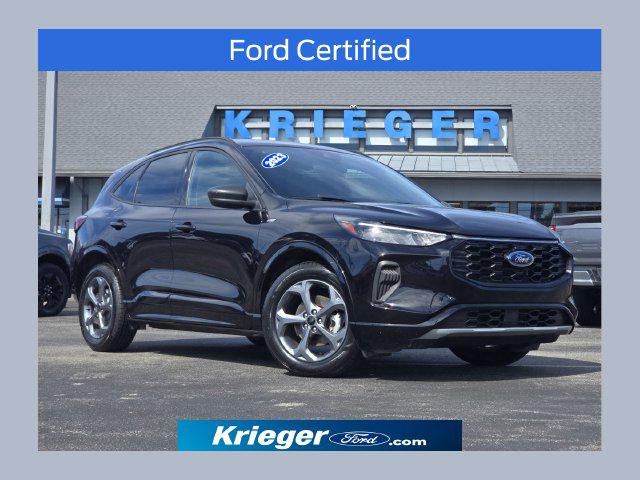
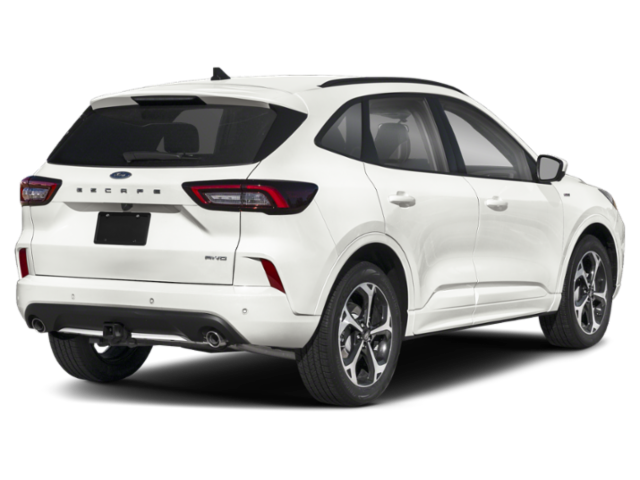
You can spot the ST-Line by its monochromatic paint, more aggressive upper and lower grille inserts, sporty 18-inch and 19-inch wheels, and a rear spoiler over the back window.
The ST-Line has a standard 1.5-liter turbocharged three-cylinder engine making 180 horsepower and 199 pound-feet of torque, an adequate amount of power. Get all-wheel drive (AWD), and Ford adds a sport-tuned suspension for more athletic ride and handling qualities.
The ST-Line Select and Elite feature a standard 2.0-liter turbocharged four-cylinder engine cranking out 250 hp and 280 lb-ft of torque. That is plenty of power for this compact crossover SUV, and it produces quick acceleration. All-wheel drive is standard with this engine, along with the sport suspension.
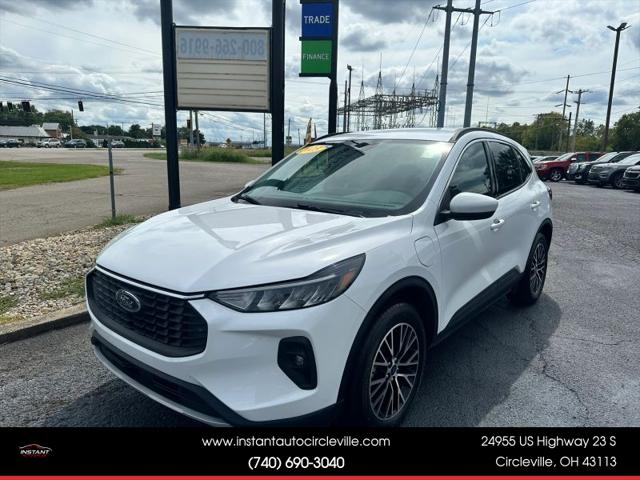
All three ST-Line variants are available with a hybrid powertrain based on a 2.5-liter four-cylinder engine. Net output measures 192 hp, and the hybrid is available with front-wheel drive or AWD. Either way, the EPA says it will get 39 mpg in combined driving and travel 558 miles between fuel stops.
My ST-Line Elite test vehicle wasn’t that efficient. The 2.0-liter turbocharged four-cylinder engine returned 24.1 mpg on the evaluation loop, less than the expected 26 mpg.
But, in addition to its quick acceleration and terrific brakes, it offered an unexpectedly isolated ride quality. Handling was decent, too, though the thick windshield pillars impede forward visibility. The ST-Line’s sport steering wheel feels good in the driver’s hands, but the steering is too lifeless and slow to encourage bad behavior.
Considering the ST-Line AWD has a sport-tuned suspension, I thought Ford could do more to tame unwanted vertical and lateral body motion. It isn’t excessive, but the overall ride and handling are what I would expect from the Base, Active, or Platinum versions of this SUV, not the sporty ST-Line.

Photo: Christian Wardlaw
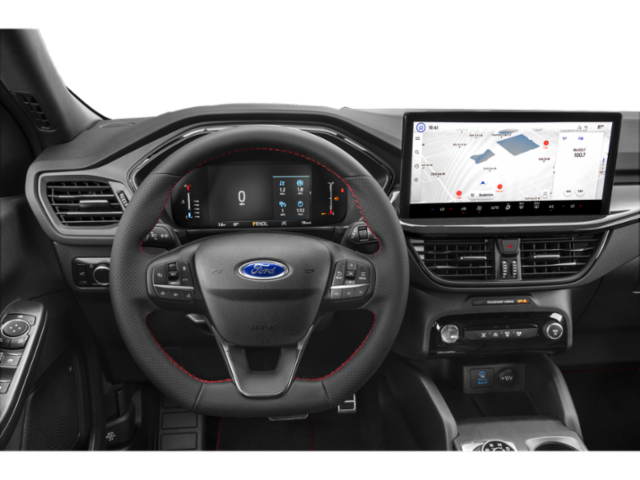
In addition to its sport-design steering wheel, the 2023 Escape ST-Line has an Ebony interior with red stitching, carbon-pattern trim, aluminum pedals, and “sport contour” seat designs.
With the ST-Line Elite, you get leather upholstery in a fancy diamond-stitched and perforated design. Unfortunately, the leather feels stiff and dry, so I recommend sticking with the ST-Line or ST-Line Select for a softer mix of cloth and ActiveX simulated leather.
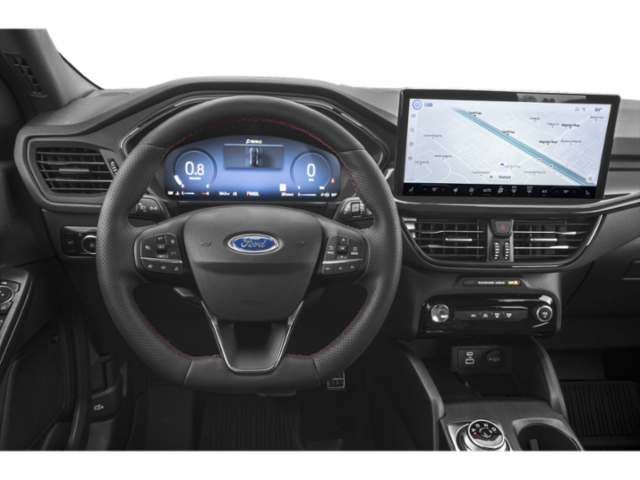
Don’t worry about choosing those more affordable models. They both come with the new Sync 4 infotainment system but with a standard 8-inch touchscreen display. With both lower ST-Line trims, you can upgrade to the excellent 13.2-inch touchscreen seen in the photo above.
Highlights of each system include:
In addition, my test vehicle had wireless smartphone charging and a 10-speaker Bang & Olufsen premium sound system. Unfortunately, the speakers were damaged, emitting plenty of hiss and sizzle at moderate volume levels, so I could not assess it.
Ford has done a good job with this version of Sync 4. The wide 13.2-inch touchscreen gives the automaker the real estate necessary to provide simple, intuitive pathways to find the data you seek, and when you’re running Apple CarPlay or Android Auto, a “Home” icon instantly takes you back to the Ford Sync 4 environment. The new enhanced voice recognition technology works well, too, quickly and accurately responding to all of my testing commands and prompts.
However, I wish Ford had used a color theme and font offering bolder and sharper contrast to improve screen legibility. With thin lettering and a washed-out appearance, it can be hard to discern details on the display.
With the 2023 Escape, Ford upgrades the Co-Pilot360 collection of ADAS by adding Intersection Assist 2.0 and Blind Spot Assist. With the former feature, Ford says the Escape will detect and brake for pedestrians at intersections. The latter feature warns the driver when a vehicle is in the Escape’s blind spots and now adds steering assist to discourage an unsafe lane change.
I didn’t purposely test either of these features because it wouldn’t be safe. However, I did use and observe all of the Ford Co-Pilot360 technologies, including the Co-Pilot360 Assist 2.0 features on my ST-Line Elite test vehicle.
Ford Co-Pilot360 Assist 2.0 adds:
With Co-Pilot360 Assist 2.0, the 2023 Ford Escape includes Predictive Speed Assist. When using the adaptive cruise control, this technology automatically reduces the SUV’s speed for curves based on data collected by the speed sign recognition system. You can turn this technology on or off using the driving assistance menu settings and the Sync 4 touchscreen.
I recommend turning it off. While using this feature on the northbound Pacific Coast Highway near Malibu, California, it slowed the Escape too much on several occasions, creating perceptible irritation in motorists following the SUV. Worse, when the Escape exits a curve, it accelerates back up to the pre-set speed, so people who pull out to pass the Ford get even more agitated. I evaluated this feature long enough to decide I didn’t like it, so I pulled over and turned it off.
Otherwise, the lane-centering assist struggled with the curves on PCH and situations where one lane widened into two or narrowed from two lanes into one. Past Point Mugu, where PCH becomes a freeway, the Co-Pilot Assist 2.0 systems performed better. And in thickening afternoon traffic on the 101 freeway in Ventura County, it did an excellent job of smoothly and safely handling multiple lanes of vehicles traveling at different speeds.

Photo: Christian Wardlaw
The 2023 Ford Escape is a better version of its fourth-generation self. The new styling and ST-Line series make it more appealing, and the technology upgrades improve upon Ford’s already impressive offering. Sync 4 is a big step up over Sync 3, especially with the 13.2-inch display. And, when used in the right circumstances, Ford Co-Pilot360 Assist 2.0 impresses.
However, the 2023 Escape remains bland in a segment leaning heavily into utility, overlanding, and active lifestyles. Ford also misses opportunities to hide cost considerations within the interior, such as the sharp contrast between the plastic pillar covers and the headliner and the ST-Line Elite’s inexpensive leather. Also, while the Escape is relatively roomy and comfortable for passengers, its maximum cargo volume falls short in the segment, especially when the SUV has a hybrid powertrain.
With the Bronco Sport already stealing some sales and the relentless competitiveness of primary rivals in the compact SUV segment, the Ford Escape faces a potentially cloudy future. But, in the meantime, favorable safety ratings, a powerful 2.0-liter EcoBoost engine, available hybrid and PHEV powertrains, and impressive tech wrapped in a clean wrapper mean a new Ford Escape might be just the thing for you.
Christian Wardlaw is a veteran automotive journalist with nearly 30 years of experience test-driving vehicles. He began his career at Edmunds and now owns Speedy Daddy Media, Inc., an automotive content creation company serving several automotive publishers. In addition to JDPower.com, his work has appeared in numerous new and used-car buying guides, newspapers, and automotive industry trade journals.