Inflation isn’t the only stressor for bank customers in the United States. Data breaches have emerged as a big concern, and the National Public Data breach (NPD) is only bound to exacerbate those worries.
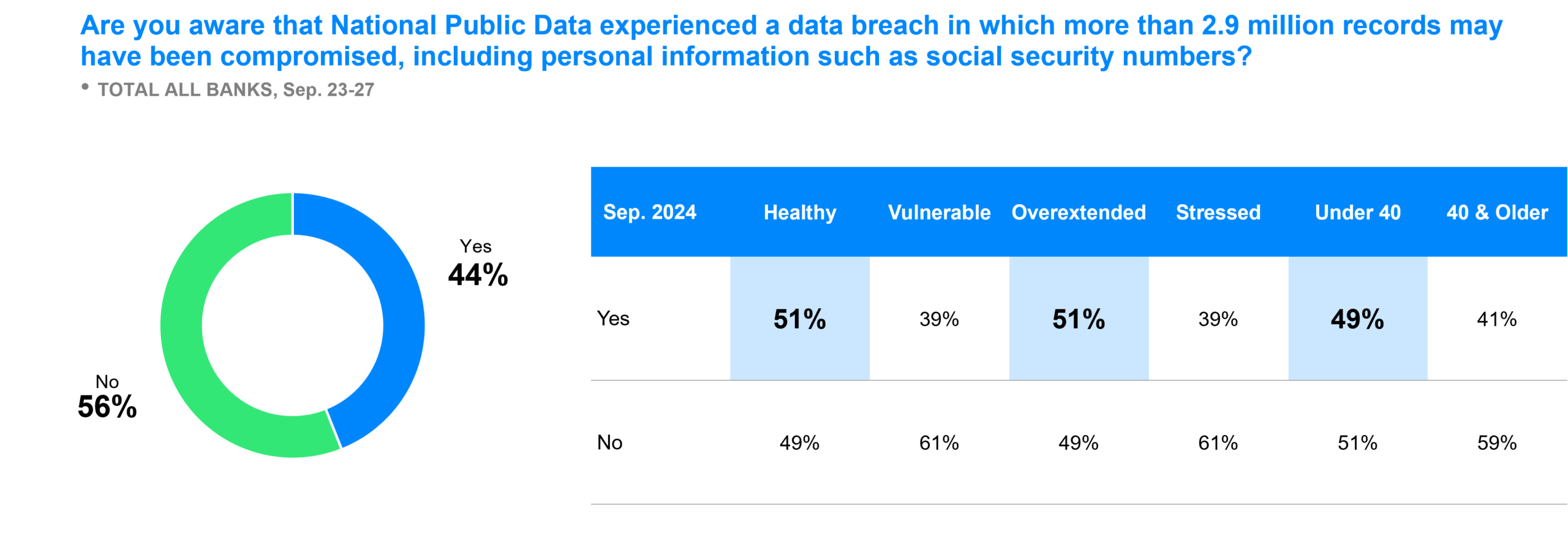
Nearly nine in 10 bank customers are worried about personal information data breaches. It’s an alarmingly high number, and it may be set to move even higher, as 44% of customers are currently aware of the NPD breach.
Banks can take heart in the fact that most customers who are aware of the breach did act to protect their identity, but they may be failing to properly educate their customers on their exposure risk. Just 50% of customers say they received an alert from their financial partner about their data being compromised.
Financial Health Stays Stagnant
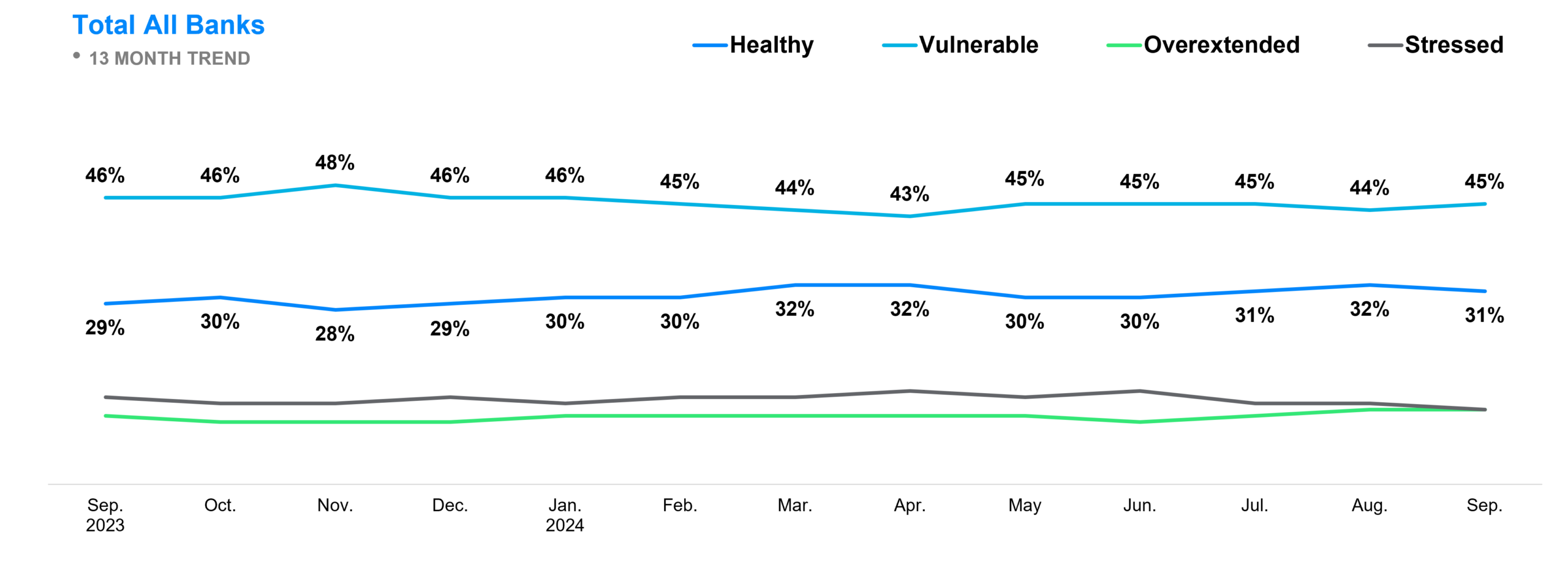
The number of customers who are financially healthy declined slightly to 31%, while 45% of bank customers fall into the vulnerable category.
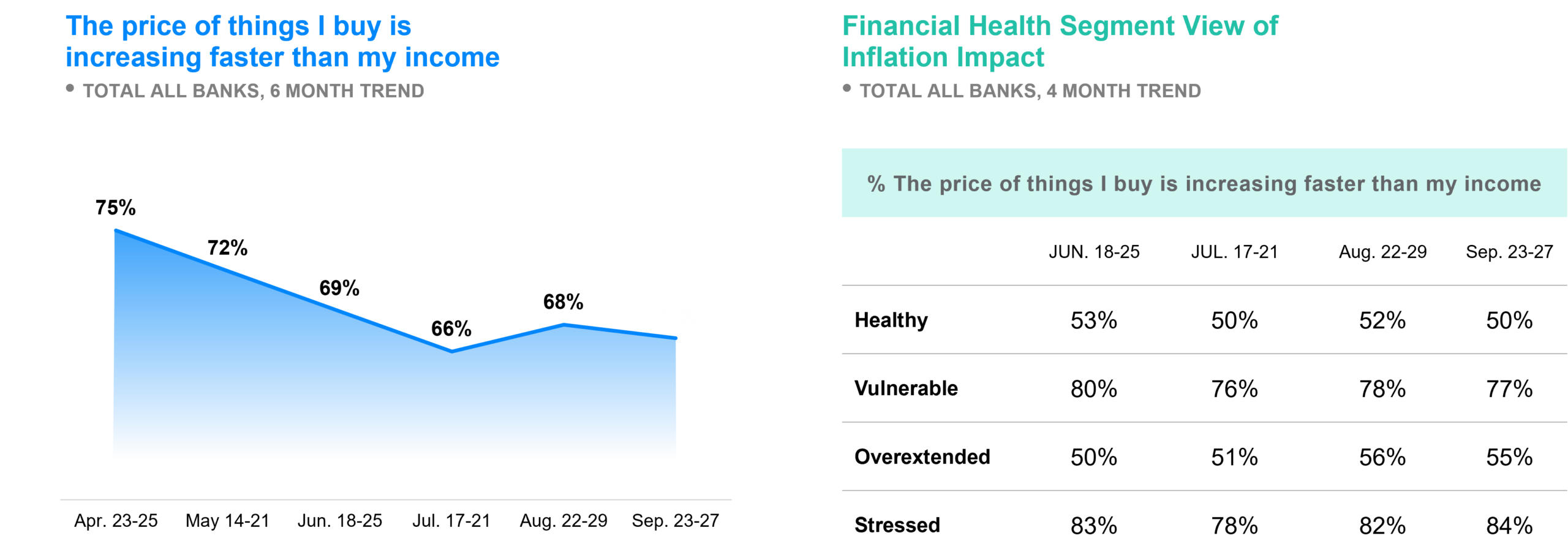
The number of bank customers who say that the cost of goods is increasing faster than their income decreased slightly (67%). Notably, stressed customers did see an increase to 84%, from 82%.
Data Privacy Starts Becomes a Top Concern
While inflation worries have begun to dip, a new customer stressor has reared its head: data breaches. An alarming 88% of bank customers are worried about personal information data breaches—a fear that spans all financial health status and age. That is despite that only 44% are aware of the NPD breach that some estimates say may have affected up to as many as 2.9 billion people.
Among those aware of the breach, 61% acted swiftly to confirm whether they were personally affected. Healthier customers are more likely to have acted, but age does not appear to make a difference in response. Troublingly, though, only 50% of those aware say they received an alert from a financial institution.

The good news is that customers are checking their credit scores with greater regularity than their credit reports. Nearly half (48%) of all customers have checked their score in the past month, with the highest levels among older and financially health customers.
Locking Down the Data
With inflation levels low enough to temporarily tamp down customer concerns about the cost of goods, data breaches have taken the mantle as a pressing issue. But banks do have it within their power to be key partners in helping customers avoid becoming victims of identity theft.
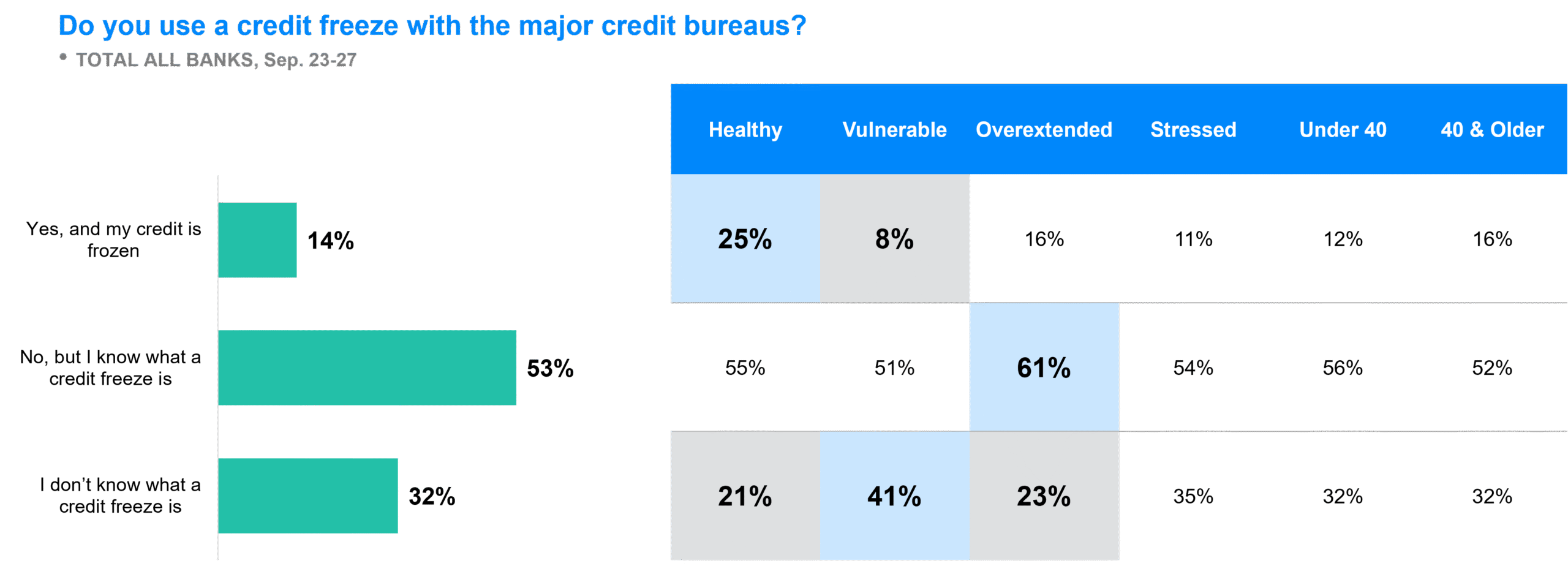
Customers—particularly those under the age of 40 and those in poor financial health—need guidance from informed partners on how they can help lock up their personal data. That includes offering the best advice on how to monitor their credit, the difference between the credit reports and scores, how to effectively freeze their credit, and what warning signs they should be looking for along the way. Financial partners that can engage by customers will likely establish vital bonds of trust and will benefit from more customer loyalty and higher levels of engagement.
Find out More
This Banking and Payments Intelligence Report is based on responses from 4,000 retail bank customers nationwide and was fielded in September 2024. It was authored by Jennifer White, senior director of banking and payments intelligence at JD Power. Please contact us at the numbers below to connect with Ms. White or to learn more about the underlying research.
Media Contacts
Brian Jaklitsch; East Coast; 631-584-2200; [email protected]
Geno Effler, JD Power; West Coast; 714-621-6224; [email protected]