Wealth Intelligence Report
October 2022
Investor Confidence Plunges, but Majority Plans to Stay the Course
With the S&P 500 down more than 23% through the end of September 2022, inflation up 8.2% during the same period and a looming recession, investors are starting to lose confidence in their ability to manage their overall financial lives.
According to the JD Power U.S. Investor Confidence Index, which tracks quarterly investor sentiment among U.S. consumers aged 18 and older with at least $100,000 in investable assets, investor confidence has fallen 37 points to 596 (on a 1,000-point scale) in Q3 2022. Despite the decline, 89% of investors say they plan to maintain or increase investment accounts over the next three months.
Inflation Rears its Head
The biggest single factor contributing to the quarterly decline in investor confidence is growing concern with the ability to keep up with inflation. Overall, just 27% of investors say they are highly confident in their ability to keep up with inflation. That’s down from 35% in the Q22022 Investor Confidence Index.
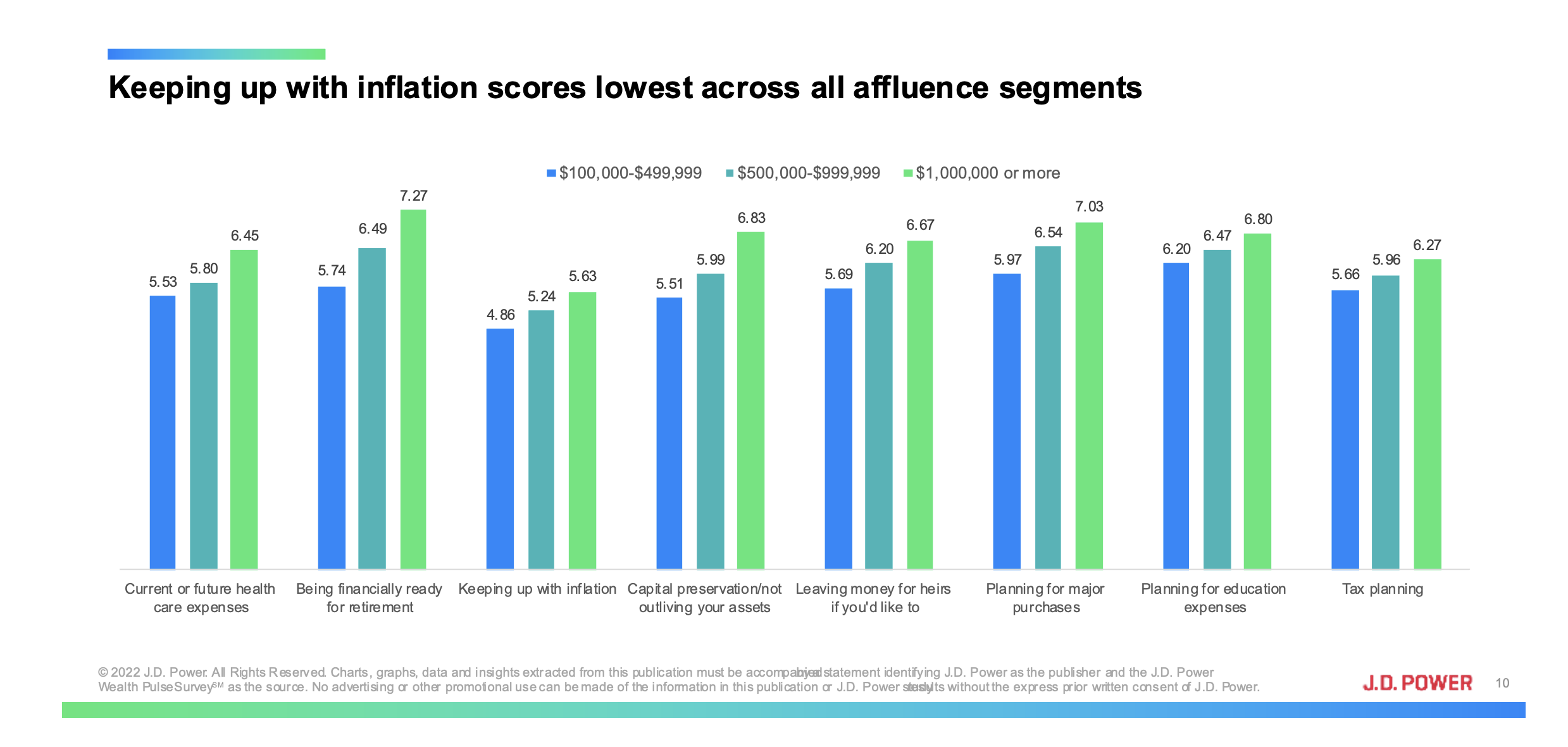
Across all affluence segments, ranging from investors with $100,000 in investable assets to those with $1 million or more, keeping up with inflation scored significantly lower than factors such as capital preservation, planning for major purchases or preparing for retirement.
Digging deeper into investor demographics, female investors have significantly lower Investor Confidence Index scores than men (553 vs. 628, respectively) and younger investors in the Generation Z[1] and Millennial segments show notably higher levels of confidence than members of Generation X and Baby Boomers.

Staying the Course on Future Investment Plans
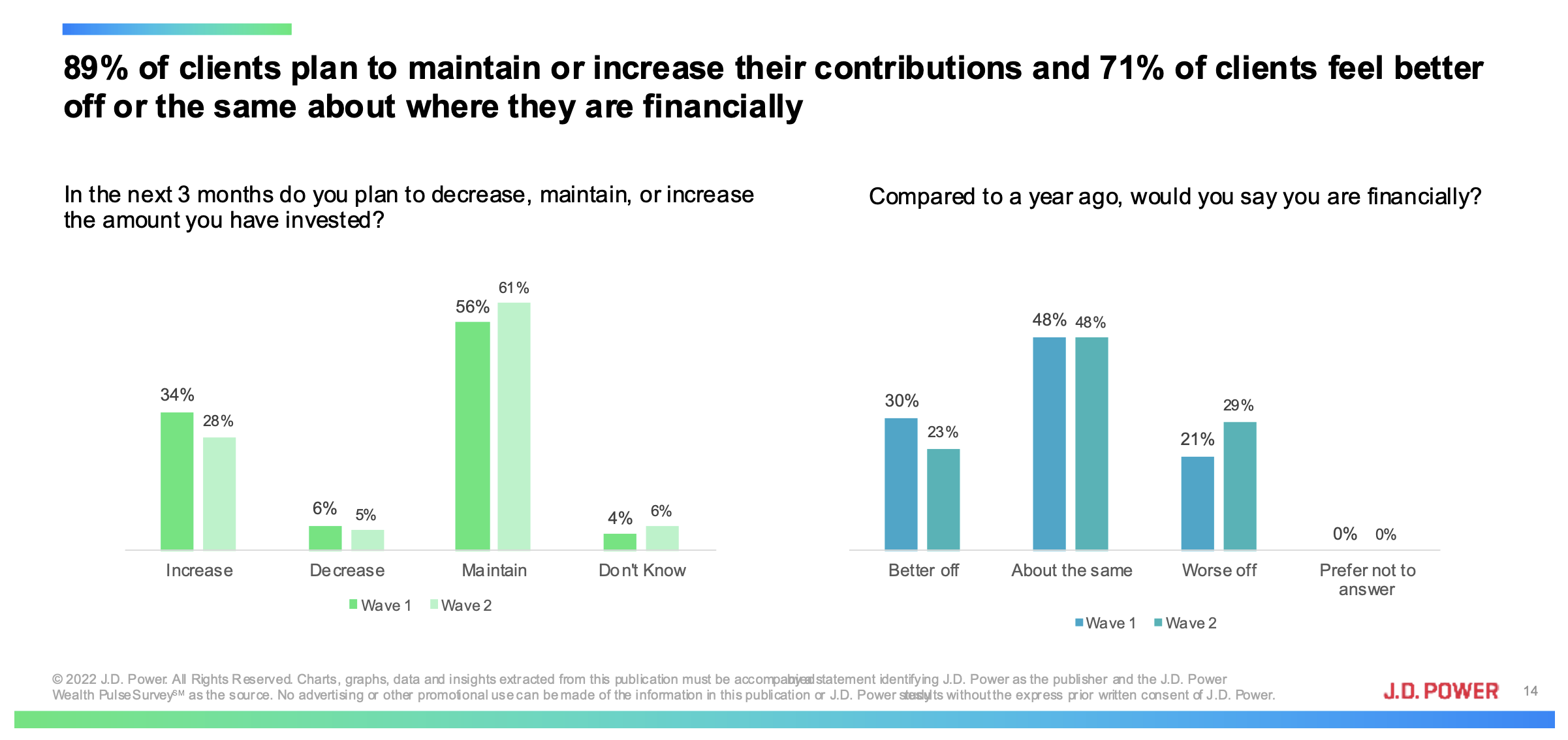
While the percentage of investors who say they will increase their investments during the next three months has dropped to 28% today from 34% in the Q2Investor Confidence Index, the majority of investors are staying resilient. Across all demographic groups, 89% of investors say they plan to maintain or increase their short-term investment. Similarly, 71% say they feel better or the same about where they are financially versus a year ago.
Weighing the Role of the Advisor
While investor confidence has declined sharply this quarter, that decline is less pronounced among full-service investors (i.e. those who work with a dedicated financial advisor in their primary relationship). The average overall investor confidence score for investors with full-service advisors is 622. That number falls to 589 among those working with robo-advised accounts and 572 among self-service investors.

Find out More
This Wealth Intelligence Report is based on responses from 1,929 U.S. consumers aged 18 and older with at least $100,000 in investable assets. It was fielded from September 12-September 26, 2022. It was authored by Michael Foy, senior director and head of wealth intelligence at JD Power. Please contact us at the numbers below to connect with Mr. Foy or to learn more about the underlying research.
Media Contacts
Brian Jaklitsch; East Coast; 631-584-2200; [email protected]
Geno Effler, JD Power; West Coast; 714-621-6224; [email protected]
[1] JD Power defines generational groups as Pre-Boomers (born before 1946); Boomers (1946-1964); Gen X (1965-1976); Gen Y (1977-1994); and Gen Z (1995-2004). Millennials (1982-1994) are a subset of Gen Y.