Technology, Media & Telecom Intelligence Report
April 2024
Mobile carriers are flooding the airwaves with catchy commercials boasting about their ability to provide affordable, high-speed home internet. The advertising push aims to build awareness for Fixed Wireless Access (FWA).
FWA is an innovative new form of 5G or 4G LTE wireless technology that delivers high-speed internet by leveraging existing wireless networks run by Mobile Network Operators (MNOs). While FWA is unlikely to be as fast a connection as Fiber, it is fast enough to connect at a speed that handles most internet needs.
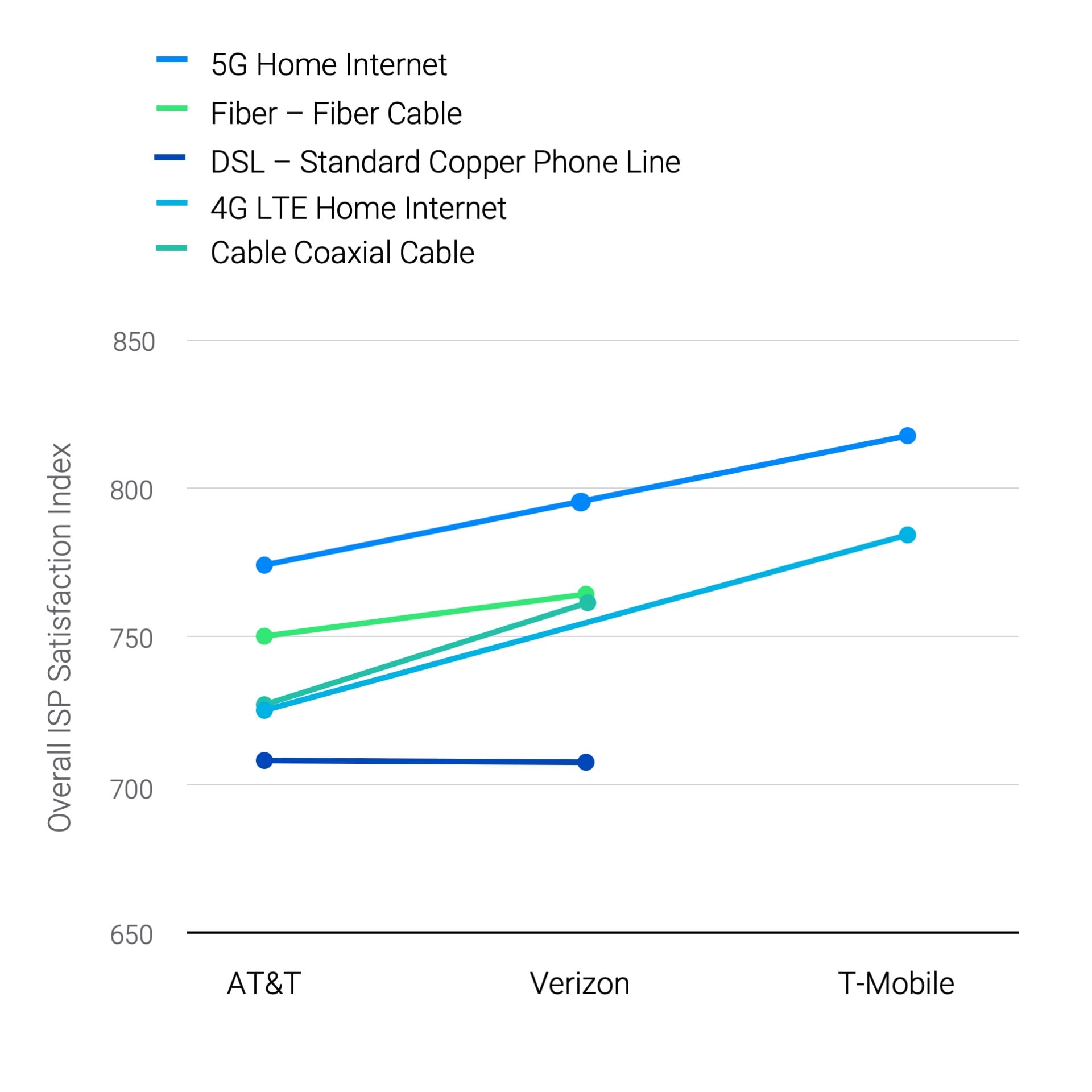
Advancements in 5G technology allow FWA to provide higher data rates, reduced latency, and improved reliability. 5G-based FWA has the potential to rival traditional wired connections, enabling gigabit speeds and unlocking new applications and services. According to the latest JD Power data, customers with FWA are embracing the new technology, as FWA is already besting fiberoptic service in terms of customer satisfaction.
Fixed Wireless Access Resonates with Consumers
In an analysis of customer experiences with FWA services, JD Power finds that the benefits extend across diverse residential landscapes. In fact, 5G FWA users have the highest satisfaction, regardless of their location. Fiber, while a strong contender, ranks second in customer satisfaction, underlining the robust performance of 5G FWA in meeting user expectations across various geographies.
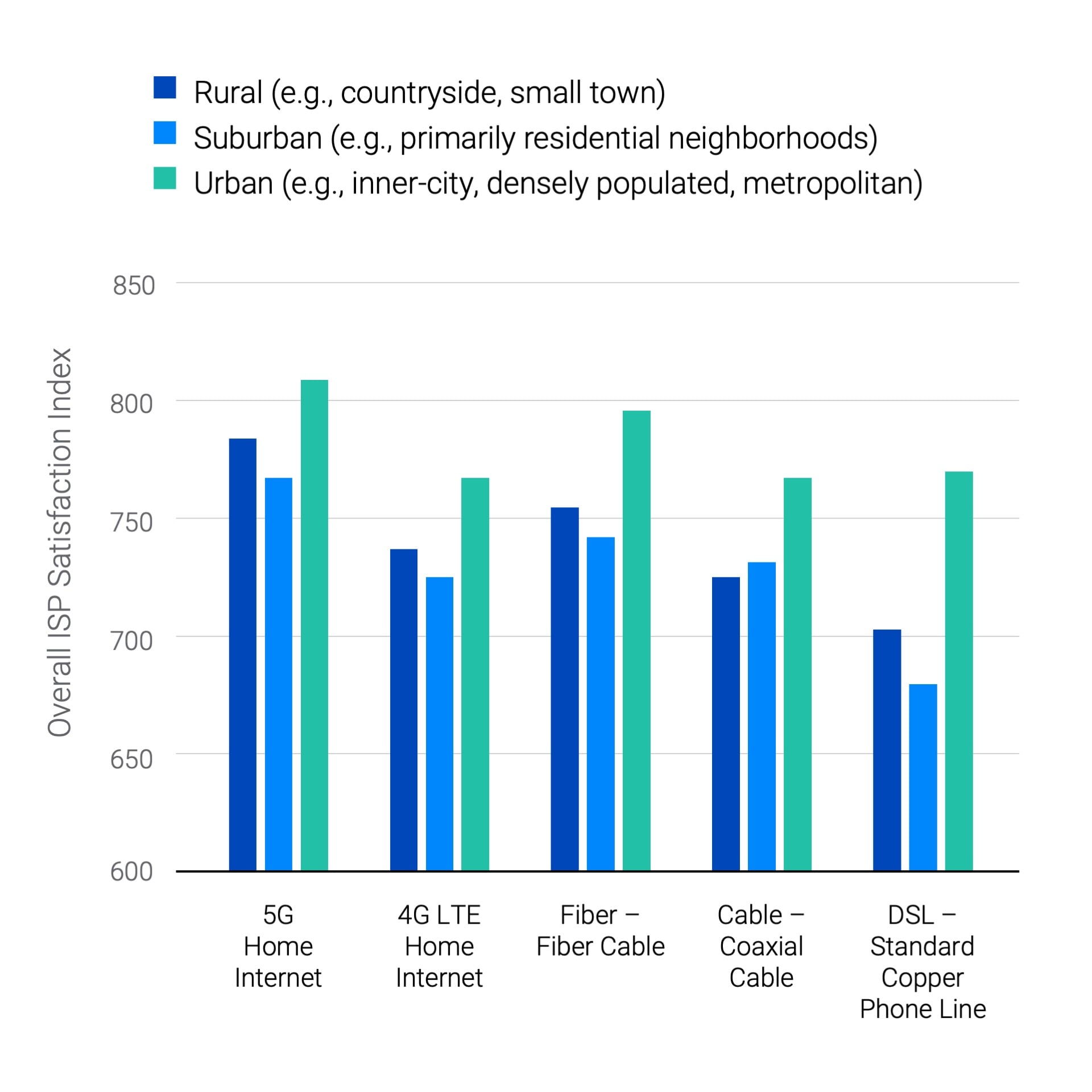
With recent advancements in capabilities, Cable internet has successfully increased its speed capabilities, rivaling those of Fiber. When evaluating customer satisfaction, both Cable and Fiber internet prove to be on par with each other, matching the performance of 4G LTE FWA. However, both trail 5G FWA, as the satisfaction levels associated with 5G FWA surpass all other forms of internet by an impressive margin of more than 20 points (on a 1,000-point scale).
The Price Factor
While the performance and reliability of both fiber and 5G internet are high, the primary distinguishing factor between connection types is the cost of service.
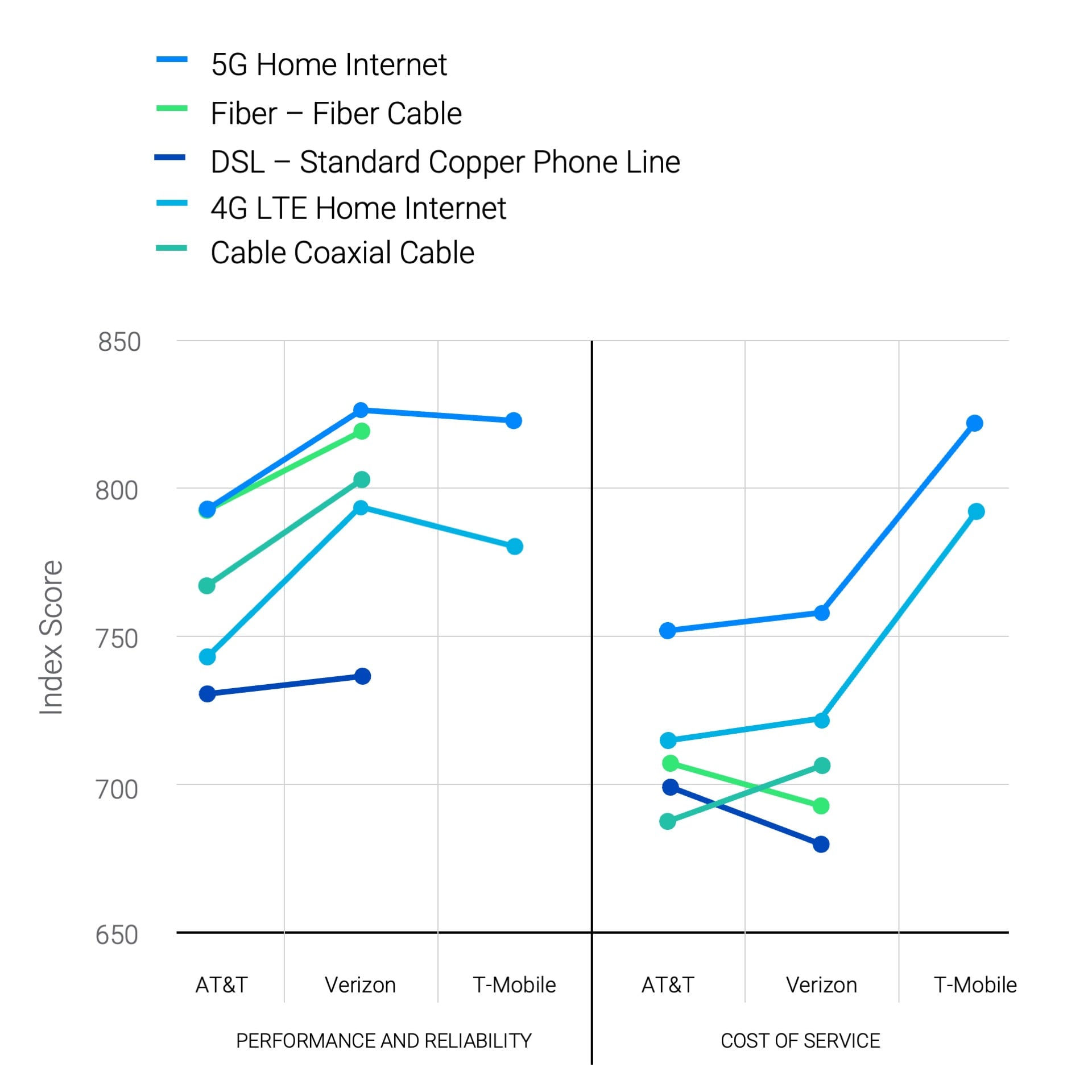
While Fiber and 5G FWA exhibit comparable performance and reliability experience scores 5G FWA leads on cost-of-service by a margin of more than 60 points. As customers still wrestle with a high cost of consumer goods and inflation stubbornly hovers around 3%, cost will likely play a pivotal role in industry disruption, with all signs pointing toward more customers actively seeking out FWA.
The Next Frontier
FWA is broadening the scope for wireless carriers, allowing companies offering fiberoptic and mobile networks to expand into new territories. That means more choices for customers and, ultimately, a broader spectrum to search for the best price and experience.
The implications for companies like T-Mobile, which can offer this affordable alternative without cutting into other aspects of their businesses, or for a potential disrupter looking to make waves in the space, could be revolutionary. As FWA adoption grows, companies currently in the industry and curious onlookers will surely be taking notice.
Find out More
This Technology, Media & Telecom Intelligence Report is based on data from the 2023 U.S. Residential Internet Service Provider Satisfaction Study, which includes responses from 23,623 customers that currently have internet service with a provider and was fielded from October 2022 through August 2023. It was authored by Carl Lepper, senior director of the technology, media and telecommunications intelligence practice at JD Power. Please contact us at the numbers below to connect with Mr. Lepper or to learn more about the underlying research.
Media Contacts
Brian Jaklitsch; East Coast; 631-584-2200; [email protected]
Geno Effler, JD Power; West Coast; 714-621-6224; [email protected]