
Knowing your driving speed is extremely important for long drives, a trip to the local market, or just a short weekend getaway. Vehicles have various safety features loaded into them, but one of the most basic safety features is the speedometer. Knowing how fast you are driving and at what speed is almost detrimental to your safety, not to mention your pocket, because you won’t be able to abide by traffic laws without the speedometer.
The speedometer is so essential that you should never truly ignore what it shows. As to why it’s that important to often take a peek at this gauge, bear with us, and we’ll explain.
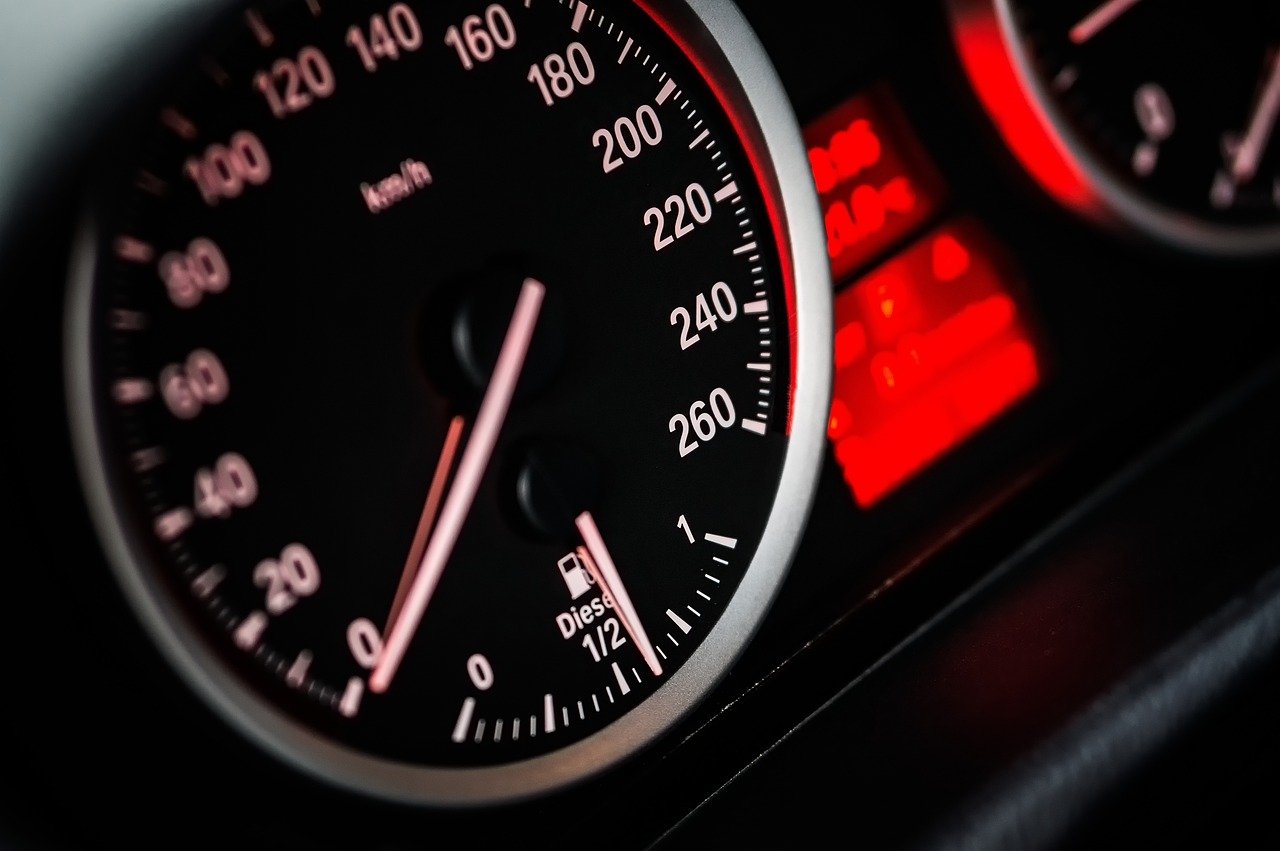
The speedometer is a device that helps measure and display the vehicle’s speed. Generally, it is placed right in front of the driving seat on the dashboard and has been one of the standard additions to modern-day cars. It has two sets of numbers, with the minor numbers at the bottom of the indicator. The two sets of numbers are indicators for kilometers and miles. A thin needle shows the number corresponding to the vehicle’s current speed. As the speed increases, the needle’s number and elevation climb the circle.
There are two kinds of speedometers: mechanical and digital, with digital ones showing your current speed accurately at all times.
Your vehicle’s speedometer can fail for various reasons, but some are more probable than others. Here are some most common malfunctions that could make your speedometer dysfunctional:
The speedometer can be repaired or replaced after you determine the root cause of the issue. If it malfunctions, you can validate the circuit integrity and the sensor function through a multimeter or a scan tool. A bi-directional scan tool can also help you check for anomalies with the vehicle’s instrument cluster.
It’s also simple to detect and diagnose a speedometer-related issue with just a simple check for bad wiring and jammed connectors. You can also try to look for visible wear and tear damage or degradation. If the sensor malfunctions, a replacement is in order. The sensor can be easily replaced by removing the affected sensor’s hold-down fastener, pulling the faulty sensor out of the socket, and replacing it with a new one.
Dealing with wiring, however, might get a little tricky. It can be arduous, and we suggest you call the mechanic or visit the nearest repair center. Locating the damaged segment of the circuit, purchasing a replacement harness or pigtail, or improving the course might be needed.
If the speedometer is dysfunctional, you must remove the instrument cluster. The faulty dash component and the hardware must be replaced to fix the issue.
However, an issue with the ECU should be treated with utmost caution. Diagnostics for an ECU failure should be conducted by factory-specific service literature. This is a scarce issue and occurs rarely.
The speedometer is an essential part of the vehicle and is vital to the safety of the driver and passengers. Therefore, it is important to check the state of your speedometer as a part of your routine maintenance and get it calibrated. Due diligence can help you avoid road hold-ups due to a dysfunctional speedometer.



The new 2027 BMW i3 boasts an estimated range of up to 440 miles, 400-kilowatt DC fast charging capability, bidirectional charging to a home or the grid, and next-generation technology.
Read the Full Article
Facing renewed competition in the full-size, light duty pickup truck segment, the 2027 Ford F-150 receives subtle styling updates, a new standard engine, broader availability of its 5.0-liter V8, and ...See More
Read the Full Article
The 2027 Civic Type R goes on sale in October 2026, and it starts at $49,990, including the $1,295 destination charge.
Read the Full Article
Part of BMW’s Neue Klasse (new class) rollout of redesigned models, the 2027 BMW 3 Series is all-new and goes on sale in the first quarter of 2027.
Read the Full Article