
Many owners pump their cars with fuel but never stop to think about just what they’re pouring inside the tank. Gas has unique properties, like weight and density, which all play an essential part. In this piece, we’ll try to understand how much gas weighs and why that matters.

The weight of a gallon of gasoline is about six pounds. There is a slight difference depending on the type of gasoline and its additives. Unlike water, which weighs about 8.4 pounds per gallon, gasoline is 25% lighter.
Many people instinctively think that all liquids weigh the same as water, which is inaccurate. This misconception can create problems, especially when you end up in an emergency where you run out of fuel. Knowing gasoline weight can help a great deal here, as you would be able to accurately estimate just how much fuel you can carry.
The Science and Technology Desk Reference claims the weight of the U.S. gasoline gallon is 6.1 pounds. Fuel quality can have a slight impact on the weight of gasoline.
Gas stations in the U.S. sell three primary grades of gasoline based on the octane level: Regular (the lowest-grade octane fuel – generally 87), Midgrade (the middle range octane fuel – typically 89–90), and Premium (the highest-grade octane fuel – usually 91–94). Regular fuel is the lightest and weighs about 6.073 pounds per gallon in +59 F temperature, while Midgrade and Premium gas weigh 6.35 pounds and 6.27 pounds, respectively, in the same conditions.
Temperature heavily influences gas weight. For instance, a gallon of premium 93-octane fuel fluctuates between 5.93 to 6.42 pounds, depending on temperature and additives like methanol, water, and benzene. Volume is another heavily dependent factor, but it’s easy to make calculations. An increase of 1 F adds one ppm to the volume, meaning a temperature difference of 30 F may expand it by 3%. All this means that if you’re, for instance, refueling during winter, you will be pouring more gas into the vehicle.
Some owners believe that driving around with a half- or quarter-empty tank would save money as the car becomes lighter. It rings true in theory but doesn’t help you save money on fuel in practice.
Small tanks can hold about 12 gallons, larger ones close to 15-20, and SUV or large truck tanks can accommodate 27 gallons. So, if we averaged out the capacity and fuel weight, we’d conclude that a full tank could weigh anywhere from 73 to 165 pounds, about the weight of a teenager. But it doesn't make a huge difference compared to the average vehicle weight of 2000 to 5000 pounds. Plus, driving close to an empty tank can bring about various car issues.
Diesel is heavier than gasoline; it weighs about seven pounds per gallon (a bit less in the US and a bit more in Canada). The difference is due to its higher density and the number of molecules. Knowing that could save you one day, as regular gasoline and diesel shouldn’t be mixed.
If your vehicle requires gasoline, and you put diesel in the tank, it would go down the engine tube as it's heavier. On the contrary, in a diesel-based car, regular fuel would float to the top and stay there until all the diesel is burned. So, if you end up accidentally mixing the fluids, both scenarios could create serious vehicle issues, requiring you to go for a procedure called “gastric lavage”. And even though you may get lucky and get a pass when it occurs for the first time, it’s best not to tempt fate and be careful.
Gasoline weight is an essential factor not to be overlooked, especially in emergencies where you run out of fuel. Things like octane level temperature and additives further influence it, which is useful to remember.
However, most of the time, people don’t go for precise measurements. And, if you want to be practical about it, remember that gasoline weighs about 6 pounds per gallon, about 25% lighter than water.



With a purposeful new design and some trail-ready upgrades, the 2027 Hyundai Tucson is pushing the brand's best-selling crossover SUV into more aggressive territory.
Read the Full Article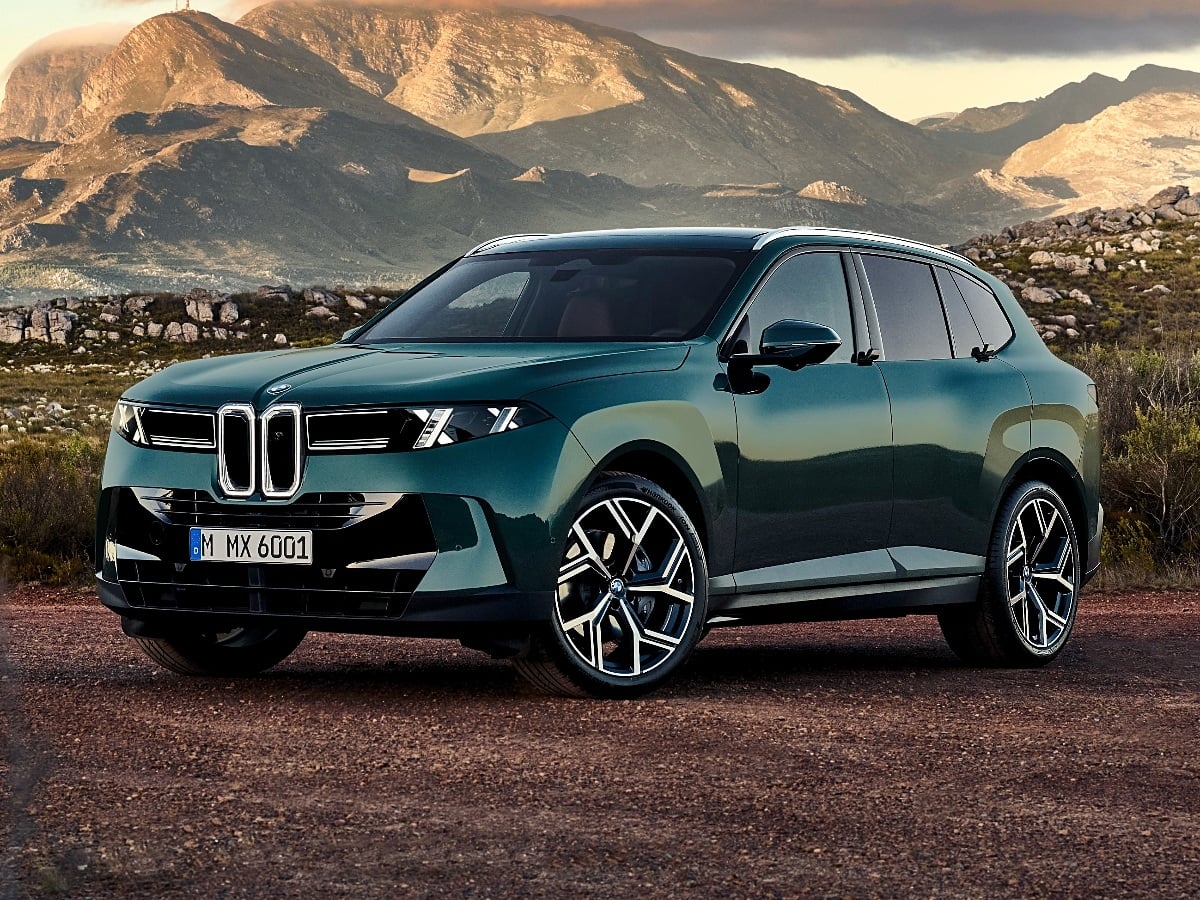
For more than 25 years, the BMW X5 has helped to define the luxury SUV segment. Now, the redesigned fifth-generation 2027 BMW X5 arrives with the automaker’s Neue Klasse styling, a roomier interior, ...See More
Read the Full Article
One of Lexus's most popular models, the NX crossover SUV is also one of the most affordable in the company’s lineup. The 2027 Lexus NX transitions to hybrid-only powertrains, and gets revised ...See More
Read the Full Article
The new 2027 BMW i3 boasts an estimated range of up to 440 miles, 400-kilowatt DC fast charging capability, bidirectional charging to a home or the grid, and next-generation technology.
Read the Full Article