84 - 103
76 - 84
489 - 517
1 speed, Automatic
Electric
All Wheel Drive, Rear Wheel Drive

Photo: Perry Stern
The Polestar 3 is available in two trim levels: Long Range Dual Motor and Long Range Dual Motor with Performance Pack. Polestar initially offered a special, full-featured Launch Edition, but it is no longer available. Prices range from around $75,000 to almost $81,000.
Polestar loaned me a 2025 Polestar 3 Launch Edition with the Performance Pack, ventilated Nappa leather seats, and metallic paint. The total manufacturer's suggested retail price was $93,100, including the $1,400 destination charge to transport the electric SUV from its assembly plant in Chengdu, China. While my test vehicle came from China, Polestar is now assembling the Polestar 3 in Ridgeville, South Carolina, making it the first Polestar model built in America.
For this review drive, Polestar paid for my travel, food, and lodging in Jackson Hole, Wyoming.

Photo: Perry Stern
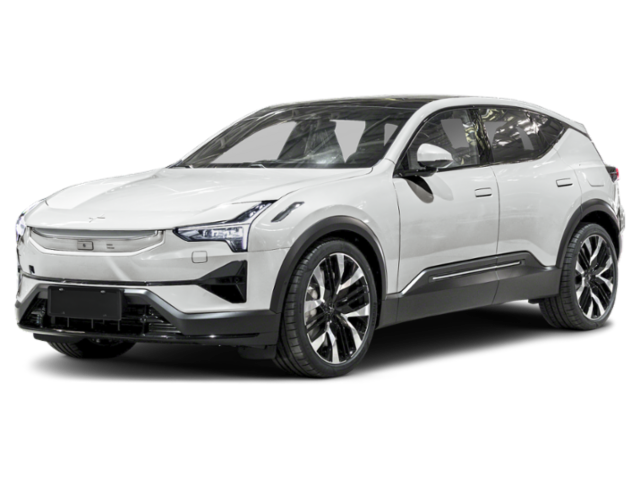
With a distinctive look and stylish LED headlights, there's no mistaking the Polestar 3 for anything else on the road. The new electric SUV features a sleek roofline, low hood, and large wheels, giving it a sporty look. The Polestar 3 also features a unique aero wing at the front of the hood, which not only looks sharp but also adds downforce for increased stability. An additional spoiler at the top of the rear hatch reduces drag, improving the vehicle's overall aerodynamic efficiency.
The Polestar 3's cabin looks futuristic with a clean, uncluttered design. Materials throughout the cabin are of high quality and primarily made from sustainable materials. The attractive Black Ash wood trim features a unique finish that reduces waste, while the optional Nappa leather seat trim is chrome-free, traceable, and produced with strict animal welfare standards.
Aside from the volume dial on the center console, the new Polestar is devoid of physical buttons and knobs. Instead, a 14.5-inch vertical touchscreen seems to float above the dashboard, with an additional 9-inch driver's display. The gear selector is on the steering column, which frees up space in the center for plentiful storage.
Sliding into the stylish front seat, the Polestar 3 came to life automatically, detecting the key in my pocket. There is no start button; you simply get in, put the car in gear, and off you go. But if you need to adjust the steering wheel or mirrors first, these common tasks are not as simple as expected.
Controls for these functions are in a sub-menu of the infotainment system. When selected, buttons on the steering wheel make the adjustments. Turning on the headlights or simply opening the glovebox requires access to the controls via the touchscreen.
The front seats were a little stiff initially, but after spending the day in the Polestar 3, I found them quite comfortable, especially with the optional massage function. Rear-seat passengers will be surprised at how much legroom there is, and with a flat floor all the way across, even the middle seat is usable.
The Polestar 3 boasts plenty of cargo space, easily accessed via a wide hatch opening. A button inside engages the air suspension to lower the height for easier loading. There are 17.1 cubic feet of space behind the rear seats, including 3.2 cubic feet of hidden storage below the floor. An additional 1.1 cubic feet of room is under the hood—an ideal place for keeping the charging cables.
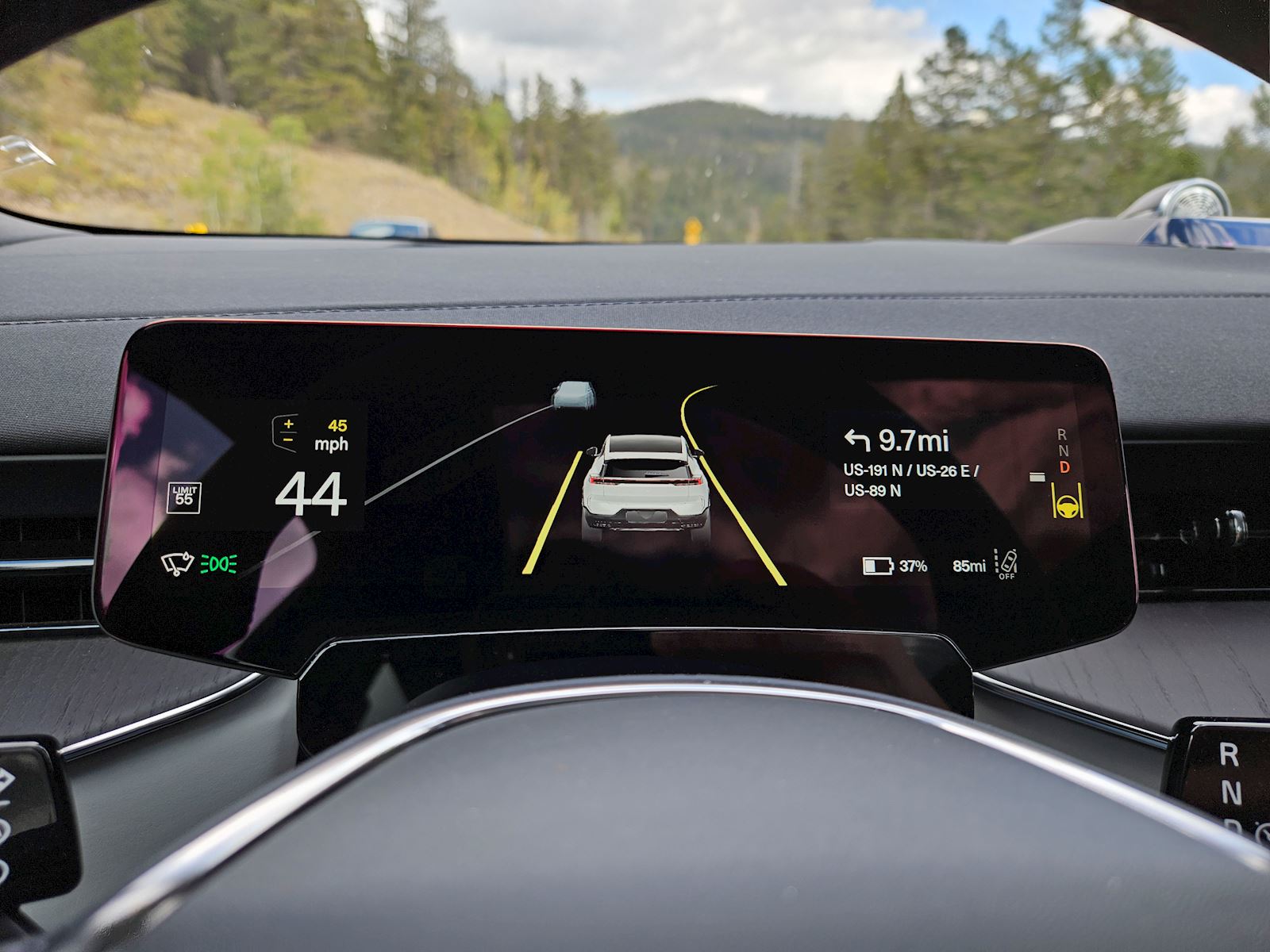
Photo: Perry Stern
The Polestar 3 features a Google-based infotainment system using a high-resolution 14.5-inch vertical display screen. With its Android Automotive operating system, Google Maps is the native navigation system, and the voice interface uses the intuitive Google Assistant. Additional apps like Waze, Spotify, Tidal, and YouTube are available for download via the Google Play store. While this is a Google-based system, Apple CarPlay and Android Auto come standard.
Taking advantage of the display's real estate, shortcuts to vehicle settings, applications, and the Home screen remain static at the bottom of the screen along with the climate controls. An active shortcut bar above the static controls highlights the most used features on the left while presenting situational features on the right. When parked, there are shortcuts to mirror/steering wheel adjustments and the glove box, but once underway, these change to vehicle settings like performance mode and one-pedal driving.
My test vehicle featured the optional Bowers & Wilkins audio system, developed specifically for the Polestar 3. The system puts 1,610 watts of sound through 25 strategically placed speakers for a completely immersive experience. The sound quality is impressive, adding to the overall premium experience.
The Polestar 3 has an extensive list of advanced driver assistance systems as standard equipment. Highlights include adaptive cruise control, forward-collision warning, blind-spot warning, lane-departure warning, and a driver monitoring system.
The optional Pilot Assist system utilizes a laser and cameras to maintain speed and distance from the car ahead while providing steering input to keep the Polestar 3 centered in the lane. The system worked well, smoothly keeping the vehicle in the lane on long straights and through curves, although it is important to point out that Pilot Assist is not a hands-free system. I found it fascinating to watch the driver's display, which showed the lane markers (even changing from broken to solid center lines in the display), as well as vehicles coming in the other direction while the system was in use.
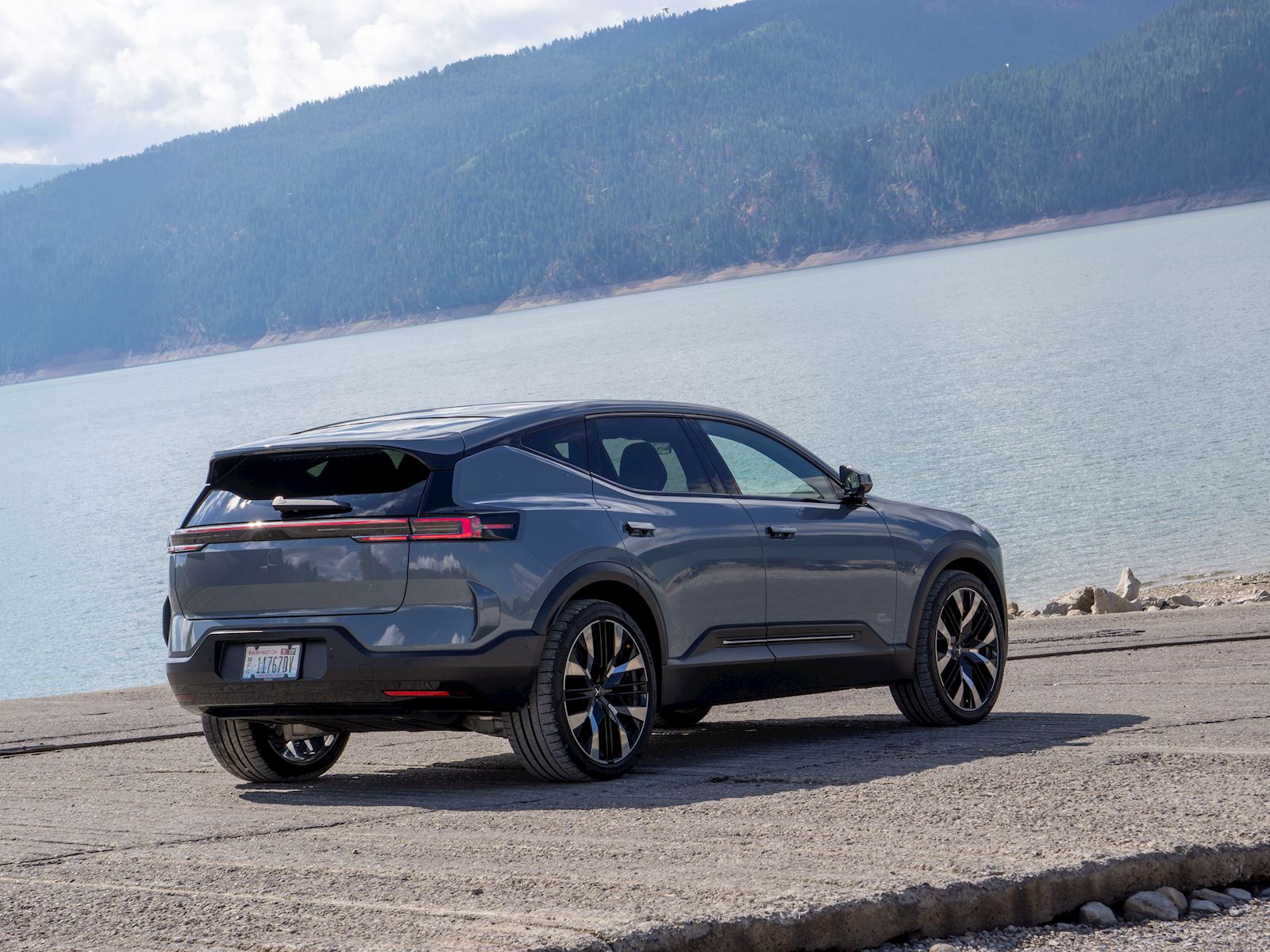
Photo: Perry Stern
The Polestar 3 delivers excellent performance thanks to its powerful dual-motor electric powertrain. My test vehicle featured the Performance Pack, which produces 517 horsepower and 671 pound-feet of torque through the all-wheel-drive (AWD) system. The Performance Pack adds 28 hp and 51 pound-feet of torque to the standard Polestar 3, but the difference in output is difficult to discern.
According to the automaker, the standard Polestar 3 will reach 60 mph in 4.8 seconds, while the version equipped with the Performance Pack is just 0.3 seconds quicker.
According to the Environmental Protection Agency (EPA), the standard Polestar 3 uses 38 kWh per 100 miles and has a range of 315 miles, while the version with the Performance Pack rates 44 kWh per 100 miles and a lower range of 279 miles. My test vehicle with the Performance Pack showed just 210 miles of range at a 95-percent charge—considerably less than the EPA estimates.
The Polestar 3 is very quick off the line with instant throttle response and smooth power delivery. But as much fun as it is to blast away from a stoplight, the newest Polestar is capable of much more. With precise steering, AWD with torque vectoring, and an adaptive air suspension, the Polestar 3 delivers excellent handling with its brisk acceleration.
My test drive took me into the mountains on Teton Pass Highway outside of Jackson Hole, Wyoming, where the Polestar 3 showed impressive capability, staying stable in the corners with outstanding grip. There was always plenty of power on tap, which was easy to modulate with smooth, quiet delivery. To say that the drive was enjoyable would be an understatement.
At the same time, the Polestar 3 is perfectly comfortable working its way through busy traffic in town or cruising at 70 mph on the freeway. This new electric SUV would make an excellent daily driver.