See answers to common EV questions, tax incentives, charging maps & more.
Explore EV21 - 25
26 - 33
221 - 302
8 speed, Auto-Shift Manual w/OD
Intercooled Turbo Gas/Electric I-4, Intercooled Turbo Premium Gasoline I-4
All Wheel Drive, Front Wheel Drive
You're probably not alone if you struggle with Mercedes SUV naming conventions. Indeed, the alphabet soup thickens as the automaker continues rolling out new and redesigned models. With this tongue-twisting proliferation of similarly named products, how can one tell them apart? As the Jackson 5 famously sang, "G-L-A-B-C. It's easy as one, two, three." Well, you get the point.
At the lower end of its range, Mercedes-Benz sells the GLA, GLB, and GLC. The GLA is a subcompact, entry-level model ideal for city dwellers. Meanwhile, the compact, five-passenger GLC offers a blend of luxury, technology, and performance in both traditional and "SUV Coupe" body styles. It is also the most expensive of the three.
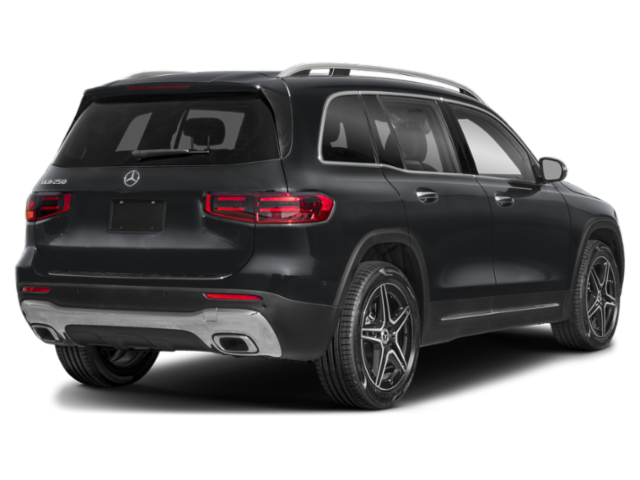
In the middle sits the GLB, which is closer in size to the GLC but with a more upright, boxy profile. The GLB has slightly less power than the GLC but a bit more passenger and cargo space. The GLB also offers seven-passenger seating in the form of an optional third row—something the GLC does not. That said, even children will likely grumble at the prospect of having to ride in the third row due to the extremely tight legroom. Price-wise, the GLB sits firmly in the middle of this trio.

Photo: Jeff Youngs
For the 2024 model year, Mercedes gives the GLB a light refresh that includes:
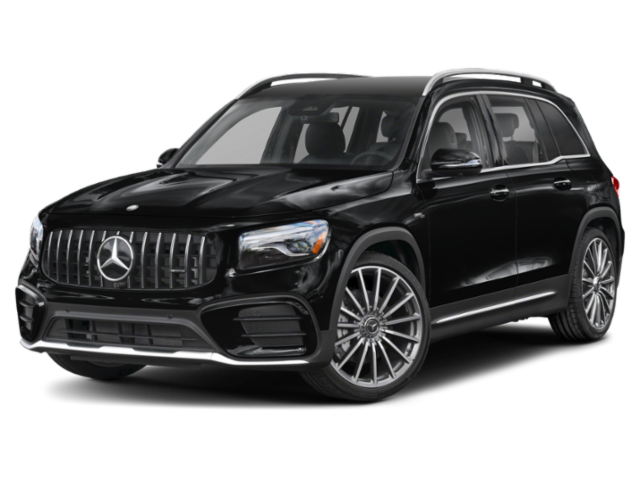
The 2024 Mercedes-Benz GLB comes in three flavors: GLB 250, GLB 250 4Matic, and high-performance AMG GLB 35 4Matic+. All three employ a turbocharged 2.0-liter four-cylinder engine with mild-hybrid technology and an eight-speed dual-clutch automatic transmission (DCT). Front-wheel drive (FWD) is standard on the GLB 250, while the GLB 250 4Matic and AMG GLB 35 4Matic+ come with standard all-wheel drive (AWD). Five-passenger seating is standard, with the optional third row providing space for seven.
JD Power previously published reviews of the 2022 Mercedes-AMG GLB 35 and 2020 Mercedes-Benz GLB 250. This review focuses on the GLB's updates for 2024 and how they potentially impact its overall consumer appeal.
For this 2024 GLB 250 review, Mercedes-Benz provided a test vehicle equipped with 4Matic AWD and the following significant options:
While most options listed above are self-explanatory, the Driver Assistance package includes nearly a dozen ADAS—above and beyond the standard package. Highlights include Active Brake Assist, Active Distance Assist Distronic, Active Steering Assist, and Pre Safe Plus.
The test vehicle's price was $55,595, including the $1,150 destination charge to ship the SUV from the Aguascalientes, Mexico, assembly plant to your local dealership.

Photo: Jeff Youngs
Aside from some minor standard equipment upgrades and package reshuffling, the GLB has remained essentially unchanged since Mercedes introduced it for the 2020 model year. For 2024, the SUV gets a light refresh inside and out.
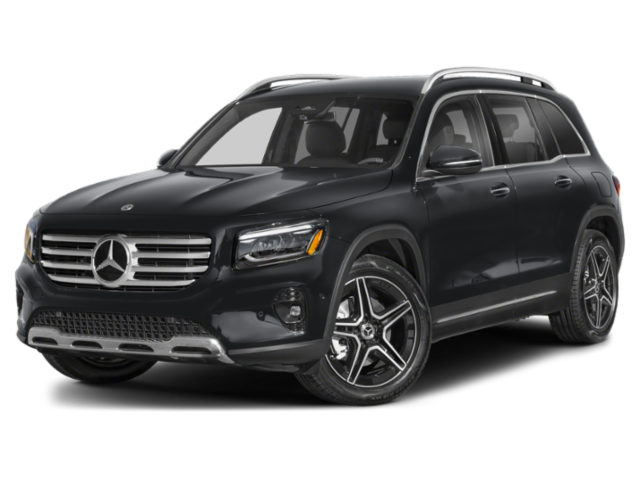
Exterior highlights include a redesigned front bumper, new LED headlights and taillights, and two new optional wheel designs (18- and 20-inch sizes). There's also a new color choice: Starling Blue Metallic. Inside, you'll find new "turbine-look" round air vents, newly standard 10.25-inch driver and infotainment display screens, and upgraded trim and upholstery choices.
Although the GLB's styling changes for 2024 are modest, they do effectively freshen the SUV's appearance, particularly at the front. The revised bumper/grille and exposed skid protection give the GLB a slightly beefier, more rugged look.
Likewise, the interior refinements take things up a notch. Still, the upgrades merely help the GLB keep pace with competitors from Audi, BMW, Genesis, and Lexus rather than raising the bar.

Photo: Jeff Youngs
In addition to the SUV's styling updates, the 2024 GLB receives several technology upgrades, including the driver information display and infotainment system.
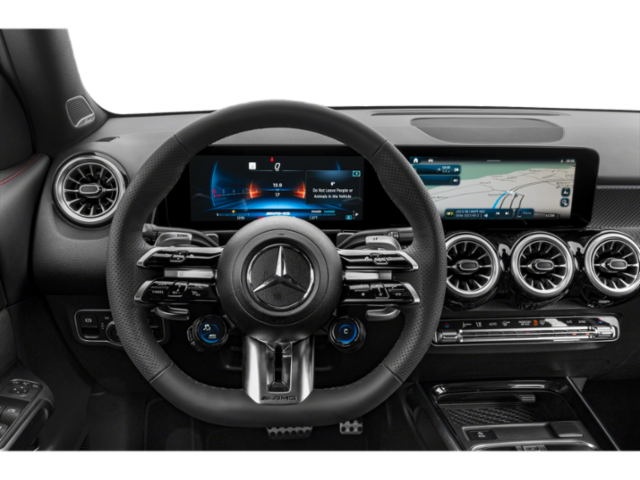
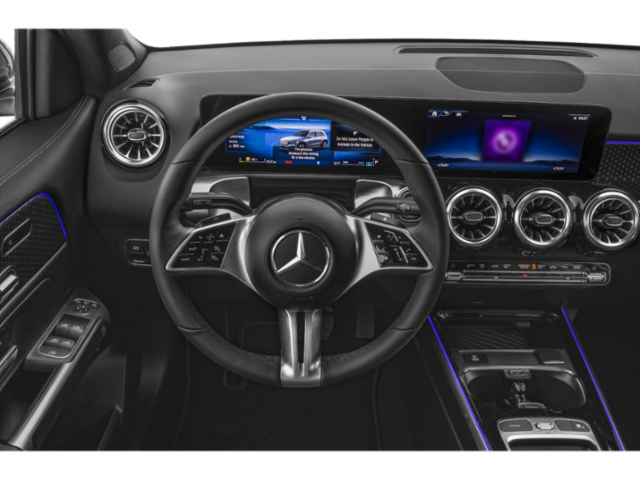
Drivers can choose among three gauge display styles—Classic, Sporty, or Discreet—depending on what they want to see on the 10.25-inch driver information screen. While Sporty is the coolest of the three with its lively tachometer display, I mostly kept the SUV in Classic view. You can also toggle between Navigation, Assistance, and Services modes and choose from 10 ambient color themes for further display customization.
Regarding infotainment, the 2024 GLB upgrades to the latest iteration of the MBUX system with better performance, more customization options, and improved graphics.
The gateway to the updated MBUX system is a newly standard 10.25-inch central touchscreen. You can also access many MBUX features via the steering wheel controls or by saying, "Hey, Mercedes." Wireless Apple CarPlay and Android Auto, an extra USB-C port, and more powerful USB ports are also standard. Audiophiles can now opt for a Burmester surround-sound audio system with Dolby Atmos technology.
As distracted driving becomes more of a concern, hands-free technology is increasingly important. The updated MBUX system benefits from improved digital voice assistant capability. The system can better understand and carry out voice commands by leveraging its in-vehicle connected services.
During my week with the GLB, I found the MBUX system quite capable and satisfying. Connecting to an iPhone 15 was quick and easy, and the system understood nearly all my voice commands, initiated by uttering the "Hey, Mercedes" wake-up phrase. From providing directions to a local meat and produce store to adjusting the cabin temperature and activating the steering wheel heater to getting the local weather forecast, MBUX worked flawlessly.
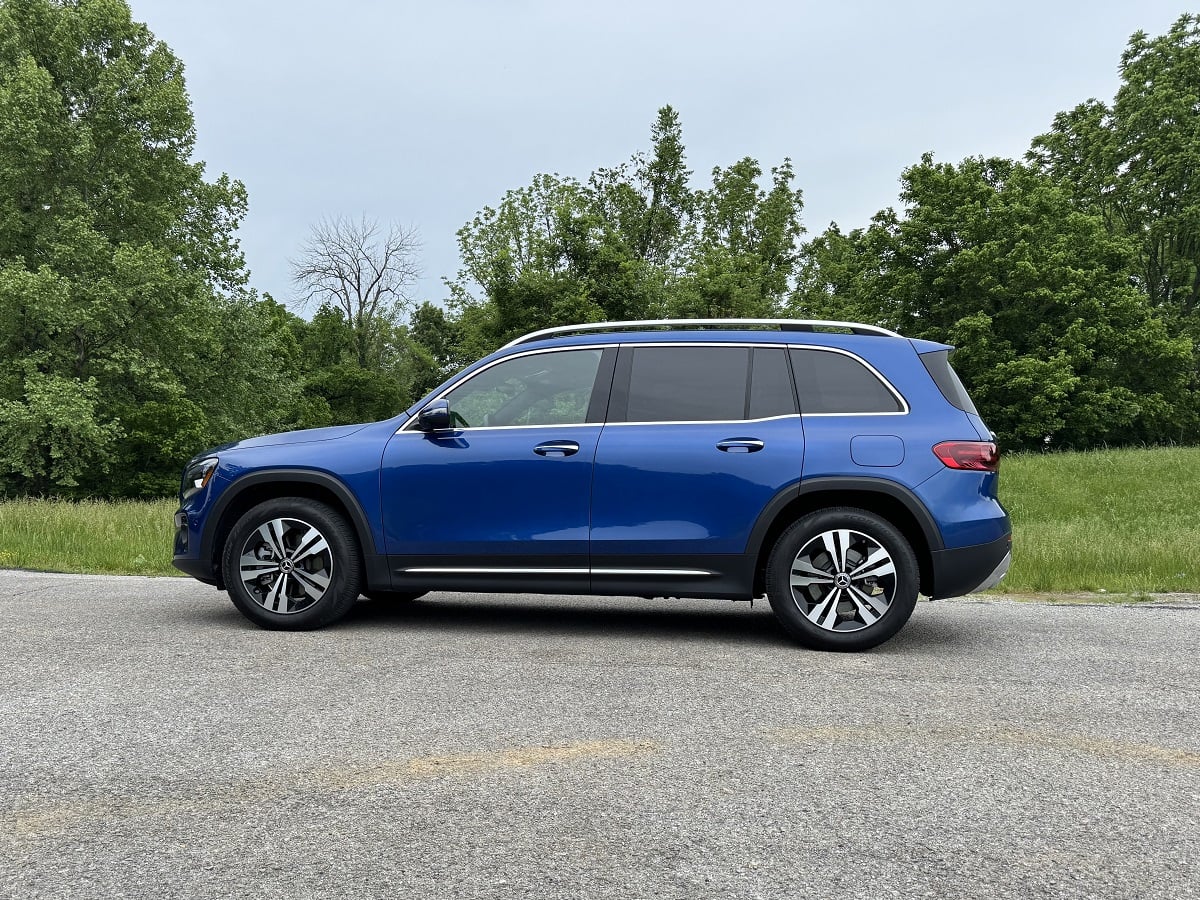
Photo: Jeff Youngs
For the 2024 model year, Mercedes adds new mild-hybrid technology to improve the GLB’s performance and fuel economy. The 48-volt mild-hybrid system provides a brief 13-horsepower boost when starting and accelerating and enables the gas engine to shut down entirely when coasting, thus saving fuel. When braking and accelerating, the mild-hybrid system returns power to the battery.
According to the Environmental Protection Agency (EPA), adding a mild-hybrid system to the GLB 250 4Matic improves fuel economy by two mpg across the board (city/highway/combined), resulting in a rating of 27 mpg in combined driving.
While horsepower (221) and torque (258 pound-feet) haven't changed since Mercedes introduced the GLB for 2020, the mild-hybrid system ever-so-slightly enhances performance and drivability while saving gas, which is never a bad thing. The performance-oriented AMG GLB 35 also benefits from the mild-hybrid boost for 2024.
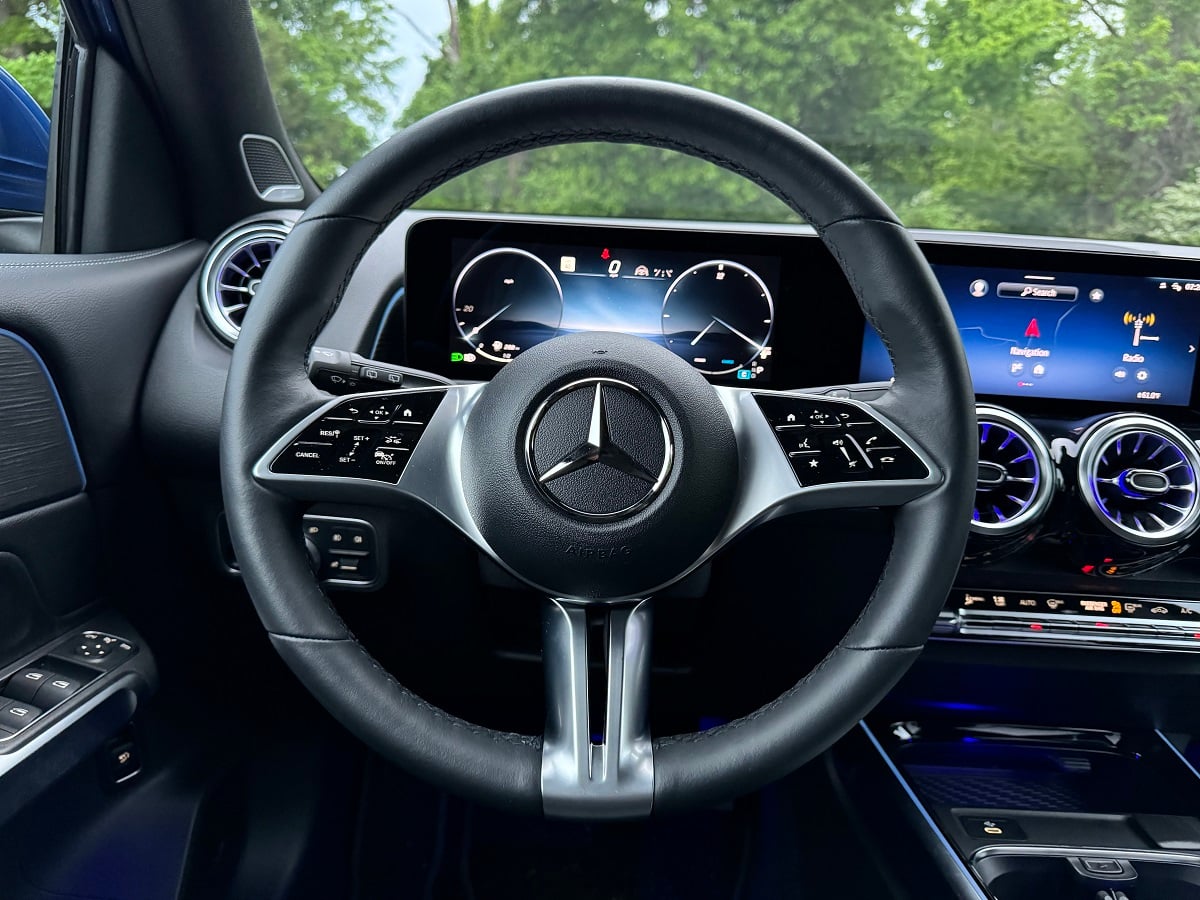
Photo: Jeff Youngs
Regarding the driving experience, my expectations for the non-AMG version of the 2024 GLB were pretty low. After all, the laundry list of performance goodies that come with the AMG version—not to mention the extra 81 hp—is what any self-respecting car enthusiast would naturally crave. However, after my seven-day evaluation, I must admit that the GLB 250 4Matic is neither underpowered nor underwhelming in the handling department.
On the contrary, the combination of the 221-hp, turbocharged 2.0-liter four-cylinder engine, 48-volt mild-hybrid system, and eight-speed DCT work quite well. Off-the-line acceleration, aided by the mild-hybrid system, is quick and smooth. The transmission doesn't exhibit any of the "clunkiness" often found in a DCT. And the ride, while not high-end premium like in the GLS, was very smooth with little body lean—certainly less than expected considering the GLB's somewhat blocky proportions.
Despite its classification as a compact SUV, the GLB's roomy cabin and excellent visibility make it seem larger than it is. This is a good thing, in my opinion.
From the driver's seat, the dual 10.25-inch screens feature crisp graphics and are easily customized to present your desired information. As you'd expect, the seats are comfortable, even on long drives. The Seat Kinetics feature, which continually adjusts various settings for the backrest and seat surface every so often, helps to keep your back and rear end from getting stiff and sore. You can also adjust the ambient lighting to your preference.
To test the automatic emergency stop assistance system, I activated the adaptive cruise control and took my hands off the wheel. I continued to do so despite the vehicle's repeated warnings urging me to retake control. Sure enough, the GLB activated the hazard flashers and initiated an emergency stop, safely steering me onto the shoulder and slowing the SUV. I retook control before completely stopping to avoid the vehicle initiating a call to first responders.
As mentioned earlier, the EPA rates the 2024 Mercedes-Benz GLB 250 4Matic's fuel economy at 27 mpg in combined driving. During my test involving a mix of primarily rural two-lane and interstate driving, the GLB indicated 29.4 mpg—above the EPA's combined rating but below the 32-mpg highway rating.

Photo: Jeff Youngs
Despite being essentially the same since its 2020 introduction, the Mercedes-Benz GLB remains a worthy contender in the crowded compact premium SUV segment. Still, one must wonder if a simple light refresh will be enough to keep it competitive with similarly sized models.
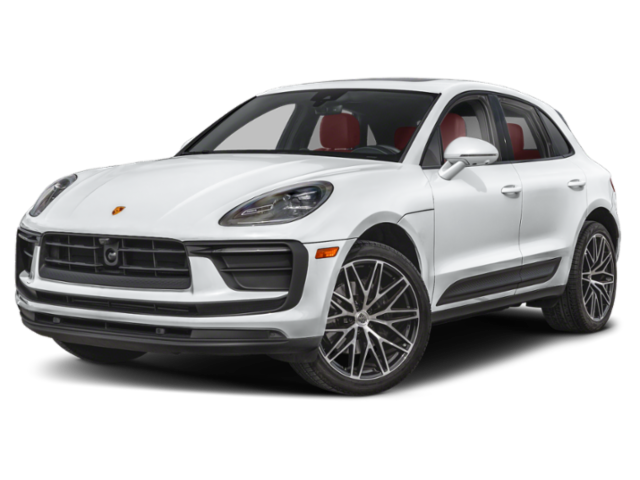
The GLB occupies a unique market position. It shares a platform with the smaller GLA, but it’s larger than the more upscale GLC. Due to this crossover, competitors include the Audi Q3 and Q5, BMW X2 and X3, Genesis GV70, Lexus NX and UX, Porsche Macan, and the Volvo XC40 and XC60. All of those offer some mix of attractive styling, a well-executed interior, advanced technology, and desirable driving dynamics.
With more traditional SUV styling, available AWD, a spacious cabin, excellent outward visibility, improved technology, surprisingly good driving dynamics, and Mercedes' reputation for safety, the 2024 GLB has a lot going for it. However, if you’re seeking a more stylish exterior, more standard equipment for the money, and a more dynamic driving experience, you’ll need to step up to the AMG GLB 35 or look to another brand.
Jeff Youngs has over 25 years of experience in the auto industry, including 19 years with JD Power in marketing and editorial management roles. He also spent nearly six years as a media relations pro with General Motors. As a freelance automotive journalist, his work has appeared on JDPower.com, CarGurus, Kelley Blue Book, Autotrader, Autolist, and iSeeCars.