See answers to common EV questions, tax incentives, charging maps & more.
Explore EV31 - 53
40 - 46
138 - 169
1 speed, CVT w/OD, 10 speed, Automatic/CVT w/OD
Gas/Electric I-4, Regular Gasoline I-4
All Wheel Drive, Front Wheel Drive

Photo: Ron Sessions
The Toyota Corolla competes in the Compact Car market segment. According to data collected from verified new-vehicle buyers for the JD Power 2022 Automotive Performance, Execution and Layout (APEAL) Study, 56 percent of new Toyota Corolla buyers are male (vs. 59 percent for the segment), and the median age of a new Corolla buyer is 48 years (vs. 46).
As part of the APEAL Study, owners rated the Corolla in 10 primary categories. Listed below in descending order, you'll find their preferences, from their most favorite thing about the vehicle to their least favorite:
In the 2022 APEAL Study, the Corolla ranks 8th out of 13 Compact Car models.
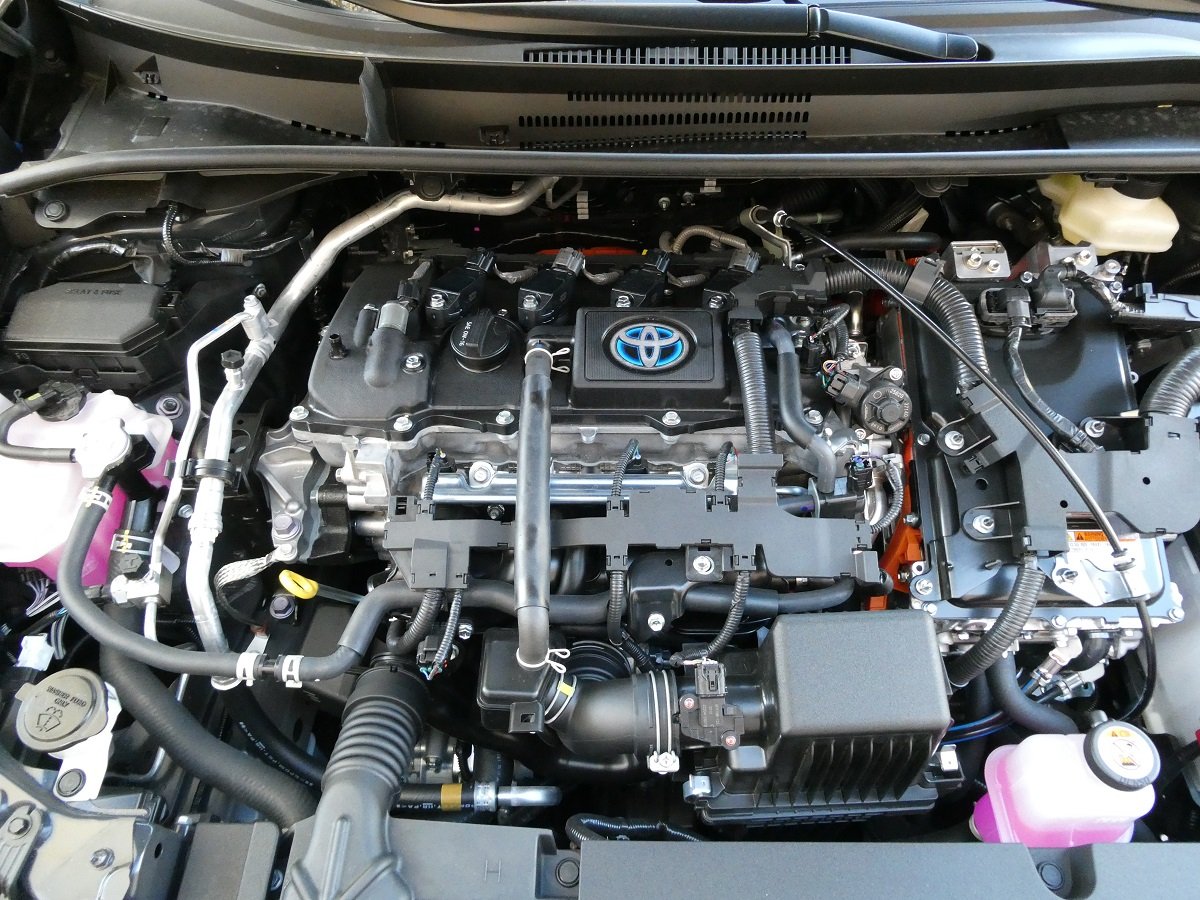
Photo: Ron Sessions
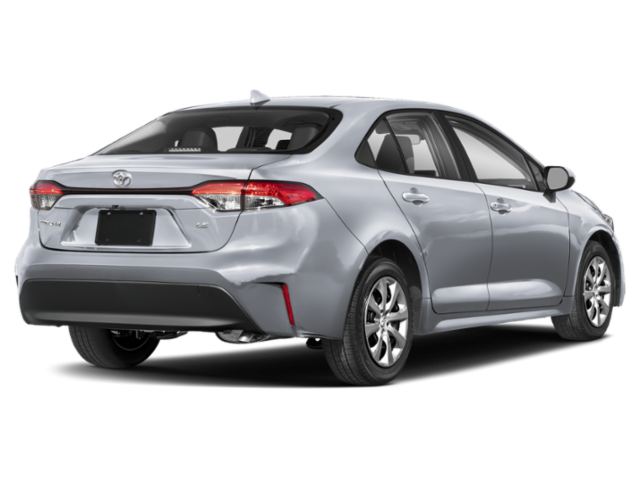
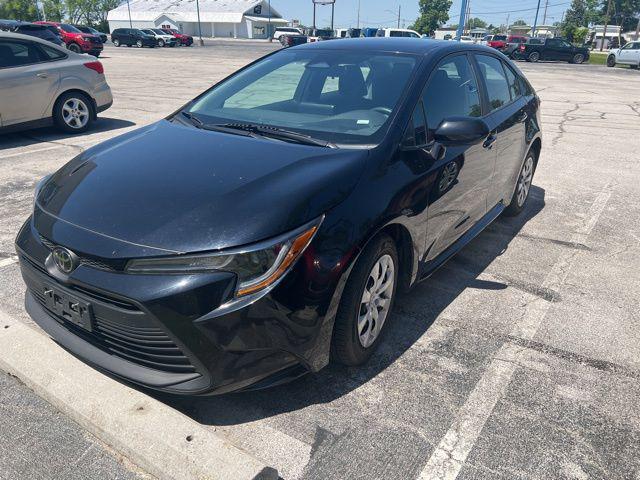
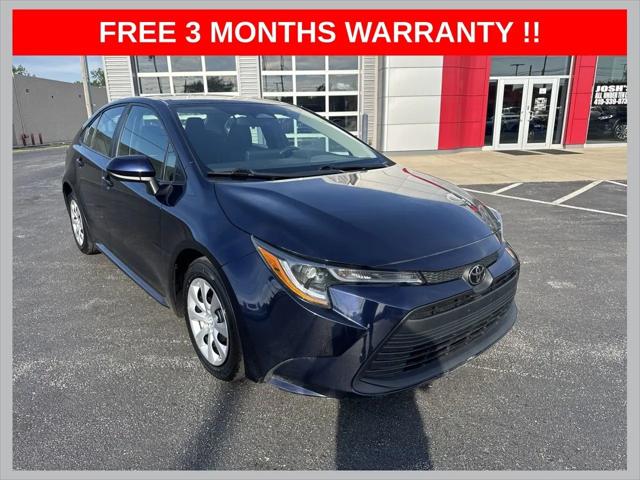
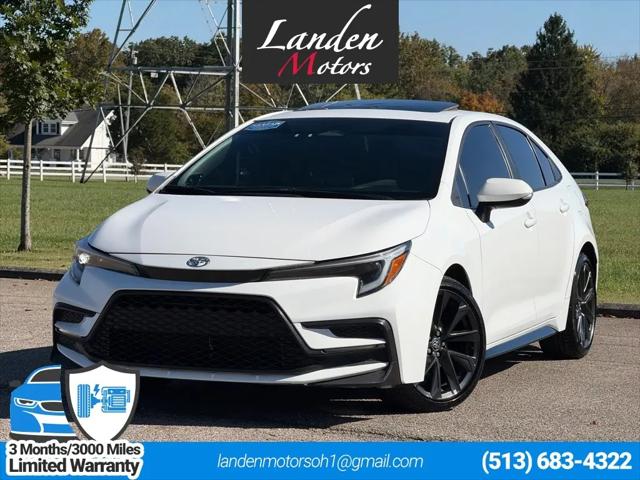
For 2023, Toyota replaces the prior year's base 139-hp, 1.8-liter 4-cylinder engine for non-hybrid Corolla L, LE, and XLE sedans with a 169-hp, 2.0-liter 4-cylinder on all non-hybrid Corolla sedans. This engine, shared with the Corolla Hatchback, pairs with a CVT that blends a physical first gear with a pulley system that Toyota says provides a crisper launch from rest. With 30 more horsepower and 25 more pound-feet of torque than the prior year's 1.8-liter, Toyota says the new 2.0-liter engine is about two full seconds quicker from zero-to-60 mph than the previous 1.8-liter. The bonus is that, with an EPA-estimated 35 mpg in combined city and highway driving, the larger and more powerful engine is also 2 mpg thriftier.
The 2023 Corolla Hybrid Sedan also gets a bump in power compared to the 2022 model courtesy of efficiency improvements inside the motor/transaxle, which blends the output of the 1.8-liter gas engine and electric motors. As a result, the hybrid system's net horsepower rises from 121 for the 2022 model to 138 for the 2023 model. However, fuel economy dips slightly for the 2023 hybrid model, with the 50-mpg EPA combined city/highway estimate for the XE and XLE front-wheel-drive (FWD) versions coming up 2 mpg short versus the 2022 model. However, according to Toyota, the zero-to-60-mph estimate improves to 9 seconds.

Photo: Ron Sessions
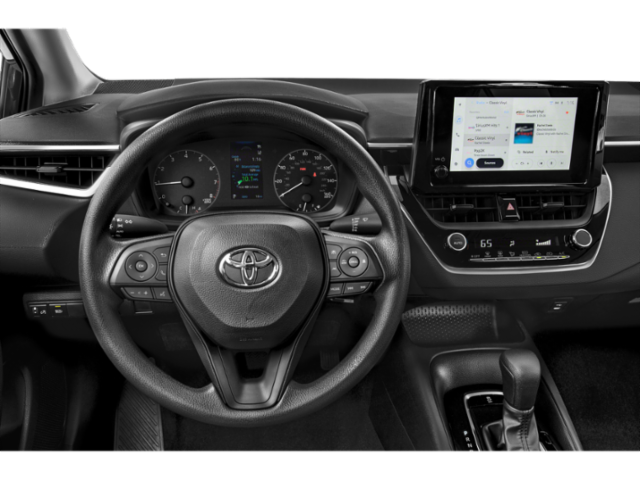
For 2023, the Corolla upgrades from Toyota Safety Sense 2.0 to the new 3.0 (TSS 3.0) version. Using higher-resolution system sensors with expanded coverage and updated system software, TSS 3.0 brings several key improvements.
The TSS 3.0 forward-collision warning system brings improved sensing for detecting motorcycles and bicycles. It also adds the ability to detect oncoming vehicles in an adjacent lane when turning and those approaching laterally at intersections. The system provides both audible and visual alerts and can provide automatic emergency braking to mitigate or avoid a collision.
In addition to using painted lines to determine if the Corolla remains in its chosen lane, lane-keeping assistance software expands to include roadside features such as guardrails and curbing to help make that determination before giving the driver audible and visual alerts. If ignored by the driver, the system initiates mild, corrective counter-steering torque unless the driver activates the turn signal.
Also, for 2023, Toyota recalibrates the adaptive cruise control system with more linear speed adjustments when changing lanes. In addition, when the driver sets the adaptive cruise control and lane markings are visible, lane-centering assistance (or Lane Tracing Assist in Toyota parlance) keeps the Corolla centered between the markings. New for 2023, software adjustments reduce the constant minor steering adjustments that are annoying and unnecessary. These updates give the Corolla driver more leeway to move around in the lane as needed to avoid potholes, truck tire treads, and other road obstacles without fighting the centering feature. The lane-centering system also receives updates to enable the Corolla to give more space within its lane when passing an adjacent vehicle.
Also new with TSS 3.0 is an emergency driving stop feature. It monitors driver steering-wheel movements and other measures of attentiveness. The system can bring the vehicle to a gradual halt if the driver is non-responsive.
The traffic-sign recognition feature now includes notifications on yield, stop, do not enter, and other intersection and pedestrian warning signs in the driver's multi-information display.
With inputs from the Corolla's front camera and radar sensor, a new Proactive Driving Assist can provide gentle braking for curves. The system helped take the edge off a particularly twisty section of the road with some surprisingly sharp turns and lightly braked in advance of the curves, slowing the car just a few miles per hour before I was even aware I needed to slow down. Proactive Driving Assist can also help maintain a comfortable and safe distance between a preceding vehicle, bicyclist, or pedestrian.

Photo: Ron Sessions
With greater hybrid system net power, the 2023 Corolla Hybrid Sedan will easily best its 2022 counterpart from zero-to-60 mph in a sprint. But the real story here is how responsive the 2023 hybrid feels around town, at part-throttle, and when tipping into the throttle. Under mild acceleration and pulling away from a traffic light, the electric motors kick in seamlessly, amplifying torque and providing a subtle but satisfying boost.
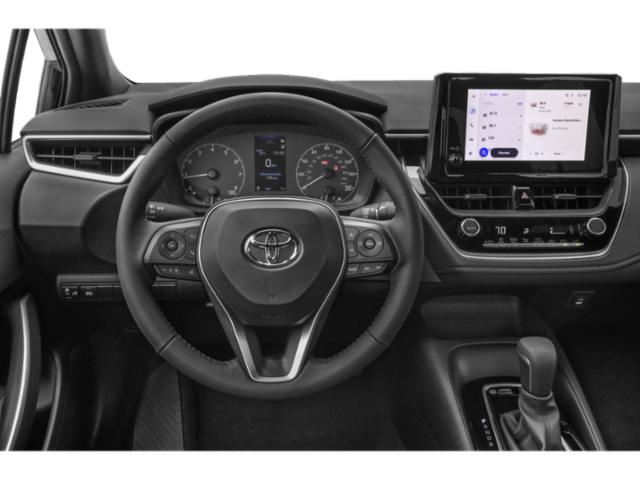
Toyota's had decades to refine its gas-electric hybrid systems. In the new Corolla, the blending of the two power sources is impressive. There are no pauses, bumps, or jerks. The best way to know the Corolla has switched from gas to electric propulsion is by watching the tachometer needle swing to zero and observing the green EV dash telltale light up during steady-state, low-load cruising, coasting, or brake application.
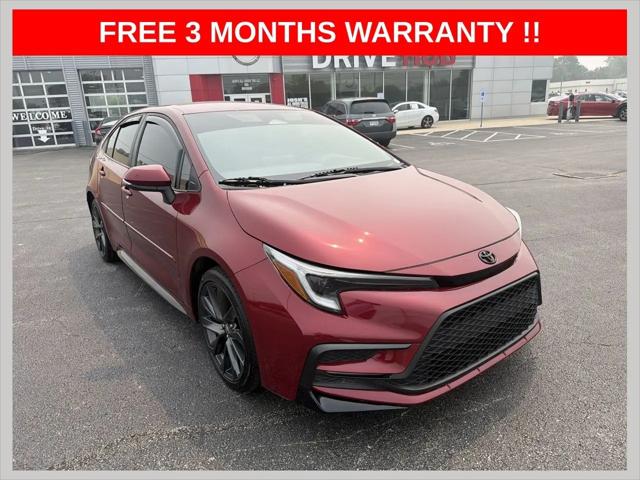
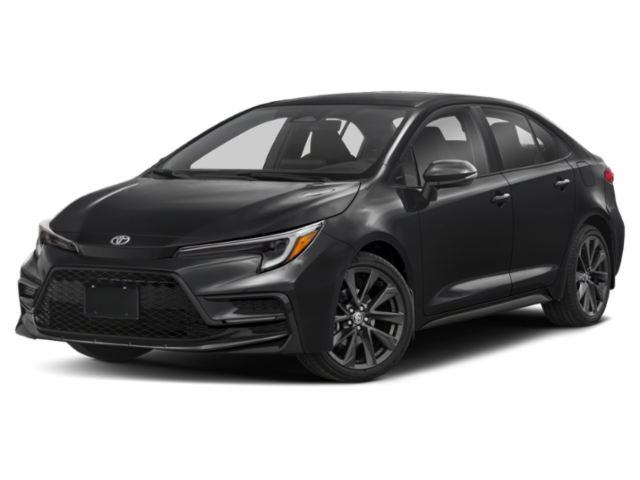
The sporty SE trim is new for the Corolla Hybrid for 2023. It offers sport suspension, software with a firmer steering feel, larger 225/40R18 Dunlop SP Sport 5000 tires, and 4-wheel disc brakes. So, the SE not only looks way sportier than the base LE, but it also has improved road-holding and steering feel. It's no hot rod, but the improvements for 2023 make it a more enjoyable daily ride.
According to EPA estimates, the stiffer-walled 18-inch SE tires do exact a 3-4 mpg fuel economy penalty compared to the skinnier 205/55R16-shod base LE. However, the tradeoff is worth it, with impressive fuel economy, sportier looks, and more engaging handling. I averaged 44.2 mpg over seven days and 275 miles of mixed residential and interstate highway driving.
The Corolla Hybrid SE offers standard 4-wheel disc brakes with good top-of-pedal response and ease of modulation. In addition, there is no discernable step between brake feel or the deceleration rate between the hydraulic/mechanical foot brakes or the regenerative brakes.
With the lithium-ion hybrid battery tucked away under the rear seat, there is no loss of the Corolla's generous rear-seat passenger space or cargo room. In addition, the 60/40 split rear seatbacks fold down when needed, substantially increasing trunk space for longer items such as ladders, 2x4s from the home-improvement store, or skis.

Photo: Ron Sessions
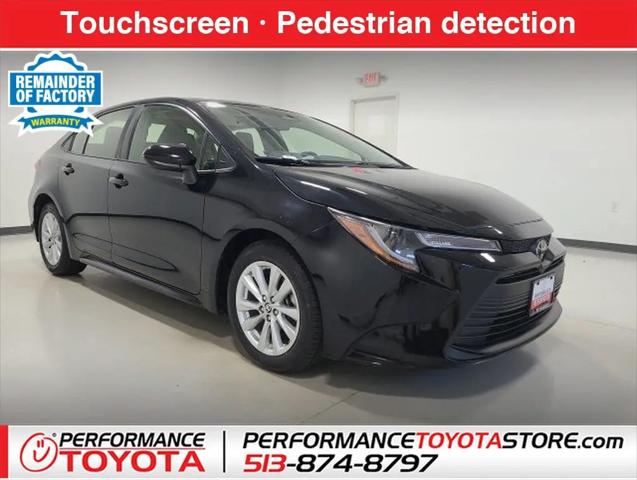
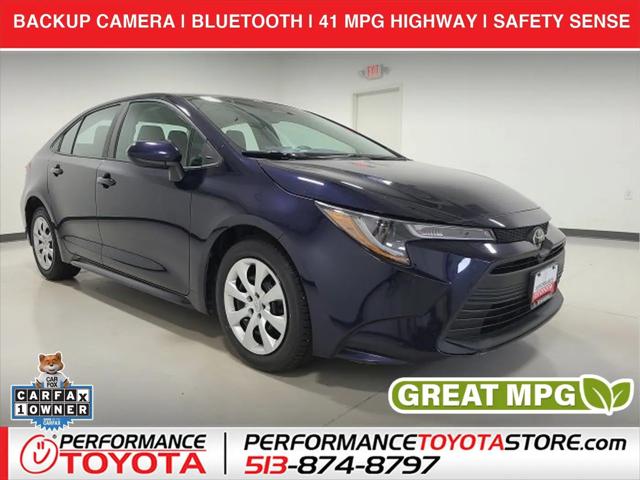
Toyota covers the compact car waterfront with a wide variety of Corolla models, including sedan and hatchback body styles, gas and gas-electric hybrid powertrains, and FWD and AWD layouts. What they all have in common is exceptional value, good fuel economy, and the brand's latest infotainment and advanced driver-assistive safety technology. Factor in the brand's stellar reputation for quality, reliability, and dependability, and it's no wonder the smallest Toyota 4-door is the best-selling offering in the compact car segment.
Ron Sessions is a seasoned vehicle evaluator with more than three decades of experience. He has penned hundreds of road tests for automotive and consumer websites, enthusiast magazines, newsletters, technical journals, and newspapers.