
Car diagnostic tests scan a car’s components and integrated systems for errors or malfunctions before they become dangerous. These tests leverage computerization to keep your car in optimal working order and can be executed by a mechanic or as a DIY.
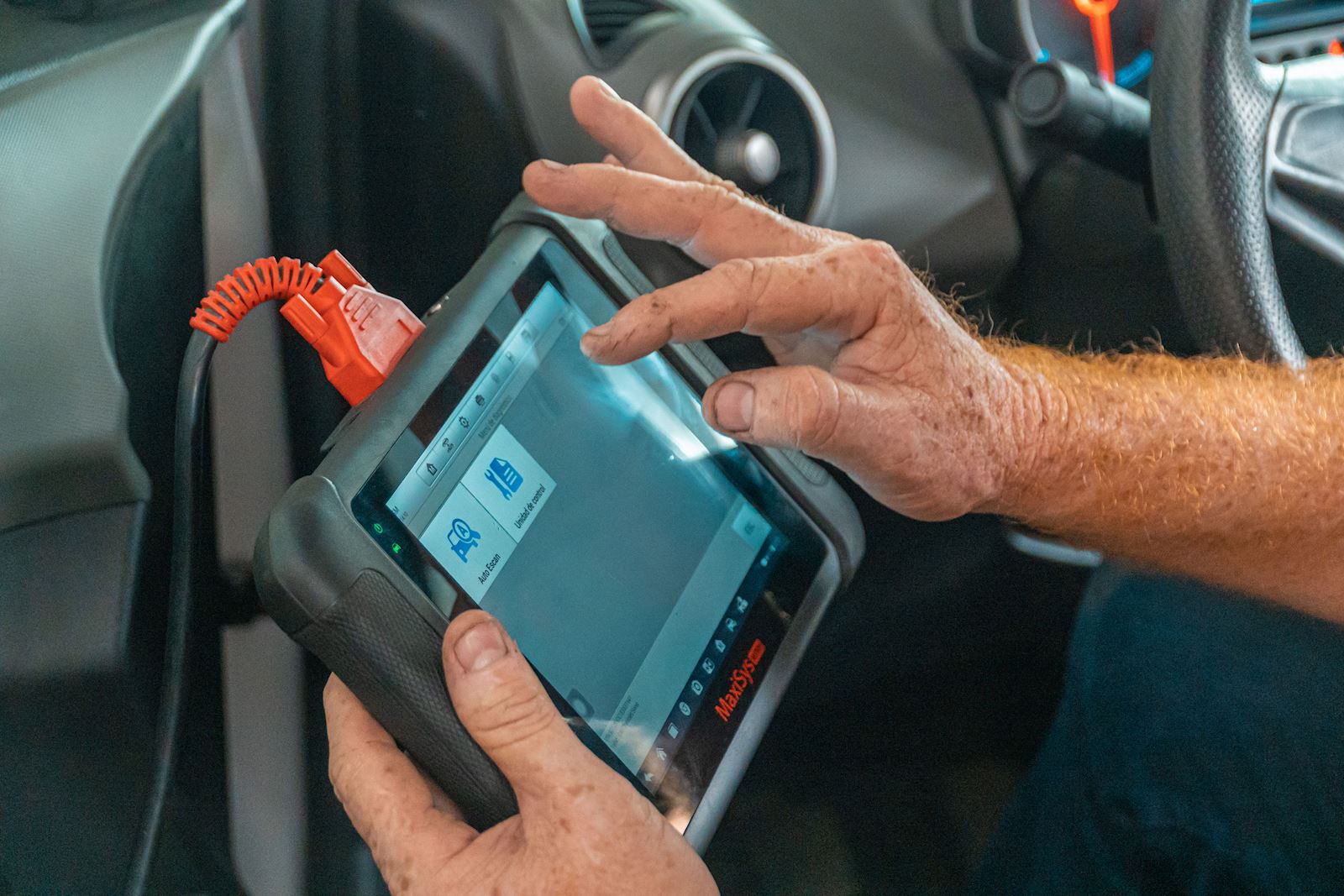
Let’s break down what car diagnostic tests are, why they are beneficial, and when they should be conducted.
A car diagnostic test is a digital analysis of your car’s computer systems and components. The test scans components and systems to check for issues with the engine, transmission, oil tank, throttle, and more. In the test, specialized software monitors features and creates data reports that can be collected and analyzed.
Because car diagnostic tests require specific devices and expertise to read correctly, most tests are performed by mechanics. However, you can also perform a car diagnostic test at home.
Car diagnostic tests are typically carried out when a vehicle’s dashboard shows a “Check Engine” signal or other warning light illumination. They can also be performed preventatively as part of regular maintenance.
Car diagnostic tests analyze several aspects of your vehicle including:
Although these results can help drivers assess their vehicle’s state, car diagnostic tests are not perfectly accurate. In many cases, they cannot tell the technician or tester the exact problem. Instead, they’re used to narrow down the location of an issue or potential error so it can be more quickly identified and resolved.
Technically, car diagnostic tests are never “needed” — they are simply tools that accelerate the repair process by assessing issues quickly and efficiently. As a result, many drivers wait until a malfunction occurs or the “check engine” light flashes before taking their car to a mechanic.
However, you may consider learning how to perform a simple diagnostic test yourself. With the right equipment, you can regularly test your car for issues and prevent any serious malfunctions from developing. Should you decide to do this, it’s a good rule of thumb to perform a car diagnostic test once every season (quarterly).
Regular car diagnostic tests are performed with a basic scanner and diagnostic software and often take only a few minutes to complete. But merely carrying out the test is just the beginning of the maintenance process. After receiving information from the test, repairs or preventative measures must be considered and/or completed.
A car diagnostic test procedure is often carried out as follows:
Car diagnostic costs vary broadly based on your vehicle’s make and model and any potential issues the car may have. Basic tests that don’t turn up any significant issues start at about $40. However, more in-depth analyses and their associated repairs could cost up to several hundred dollars, depending on the issue’s severity and complexity.
Furthermore, double-check the fine print in any mechanic’s service agreement before signing off on a car diagnostic test. They may claim that they will provide free diagnostic services but can sometimes camouflage hidden fees into the granular details of their service agreements. Run through the print with a fine-toothed comb before agreeing to any services, to ensure you know all the details.
While you may hire a mechanic to run the diagnostic test on your vehicle, you can conduct the test yourself. The OBD (onboard diagnostic) computer comprises multiple sensors to diagnose issues, which it labels in a 5-character code known as the OBD or OBD-II code. To read the code, acquire an OBD scanner that connects to the vehicle and displays error codes on its screen.
To begin the process, read your owner’s manual to locate your vehicle’s OBD port which is also known as the diagnostic link connector (DLC). Ensure your vehicle is turned off and insert the scanner’s 16-pin trapezoidal plug into the OBD port.
Insert your key in the ignition and turn it until the power is on, but not the engine. At this point, the scanner’s screen may acknowledge that it is connecting to the OBD computer.
Depending on your OBD scanner, you may need to manually enter the vehicle identification number (VIN) or the make and model to proceed.
Once connected, look for your codes in the “Codes” or “Trouble Codes” menu. Most devices display active and pending OBD codes. “Active” indicates an issue that triggers the Check Engine light, while “pending” denotes an error. The next step is to decipher the 5-character OBD code, which you can look up here.
Car diagnostic tests are valuable for a variety of reasons.
Ultimately, car diagnostic tests are beneficial tools that should be a regular practice in any maintenance checkup. To avoid the inconvenience of taking your vehicle to a mechanic, consider purchasing the necessary equipment and conducting regular diagnostic tests on your own. A car diagnostic test helps avoid long-term or catastrophic damage due to malfunctioning parts.
Matt Yantakosol is a lifelong automotive enthusiast and former consultant focused on the consumer aspect of the industry. He has traveled to New York, Detroit, Chicago, L.A., Paris, Geneva, Frankfurt, and Tokyo Auto Shows to track and observe the newest industry innovations. In addition to JDPower.com, Matt's writing has appeared on Pcarmarket.com.



The new 2027 BMW i3 boasts an estimated range of up to 440 miles, 400-kilowatt DC fast charging capability, bidirectional charging to a home or the grid, and next-generation technology.
Read the Full Article
Facing renewed competition in the full-size, light duty pickup truck segment, the 2027 Ford F-150 receives subtle styling updates, a new standard engine, broader availability of its 5.0-liter V8, and ...See More
Read the Full Article
The 2027 Civic Type R goes on sale in October 2026, and it starts at $49,990, including the $1,295 destination charge.
Read the Full Article
Part of BMW’s Neue Klasse (new class) rollout of redesigned models, the 2027 BMW 3 Series is all-new and goes on sale in the first quarter of 2027.
Read the Full Article