
If you're keen on automotive field development, you might have encountered the abbreviation SAE at least once. Founded in 1905 by automotive magazine publishers Peter Heldt and Horace Swetland, today, the Society of Automotive Engineers has more than 1,120 members, including engineers, managers, and students from more than 97 countries. So, let’s find out what this organization does.

The SAE creation resulted from the “free exchange of ideas” concept, actively followed by Heldt and Swetland. The former was convinced that the best solutions to constantly arising technical issues in the automotive industry could be found only through the continuous interaction and cooperation of engineers involved in this field.
In his opinion, this interaction could best be accomplished within a technical community whose field of activity could be the purely technical side of automobile engineering. He presented these ideas in one of his articles in the summer of 1902. Three years later, in 1905, the Society of Automotive Engineers, headquartered in New York, was founded. Andrew Riker became president, and Henry Ford was the first vice president. Initially, the Society had 30 members, each of whom was a volunteer enthusiast who had decided to give his best to the cause.
Over the first ten years of its existence, the Society was rapidly expanding. The publication of a technical magazine and a collection of technical documents, originally known as the SAE Transactions, now called SAE International's Journals, began.
By 1916, the number of members reached 1,800 people. The same year, at the Society's annual meeting, representatives of tractor and motorboat manufacturers proposed that SAE oversee technical standards in these industries. At the time, the aviation industry was in its infancy. Still, despite this, aviation engineering luminaries such as Thomas Edison, Glenn Curtiss, and Orville Wright supported the Society's vision and were actively involved with it.
The joint research program promotes projects that benefit the automotive industry. Numerous meetings and exhibitions provide global opportunities for the SAE network. The organization also offers a full suite of professional development activities such as seminars, technical symposia, and e-learning.
For example, it holds digital and offline worldwide events in the automotive field, including Defense Maintenance And Logistics Exhibition in Orlando, Florida, the 2023 SAE Showcase (online), SAE Heavy-Duty Diesel Sustainable Transport Symposium in Gothenburg, Sweden, etc.
It also provides technical learning for the mobility industry, supporting the professional growth of thousands of engineers and technical or business professionals. You can learn Robotics for Autonomous Vehicle Systems, Automotive Cybersecurity, Fundamentals And Applications Of Electric Motors For Automotive Industries, and other subjects.
To become a member of the organization, you need to be a student or a professional in the automotive field. As an expert, you will be able to grow both personally and professionally through access to exceptional volunteer, leadership, and career-building opportunities. In addition, there are some price reductions on a broad range of publications, products, and services unavailable to non-members. As a student, you can join discussions on the latest technical topics, seek advice from mobility industry veterans, and find volunteer opportunities. Moreover, it provides exposure to the job market.
The Society of Automotive Engineers (SAE) has developed a classification for automobile automation. It contains six levels or classes of autonomy: from fully manual at level zero to fully autonomous at level five. The first level deals with the operation of the collision warning system for vehicles and pedestrians, crossing of the line markings, road sign identification, and intervention in the steering system.
The second level provides the driver with more active assistance, including steering and braking. The third level involves autonomous driving on specific road segments, which requires only partial supervisory control from the driver.
The fourth level of automation is similar to the third level, but the driver's attention is not required here; it is almost a full-fledged autopilot. The automated system of the fifth level provides a fully autonomous movement of the vehicle to a specified destination without any human intervention.
To conclude, the abbreviation SAE stands for the Society of Automotive Engineers. Its primary goals are to promote mutually beneficial cooperation, provide additional information, and create a dialogue at a high professional level between specialists from the automotive industry, transport, science, personnel training, and representatives of public and governmental organizations.


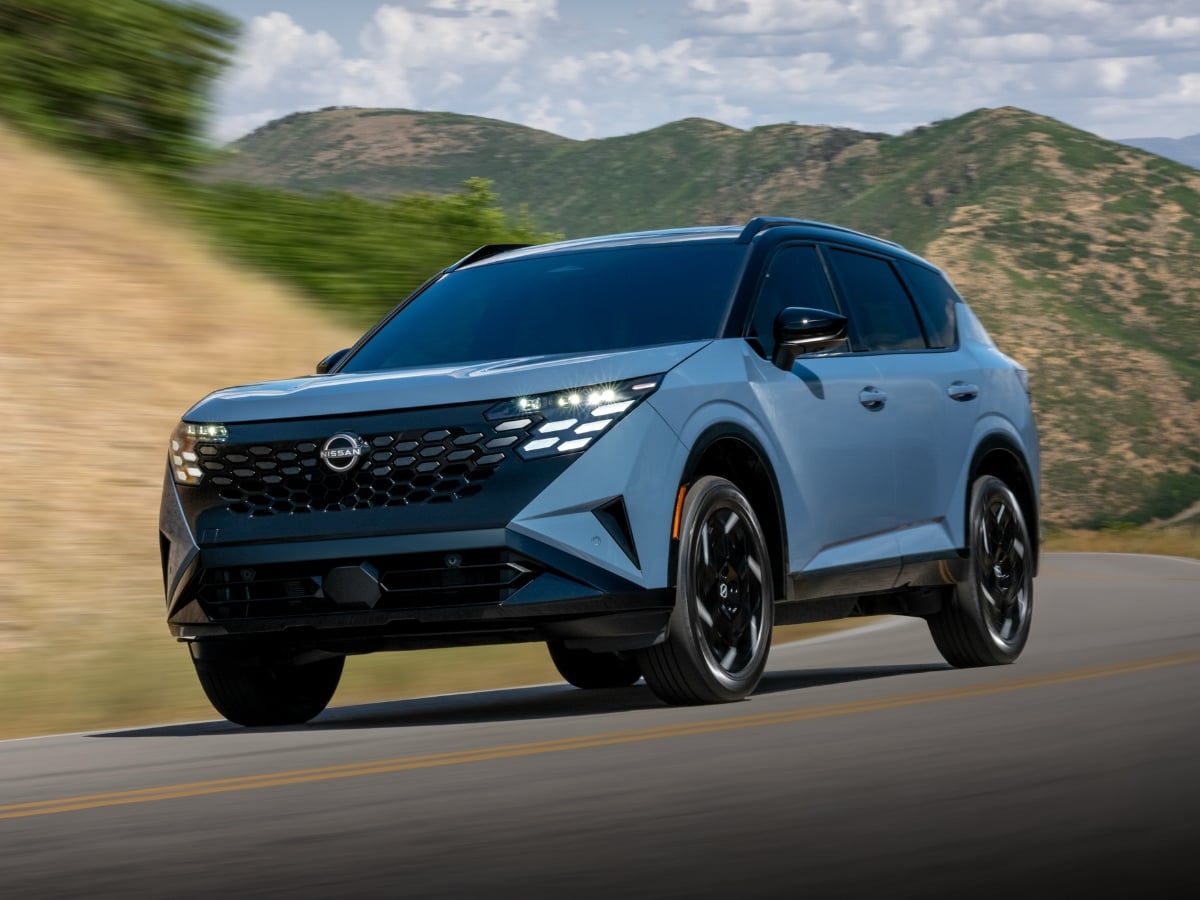
Nissan is about to introduce an innovative new SUV. The 2027 Nissan Rogue Hybrid has a gasoline engine, but it does not power the wheels. Instead, electric motors at each axle provide propulsion, ...See More
Read the Full Article
Adding European flair to the otherwise vanilla midsize three-row family SUV market, the redesigned 2027 Volkswagen Atlas debuts with a sharper exterior, an upgraded cabin, more power, and new ...See More
Read the Full Article
Though the styling stays largely the same, a massive boost in electric range for the plug-in hybrid (PHEV), plus a refined design, helps the 2028 Volvo XC60 stay current and desirable.
Read the Full Article
With the 2027 Lexus TZ, Toyota Motor’s luxury division introduces its first three-row all-electric SUV, featuring a lounge-inspired interior, an enhanced all-wheel drive (AWD) system, and up to 300 ...See More
Read the Full Article