
It doesn't take a car expert to know that overloading a roof rack can negatively affect passenger safety and the overall driving experience. That said, having a deeper understanding of rooftop weight limits will allow vehicle owners to maximize their ability to successfully and safely transport all kinds of items and gear, from luggage to bikes to camping equipment.
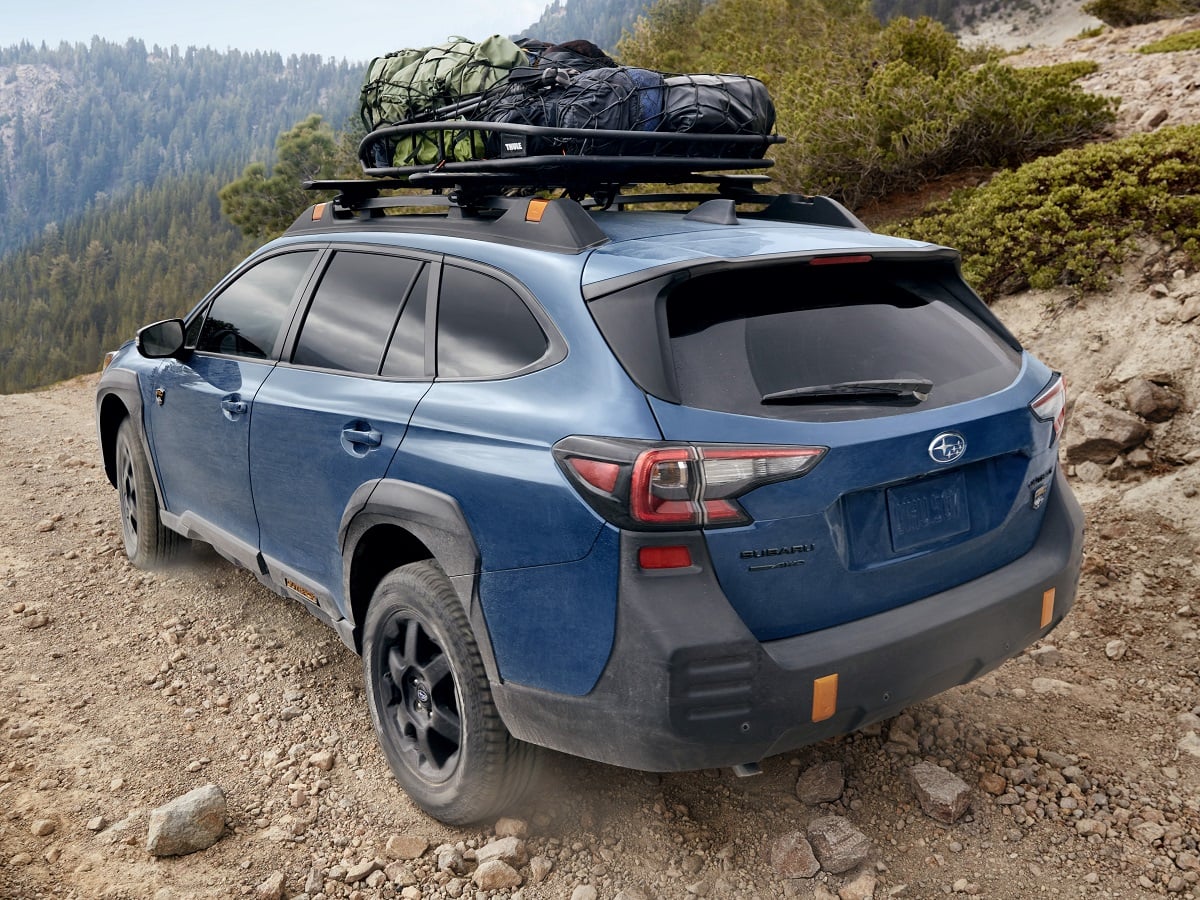
Knowing the difference between a vehicle roof's dynamic weight capacity (DWC) and static weight capacity (SWC) is critical to having the best on- and off-road experience while avoiding unforeseen circumstances.
All vehicles have different dynamic and static weight capacities. The limit depends on vehicle type, model, and year. Whether it's a roof rack, a rooftop tent, or any other item, regardless of size, the weight distributed on a vehicle's roof can affect its handling characteristics and controllability.
In certain situations, added roof weight can impede acceleration and braking or throw a vehicle off-balance due to a high and heavy center of gravity. Although not a common occurrence, a vehicle could even tip over in a worst-case scenario, resulting in serious injury to its occupants. Often, drivers must pull to the side of the road and reduce or redistribute the rooftop weight to allow them to continue more safely and stably.
The key to avoiding such danger or inconvenience is to know a vehicle roof's weight capacity and stay within that limit. This is when knowing the roof's static and dynamic weight limits becomes essential. You can typically find this information in the vehicle's owner's manual. The owner should know these limits when putting anything on top of a car.
Calculating a roof's weight limit is straightforward. For example, if a vehicle's roof has a weight capacity of 200 pounds and the owner wants to mount a roof rack, they need to subtract the weight of the roof rack from 200. If the rack weighs 60 pounds, you can only load an additional 140 pounds. If you want to add a rooftop tent and gear weighing another 45 pounds, you'll have only 95 pounds of capacity remaining.
Dynamic weight capacity, or DWC, refers to the roof weight capacity while the vehicle is in motion. Since we are talking about the vehicle's weight capacity while driving, it refers to the weight you can support on your vehicle roof while it is in motion. Motion considers any movement along the x-y-z axis— forward/backward, side-to-side swaying, and the ups and downs of road surfaces (ruts, ditches, holes, bumps, rises).
Dynamic weight reduces further when taking a vehicle off-road due to the additional movement, both laterally and vertically, due to uneven terrain. This jarring motion creates higher load pressure on the vehicle's roof. Since many automakers do not provide this off-road DWC capacity figure, the general rule is to reduce the DWC by approximately one-third when taking a vehicle from pavement to unpaved surfaces. Using our 200-pound limit example from above, that would result in a DWC of roughly 133 pounds.
DWC is always lower than the static weight capacity, or SWC, due to the force and momentum created through motion.
Static weight capacity refers to the roof weight capacity while the vehicle rests. In other words, when it is stationary. Since SWC is the weight your vehicle can support on its roof when it's not moving, no additional forces of motion are applied.
With gravity being the only downward force, SWC is always higher than DWC, allowing the vehicle owner to put more weight on the roof. Typically, SWC can be three to six times more than DWC. That means using a rooftop tent at night and adding more items—and people—will not be a problem since the vehicle is not in motion. When driving again at daybreak, you must reduce the rooftop weight before moving.
Knowing the roof load limits is essential to understand what items you can mount or arrange atop a vehicle to avoid overloading, whether it is in motion or at rest. Properly loading a vehicle roof will ensure the safe and seamless operation of the car. Most vehicles—especially trucks and SUVs—provide these limits in their owners' manuals.
To learn more about various automotive topics, visit the Shopping Guides section of the website.
Jessica Shea Choksey is an experienced writer in the automotive field. In addition to JDPower.com, she was a correspondent for PBS's MotorWeek. Her work has also appeared in AutoTrader.


The Ford Transit is the automaker’s full-size cargo and passenger van offering, designed to serve a wide range of commercial and lifestyle applications. With 37 available configurations, the platform ...See More
Read the Full Article
The Chevrolet Tahoe is a full-size, three-row SUV with a standard V8 engine and available diesel power. Built on the same platform as the Chevrolet Silverado 1500 pickup, the Tahoe benefits from its ...See More
Read the Full Article
It is the end of the line for the Ford Escape. After 25 years as a fixture of Ford’s lineup, 2026 will be the compact SUV’s last model year.
Read the Full Article
The Colorado is Chevrolet’s midsize pickup. It ranks among the segment’s most capable trucks for payload and towing, and can be configured for both work and off-road adventures. For 2026, the ...See More
Read the Full Article