
Vehicle alignment refers to a mechanical procedure that adjusts the suspension to its proper configuration, correctly positioning the axles and wheels to allow the tires to make even contact with the road surface. It also ensures that a vehicle's wheels are "squared up" to one another.
A vehicle comes out of alignment gradually over time from treading over minor imperfections on the roadway. Or, it can happen suddenly from a single impact such as driving over a deep pothole or curb. Outside of such an occurrence, you should perform an alignment on your vehicle at regular intervals, as directed by the owner's manual.
When a suspension is out of alignment, the effects are evident. The vehicle may pull to one side, suffer from uneven tire tread wear, and feel less precise in terms of steering. If you disregard these symptoms, the alignment can progressively worsen and affect the vehicle's overall handling dynamics and safety.
Properly aligning a vehicle takes a high level of precision. Although you can perform the job at home, it is much more complicated than changing the engine oil or replacing a headlight bulb. A vehicle alignment has a significant potential for error due to the meticulous angle measurements and necessary adjustments to get it right. Since service garages have the proper tools, tech, and training to make such calibrations, the general recommendation is to hire a professional to do this work for you.
There are three primary vehicle alignments: front-end, thrust, and four-wheel.
A mechanic will recommend which alignment is right for your vehicle.
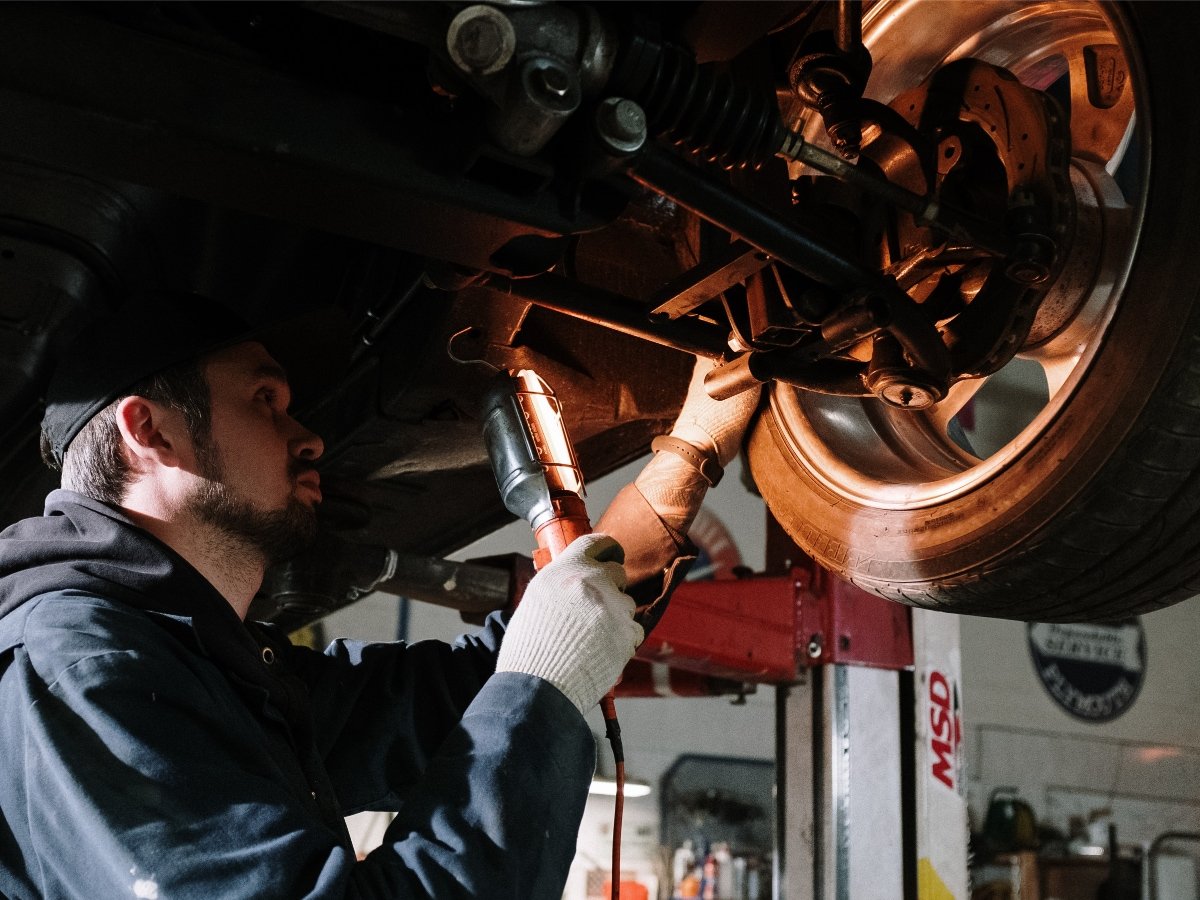
The first step of an alignment is to test drive the vehicle and assess suspension tuning. The mechanic will then lift the car and inspect it from beneath. If any tire or suspension repairs or replacements are necessary, they will be made before the alignment procedure begins. Additionally, the mechanic will check and adjust tire pressure before connecting the vehicle to the alignment machine.
Once the vehicle is connected, the mechanic will make measurements of four primary angles – toe, camber, caster, and thrust – and adjust them to align the suspension.
Once the angles have been measured and adjusted, the mechanic will recalibrate the steering wheel to a center position. Finally, another test drive will confirm proper alignment. On average, a vehicle alignment will take 60 to 90 minutes to complete if no suspension components need replacement.



With a purposeful new design and some trail-ready upgrades, the 2027 Hyundai Tucson is pushing the brand's best-selling crossover SUV into more aggressive territory.
Read the Full Article
For more than 25 years, the BMW X5 has helped to define the luxury SUV segment. Now, the redesigned fifth-generation 2027 BMW X5 arrives with the automaker’s Neue Klasse styling, a roomier interior, ...See More
Read the Full Article
One of Lexus's most popular models, the NX crossover SUV is also one of the most affordable in the company’s lineup. The 2027 Lexus NX transitions to hybrid-only powertrains, and gets revised ...See More
Read the Full Article
The new 2027 BMW i3 boasts an estimated range of up to 440 miles, 400-kilowatt DC fast charging capability, bidirectional charging to a home or the grid, and next-generation technology.
Read the Full Article