
Most vehicle owners are unaware of the dangers of old tires, assuming they are good once there is enough tire tread and they look okay. However, while it is vital to regularly inspect the condition of tires, a normal-looking tire or one with plenty of tread depth does not always mean it is safe for use. Indeed, old tires are prone to multiple failures due to deterioration and have led to many incidents of loss of control and rollover crashes. Generally, car manufacturers advise that tires that are six years old from the date of manufacture should be replaced.
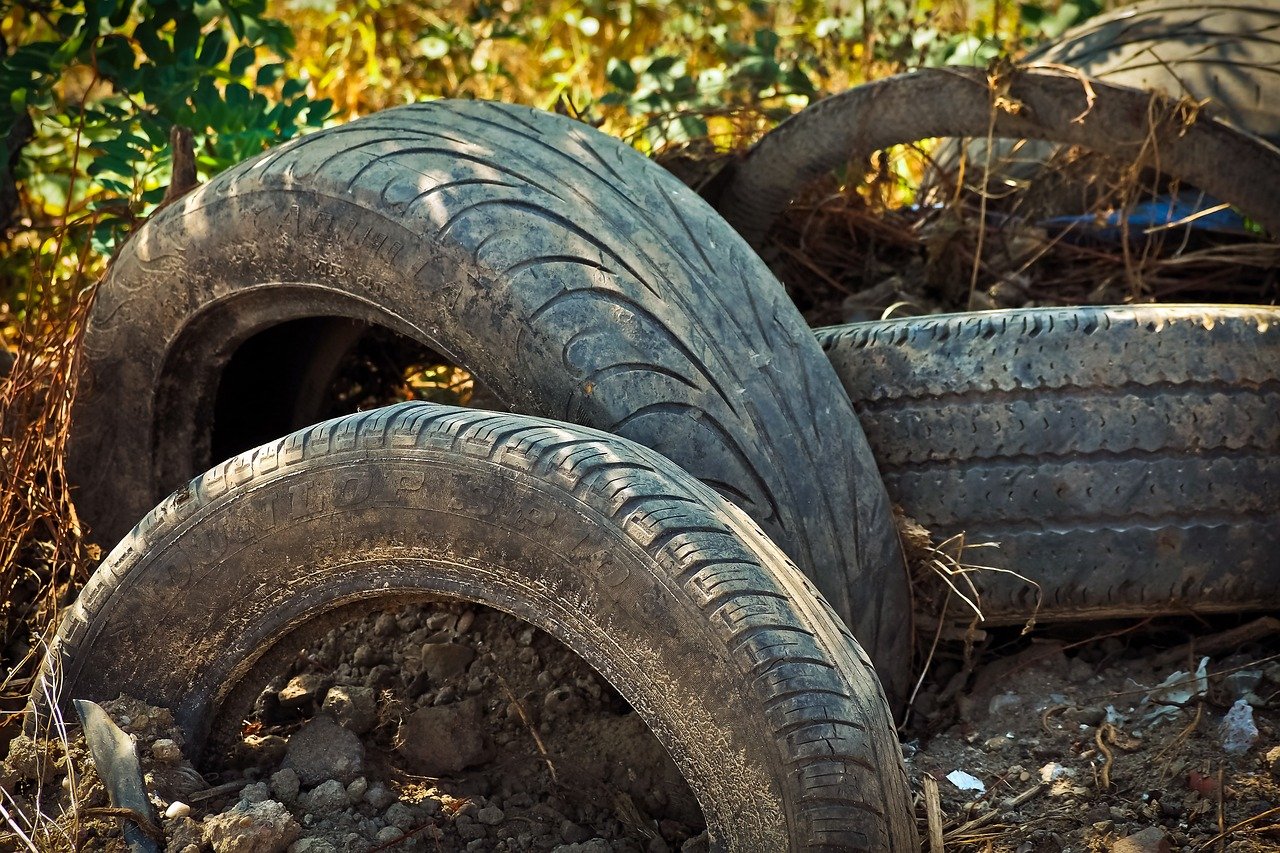
The rubber compounds that make up the tires deteriorate over time. As the tire ages, cracks develop on the inside and outside, causing the steel belts in the tread to separate from the rest of the tire. Just as an old rubber band cracks and breaks when stretched, the tires become prone to being torn apart when driven and this can lead to severe consequences.
Old tires leak air faster than normal tires and require constant refilling. As they lose air, they lose their grip, even in dry conditions, making the vehicle difficult to steer and reducing fuel efficiency.
The use of old tires on a vehicle can be hazardous and significantly increase the risk of accidents. Poorly conditioned tires can significantly reduce vehicle performance, making driving far more dangerous. To maintain safety and optimal performance, drivers must regularly check the condition of their tires to assure they remain in good condition and well-maintained.
If that’s not enough, there are a few possible hazards associated with old tires.
Typically, tires are constructed with a certain level of puncture-resistance and can sustain a nail puncture without losing air. However, worn out tires do not provide the same level of durability and are more vulnerable and prone to blowing out or tearing due to cracks.
Old tires lack grip and their decreased strength means they cannot effectively cling to the surface of the road, increasing the risk of dangerous skidding, especially in wet conditions.
Old tires increase the time and distance required to stop a vehicle. Even if the driver responds in time, the vehicle may not decelerate fast enough to avoid an accident, and the tread may unexpectedly separate from the tire, causing them to lose control of the vehicle.
Old tires leak air quicker than regular tires and require constant re-inflation. As air is lost, grip is weakened, even in dry weather, and makes the vehicle difficult to navigate and reduces fuel efficiency.
Since the 2000s, tires have been required to have the U.S Department of Transportation (DOT) code. This code houses all tire information, including its age.
To find a tire's age, look for “DOT” on the sidewall. The last four digits to the right represent the week and year the tire was manufactured. So a tire with the digit 0814 means it was produced in the 8th week of 2014. Any tire that's six years old from the date of production should be replaced.
Although knowing the date a tire was manufactured is important, it is vital to make a visual inspection of the tires for signs of aging. That’s because environmental conditions and how a tire is used affects its lifespan.
Below are some of those conditions:
Where and how a tire is used greatly impacts its service life. Tires on a car that’s driven regularly will age faster. Also, tires on a car that’s used on harsh terrains, driven aggressively, or driven with the tires underinflated will age sooner.
The rubber compounds that makeup tires dry off and deteriorate faster when exposed to extreme sunlight or heat. Hence tires used in warmer areas are more prone to aging faster.
Usually, tires that are not in use such as spare tires and tires in shops should experience normal aging. However, they age faster when storage conditions are unfavorable, such as prolonged heat.
Tires have a limited service life. As they age, the rubber compounds deteriorate, causing them to be more prone to failure. As such, it is strongly recommended that vehicle owners replace tires that are over six years old and refrain from using aged tires, even if the tread depth appears to be optimal.



Adding European flair to the otherwise vanilla midsize three-row family SUV market, the redesigned 2027 Volkswagen Atlas debuts with a sharper exterior, an upgraded cabin, more power, and new ...See More
Read the Full Article
Though the styling stays largely the same, a massive boost in electric range for the plug-in hybrid (PHEV), plus a refined design, helps the 2028 Volvo XC60 stay current and desirable.
Read the Full Article
With the 2027 Lexus TZ, Toyota Motor’s luxury division introduces its first three-row all-electric SUV, featuring a lounge-inspired interior, an enhanced all-wheel drive (AWD) system, and up to 300 ...See More
Read the Full Article
With the all-new 2027 Kia EV3 small crossover SUV, the Korean automaker continues to expand its all-electric lineup while keeping prices accessible.
Read the Full Article