Free Teen Driving School Reduces Crash Rates by Nearly 65%

Christian Wardlaw | Nov 25, 2024

My daughter turned 16 last summer. To teach her how to drive correctly, we bought her a driving school package through our insurance company (AAA), adding four extra sessions the state of California does not require for licensure, including freeway and nighttime driving. 

Then, after she passed her driver’s test, we put her into a properly maintained used car with brand-new tires that ranks high in crash tests conducted by the Insurance Institute for Highway Safety (IIHS). Finally, we sent her to a free teen driving school to learn about car control in sudden, unexpected situations, adding an extra layer of skill to her experience.

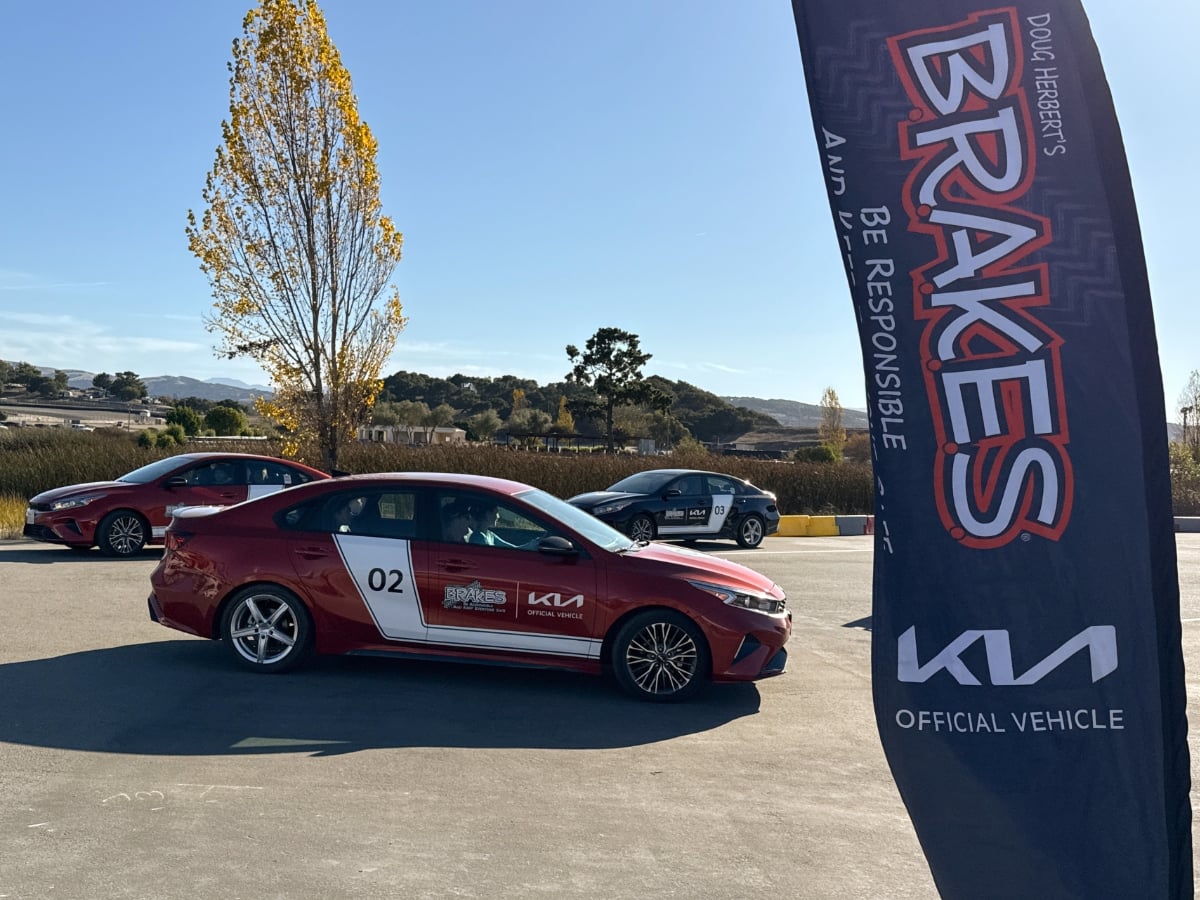
BRAKES Driving School Banner

Photo: Christian Wardlaw

Our three-hour course at Doug Herbert’s BRAKES Teen Pro-active Driving School required a $99 deposit to reserve a slot, but that’s fully refundable if you wish. Alternatively, you can donate the deposit to the school, a 501 (c)(3) non-profit organization. We did just that, not only because we got exponential value from the experience. 

BRAKES is a fitting acronym for the school, and it means Be Responsible and Keep Everyone Safe. Founded by Top Fuel drag racing champion Doug Herbert following the tragic deaths of his sons in a car accident, the BRAKES Teen Pro-active Driving School is held in various locations around the country. Kia generously provides instruction vehicles, and the program is staffed by volunteers dedicated to safe teen driving.

Why Your Teen Driver Needs Extra Driving Instruction 

According to the IIHS, motor vehicle crash deaths among teens aged 13 to 19 years old fell from 9,940 in 1978 to 2,837 in 2012. Since then, the rate of decline has stalled, fluctuating between a high of 3,090 (2021) and a low of 2,394 (2019). The IIHS says 56% of teenage fatalities due to traffic accidents occur with another teen behind the wheel of the vehicle that crashed, and single-vehicle collisions account for 43% of fatal crashes among drivers aged 16-19.

That last statistic suggests teens may not know what to do in situations that can cause a loss of control. The BRAKES driving school teaches kids what they cannot safely learn on public roads, and as I discovered, the curriculum is illuminating for parents too.
BRAKES Driving School Laguna Seca

Photo: Christian Wardlaw

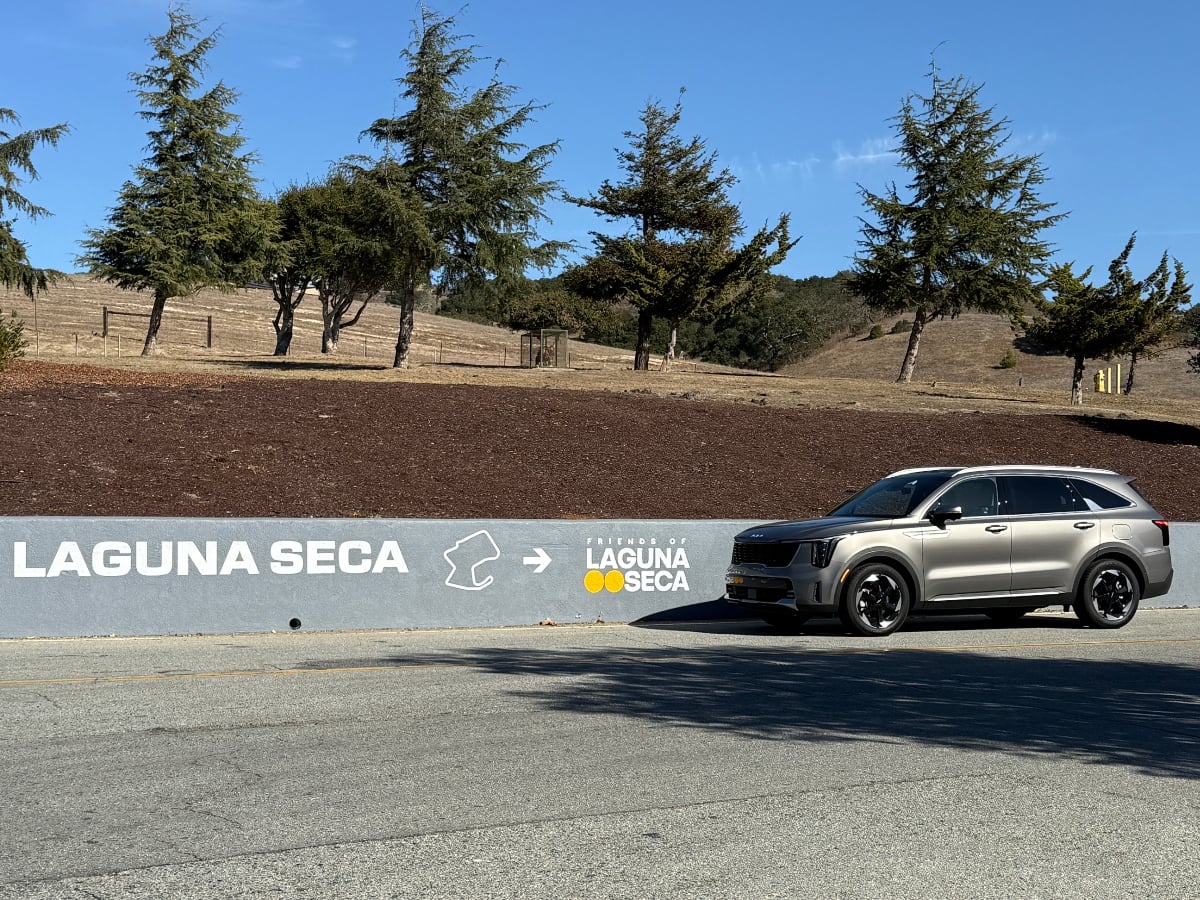
We signed up for the mid-day November 9, 2024, class at the historic Laguna Seca Raceway near Monterey, California. That’s a five-hour haul from home, but the 2025 Kia Sorento plug-in hybrid in the photo above made it a comfortable and efficient trip. 

Also, it was good to be back at the track where, nearly two decades ago, I attended a Mazda MX-5 Miata Cup racing school, forgot the “oak tree” rule, and embarrassingly flubbed the Corkscrew on my first solo lap. But that’s a story for another time.

Teen Driving Statistics and What the BRAKES School Teaches

At Laguna Seca, the BRAKES Teen Pro-Active Driving School is held in the parking lots adjacent to the kinked straight between Turns 4 and 5. Here, teenagers (and their parents) learn about:
  • Distracted driving
  • Drop-wheel recovery
  • Panic braking
  • Crash avoidance and slalom maneuvers
  • Car control and skid recovery

BRAKES Driving School Classroom

Photo: Christian Wardlaw

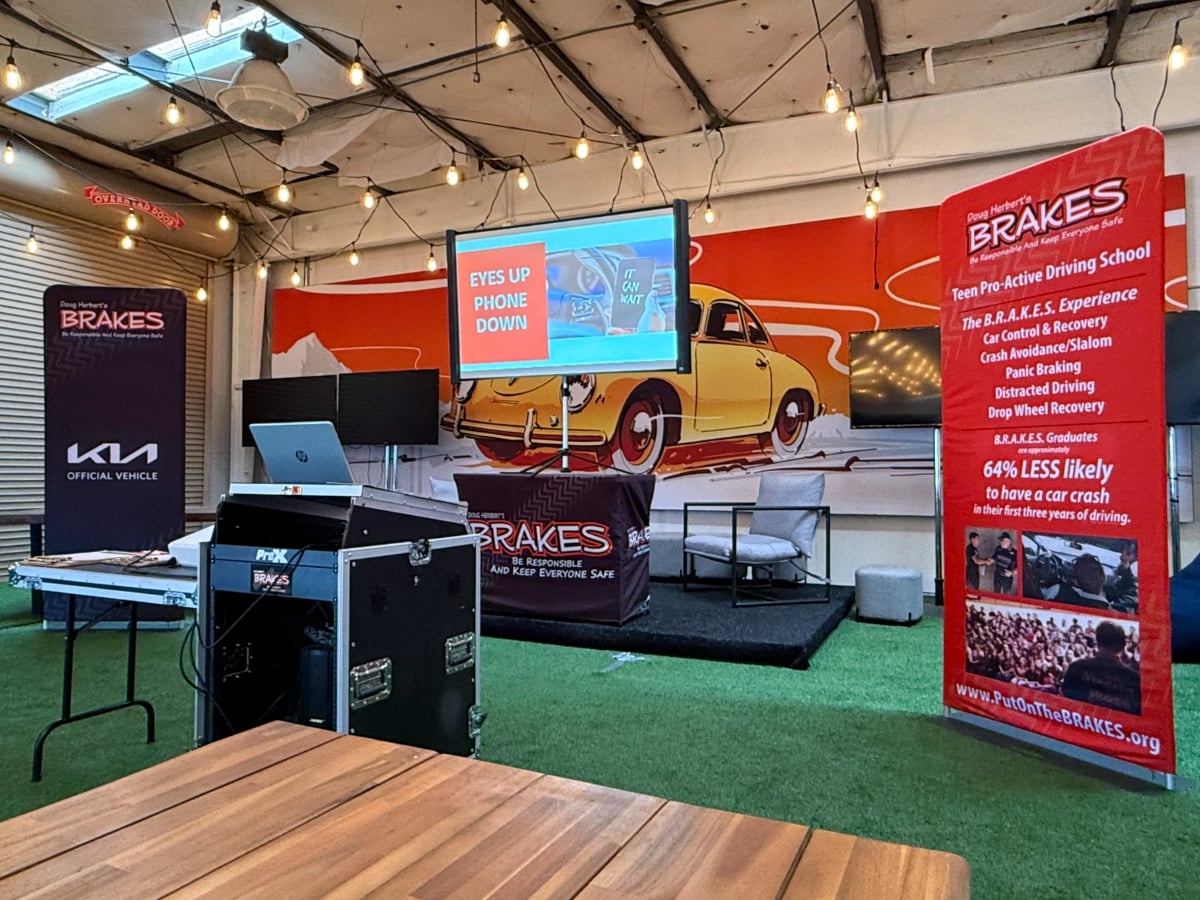
Coursework begins with a 30-minute presentation explaining why Doug Herbert founded the school, what attendees will learn, and essential driving tips to keep yourself and the people riding with you safe.

The highlights include:
  • Seatbelt use
    • National Highway Traffic Safety Administration (NHTSA) data shows that in 2021, 51% of teen drivers killed in a crash were not wearing their seatbelt, and 90% of passengers who died in a collision when in a vehicle driven by a teen driver were unbelted.
    • So yeah. Pro tip: Use your seatbelt. 
  • Smartphone dangers
    • Dialing a phone number while driving increases crash risk by six times.
    • Texting while driving increases crash risk by 23 times.
    • Parents should not call or text their teens when they know they’re driving.
  • Speed and alcohol
    • According to the NHTSA, speed was a factor in 32% of fatalities involving a teen driver in 2021.
    • The NHTSA also says 19% of teen drivers involved in a fatal crash in 2021 had been drinking alcohol. 
  • Proper tire care
    • Tires are critical to retaining control of a vehicle.
    • Check tire pressures once per month.
    • Replace tires when tread wear nearly reaches the tread bars.

BRAKES Driving School Training

Photo: Christian Wardlaw

  • Situational awareness
    • Properly adjust your mirrors and check them regularly as you drive.
    • When the light turns green at intersections, pause to look both ways before proceeding.
    • On highways, the left lane is for passing, not cruising.
    • Always look where you want the vehicle to go, whether you’re in control or not, and you’ll instinctively steer in that direction.
  • Big rig safety
    • Don’t hang out in the “No Zones” where truck drivers can’t see you.
    • Pass or get behind 18-wheelers; don’t drive next to them.
    • Never cut in front of a semi-truck and then brake because they require three times the distance of a typical car to stop.
  • Be smooth
    • Sudden inputs can lead to a loss of vehicle control.
  • Riding with other people
    • If you feel unsafe, get out, call home, and get a ride.

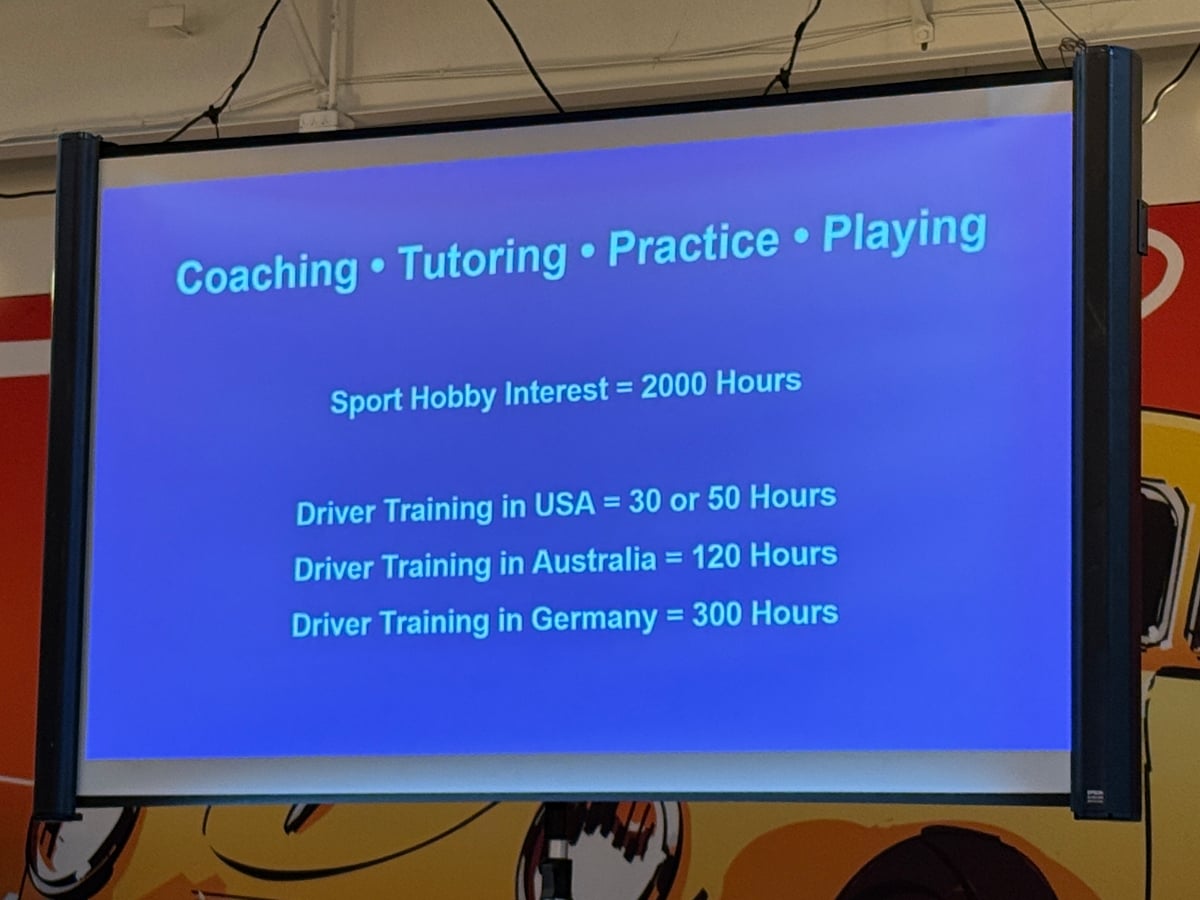
During our class, the lead instructor reminded everyone in the room that driving is a privilege and not a right and noted that minimum driver-training requirements in the United States pale compared to the more rigorous standards in other parts of the world, such as Australia and Germany. 

If you’ve ever driven in Europe, you know the stark differences between American and European driver skill sets.
What We Learned at the BRAKES Driving School

BRAKES Driving School Students on Course

Photo: Christian Wardlaw

On the driving course, teen drivers experience several different driving situations.

Driver Distraction Exercise

  • What it is: Students drive in a roundabout, and the instructor requests they input a number on a calculator to simulate smartphone distraction. Afterward, they put on a pair of goggles that mimic impairment from alcohol or drugs, and instructors ask the student to pull forward to a cutout of a person walking a dog and stop the vehicle without hitting the obstacle. 
  • What it teaches: The dangers of driving while distracted and under the influence of alcohol or drugs.
  • What my teenager learned: When she attempted to input a number on the calculator, the car traveled off course, and she had to jerk the steering wheel to remain in the roundabout, perfectly illustrating the dangers of smartphone use while driving. Also, she learned what happens to your vision and depth perception when you’re drunk or high. And yes, she smacked into the cutout of the person and dog.

Drop-wheel Recovery Exercise

  • What it is: Students drive at moderate speed on a straight section of pavement, then put the right wheels off into some dirt.
  • What it teaches: What to do if two wheels drift onto a road’s dirt shoulder. In other words, don’t panic.
  • What my teenager learned: She says her driver’s education lessons covered this topic briefly, but before attending the BRAKES driving school, she likely would have slammed on the brakes if this had happened to her while driving. She learned not to slam on the brakes or jerk the steering wheel to get back on the road. Instead, she knows to ease off of the accelerator pedal and slowly steer the car back onto the pavement.

BRAKES Driving School Car Control Exercise

Photo: Christian Wardlaw

Panic Stop Exercise

  • What it is: Students drive at city speeds, and when the instructor suddenly says to stop, they apply maximum braking and simultaneously steer hard left or right.
  • What it teaches: What it feels and sounds like when the antilock braking system (ABS) engages, how a vehicle behaves under maximum braking power, and that you retain steering ability with the ABS working.
  • What my teenager learned: She and I practiced hard stops a few times when she first started driving, but not severe enough to engage the ABS. At the BRAKES driving school, she experienced immediate, hard, maximum braking that engaged the ABS, so now she knows what that sounds like and feels like. She also understands that those noises and pulsations are normal and do not mean she is breaking the car, and she can still steer in such situations.

Crash Avoidance and Slalom Exercise:

  • What it is: Students accelerate hard to a moderate speed toward a three-lane decision point. At the last moment, the instructor tells them to take the left or the right lane, simulating an evasive maneuver. Afterward, the students drive a slalom at about 25 mph.
  • What it teaches: What it feels like when making sudden steering inputs and how a vehicle reacts to them.
  • What my teenager learned: She will often need to make split-second decisions while driving and what it feels like to take sudden evasive actions at both low and high speeds. She also learned never to swerve to avoid a small animal.

BRAKES Driving School Skid Control Exercise

Photo: Christian Wardlaw

Car Control and Skid Recovery Exercise:

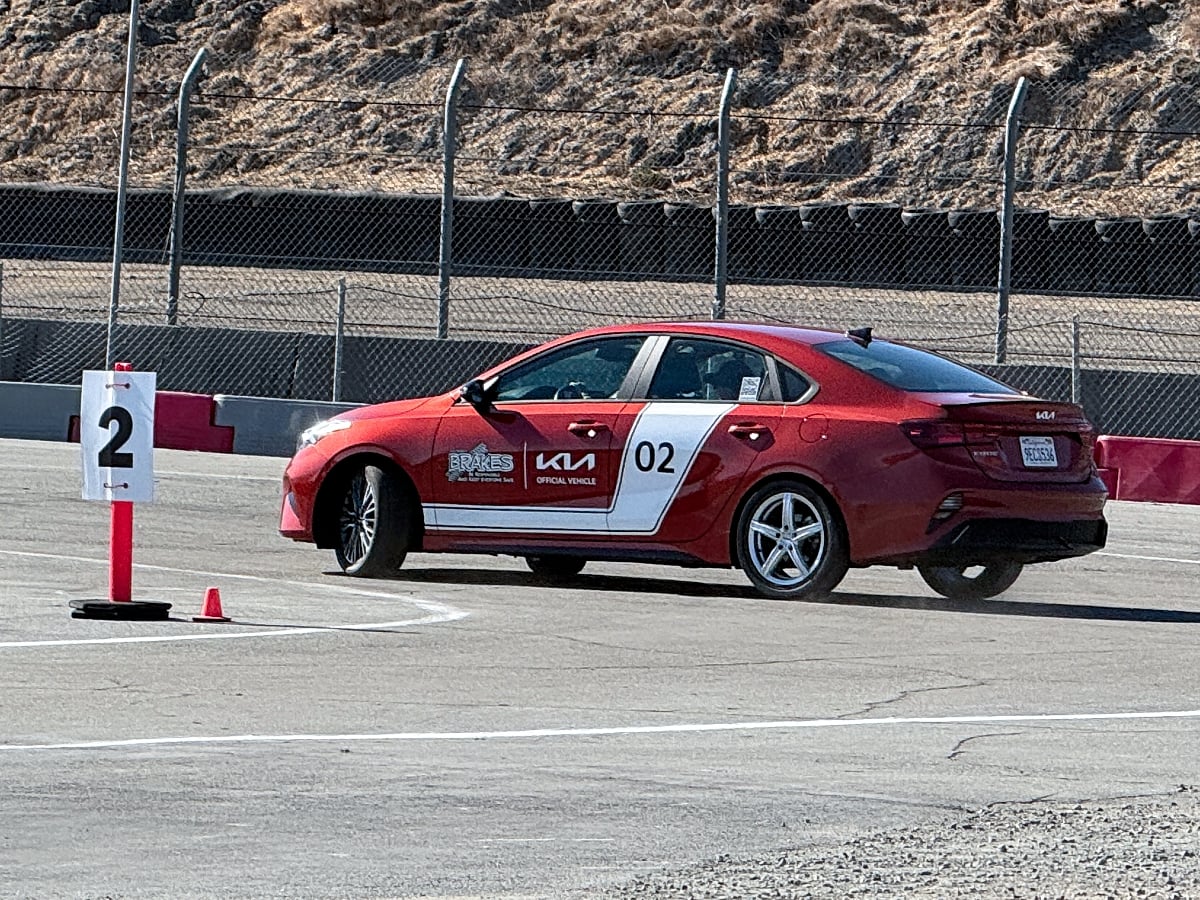
  • What it is: Students drive a low-speed autocross course with left and right turns. The instructor randomly activates the emergency brake, causing a rear wheel to lock up while special rear tire covers cause the back of the car to start skidding.
  • What it teaches: The CPR method to control a skid: correct, pause, and recover.
  • What my teenager learned: She feels her instructor didn’t offer much practical CPR guidance during the exercise, so the value to her was feeling what it’s like when a car slides and spins 180 degrees. Also, she says it was fun but understands that in the real world, it wouldn’t be. Observing from the parent tent, I watched her successfully recover from a skid only one time out of numerous attempts.

Overall, my daughter says the most important thing about the BRAKES driving school is experiencing these situations in a safe, controlled environment and learning and practicing how to take the proper action to correct them. Well, she said something like that. I read between the lines and summarized her sentiments. 

Parents Are Also Students at the BRAKES Driving School

Parents get in on the fun and learning too, experiencing the panic stop, crash avoidance, and slalom exercises in the latest family-friendly Kia vehicles, including the Carnival, Sorento, and Telluride. This is an essential part of the curriculum because many parents have never experienced maximum braking with ABS activation, collision avoidance steering under maximum braking, or how best to control a vehicle when taking evasive action to avoid an obstacle.

BRAKES Driving School Braking Exercise

Photo: Christian Wardlaw

Instructors also remind moms and dads that their teens learn more about driving from their parents’ behavior than anywhere else. If you’re a poor and/or unsafe driver, you should expect your child to adopt poor and/or unsafe driving habits. The consistently ineffective parental guidance of “do as I say and not as I do” also doesn’t work regarding safe driving. 

Summary

Now that our daughter has graduated from the BRAKES Teen Pro-active Driving School, my family’s insurance company provides a small discount on our car insurance. As anyone who has added a freshly minted driver to a family car insurance policy knows, every little bit helps.

However, that’s not why we gladly donated $99 and made a 10-hour round trip to put her through the school. According to a researcher at the University of North Carolina at Charlotte, graduates of the BRAKES Teen Pro-active Driving School are 64% less likely to have a car crash in the first three years of driving.

BRAKES Driving School Cars From Kia

Photo: Christian Wardlaw

So, in addition to her extended driving lesson package through AAA and a safe car to drive, she has now learned additional skills that will help to keep her safe on the road, taught on a closed course by professionals. The added peace of mind it brings me and her mom is worth far more than a $99 donation. It is invaluable.

Christian Wardlaw is a veteran automotive journalist with 30 years of experience in the field and has held automotive editorial leadership positions at Edmunds, JD Power, and The New York Daily News. Today, Chris owns a content agency called Speedy Daddy Media, and in addition to JDPower.com, his work appears on Capital One Auto Navigator, CarGurus, and Edmunds.

What’s Next?


Cars for Sale
Want to Take Action?
Shop Cars for Sale

Car Trade-in Values
Curious About Your Car’s Trade-in Value?
Find out With Our Car Trade-in Values Tool

Best Cars and Trucks
Want to Maximize Your Purchasing Power?
Explore Our Listings of the Best Cars and Trucks

EV Charging Stations Near Me
Need to Find EV Charging Stations Near You?
Check Out Our EV Charging Stations Map

Explore New Car Previews

2026 Ford Transit Preview

2026 Ford Transit Preview

The Ford Transit is the automaker’s full-size cargo and passenger van offering, designed to serve a wide range of commercial and lifestyle applications. With 37 available configurations, the platform ...See More

Read the Full Article
2026 Chevrolet Tahoe Preview

2026 Chevrolet Tahoe Preview

The Chevrolet Tahoe is a full-size, three-row SUV with a standard V8 engine and available diesel power. Built on the same platform as the Chevrolet Silverado 1500 pickup, the Tahoe benefits from its ...See More

Read the Full Article
2026 Ford Escape Preview

2026 Ford Escape Preview

It is the end of the line for the Ford Escape. After 25 years as a fixture of Ford’s lineup, 2026 will be the compact SUV’s last model year.

Read the Full Article
2026 Chevrolet Colorado Preview

2026 Chevrolet Colorado Preview

The Colorado is Chevrolet’s midsize pickup. It ranks among the segment’s most capable trucks for payload and towing, and can be configured for both work and off-road adventures. For 2026, the ...See More

Read the Full Article