
Being the first at something isn't easy. While there are many "firsts" when it comes to the long, ever-winding road toward autonomous cars, Mercedes-Benz can claim an important one. The German luxury sport automaker is the first company to deploy a Level 3 self-driving car in the United States.
Starting in 2023, Mercedes will make available all-electric EQS and, later, S-Class sedans with the company's Drive Pilot system. The automaker has outfitted these cars with numerous additional sensors and safety features to make them capable of driving themselves in limited situations. This degree of proper autonomy is a step beyond the hands-off driver-assistance technology offered in systems like General Motors' Super Cruise and Ford's BlueCruise. With Level 3, the car is indeed driving itself. As such, the car and its manufacturer—not you—would be liable in the case of any incident.
To get a feel for how well Drive Pilot works, Mercedes-Benz flew me to the land of terrible traffic—Los Angeles—set me up in a hotel for an evening, and gave me access to an EQS sedan for an afternoon of testing. But before I could see what the system can do, I had to learn what it can't.
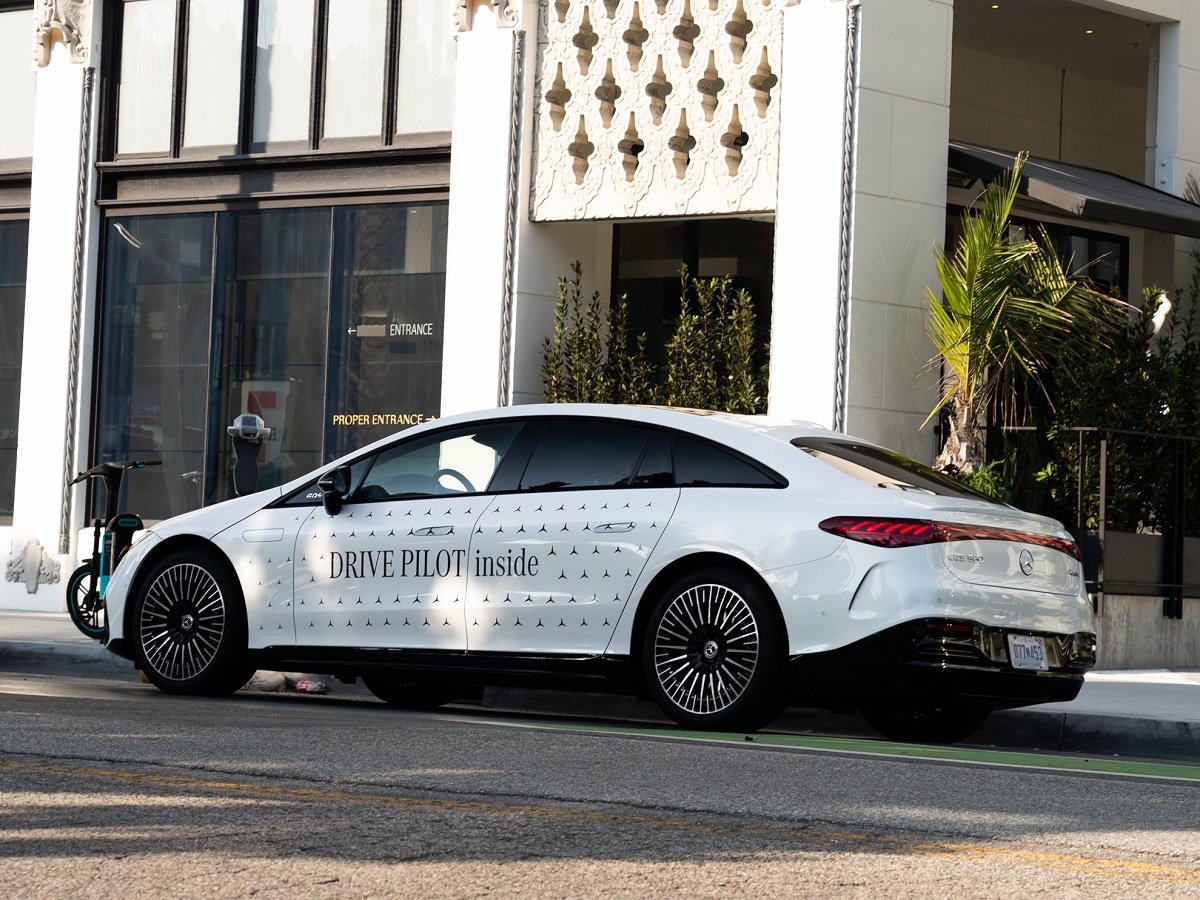
Photo: Tim Stevens
The Drive Pilot experience starts with a video, over seven minutes long and not unlike the things flight attendants always encourage you to pay attention to before liftoff. The car lays out all the dos and don'ts through that mandatory video, which vehicle owners must watch at least once.
The most significant restriction is geographical and legislative. Drive Pilot is legal only in California and Nevada. By extension, these are the only places Mercedes will sell cars equipped with the feature. Additionally, the service only works on highways mapped in high-definition—no secondary roads.
The other restrictions are more conditional. They're also more frustrating. For example, the system only works at speeds of up to 40 mph and only when in traffic. While you are free to take your eyes off the road, due to California and Nevada law, you are still not allowed to have your smartphone in your hand. So, you're more or less restricted to whatever you can pull up through the in-dash MBUX experience.
Also, you're not allowed to take a nap or turn around and look at any rear-seat passengers for long. And you must always be ready to take over the system within 10 seconds. Should you not respond to the car's increasingly insistent alerts—a dashboard warning, then chimes and flashing lights, then a swift tug at the seat belt—the car will put on its hazards and bring itself to a safe stop.

Photo: Tim Stevens
With all those caveats dancing through my head like so many legal sugarplums, I headed out in search of traffic. It wasn't hard to find. Within a few miles of departure, I hit four lanes of gridlock. It was time to engage Drive Pilot.
The system alerts its readiness with a little icon on the gauge cluster, plus a pair of white lights embedded into buttons on the steering wheel. Press either of those buttons, then press "OK" to acknowledge one final warning, and the system enables. You're free to let go of the wheel.
From there, the experience got pretty dull, which is how it should be. The car decides what's a safe speed, so there's no need to worry about that. It stayed rock-solid in the middle of the lane but reacted smoothly and cleanly to lane-splitting motorcyclists and even other drivers who aggressively cut in ahead of me.
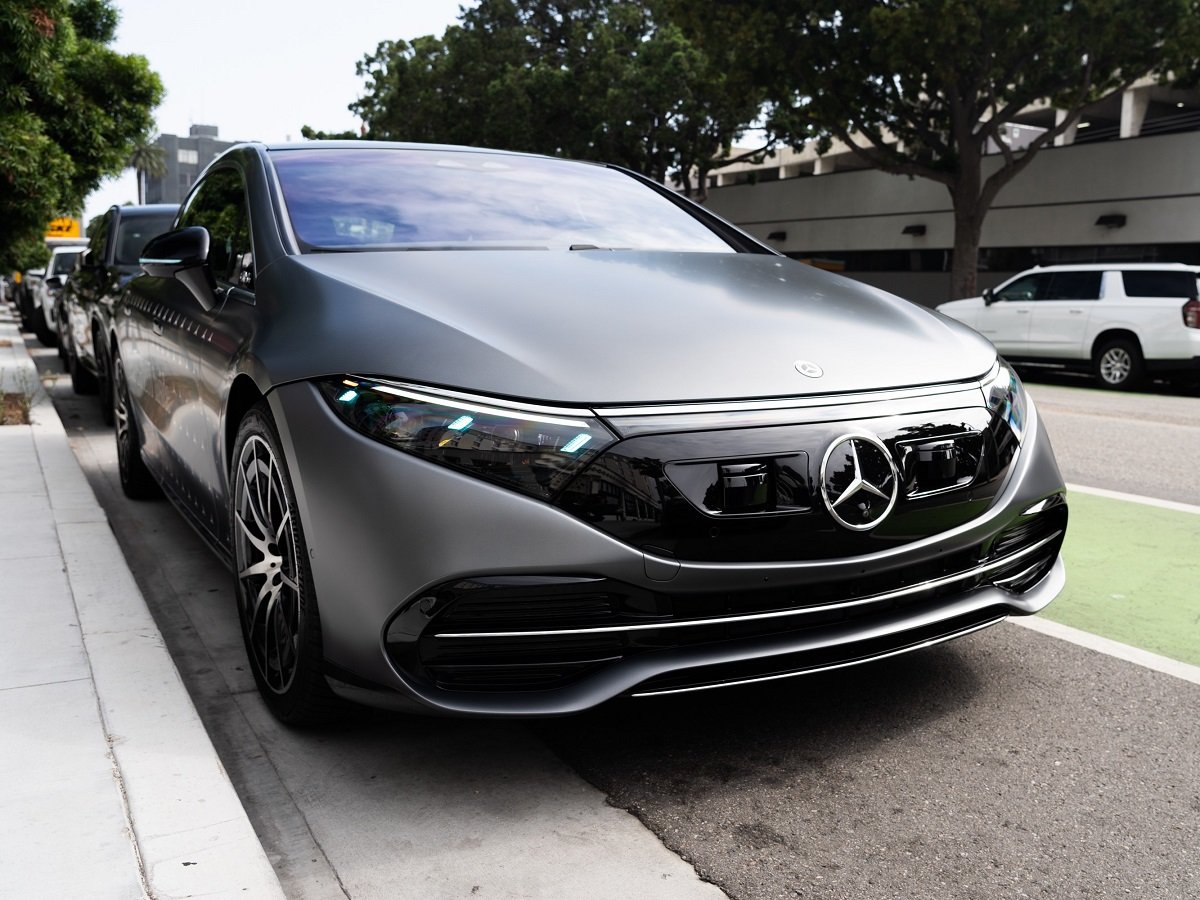
Photo: Tim Stevens
That could be a problem for some drivers, as Drive Pilot leaves generous room between you and the car ahead. Getting cut off will be a frequent occurrence, but if you're chilled out watching YouTube on the center display, does it matter?
My only frustration was that the system feels very limited in capability compared to Mercedes-Benz's own Level 2 Distronic system. Drive Pilot won't automatically change lanes to move around slowed or stopped traffic, for example, and won't change lanes to move you toward your exit. It will just sit there until you take over and move it into another lane. Distronic does all those things, with the minor restriction that you need to keep touching the steering wheel.
And then there's the most significant restriction: 40 mph. That, in my eyes, makes Drive Pilot's current state somewhat less appealing than Level 2 hands-off systems like Super Cruise.

Photo: Tim Stevens
Mercedes-Benz says that improvements and updates will come in time, which is why Drive Pilot comes with a recurring cost. That cost will also help to cover the additional hardware. Any EQS or S-Class equipped with Drive Pilot features a laser-scanning lidar sensor, higher-accuracy GPS, and even numerous redundant components like power steering, anti-lock braking, and even a second ECU.
These cars won't cost any more to buy, but using Drive Pilot requires a $2,500 subscription for the first year. That works out to just over $200 a month, compared to $25 monthly for Super Cruise or $75 for BlueCruise. Mercedes-Benz isn't saying whether that cost will be the same going forward as the system improves in capability.
Again, these cars will only be available in California and Nevada to start and will be limited in availability, at least initially. So, if you want one, you'd best call your local dealer now.
Tim Stevens is a veteran automotive and technology journalist with over 25 years of experience covering everything from smartphones to supercars. In addition to JDPower.com, his expert perspectives have appeared in numerous national and international outlets, including print, online, and broadcast television.


The Ford Transit is the automaker’s full-size cargo and passenger van offering, designed to serve a wide range of commercial and lifestyle applications. With 37 available configurations, the platform ...See More
Read the Full Article
The Chevrolet Tahoe is a full-size, three-row SUV with a standard V8 engine and available diesel power. Built on the same platform as the Chevrolet Silverado 1500 pickup, the Tahoe benefits from its ...See More
Read the Full Article
It is the end of the line for the Ford Escape. After 25 years as a fixture of Ford’s lineup, 2026 will be the compact SUV’s last model year.
Read the Full Article
The Colorado is Chevrolet’s midsize pickup. It ranks among the segment’s most capable trucks for payload and towing, and can be configured for both work and off-road adventures. For 2026, the ...See More
Read the Full Article