See answers to common EV questions, tax incentives, charging maps & more.
Explore EV
23
33
237 - 335
10 speed, Automatic
Turbocharged Gas I4
All Wheel Drive, Rear Wheel Drive
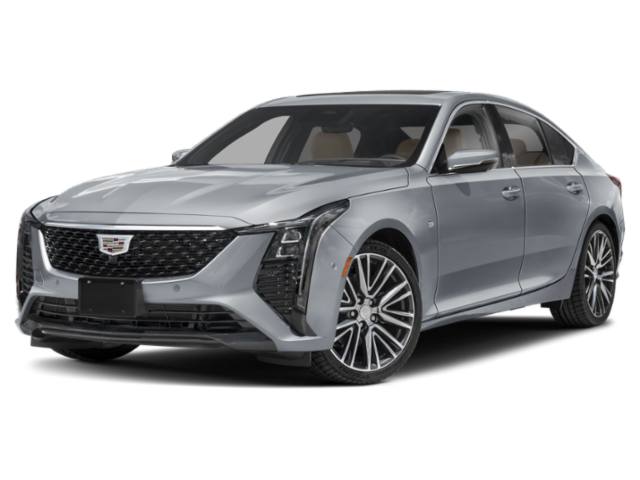
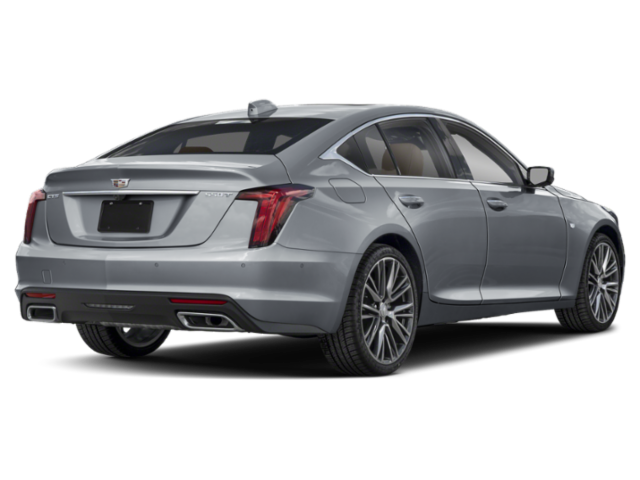
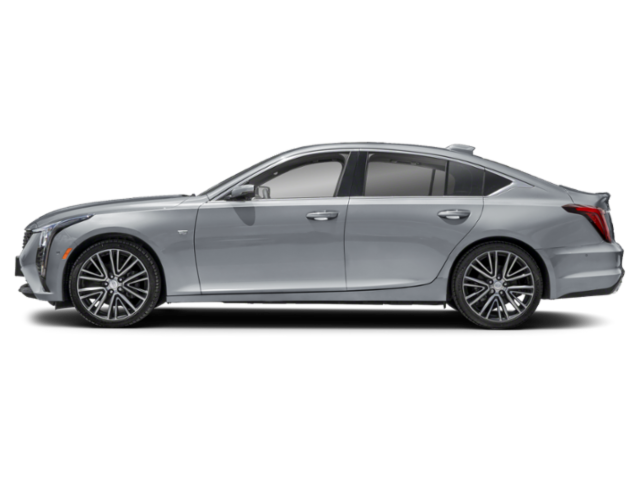
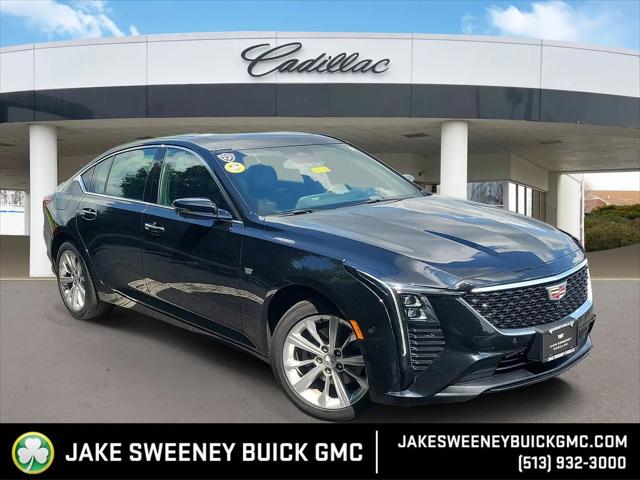
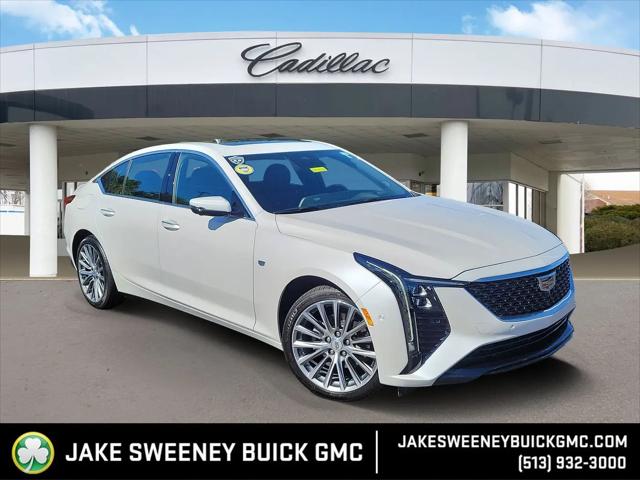
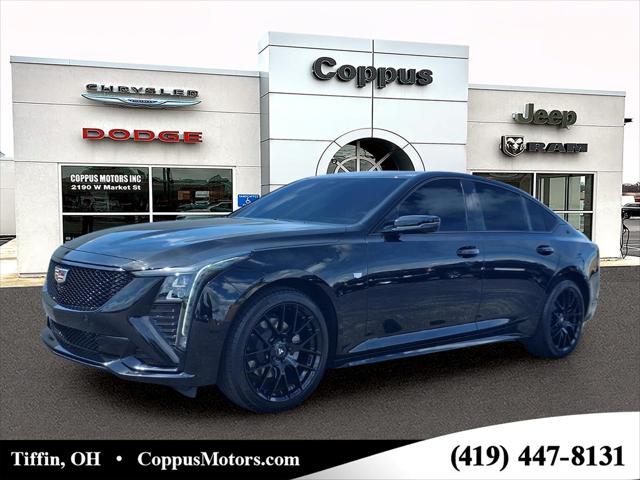
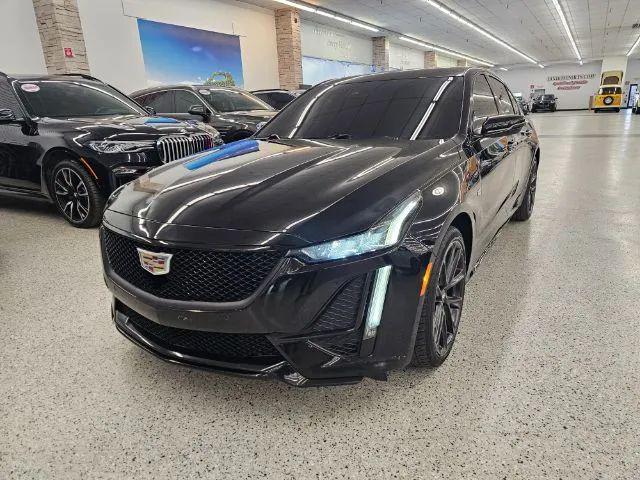
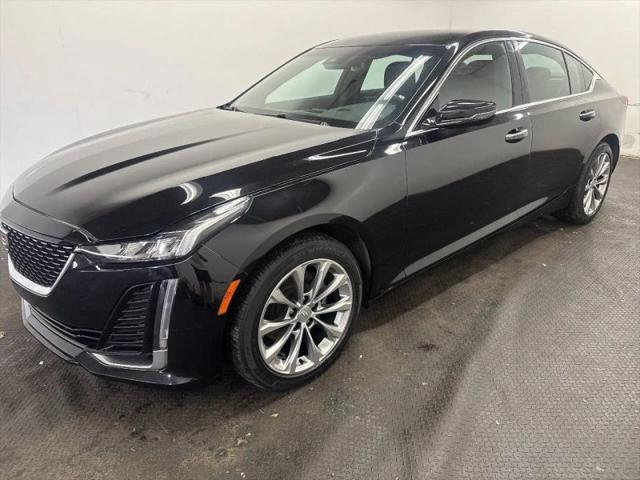
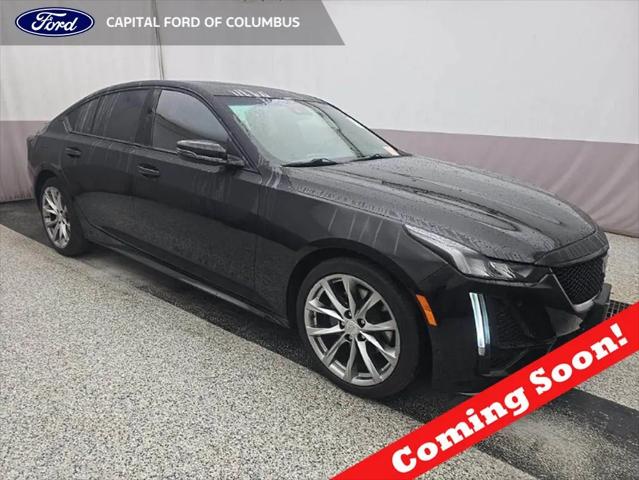
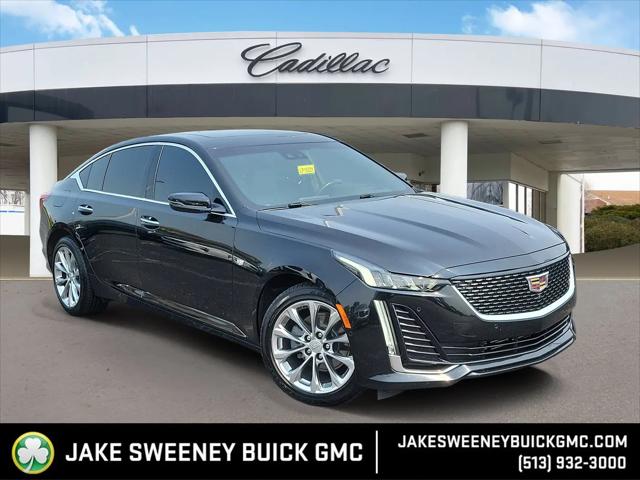
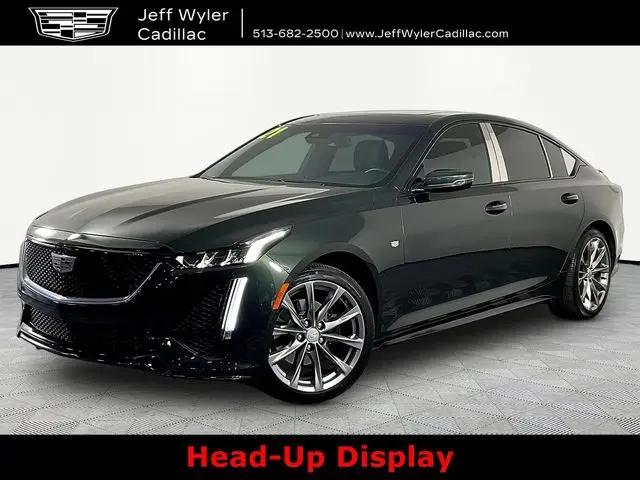
It's hard to believe, but some people don't want to drive an SUV. For them, Cadillac still builds a traditional American luxury car called the CT5. A midsize sedan, the 2025 CT5 is available in mild to wild configurations, and it represents the performance and technology pinnacle of cars wearing the Cadillac crest over the past decades. To keep it fresh, the 2025 Cadillac CT5 gets changes that make it more compelling than before.

Photo: Christian Wardlaw
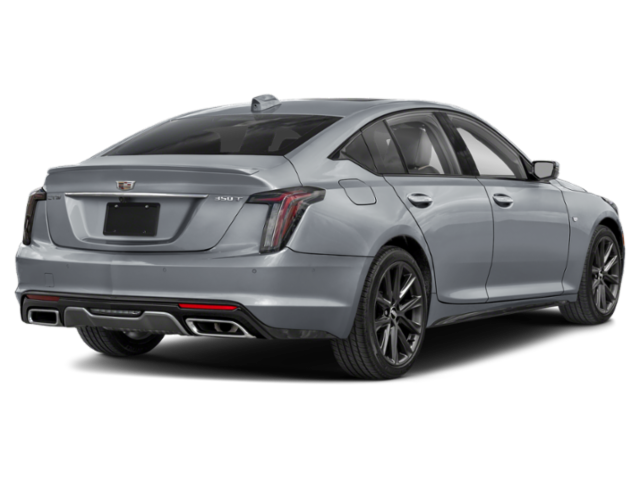
Cadillac offers the 2025 CT5 in Premium Luxury, Sport, CT5-V, and CT5-V Blackwing trim levels. JD Power previously published reviews of the 2020 CT5-V and 2022 CT5-V Blackwing. This review focuses on the CT5's updates since then and how they potentially impact its consumer appeal.
Here is a summary of the changes since the CT5 debuted in 2020:
For this 2025 CT5 review, Cadillac provided a test vehicle equipped with Premium Luxury trim and the following options:
The test vehicle's price was $63,310, including the $1,395 destination charge to ship the car to your local dealership from the assembly plant in Lansing, Michigan.

Photo: Christian Wardlaw
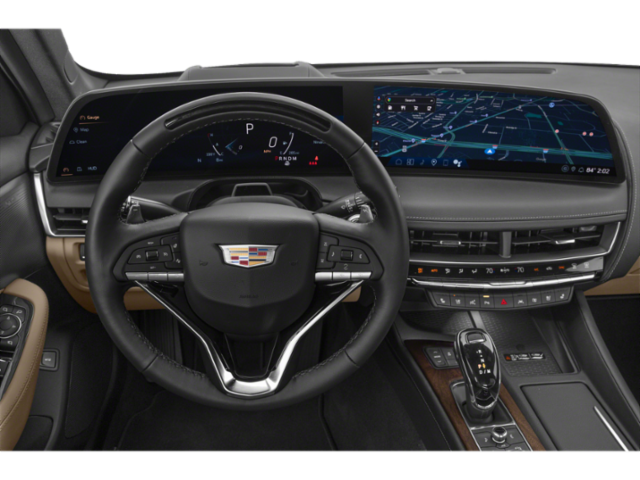
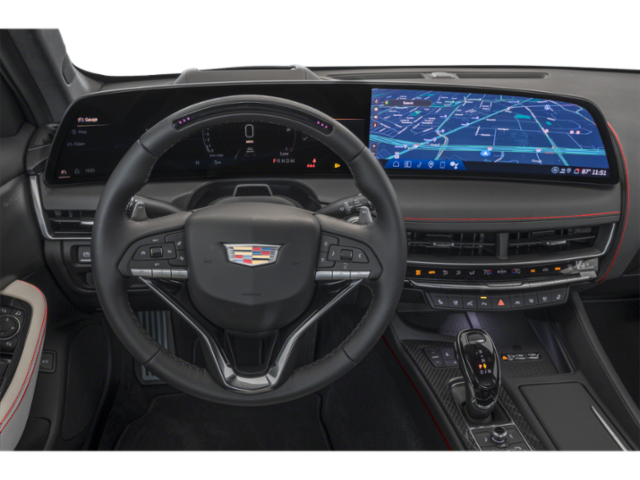
Cadillac has restyled the CT5's front end, but that's not the most noticeable visual change. Open the driver's door, and you cannot miss the new 33-inch curved display on the dashboard. The high-resolution configurable display boasts clean graphics, an intuitive user experience, and an organic shape that is more elegant and stylish than the rectangular panels in some of this Cadillac's rivals.
The new display integrates well with the existing CT5 dashboard, which continues to provide separate climate controls and infotainment knobs and buttons on the center console. Cadillac has wisely resisted the move to touch-sensing panels and renders nearly all the physical switchgear in matte black with clear white markings. Some polished metal steering wheel controls depart from that norm, making them hard to identify and use.
My test car had the Platinum Package, equipping it with supple semi-aniline premium leather in a high-contrast Sedona Sauvage color. Genuine carbon fiber trim decorated the cabin, leaving only a few seemingly inexpensive details for a car of this caliber. The heated, ventilated, and massaging front seats are comfortable on long drives, and the CT5's back seat easily accommodates adults. The 11.9 cubic-foot trunk is small, though.

Photo: Christian Wardlaw
Equipped with Google Built-in, the infotainment system boasts Google Maps, Google Assistant, and app access via the Google Play store. In addition, it offers wireless Apple CarPlay and Android Auto, Amazon Alexa, SiriusXM 360L satellite radio, and access to a 5G LTE Wi-Fi hotspot. If you can't find a way to entertain yourself with this technology, you're not trying hard enough.
As is typical with Google Built-in infotainment systems, this one responds quickly and, usually, accurately to spoken commands. Graphics and iconography are excellent, and the user interface is straightforward. Between the Google Assistant digital voice assistant, touchscreen, and controls on the steering wheel and center console, the Cadillac CT5 caters to various owner preferences for interacting with the technology.
Though the CT5's infotainment system is Google-based, I had no trouble pairing an iPhone 16 to the car's tech, running Apple CarPlay, and streaming music via Apple Music and Pandora. In addition, Cadillac has swapped the previous Bose sound system for a new AKG setup with 15 speakers. It sounds great, adding more joy to the drive.
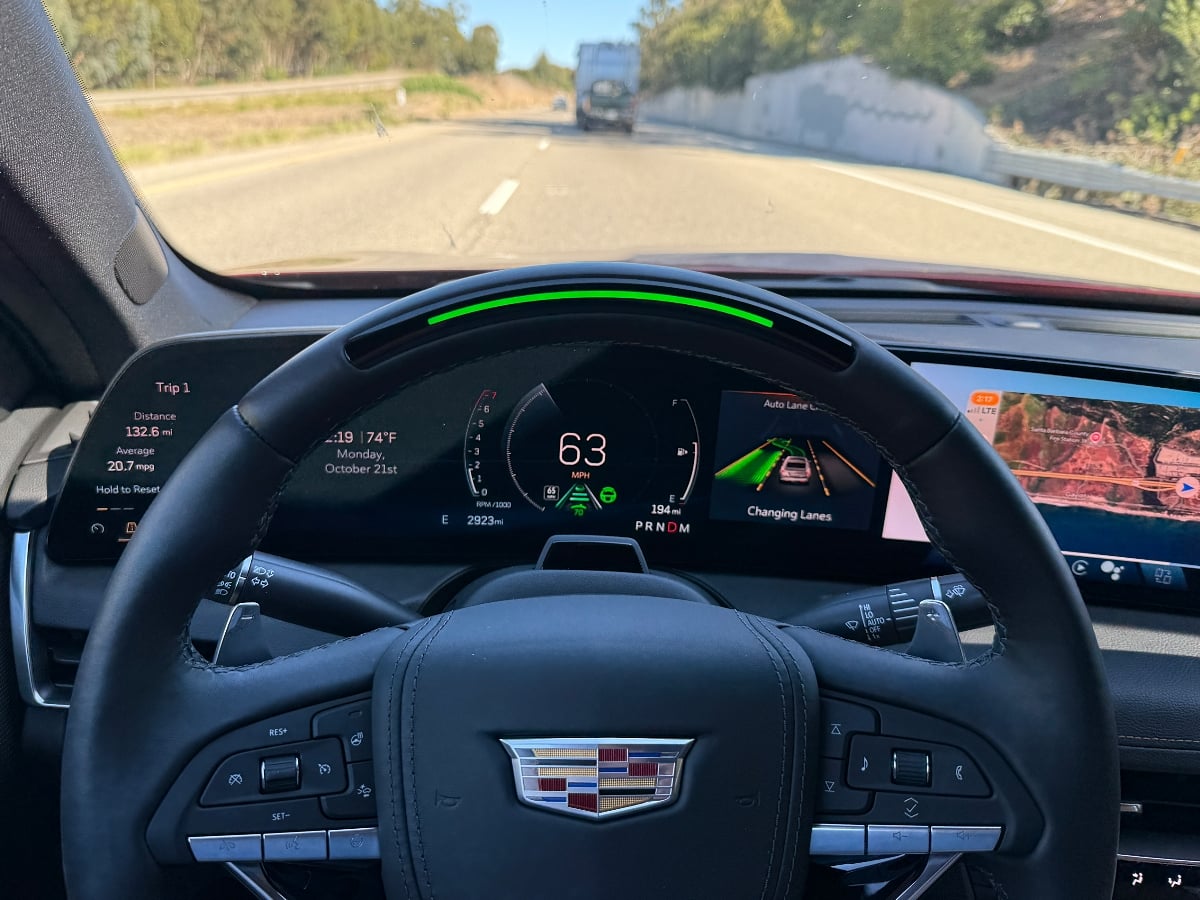
Photo: Christian Wardlaw
Super Cruise is not new to the 2025 Cadillac CT5. However, it is always essential to evaluate hands-free advanced driving assistance systems (ADAS) as the technology regularly changes.
In my experience, the 2025 CT5's Super Cruise is the best-performing iteration of the technology yet. For example, it appears to work on a broader network of highways than in the past. In addition, the automatic lane change function did not attempt to illegally cross carpool lane markings on Los Angeles expressways, as it did in a 2023 CT5 I tested.
I used Super Cruise extensively on California's 101 freeway between Buellton and suburban L.A. It worked well in most light-traffic situations, but heavier traffic in Santa Barbara made using it less satisfying. On a day trip into L.A. proper, I preferred driving the car myself.
That's not a fault of Super Cruise. Instead, that's true of any hands-free driving assistance system I've tried. Generally, I think they are most effective in dense or light traffic and less practical in moderate traffic on multi-lane freeways. Regardless of the use case, Super Cruise is one of the best systems available today, partly because it clearly communicates when it is active and when it is not.

Photo: Christian Wardlaw
Previously, JD Power published reviews of the sport-tuned CT5-V and performance-oriented CT5-V Blackwing. The test car arrived in Premium Luxury trim this time, meaning it had the standard suspension tuning. Upgrades included a twin-turbocharged 3.0-liter V6 engine supplying 335 horsepower and 405 pound-feet of torque, AWD, and a set of 20-inch wheels.
You'll probably want the optional twin-turbo V6. The CT5's standard engine is a turbocharged 2.0-liter four-cylinder offering just 237 hp and 258 lb-ft of torque. While I haven't driven a CT5 with the standard turbo four, I'd bet the car feels slow and unrefined in comparison. Of course, the downside is the V6 costs quite a bit of money to buy and is less fuel-efficient.
According to the EPA, the twin-turbo V6 with AWD should get 21 mpg in combined driving, while the standard turbo four returns 25 mpg with AWD. The test car averaged 22.5 mpg during my evaluation, but that result included more highway driving than usual.
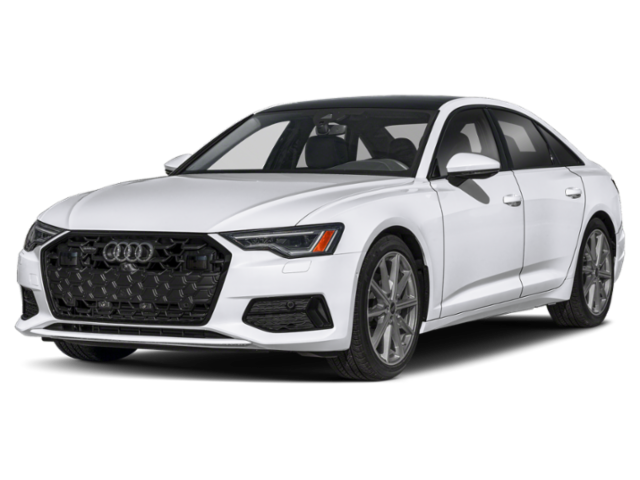
Regarding driving dynamics, Cadillac engineered the CT5 to be a credible competitor to German cars like the Audi A6, BMW 5 Series, and Mercedes-Benz E-Class. That is true for the CT5-V and CT5-V Blackwing. The standard suspension of the CT5 Premium Luxury allows too much body float, especially over the front wheels. Unfortunately, Cadillac reserves an adaptive suspension for the V and Blackwing models.
Otherwise, the CT5 Premium Luxury feels athletic in twists and turns, and nothing about the steering, brakes, or tire grip is cause for alarm or complaint. The powertrain doesn't feel or sound as refined as what you'll find in an equivalently powered Audi, BMW, or Mercedes, but you'll save thousands by selecting the Cadillac instead.

Photo: Christian Wardlaw
I've liked the CT5 since it first went on sale for the 2025 model year. It's not as refined as some of its rivals, but the savings in the purchase price makes up for it. The new 33-inch display significantly improves the car's technological sophistication, and Super Cruise is better than what you'll find in some of the CT5's competitors.
Add the CT5-V and CT5-V Blackwing models, the latter miraculously still available with a manual gearbox, and this lineup of Cadillac sedans is still exceptionally appealing.
Christian Wardlaw is a veteran automotive journalist with 30 years of experience in the field and has held automotive editorial leadership positions at Edmunds, JD Power, and The New York Daily News. Today, Chris owns a content agency called Speedy Daddy Media, and in addition to JDPower.com, his work appears on Capital One Auto Navigator, CarGurus, and Edmunds.