See answers to common EV questions, tax incentives, charging maps & more.
Explore EV
15
20
697
9 speed, Automatic w/OD
Twin Turbo Premium Unleaded V-8
All Wheel Drive

Photo: Mark Takahashi
The 2025 Aston Martin DBX707 has a single trim level. The automaker pairs a potent 697-horsepower, twin-turbocharged V8 engine with a nine-speed automatic transmission that sends power to all four wheels. Prices start at an eye-watering $253,000, and the crossover SUV will begin showing up in dealerships this fall.
For this 2025 DBX707 review, Aston Martin provided a test vehicle equipped with the following significant options:
The test vehicle’s price was $342,600, including the $4,000 destination charge to ship the SUV from the Aston Martin assembly plant in Gaydon, Warwickshire, England, to your local dealership.
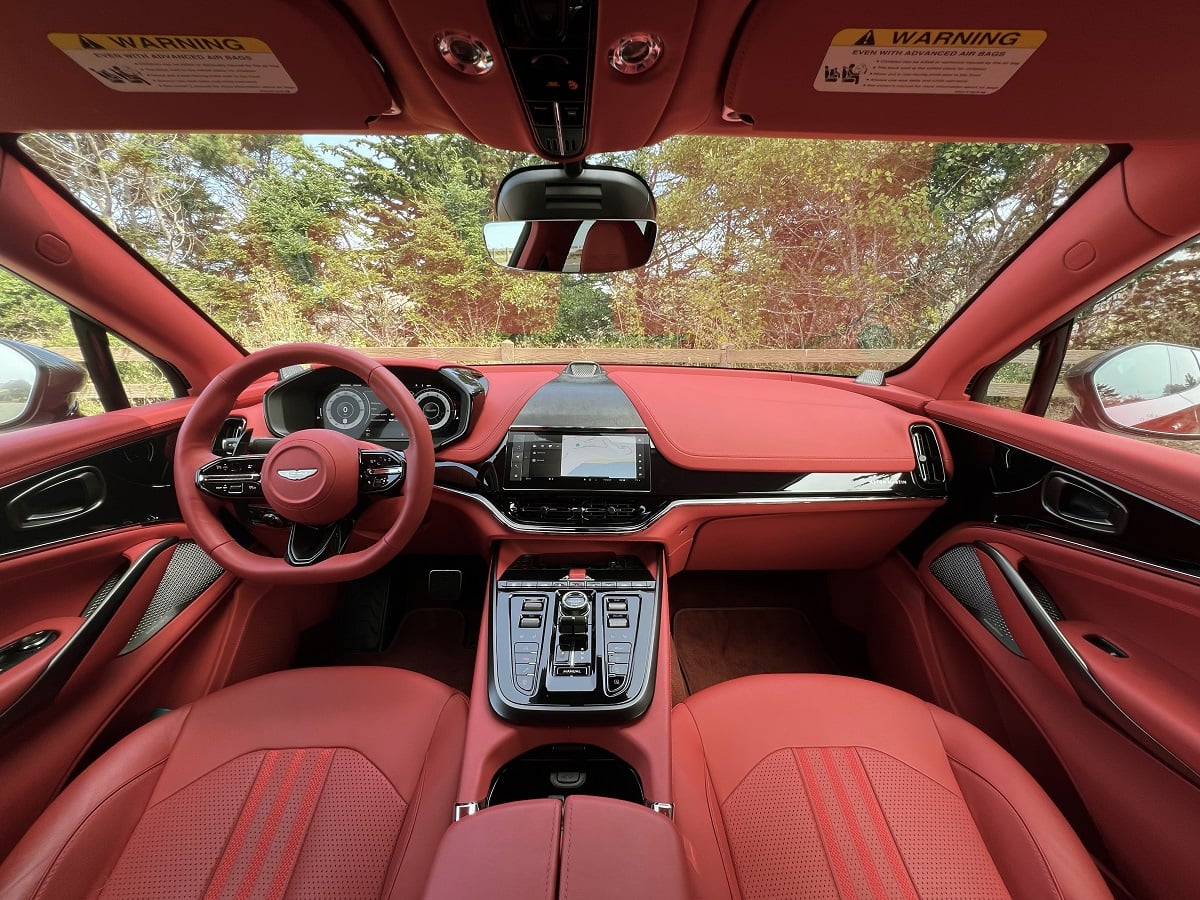
Photo: Mark Takahashi
The DBX707's cabin is the most significant upgrade for 2025. The graceful dual-cowl motif remains, but the details make a big difference. The ignition and gear-selector buttons move from the awkward position atop the dashboard to a more logical spot in the broader center console.
The separate gear buttons are gone in favor of a much more intuitive lever, and the drive-mode dial now surrounds the Start button. Flanking them are beautifully knurled metal roller dials for climate and volume controls, with secondary buttons in front and behind. The steering wheel also features a smaller and more elegant hub containing the airbag, with well-placed buttons on the spokes.
The materials quality remains exceptional and appropriate for the price, though some piano-black elements and the brushed metal central dashboard panel caused annoying glare from the midday sun. All standard trim choices are glossy, but with enough money, I'm sure you can commission a bespoke dashboard to suit your tastes.
More importantly, the build quality has improved. The center console feels much more substantial than before, and the creaks and squeaks I’ve experienced in the past with this SUV are absent.
There's adequate space to store your personal items, with a wireless phone charging tray and moderately sized cupholders, bins, and door pockets. Behind the rear seats, the cargo area can hold up to 22.3 cubic feet, which is generous compared to its primary rivals.
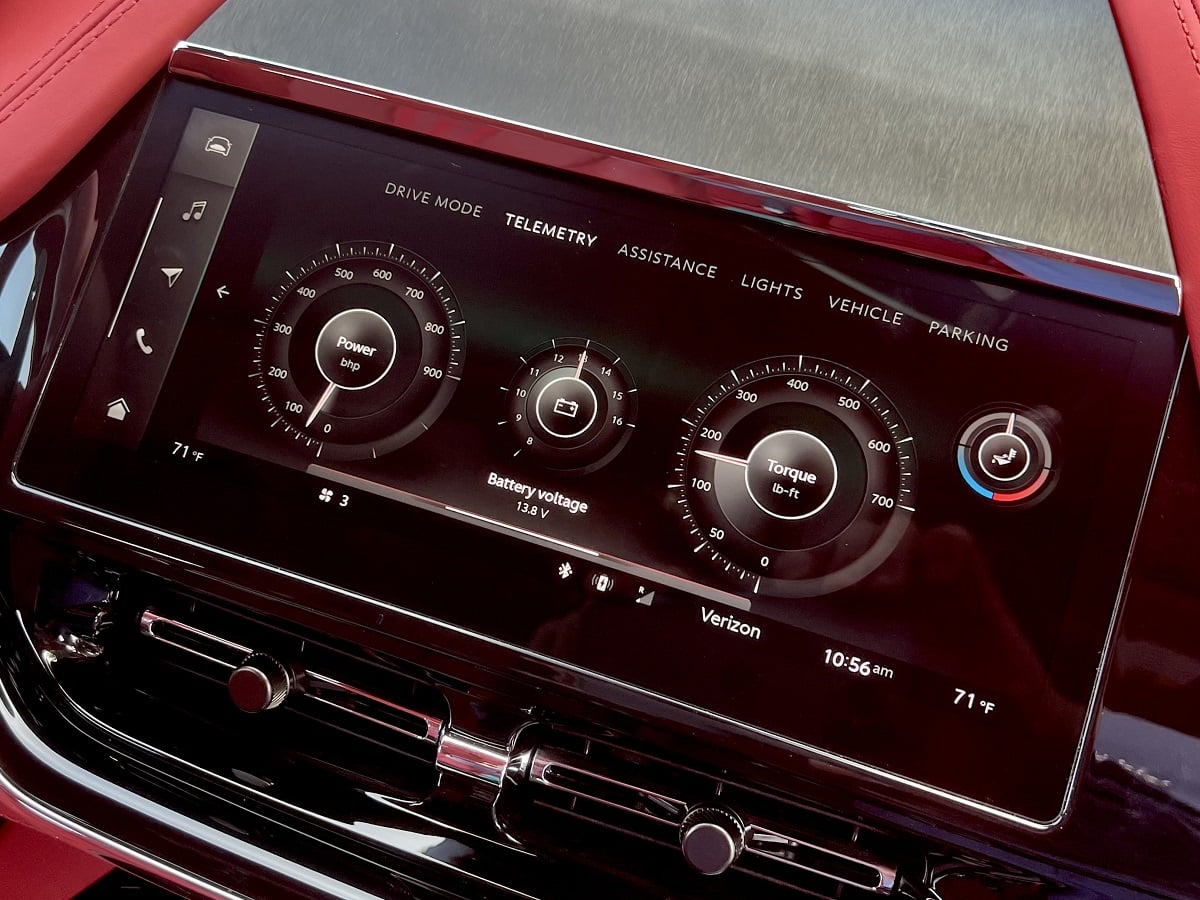
Photo: Mark Takahashi
The 2025 DBX707 inherits the newest infotainment system developed by Aston Martin. It's similar to the new Vantage and DB12 unit and represents a big step forward from the previous model. The last DBX I drove featured a Mercedes-sourced system; it wasn't even a newer MBUX version. Instead, it was a previous-generation Comand system that Mercedes phased out in 2017. Even though it functioned well in the DBX707, seeing the familiar touchpad and dial controller was a letdown.
The new system benefits from a 10.25-inch central touchscreen that is within easy reach of the driver. The graphics are sharp, responses are reasonably quick, and Apple CarPlay and Android Auto can now operate wirelessly. Navigating the menus is easy and intuitive in a short time, and there's even a nifty power output meter to show how much potential is left.
I did experience some technical glitches when pairing phones via CarPlay and Android Auto, though. Fortunately, those were isolated incidents caused by some unusually intrusive radio interference where I had parked. Those gremlins never reappeared later in my drive.
Throughout my day behind the wheel, the advanced safety features performed as advertised with no false alarms. The lane-departure warning and lane-keeping assistance systems tend to be a bit overprotective on winding roads but are well-tuned for highway and city driving.

Photo: Mark Takahashi
The 2025 DBX707's mechanicals and chassis are carryovers, but the software controlling the adaptive suspension is slightly revised. On broken pavement, the ride quality is less jittery and more composed, though you still feel plenty of bumps and ruts. That's an impressive feat, considering the oversized 23-inch wheels.
I'm pleased to report this comes without any sacrifice to handling performance. My initial impressions suggest that when driven enthusiastically, cornering has marginally improved as I have more confidence when carving up mountain passes. This prowess explains why a DBX707 has served as an occasional Formula One medical car.
The improved handling pairs perfectly with the DBX's potent engine and dependable brakes, enhancing the overall performance feel. With 697 hp and 663 pound-feet of torque, I never desired more power, yet I found the throttle easy to manage on the open road. Aston Martin estimates the DBX707 will reach 60 mph in only 3.1 seconds. However, it can be a bit jumpy and overeager when trying to leave the line smoothly and conservatively.
Carbon ceramic brake rotors are standard on all DBX707s and can slow this 5,000-pound beast in a hurry. With repeated and heavy use on downhill sections, I never experienced any degradation in stopping power, though the brakes did begin quietly squealing in one particularly entertaining section. The pedal is easy to modulate, giving precise control when trailing off the brakes and gracefully transitioning to the gas.
When starting the DBX707, you can hold one of the shift paddles to initiate a loud ignition or tap the button alone for a more refined introduction. The default drive mode is the GT setting, which is still plenty sporty for the average driver. While the ride quality remains on the stiff side, it's acceptable for everyday commuting.
Turning the dial around the Start button to the first detent engages Sport mode. It noticeably firms up the suspension and gives the throttle more immediacy. The engine and exhaust also become more extroverted, with a more pronounced growl at idle and a fiercer bellow when the engine approaches its redline.
The top Sport+ drive mode maximizes performance, though the difference isn't as noticeable as the jump from GT to Sport. The exhaust sounds, however, add the kind of raucous theater that encourages you to continue exploring the DBX's performance potential.
When dumping the throttle, the DBX707 let out a few crackles out the tailpipes, bringing a mischievous grin to my face. It's not as obnoxious (or glorious, depending on your tastes) as a Jaguar F-Type. For the full effect, I highly recommend driving with the windows down.