What Our Expert Says
In the sections that follow, our expert provides his own assessment of how the new 2017 Sportage performs in each of the 10 categories that comprise the
2015 U.S. APEAL Study.

Exterior
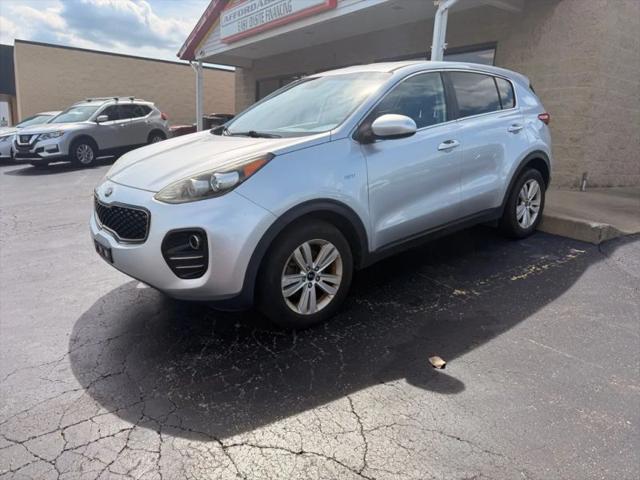
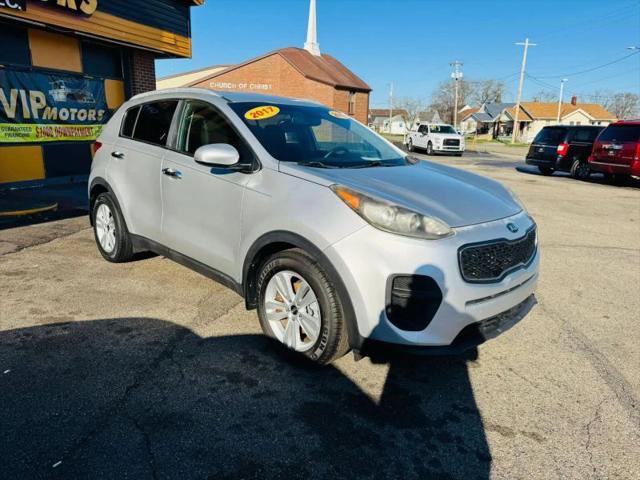
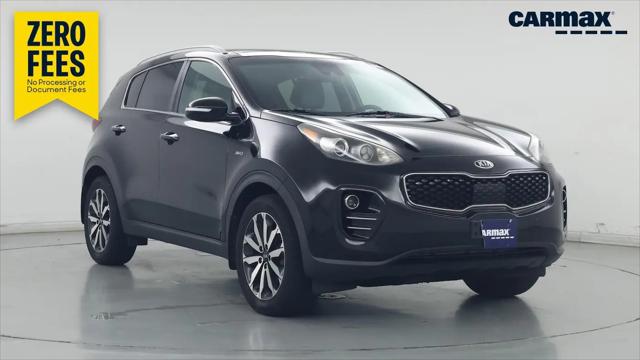
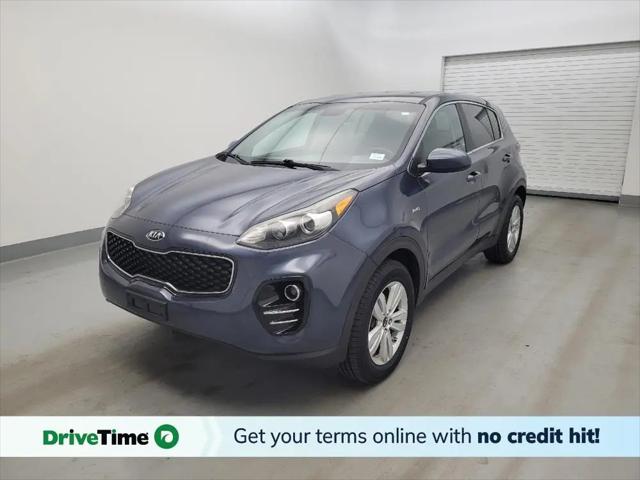
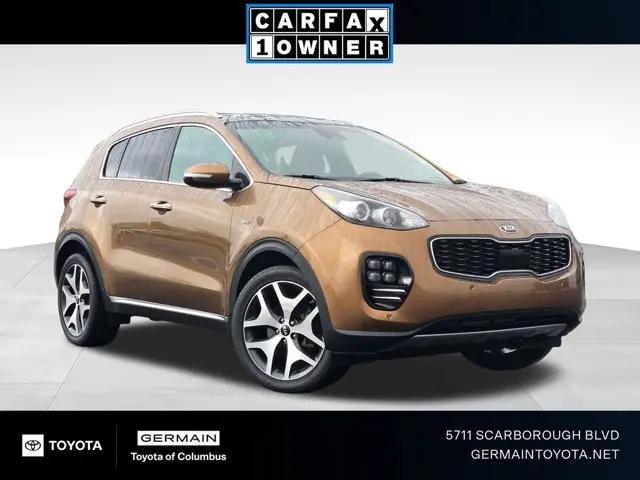
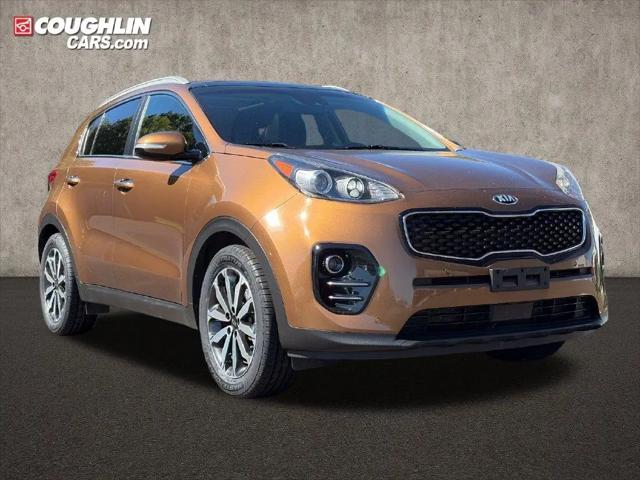
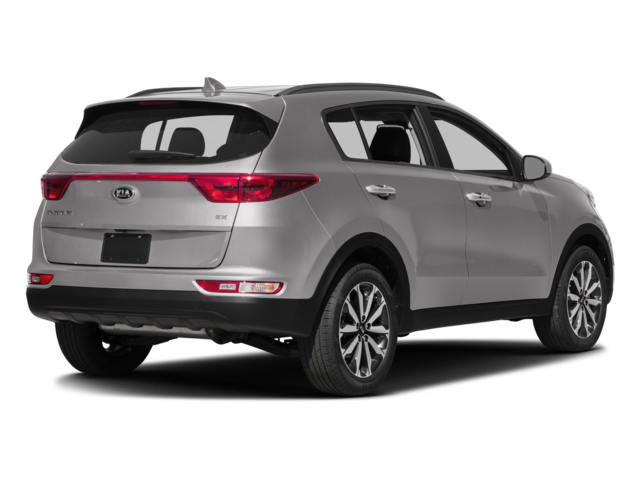
Kia takes a familiar approach with the Sportage's exterior styling, though the front end is rendered with a bolder pen than the automaker's other models. Eye-catchingly aggressive, the Sportage's tiger-nose grille is an unmistakable Kia design cue, while the lighting elements and their positioning resemble both the original
Subaru B9 Tribeca and SUVs from
Porsche.
The rest of the 2017 Sportage is beautifully rendered, once again proving that attractive and upscale design is not the sole province of luxury brands. Frankly, the Sportage shames most luxury crossovers of similar size in terms of visual balance and a stylish aesthetic.
Interior
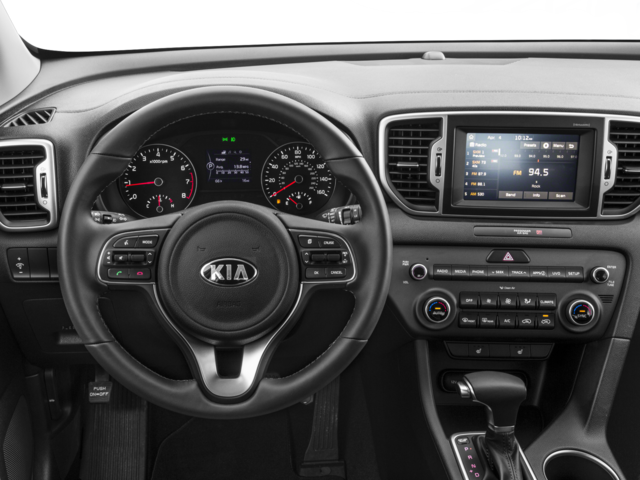
Inside, in terms of design, layout, and material surfacing, the new Sportage is undeniably Germanic. In so many ways, you examine the Sportage's interior and wonder how the company can deliver the level of quality it does at the price point it charges. No doubt, this is one reason Kia owners rate their vehicles so highly for initial quality.

Unfortunately, in other ways, you wonder what the heck Kia was thinking. For example, the test car's floor mats were flimsy and curling up at the corners. The metallic doorsill scuff plates suffered scuffs far too easily. The steering wheel control stalks also felt flimsy and insubstantial when used. While quality-related positives far outweigh the negatives, Kia still ought to address the obvious shortcomings.
Going hand in hand with Germanic design, and especially when equipped with black leather, the Sportage's cabin is also rather plain. Glossy black trim and polished silver accents add an upscale look, but the test vehicle's interior was relentlessly dark, making the gray roof pillar covers, gray headliner, and gigantic panoramic sunroof necessary to lighten the mood.
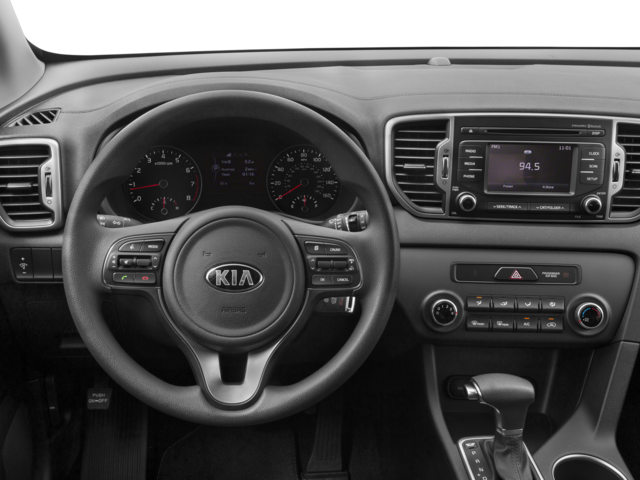
Controls are driver-centric, and Kia thoughtfully supplies an array of stereo, climate, comfort, and infotainment system buttons on the dashboard, minimizing interaction with the display screen. This approach makes it very easy to access commonly used functions using familiar controls.
Seats
Front-seat comfort is outstanding. The test vehicle had heated and ventilated seats wrapped in appealing leather upholstery, and Kia supplies soft material where the driver is likely to rest arms and elbows. A heated steering wheel is included for the SX Turbo version, too, and the thick-rimmed wheel is pleasing to grip.

The rear seat is comfortable enough for adults. Thigh support, legroom, and foot space all rate as decent, and the seat backs recline for greater comfort on longer journeys.
Climate Control System
Thanks to large knobs, big buttons, and in the SX Turbo, a dual-zone automatic climate control system, heated and ventilated front seats, and a heated steering wheel, staying warm or cool in the new Sportage is easy. Rear passengers are happy, too, thanks to a vent delivering warm or cool air.
Infotainment System
Touch-screen technology with Bluetooth connectivity is standard for all 2017 Sportage trims. The test vehicle had the upgraded system with a larger 8-in. capacitive-touch display and a broader array of features, including voice recognition, smartphone-projection technology, connected services, navigation system, and more.
Using Kia's Your Voice (UVO) technology is simple and straightforward, though the voice-recognition system still isn't as smart or as easy to use as what smartphones provide. That makes the Apple CarPlay and Android Auto smartphone-projection systems that much more effective for daily driving.

Thanks to the free UVO eServices technology, Sportage owners won't pay subscription fees to access the 911 Connect automatic collision-notification system, the Parking Minder system to find a lost car, or the safe teen driver features including speed, curfew, and boundary alerts.
Equipped with the Sportage's available Harman Kardon audio system, complete with Clari-Fi music-restoration technology, the SX Turbo delivers robust bass without distortion and immerses the driver in the music.
Storage and Space
Kia supplies generous storage inside of the Sportage. Numerous storage bins and trays accommodate the driver and front passenger, the only oversight the lack of a rubber liner in the door panel armrest trays. Rear-seat passengers enjoy bottle holders in the door panels and netted pockets on front seat backs.
Cargo volume measures 30.7 cu. ft. behind the rear seat and 60.1 cu. ft. with the rear seat folded down. While these numbers are smaller than several competitors, the cargo area is nevertheless reasonably accommodating. The Sportage could use an extra couple of inches of cargo bay length to make it easier to carry a compact stroller and full-size suitcases at the same time.

The test vehicle had a power hands-free tailgate. Sometimes it opened when I didn't want it to (when toweling the car off after a wash), and sometimes it didn't open when I wanted it to (after buying half a case of wine). The reason for this feature's recalcitrance when it was needed the most remains a mystery.
Visibility and Safety
As was true of the previous Sportage, the new one does not have rear quarter windows between the rear doors and the tailgate. The result is a sizable blind spot on either side of the SUV.
Fortunately, the new Sportage is equipped with positively huge side mirrors and a standard reversing camera. Upgrades include front and rear park-assist sensors and a blind-spot warning system with rear cross-traffic alert. This combination of features and technologies effectively eliminates the problem of the wide rear blind-spot areas, though it would be nice if the blind-spot warning lights were more obvious when illuminated.
Standard for the SX Turbo, and available for the Sportage EX, a forward-collision warning system, autonomous emergency braking, and a lane-departure warning system provide an extra helping of driver assistance and safety. I did not receive false collision warnings during testing, but the lane-departure warning system's audible beep gets annoying after awhile. However, it is easy to shut off using a button on the lower left side of the dashboard.

Adaptive bi-Xenon headlights with automatic high-beam activation are also standard for the SX Turbo. My neighborhood is unlit by streetlights, and the Sportage's lighting system proved fantastic after dark, providing a clear path from the main road to my driveway.
Should a collision occur, rest assured that the Sportage will do everything it can to protect its occupants. The Insurance Institute for Highway Safety (IIHS) gives it top marks, including a "Superior" rating when equipped with its automatic emergency braking system.
Engine/Transmission
Choose a Sportage LX or EX and it comes with a 181-horsepower, 2.4-liter 4-cylinder engine. The SX Turbo is equipped with a more satisfying turbocharged, 2.0-liter 4-cylinder engine, one that generates 240 horsepower at 6,000 rpm (237 horsepower with AWD) and 260 lb.-ft. of torque from 1,450 rpm to 3,500 rpm. Naturally, this engine suffers a slight penalty in terms of fuel economy.

A 6-speed automatic transmission is standard equipment, delivering the power to the front wheels. Kia's Dynamax AWD system is an option, adding a locking center differential, Downhill Descent Control system, and different front styling that improves the Sportage's approach angle. I did not test its off-roading capability, but have witnessed first-hand its performance on difficult terrain and can attest that the Sportage will go just about anywhere the average driver wants it to go.
Three driving modes are available: Eco, Normal, and Sport. In Eco mode, the Sportage supplies gentle throttle response in an effort to maximize fuel economy, but this trait is easy to override simply by pushing harder on the accelerator. Sport mode immediately quickens response, and the driver doesn't need to depress the accelerator as much to elicit acceleration. Sport mode also firms up the steering.
Fuel Economy
Regardless of engine choice, there is not a wide range of difference between the Sportage's official EPA city and highway fuel-economy numbers, especially when equipped with AWD.
The test vehicle was the least efficient version of the Sportage you can buy, the SX Turbo with AWD. Official EPA ratings are 20 mpg city and 23 mpg highway, for a combined rating of 21 mpg. The test vehicle returned 19.9 mpg during evaluation.
Driving Dynamics
Choose the SX Turbo version if you favor acceleration over fuel efficiency. The turbocharged engine provides a broad and linear power curve but it lacks zing, the building crescendo of thrust that slings some turbocharged vehicles to speed with a genuine thrill. It sounds good when revved, though, and is fairly refined in terms of noise, vibration, and harshness.

The transmission is usually delightful...but not always. The shifter feels solid when used, like a quality piece of equipment, and the manual shift gate is intuitively patterned and complemented by paddle shifters. Dissatisfaction arises from delayed downshifts when the vehicle is placed in the Normal and Sport driving modes. Manually taking charge of gear shifting resolves this, of course, but it sure seems like the transmission ought to respond faster to vigorous driving when placed in Sport mode.
Equipped with 4-wheel disc brakes, they perform well and resist fade under repeated abuse, but pedal feel requires fine-tuning. At the top of the pedal's travel, not much happens. Push harder and the brakes bite. Thankfully, the transition to engagement is gradual rather than sudden.
Handling is adept but not invigorating. Suspension tuning is soft yet secure, the Sportage displaying plenty of vertical body motion combined with some roll in the corners. Ride quality is excellent at all times, clearly a priority as Kia developed this SUV.
Steering feel and response is better than the previous Sportage, but is still not as refined and enjoyable as the best electric units on the market. Kia wraps the SX Turbo's steering wheel in smooth leather and it is a pleasure to grip. Assist levels are nicely executed, and it feels natural in Sport mode, resolving a challenge that has historically baffled Kia.
However, steering response to input isn't as quick or as crisp as it should be. Instead of helping the Sportage to feel "tossable" and precise–like the SUV is taking direction from the driver–the steering frequently requires the driver to react to unexpected behaviors, forcing regular course corrections and creating unnecessary distraction.

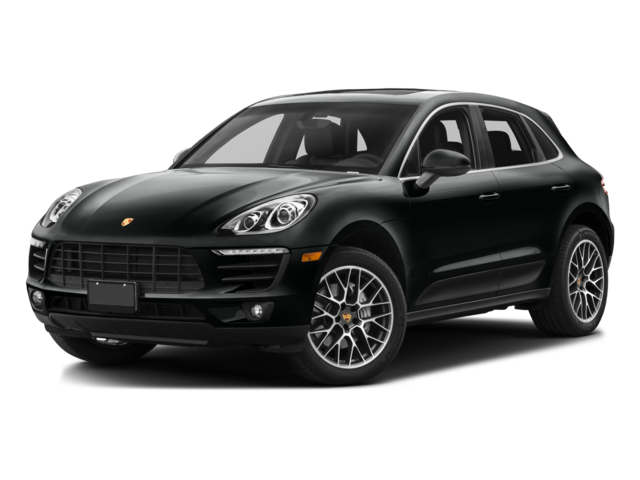
Generally, the Sportage strikes me as a quick crossover made for spirited driving in cities and suburbs, and for covering ground on highways. It is not tuned to take on a
Porsche Macan on a twisty road, which is just fine. For most people, most of the time, it should prove quite satisfying.
Kia still has work to do on the steering, though.


 For this review, our expert evaluated a Sportage SX Turbo with Pacific Blue paint and AWD. The only option was a set of carpeted floor mats, bringing the price to $35,025, including the $895 destination charge.Before we discuss the results of our evaluation of the redesigned 2017 Sportage, it is helpful to understand who bought the previous version of this SUV and what they liked most and least about it.