See answers to common EV questions, tax incentives, charging maps & more.
Explore EV
Photo: Christian Wardlaw
The Subaru Outback competes in the Midsize SUV market segment. According to data collected from verified new-vehicle buyers for the JD Power 2022 Automotive Performance, Execution and Layout (APEAL) Study, 61 percent of new Subaru Outback buyers are male (vs. 54 percent for the segment), and the median age of a new Outback buyer is 61 years (vs. 60).
As part of the APEAL Study, owners rated the Outback in 10 primary categories. Listed below in descending order, you'll find their preferences, from their most favorite thing about the vehicle to their least favorite:
In the 2022 APEAL Study, the Outback ranks sixth out of seven Midsize SUV models. Only the Ford Edge ranks lower.
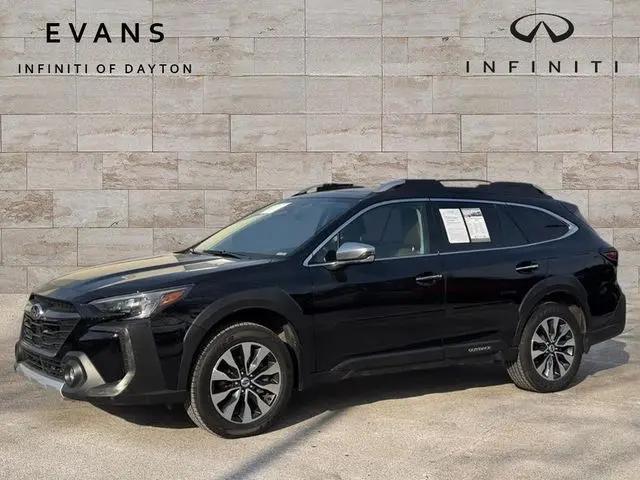
In the following sections, our independent expert analyzes a 2023 Subaru Outback Touring without any options. The test vehicle's price was $41,070, including the $1,225 destination charge.

Photo: Christian Wardlaw
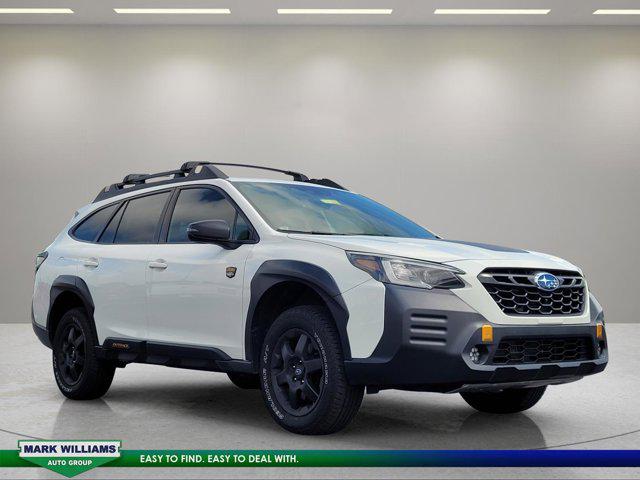
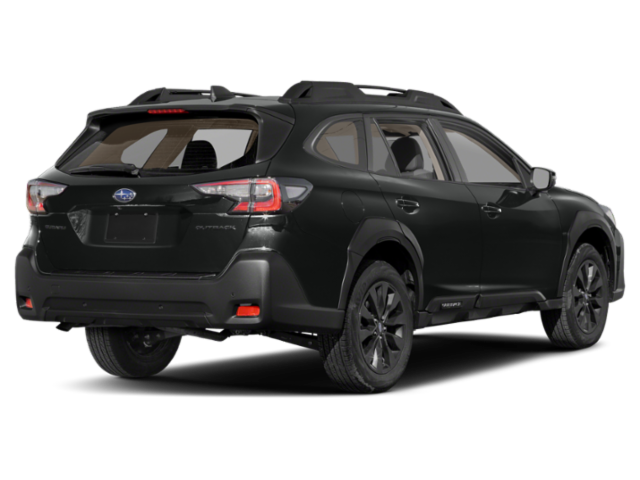
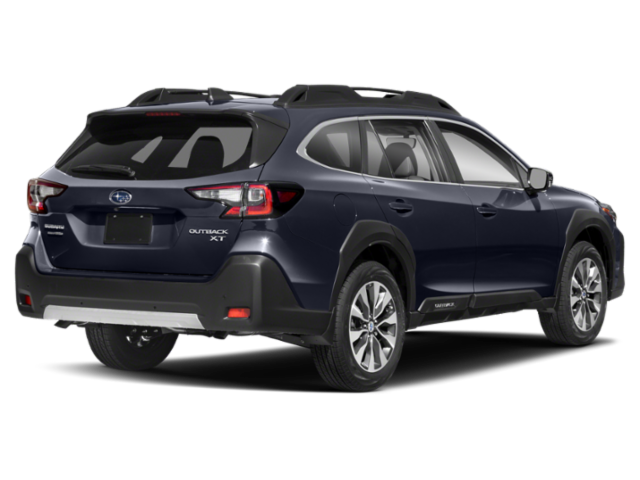
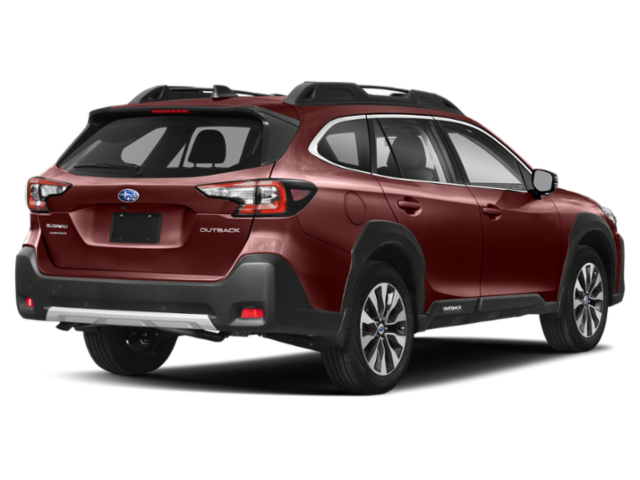
What follows is just my opinion, but Subaru has done itself no favors with the 2023 Outback's updated styling. Instead, the automaker appears to have hired a consulting firm called Tusk, Pincer, Cladding and Associates to recommend the design modifications. The result is less appealing while simultaneously detracting from what makes the Wilderness model so unique.
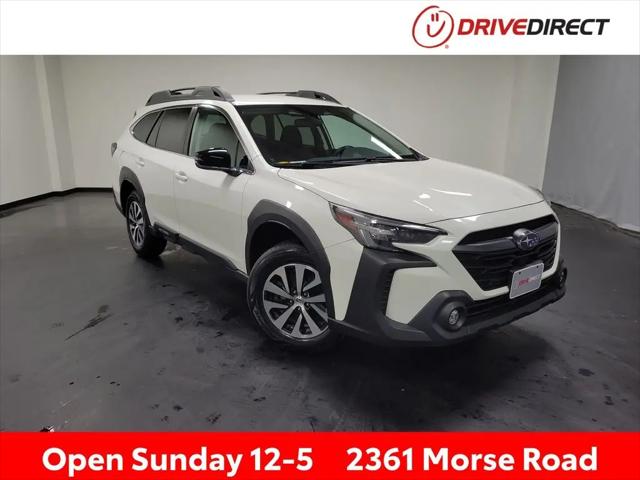
Here's a hint: You can hide the changes by choosing Crystal Black Silica or Magnetite Gray Metallic paint. Or, get the Onyx Edition, on which the bold updates look more natural because it has dark-finish wheels and blacked-out trim.
Speaking of the Onyx Edition, it is now available with the Outback's standard 182-horsepower 2.5-liter 4-cylinder engine in addition to the available 260-hp 2.4-liter turbo four that comes in the Outback XT. Yes, you'll give up the ability to accelerate out of your own way, but you'll also save yourself $5,100. And that's before factoring in any fuel savings over the ownership period.
Subaru reports that the 2023 Outback has the latest version of its acclaimed EyeSight ADAS. New software, two new cameras providing a wider field of view, and an electronic brake booster contribute to EyeSight's improved smoothness and broader operational capabilities, according to the automaker.
EyeSight equips every 2023 Outback with the following features:
Unfortunately, you cannot get a blind-spot warning or rear cross-traffic warning system on the base Outback. However, these critical safety features are an option with Premium trim and come standard on the Onyx Edition and all other Outbacks.
In addition, automatic emergency steering (AES) is new to EyeSight, but only when the Outback has the blind-spot warning system. Subaru says it can help a driver to avoid collisions with obstacles at speeds under 50 mph, independent of the adaptive cruise control and lane-keeping assistance systems. Basically, when the automatic braking system may not prevent an accident and the driver does not take evasive action, AES determines if there is room in the travel lane for the technology to take control and steer around an obstacle safely.
Other 2023 Outback safety features, depending on the trim, include:
As an upgrade, my Outback Touring test vehicle had a Wide-Angle Mono Camera. Subaru says this new-for-2023 feature can sooner recognize pedestrians and cyclists when the crossover enters an intersection at low speeds. I didn't purposely test that system, and during a week of heavy holiday travel in and around the Los Angeles area, it never activated. But I'm sure it provides an added layer of safety in congested situations.
Historically, the Outback's reverse automatic braking system, my driveway angle, and my street have been incompatible with each other. This time around, that remained true, the car slamming on the brakes as I reversed into the street at even a snail's pace. However, turning the system off is easy. Unfortunately, it remains off. What would be great is if you could set the system to automatically shut off at specific GPS coordinates or an address, similar to the nose-lift system in a Chevrolet Corvette.
Generally speaking, EyeSight is accurate. During the evaluation, it issued false alerts only when driving on a section of the freeway with construction scars. However, the new cameras may have made the technology too sensitive. For example, when the adaptive cruise control is active, the Outback brakes too abruptly when other motorists cut into the gap ahead, and the vehicle slows more than is preferred when rounding gentle curves in the highway.
I did not like the Outback's lane-centering assistance system, either. When active, there is an evident change in how the steering feels in your hands, and it is unpleasantly artificial. The tech introduces an on-center dead zone and relatively stiff off-center resistance to the driver's inputs. Furthermore, on a winding highway, the system barrages occupants with chimes each time the tech turns off in a curve and then turns back on after the curve. In addition, it could not always sense when I held the steering wheel below the center spokes.
While these behaviors are well-intentioned, they cause more aggravation than they might be worth. The problem is that the technology doesn't feel natural or transparent to the driver, and that's the key to encouraging people to use these safety features. Fortunately, a button on the steering wheel makes it easy to activate and deactivate the steering assistance.
I can report that the Outback's forward-collision warning and automatic emergency braking systems are effective. For example, while driving in dense urban traffic in Los Angeles, I checked the right mirror to see if I could safely change lanes when a driver ahead decided to make an illegal left turn. That motorist's decision brought traffic to a sudden and unexpected standstill, and the Outback's tech performed as designed and intended, preventing a collision.

Photo: Christian Wardlaw
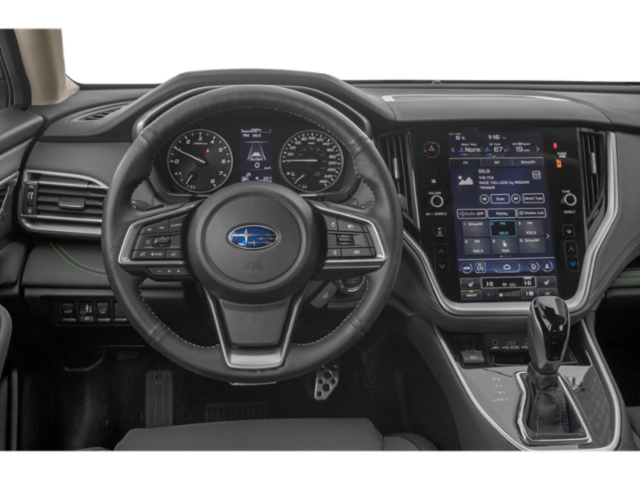
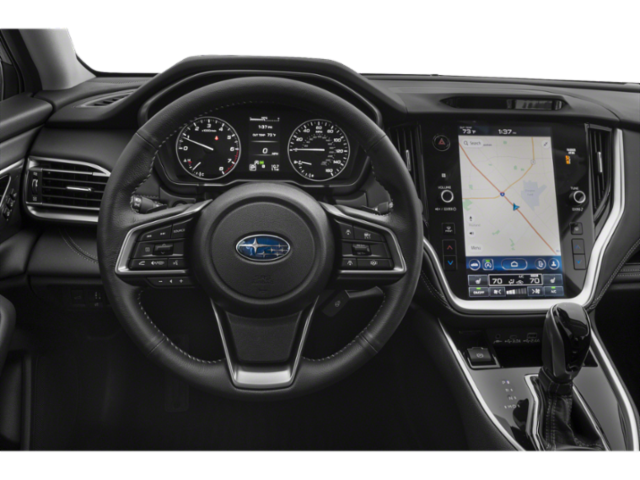
When the current-generation Outback debuted, Subaru added a new Starlink 11.6-inch touchscreen infotainment system to the model. Mounted in portrait instead of landscape orientation, the touchscreen offered a confusing user experience. For 2023, Subaru claims to have "improved the on-screen controls."
Without performing a back-to-back comparison, Starlink does seem better organized and more intuitive to use, though the graphics and use of color remain jarring to my eye. Subaru continues to provide volume and tuning knobs, temperature control buttons for the dual-zone automatic climate system, and fast access to the front and rear defrosters. The seat heating and ventilation controls remain part of the display screen, but they're relatively easy to find and use.
With base trim, the Outback's infotainment and climate system setup uses two 7-inch display screens. The top screen controls the infotainment system, while the bottom one handles climate functions. Highlights include:
All other Outbacks have an 11.6-inch display that blends all functionality into a single touchscreen. Highlights include:
Upgrades include a navigation system, a dealer-installed wireless smartphone charger, a 12-speaker Harman Kardon premium sound system, and, with Touring trim, a CD player. Yes! Do you know how many old CDs I have stashed in my garage?
Overall, the infotainment system is easy to understand and use, and the test vehicle's Harman Kardon premium audio system delivered decent sound quality. However, the key to satisfaction here is to use a paired Apple or Android device and skip the native voice-recognition system. It isn't very good.
For example, it could not understand "Chipotle." Requests for directions to the closest hospital instead produced a route to Sveadal, California. The system understood a request for directions to "Sixteen hundred Pennsylvania Avenue, Washington, D.C." as "Henshaw Avenue, Salton City, California." Requesting a specific SiriusXM station dumped me into the navigation menu.
So, umm, yeah. Use your phone.
Previously, I evaluated a 2022 Subaru Outback Wilderness, which elevates the vehicle's off-roading capability at the expense of its on-road handling. This time, the test vehicle had the Outback's standard 182-hp 2.5-liter 4-cylinder engine, suspension tuning, ride height, and ground clearance.
Though Subaru's agreeable continuously variable automatic transmission tries its hardest to make the best use of the available power, the Outback is slow. I do like the characteristic grumble of its boxer-type engine, though, a Subaru (and Porsche) signature sound that makes the Outback different from every other crossover SUV.
Theoretically, in addition to costing less, the standard engine should deliver better fuel economy. Over more than 600 miles of driving, my test vehicle averaged 25.6 mpg. That's what it got on the evaluation route, too, so I'm confident you'll achieve similar results in a mix of city and highway driving.
A short off-roading jaunt revealed the benefits of the Outback's generous 8.7 inches of ground clearance, standard all-wheel-drive system, and X-Mode traction and hill-assist technology. Of course, the Wilderness is more capable, but a standard Outback is no slouch in the outback.
The 2023 Outback exhibits an impressive blend of low-speed communication, higher-speed comfort, and trustworthy handling on pavement. Given the miles my family covered, including on the crumbling pavement of L.A.'s city streets and the notoriously bouncy 405 freeway on the city's west side, the Outback did a terrific job isolating occupants from the unpleasantness underneath its tire contact patches.

Photo: Christian Wardlaw
The Subaru Outback is flawed, but not irredeemably so. At its core, it is a safe, practical, comfortable, and useful vehicle ready for nearly any weather on any road. However, the devil is always in the details. Here, Subaru needs to refine the Outback's technology, increase its standard power rating, and stop resorting to outlandish design cues. You can see this in JD Power's data shared above, and a week spent piling miles on the crossover validates Outback owners' sentiments.
Christian Wardlaw is a veteran digital automotive journalist with over 25 years of experience in test-driving vehicles. In addition to JDPower.com, his work has appeared in numerous new- and used-car buying guides, newspapers, and automotive industry trade journals. Google him to learn more.
21 - 26
182 - 260
8 speed, CVT w/OD
Intercooled Turbo Regular Unleaded H-4, Regular Unleaded H-4
All Wheel Drive