
In electronics, fuses serve as safety mechanisms to prevent the overflow of current which can damage an electrical circuit. A fuse is typically a metal wire strip that melts or burns when too strong a current passes through it, thus interrupting the flow of electricity and breaking the circuit to a given device. A car has many such fuses to protect its various electrical components from high-voltage occurrences. These fuses are generally rated at 32 volts and are in one of two fuse boxes for most vehicles.
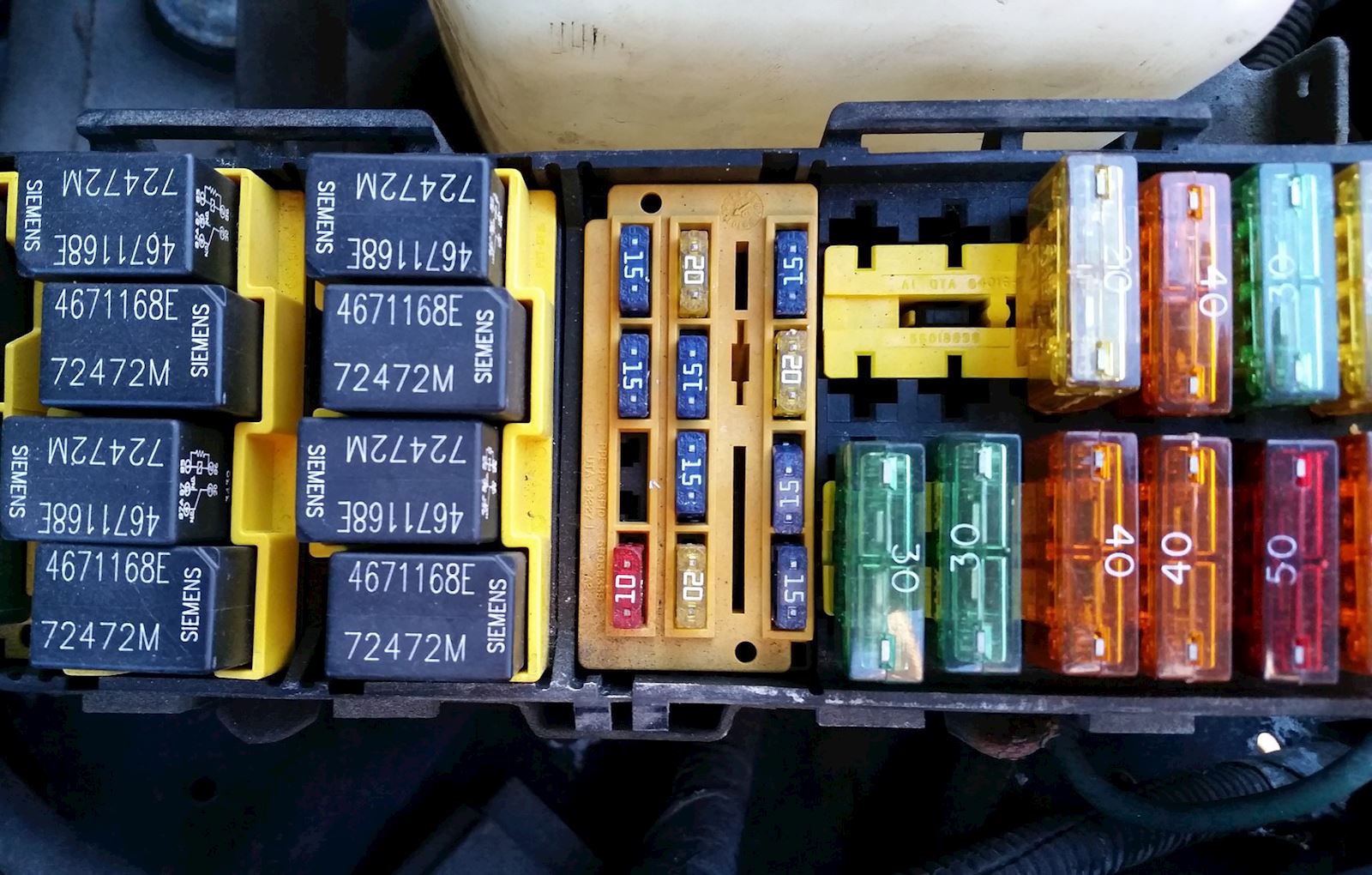
When a component in a vehicle stops working, the reason is most often a blown fuse due to an overabundance of electrical current. This could apply to everyday driver-interfaced devices like a car stereo or interior lighting but can also include more sophisticated systems powered by electricity: powertrain electronics, chassis electronics, safety features, driver assistance technologies, and passenger comfort amenities. When a failure occurs, the faulty fuse must be identified and replaced. New fuses are available online and at stores with automotive departments.
A blown fuse signals a short circuit. This occurs when an electrical component draws a stronger current than it is designed to handle due to the device malfunctioning. Defective switches and faulty wiring are common causes for fuses blowing, but any kind of mechanical issue with a motor or an electrically motivated moving part can be a culprit. For instance, a windshield wiper stuck under ice can force the motor to short out. In this case, the blown fuse prevents the motor from overworking and burning itself out, which would be a much more costly replacement than the fuse.
Common signs of a blown fuse are malfunctioning windshield wipers, power outlets, power door locks, heater fans, and power windows. Other indicators include faulty interior lighting, taillights, and headlights. Beyond experiencing defective equipment, you may notice a burning smell when the fuse blows. Furthermore, if the vehicle senses a blown fuse, it may display a warning message on the dashboard.
A blown fuse can not only lead to inconvenience but also security issues. Resolving these issues requires some investigation based on the symptoms. For normal failures, such as lights, power seats, or air-conditioning, checking the fuse is the logical first step to resolving the problem.
However, for a vehicle’s more complex engineering systems, the recommendation is for the owner to investigate the reason for the blown fuse as it might be indicative of a larger issue that could continue to grow worse, even after the fuse alone has been replaced. In this circumstance, it is advisable to consult a certified mechanic or dealer service department.
Once you suspect a blown fuse, turn off the vehicle and locate the main fuse box, usually located in the driver’s side footwell underneath the dashboard. There may also be a second fuse box under the hood. Consult your owner’s manual for the exact location of each.
In most cases, a diagram that shows you the position and the name of each fuse can be found inside the fuse box. This helps you locate the fuse that is related to the failed vehicle component. But pay close attention to the diagram, as a typical vehicle may have over 30 fuses, and higher-end cars with more electronics may have two to three times that many.
Once you identify the correct fuse, pull it out (ideally with fuse pullers/pliers) and visually inspect it. The blown fuse will be apparent because the wire element within will have melted or burned from the higher electrical current. You can also leverage diagnostic tools like a test light or a multimeter to identify the dead fuse without having to pull it out. Both devices are affordable and easy to use.
Once you have identified the blown fuse, consult your owner’s manual to learn the type of fuse needed. You want to obtain a new fuse that is identical to the one you’re replacing. Installing an incorrect fuse can harm the vehicle’s electrical system. In addition to securing the correct type of fuse, it must have the same voltage because replacing a fuse with a different voltage can cause damage to the component the fuse is supposed to be protecting.
To replace a blown fuse, start by turning the vehicle off and opening the fuse box. Then, remove the faulty fuse and insert the new fuse in its place. To confirm the new fuse is in all the way, compare it to the surrounding fuses to see that it is properly set. Then return the fuse box panel to its normal state and turn the vehicle on. Next, test the affected component to see if it works with the new fuse in place. If the component is now functional then it means that the old fuse was the cause of the issue and the replacement was successful. However, if the issue still occurs, then it is time to contact an automotive professional to properly diagnose the issue.
Fortunately, fuse replacement is inexpensive and can be done as a DIY project. There are typically five different fuses used in vehicles: blade fuses, mini blade fuses, maxi fuses, glass tube fuses, and high current or mega fuses. Bussman Blade fuses ranging from 3 amps to 80 amps can be acquired for around $5 to $6 while mini blade, maxi blade, and glass tube fuses are priced similarly. A high-current or mega fuse is typically priced slightly higher than the other fuses and may set you back $10 or more. To assist in the replacement process, a roughly $5 glass blade fuse puller can be leveraged to extricate and install fuses. Acquiring small pliers and other tools may be necessary to conduct the replacement.
Given the extent of electronics in cars, a blown fuse can interrupt the capability of many mechanisms from the power seats to the stereo to even crucial safety features. While a blown fuse can have a significant impact on your vehicle’s functionality, it is likely not a high-cost repair. In fact, it is an auto repair you can execute yourself without having to pay a high hourly mechanic rate. If you sense a blown fuse, identify which fuse, consult your owner’s manual for replacement requirements, and install a new one. The sooner it is resolved and confirmed to not be a symptom of a larger issue, the better.


The Ford Transit is the automaker’s full-size cargo and passenger van offering, designed to serve a wide range of commercial and lifestyle applications. With 37 available configurations, the platform ...See More
Read the Full Article
The Chevrolet Tahoe is a full-size, three-row SUV with a standard V8 engine and available diesel power. Built on the same platform as the Chevrolet Silverado 1500 pickup, the Tahoe benefits from its ...See More
Read the Full Article
It is the end of the line for the Ford Escape. After 25 years as a fixture of Ford’s lineup, 2026 will be the compact SUV’s last model year.
Read the Full Article
The Colorado is Chevrolet’s midsize pickup. It ranks among the segment’s most capable trucks for payload and towing, and can be configured for both work and off-road adventures. For 2026, the ...See More
Read the Full Article