
Take a quick look at any tire, and you’ll notice a series of letters and numbers around the sidewall. These might seem like random gibberish, but they tell you lots of helpful information about your tires.

So, what do all these codes mean? Here’s everything you need to know to read a tire sidewall.
Most US tires these days are P-Metric. It was introduced by a group of US manufacturers in 1977 and is now widely used throughout the country.
It’s easy to tell if your tire is P-Metric. The first character in the code will be a P!
The first character will always tell you what class of tire you’re using:
There will be three digits following the initial letter (if any). These indicate the width of the tire in millimeters. For example, if the tire says “220,” it measures 220mm from sidewall to sidewall.
After the slash, there’s a two-digit number: the tire’s aspect ratio, or the ratio of the sidewall height to the tire width. So if the two-digit number is “70”, the sidewall height is 70% of the width.
Next, there will be either an “R” or a “D.” The R is short for radial construction, which means that the plies run perpendicular to the tread. The D is short for diagonal bias construction, which means the plies run at a narrower angle to the tire tread.
The last number in the tire code is the diameter. On P-Metric and light truck tires, this diameter is documented in inches, not millimeters. If the last two digits are “20,” the tire is designed for 20-inch wheels.
High-flotation tires are a particular case. If you’re unfamiliar with these tires, they’re wide and flat tires manufacturers typically use on off-road vehicles and performance cars.
The first two digits in these codes display the tire diameter in inches. If the number is “36”, the tire has a total diameter of 36 inches.
Following this, you’ll see the tire width measured from sidewall to sidewall. This number can be three or four digits with a decimal point in the middle.
Next, there will be an “R” or a “D.” These have the same meaning as the corresponding letters on other tires; R for radial tires and D for diagonal bias. The last two digits give the tire diameter in inches.
Some high flotation tires are also light truck tires. In this case, the load range will be listed after the diameter, typically, the letter C, D, or E.
Depending on what the manufacturer deems important, different tires will have various information markings. So far, we’ve talked about the main tire code – the big, bold letters you can read from several feet away. But what about the smaller letters and numbers all around the sidewall?
That said, there are certain things you should look out for.
In addition to the size data, you’ll also see important information about the maximum pressure and load limit. These are listed in small numbers near where the tire meets the rim.
Maximum pressure is the maximum air pressure listed in PSI. Standard load tires typically have a full inflation level of 36 PSI, while extra load tires usually have a maximum pressure of 42 PSI.
The maximum weight the tire can carry is the load limit, assuming it’s inflated to full pressure.
The load index is a little bit different from the load limit. The load limit is a single number and tells you only what the tire can carry at full pressure. On the other hand, the load index lets you know what your tire can carry at any pressure.
The load index will be a number from 0 to 150. To interpret, you’ll need to consult a load index chart. This document will often be sorted into several columns with different inflation levels and limits.
The speed rating tells you the maximum speed the tire can safely travel. This rating works by a letter system, which you can reference in a chart. Keep in mind - manufacturers test these numbers in a laboratory under ideal conditions, and they usually exceed driving speeds that would be safe on a public road.
The DOT also requires manufacturers to include critical safety data on their tires. After the letters “DOT,” you’ll see codes telling you the manufacturer, manufacturing plant, and manufacture date.
Why is this so important? If a manufacturer issues a safety recall, you can use this information to determine whether your tires are affected.
Following this simple guide, you can easily decipher all the essential information about your tires. You’ll know how to inflate them, how much they can hold, and other valuable data. And when you need a replacement, it will be easy to order the correct size.


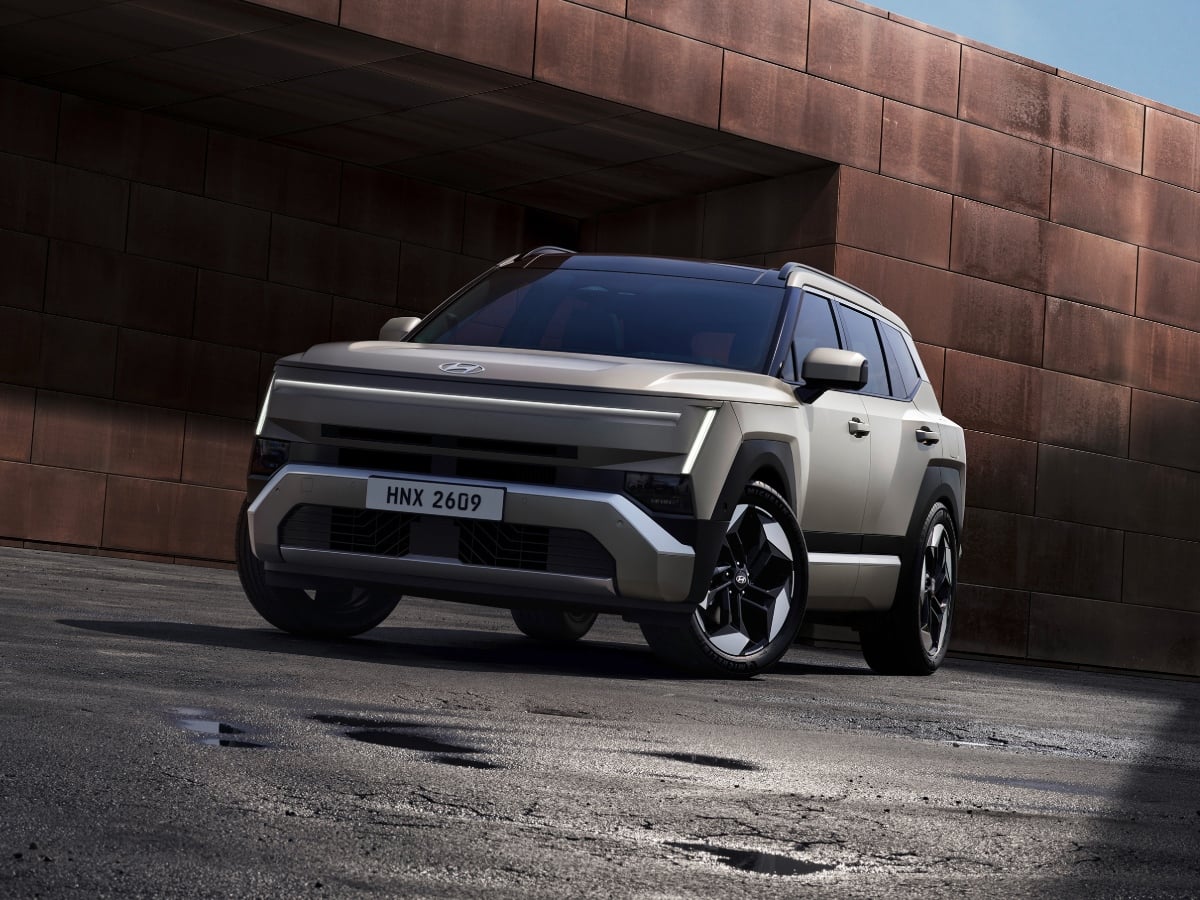
With a purposeful new design and some trail-ready upgrades, the 2027 Hyundai Tucson is pushing the brand's best-selling crossover SUV into more aggressive territory.
Read the Full Article
For more than 25 years, the BMW X5 has helped to define the luxury SUV segment. Now, the redesigned fifth-generation 2027 BMW X5 arrives with the automaker’s Neue Klasse styling, a roomier interior, ...See More
Read the Full Article
One of Lexus's most popular models, the NX crossover SUV is also one of the most affordable in the company’s lineup. The 2027 Lexus NX transitions to hybrid-only powertrains, and gets revised ...See More
Read the Full Article
The new 2027 BMW i3 boasts an estimated range of up to 440 miles, 400-kilowatt DC fast charging capability, bidirectional charging to a home or the grid, and next-generation technology.
Read the Full Article