
If you drive a truck for work or pleasure, you’re well aware of how much fuel they burn. But if you need to haul a heavy load or pull a trailer, a gas-guzzling pickup may be your only option.
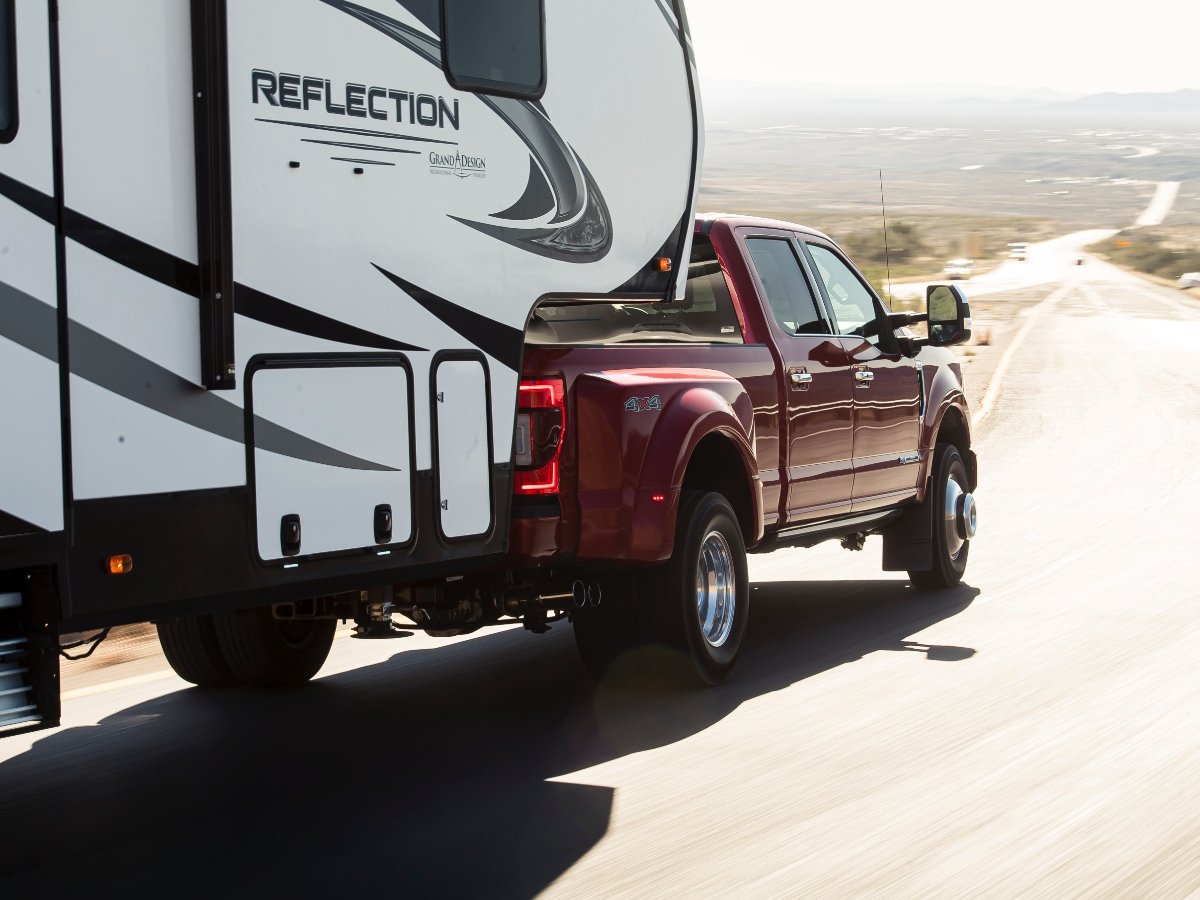
So, how do you boost your truck’s gas mileage? Read ahead for some tips.
A common cause of poor mileage is inconsistent speed. Put simply - it takes more gas to accelerate than it does to maintain the same speed.
Unless you’re focused solely on speed while driving, you’ll invariably speed up and slow down, getting fewer miles per gallon (MPG). To avoid this, use cruise control on the highway, so you maintain a consistent speed.
Almost by definition, idling is a waste of gas. The less you idle, the better. That said, there’s a rule of thumb for stoplights: one minute of idling burns about as much fuel as starting the engine. If it’s a short light, keep your engine running, and you’ll probably burn less.
On a similar note, avoid drive-thrus when possible. Park your truck and pick up your food inside when you can.
If you have multiple errands to run, do them all in one trip to save gas. While you’re at it, plan your route to be as efficient as possible. Most modern GPS apps (like Waze) can find the fastest route, which is not necessarily the shortest. This helps you avoid wasting fuel in stop-and-go traffic.
The less weight you’re hauling or towing, the less gas you’ll burn. Look at what’s in your truck bed, and ask if that rusty toolbox or bag of cement really needs to go everywhere with you. The same principle applies to any gear you’re hauling in a Jobsite trailer.
Your oil pump efficiency has a major impact on your gas mileage. Thick oil increases the load on the pump, directly impacting how many MPG you get. This is particularly true in the winter months when oil gets thicker in the cold.
One solution is to use a lighter oil, particularly in winter. Always follow your manufacturer’s recommendations, though. Also, remember that heavier loads require thicker oil. Whether you’re hauling dry brush or towing a mobile home makes a big difference in what oil will be acceptable.
Even if you can’t use lighter oil, regular oil changes will keep your oil from getting excessively thick. Have these performed every 3,000 to 5,000 miles, just before winter, or whenever your manufacturer recommends.
Tire pressure, brake quality, and the state of your transmission all impact your fuel economy. The better-maintained your truck is, the more efficiently it will run. Wheel alignment and proper tire rotation are also crucial to maintaining peak efficiency.
Because trucks are so fuel-inefficient, many drivers outfit their rigs with cold air intakes, modified computers, vortex systems, and free flow exhausts. These modifications can indeed improve your gas mileage. However, the benefits may be negligible at best.
Now, if your only concern is saving the environment, you can skip the rest of this section. Whether or not you want to invest in a particular upgrade will be a personal ethical decision, and that’s beyond our purview. Instead, let’s look at the cost benefits of modifying your pickup.
And because every modification and each truck is different, there’s no single yes or no answer. Instead, you need to do the math. Here’s how:
Once you know how long it will take for a modification to pay for itself, deciding whether to invest in it is easy. For our example, you’d ask yourself if you’re going to drive that truck for another five years. If so, you’d want to install the new exhaust. If not, the exhaust would cost you more than it saved.
Not every one of these tips will apply to every driver. But most of them will be of help to most people, so do whatever works for you. Even if you only shave off a few MPG, you’ll still be better off!
Want to learn more? Read our other articles to find anything you want to know about your car or truck!


The Ford Transit is the automaker’s full-size cargo and passenger van offering, designed to serve a wide range of commercial and lifestyle applications. With 37 available configurations, the platform ...See More
Read the Full Article
The Chevrolet Tahoe is a full-size, three-row SUV with a standard V8 engine and available diesel power. Built on the same platform as the Chevrolet Silverado 1500 pickup, the Tahoe benefits from its ...See More
Read the Full Article
It is the end of the line for the Ford Escape. After 25 years as a fixture of Ford’s lineup, 2026 will be the compact SUV’s last model year.
Read the Full Article
The Colorado is Chevrolet’s midsize pickup. It ranks among the segment’s most capable trucks for payload and towing, and can be configured for both work and off-road adventures. For 2026, the ...See More
Read the Full Article