
Some of the main points of consumer resistance against hybrid vehicles include perceptions that the costly high-voltage battery packs in these vehicles are unreliable and prone to frequent or premature failure. However, the truth is that all manufacturers of hybrid vehicles in the US domestic market are legally required to warrant high-voltage hybrid battery packs for at least eight years or 100,000 miles of use. However, ten-year warranty periods of ten years or 150,000 miles of service are now the norm on some Japanese-made hybrids, one example being late-model Toyota Prius vehicles.

Moreover, manufacturers in the U.S. domestic market are legally obliged to transfer and honor the balance of hybrid battery warranties. This requirement means that if you buy, for instance, a three-year-old hybrid vehicle with 40,000 miles on the odometer, the dealer must transfer the balance of the original battery warranty to you. It also means that the dealer must honor the remaining warranty balance if the battery fails within the remaining time period.
Sadly, nothing in this world is perfect, which means that high-voltage hybrid battery packs can and do fail for various reasons. Thus, to understand what you can do to extend the life of your hybrid vehicle’s high-voltage battery pack, we need to discuss what hybrid battery packs are, how they work, and how they sometimes fail.
In simple terms, any battery pack consists of low-voltage battery cells connected in series to form a larger and more powerful battery. While some specific details regarding the design construction and chemistry used in individual battery cells vary between different manufacturers and/or models, all hybrid battery packs follow the same general pattern, which we will discuss below using a typical Toyota hybrid battery pack as an example.
The battery packs in Prius models typically consist of 128* cells, each of which has a nominal voltage of 1.2 volts. Constructing the battery pack consists of six battery cells connected in series, which means that one cell’s negative pole is connected to the next cell’s positive pole in the series to create a battery module with a nominal voltage of 7.2 volts. Continuing this pattern, the modules are also connected in series to create a battery pack with a nominal voltage of 201.6 volts.
*Note that with some battery chemistries, such as those based on nickel-metal hydride alloys, some hybrid battery packs in some Prius models can contain as many as 228 cells.
In Prius models, the battery pack can typically produce up to 20 kW of power when it is 50% discharged. However, during normal operation of the vehicle, the battery's electronic management system will maintain the battery's state of charge in a range of between about 90% of its maximum capacity at the upper limit and about 30% of its capacity at the lower limit.
The technical details of how the battery pack maintains this level of charge (also known as the battery's SOC (State of Charge)) fall outside this article’s scope, but suffice it to say that the bulk of the battery charging process occurs during regenerative braking. This process is initiated when the driver removes pressure from the accelerator pedal. This action causes the motor/generator in the drivetrain to stop supplying motive power to the vehicle and start functioning as a generator to replace lost battery capacity. The magnetic forces that the charging process creates are powerful enough to exert a strong braking force on the vehicle, hence the term "regenerative braking.”
From the perspective of an average owner of a hybrid vehicle, the two most important factors that determine the longevity, durability, and performance of a hybrid battery pack are the battery's SOC (State of Charge) and the battery’s SOH (State of Health), but what do these terms mean, exactly?
State of Charge is simply an expression of how much electrical energy is stored in the battery relative to its nominal voltage, which in the case of a typical Prius model is 201.6 volts. Note that the relationship between a battery's measured voltage and its ability to provide useful work is not necessarily linear. It’s merely technical language that means that a battery that is, say, 70% discharged, may provide up to about 40% (or more, depending on operating conditions and the level of power demand) of the power it would provide if it were charged to 100% of its maximum capacity.
While a hybrid battery’s SOC is of some importance in terms of how well a battery performs over the short term, a battery’s State of Health is vastly more important for how well (or otherwise) a hybrid battery pack performs over the medium to long-term and here’s why:
In any electrical system, electrical energy will always flow from a high potential to a low (or lower) potential. Basically, this means that if two batteries are connected, and one battery runs down for any reason, the electrical energy from the battery with the highest charge will flow towards the battery with the lowest charge in an attempt to satisfy several laws of physics, which we need not delve into here.
In practice, then, a hybrid battery pack can only perform as intended if all of the cells and modules in the battery pack share both charging and discharging loads equally. But since hybrid battery packs contain dozens of individual cells, any failure, defect, and/or malfunction in any cell has a direct and immediate bearing on how well the cells on either side of the defective cell or module performs.
Therefore, to protect the power electronics and other control systems on the vehicle, a dedicated battery control module monitors each cell and module in the battery pack individually. Suppose this control module detects one cell or module whose nominal voltage, resistance, temperature, or other monitored parameter deviates from those of all other cells or modules by more than a maximum allowable margin. In that case, it will limit the entire battery pack’s charging/discharging capability to that of the damaged cell or module as a protective measure.
There are many possible reasons why any individual cell or module can fail. In practice, though, the most common causes include:
Regardless of the actual causes of differences in monitored parameters, the effects of such differences can vary from slight, to barely noticeable, to dramatic, in the sense that one or more control modules could immobilize the vehicle as a safety precaution.
Hybrid battery packs are inherently dangerous to work on, and therefore, these batteries are not user-serviceable. Nonetheless, there is one essential thing you can do to protect your vehicle's battery that does not involve working on it yourself.
The battery monitoring system sets trouble codes and illuminates warning lights on the vehicle’s dashboard if it detects any one or more of a large variety of possible issues, defects, malfunctions, or failures in the high-voltage battery pack and its related systems. These kinds of issues typically include:
In some cases, hybrid battery packs can be repaired by removing and replacing damaged battery cells and/or battery modules. However, this is a highly specialized field of repair that should only be performed by suitably qualified personnel who have access to OEM-level service information and OEM-approved testing, diagnostic, and charging equipment.
In practice, though, dealers will typically replace a high-voltage battery pack that shows electrical imbalances under warranty conditions instead of repairing it, but this is not always the case. Nonetheless, if a warranty does not cover a high-voltage battery pack, having the battery inspected regularly and performing required repairs on a timely basis offers owners of hybrid vehicles an extremely cost-effective method of restoring the performance of a “lazy” battery.
In most cases, the combination of semi-annual battery inspections and OEM-approved battery servicing procedures performed (if required) by a suitably qualified service provider can extend the useful life of a hybrid battery pack by several years.



The 2027 Civic Type R goes on sale in October 2026, and it starts at $49,990, including the $1,295 destination charge.
Read the Full Article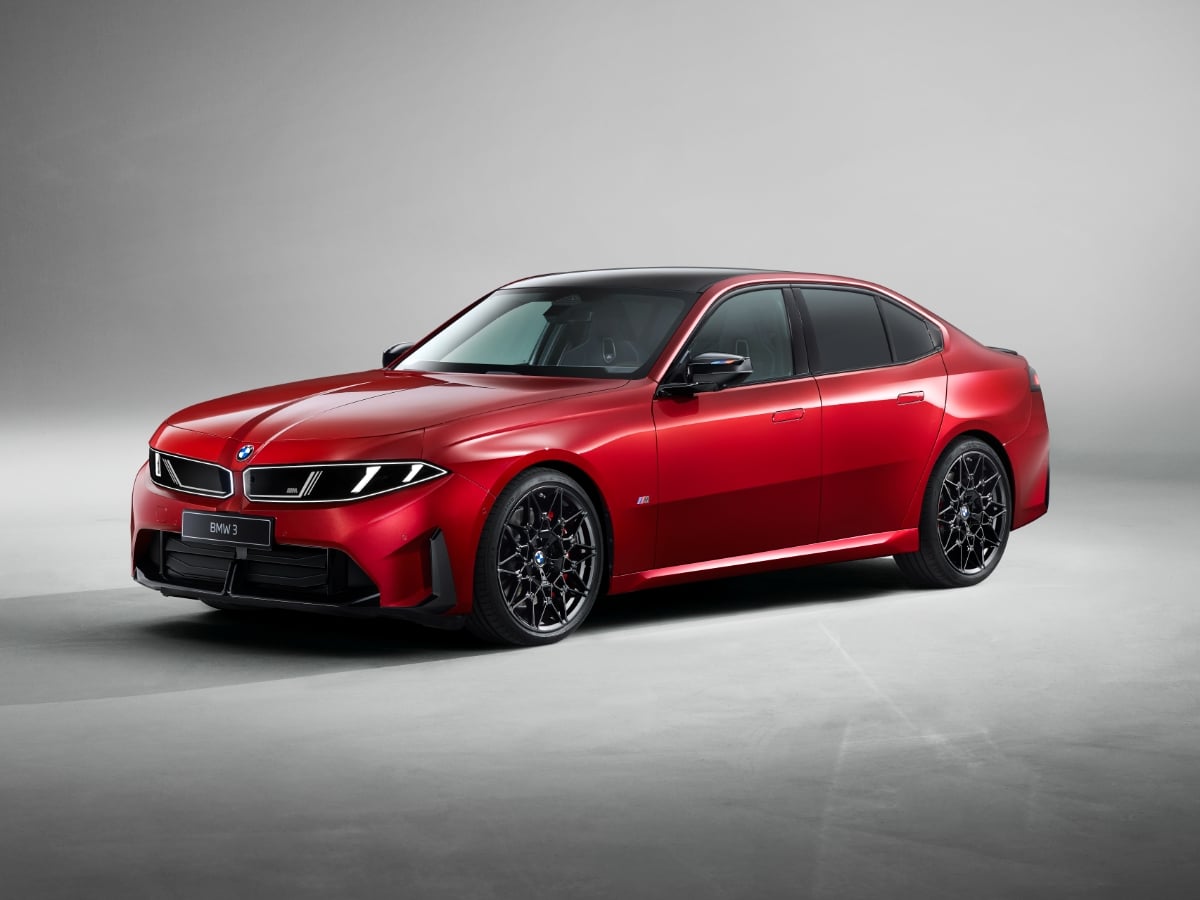
Part of BMW’s Neue Klasse (new class) rollout of redesigned models, the 2027 BMW 3 Series is all-new and goes on sale in the first quarter of 2027.
Read the Full Article
Updates to the 2027 Honda Passport TrailSport include a reworked suspension, improved steering, subtle styling enhancements, and added standard equipment.
Read the Full Article
The midsize 2027 Mercedes GLE remains available in original and spicy Coupe recipes, now with standard 4Matic all-wheel drive (AWD), MBUX Superscreen technology, and a panoramic glass sunroof for ...See More
Read the Full Article