18 - 24
21 - 32
255 - 671
9 speed, Automatic w/OD
Intercooled Turbo Gas/Electric I-4
All Wheel Drive, Rear Wheel Drive
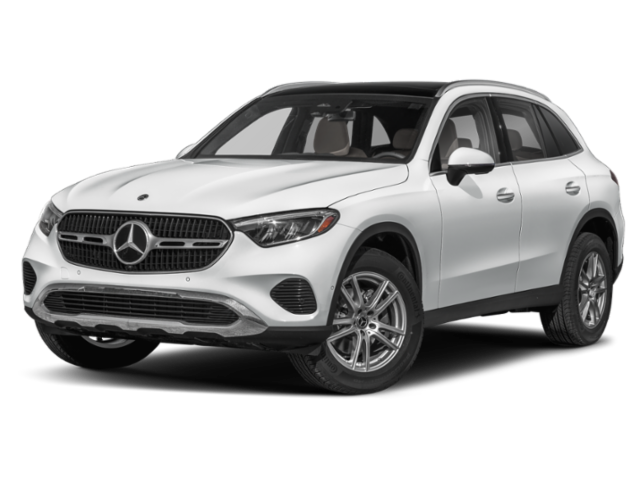
The compact five-passenger GLC SUV has been part of the Mercedes-Benz lineup for almost 10 years. A few years ago, the German luxury brand rolled out the second generation of this popular model. The GLC is one of the top-selling Mercedes-Benz models in America, and the automaker hopes to build on that success with some significant updates for the 2025 model year. Most notable is the introduction of the GLC 350e plug-in hybrid (PHEV), which boasts one of the longest electric ranges of any PHEV vehicle.

Photo: Perry Stern
While the basic design of the Mercedes-Benz GLC remains unchanged for the 2025 model year, several updates are worth calling out. For 2025, the GLC gets:
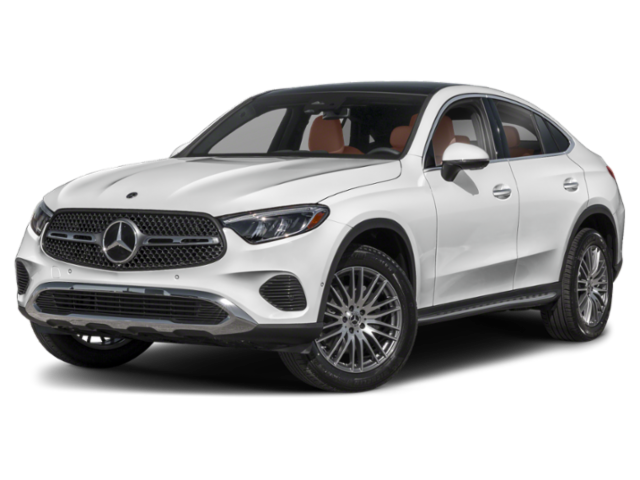
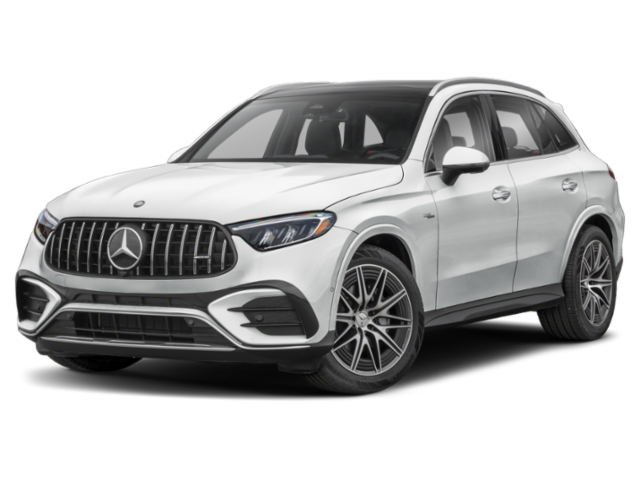
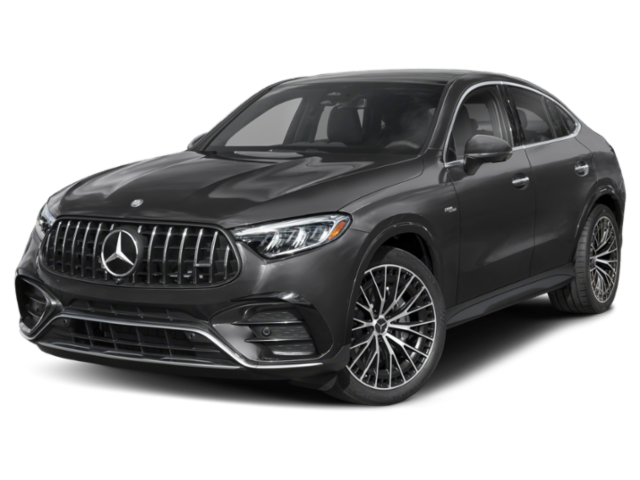
Mercedes-Benz offers the 2025 GLC SUV as the 300, 350e, AMG 43, and AMG 63 S E Performance. The GLC 300 is available with rear-wheel drive, while all other trims come standard with 4Matic all-wheel drive (AWD). Prices range from $50,000 to around $87,000. Mercedes-Benz also offers the GLC Coupe, but the new 350e PHEV is exclusive to the standard SUV.
JD Power previously published reviews of the 2023 Mercedes-Benz GLC and 2024 Mercedes-Benz GLC Coupe. This review focuses on the GLC's new plug-in hybrid powertrain and how it potentially impacts the GLC’s overall consumer appeal.
For this 2025 GLC SUV review, Mercedes-Benz provided a test vehicle equipped with 350e trim and the following significant options:
The test vehicle's price was $68,650, including the $1,150 destination charge to ship the SUV from the Mercedes-Benz assembly plant in Bremen, Germany, to your local dealership.

Photo: Perry Stern
Mercedes-Benz has several PHEV models in its lineup, but the new GLC 350e 4Matic SUV stands out with its ability to drive further on electric power than any other PHEV the brand offers.
Powering the GLC 350e is a turbocharged 2.0-liter four-cylinder engine that puts out 201 horsepower along with a 134-hp permanently excited synchronous electric motor. The hybrid power plant's total output is a healthy 313 hp and 406 pound-feet of torque. The electric motor puts out 325 pound-feet of instant torque for quick throttle response, which helps move this compact premium SUV to 60 mph in about 6.2 seconds—a believable figure based on my experience in the GLC.
The electric motor gets power from a 23.3-kilowatt-hour (kWh) battery, which provides enough juice for the GLC 350e to travel an EPA-estimated 54 miles on electric power only. Once the battery was depleted, I charged the GLC with my home EV charger. It took about three hours to get back to a full charge. Drivers can also plug into a DC fast charger, which reduces charging time to about 30 minutes.
According to the Environmental Protection Agency (EPA), the GLC 350e delivers 64 MPGe on electricity and gas. When there's no charge left in the battery, the GLC 350e reverts to the gas engine, which gets an EPA-estimated 25 mpg in combined driving.
When I first got into the GLC 350e, I was surprised to find the battery completely depleted. While that would be an issue with an electric vehicle (EV), it's not a problem for a PHEV. There was no change in power output even without a charged battery, and I quickly accelerated onto I-94, heading west from the Detroit airport toward Dexter, Michigan.
The GLC 350e cruises easily at 70 mph, and the small Mercedes SUV provides a quiet, comfortable ride. Like a typical hybrid, the gas engine shuts off when its power isn't needed, like when coasting or stopped in traffic. The transition is seamless, and the engine is quiet enough that the tachometer is often the only indicator that the engine isn't running.
Once I left the interstate, I headed for my favorite backroads. With its small size, 4Matic AWD, and excellent steering response, the GLC feels agile, delivering commendable handling and an enjoyable driving experience. Performance is further improved in Sport mode, which increases throttle response and changes the shift pattern to keep the revs higher for quicker performance. But there's another benefit.
While it provides excellent power, the engine charges the battery in the process, so after 10 miles of spirited driving, the battery had charged enough to provide five miles of electric-only driving. This is certainly not the most fuel-efficient way to charge the battery, but it is a lot of fun.
After charging the GLC on my home charger, the trip computer indicated 63 miles of EV range available, and I headed out of town in Electric mode. Running exclusively on the 134-hp electric motor, the GLC delivers adequate power for cruising around town and has no problem getting up to highway speed. Mercedes limits top speed to 87 mph in Electric mode, but that was not an issue. While the GLC will remain in Electric mode until you deplete the battery, flooring the throttle will engage the gas engine to deliver full power as needed.
In a mix of highway and city driving, the battery ran out of juice at 57 miles—slightly further than the EPA estimate of 54 miles. During my electric drive, the trip computer showed 2.1 miles/kWh, translating to just over 70 MPGe—slightly better than the EPA estimate of 64 MPGe. Conversely, when driving the GLC with a depleted battery, I saw 24 mpg—similar to the EPA rating of 25 mpg.

Photo: Perry Stern
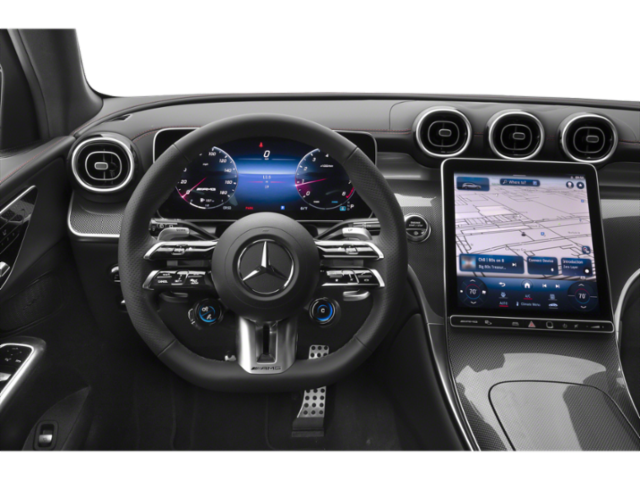
While adding the plug-in hybrid variant is one of the most significant updates for the 2025 GLC, Mercedes-Benz made other noteworthy changes to the small SUV for the new model year. That includes the third generation of MBUX, the brand's advanced infotainment system.
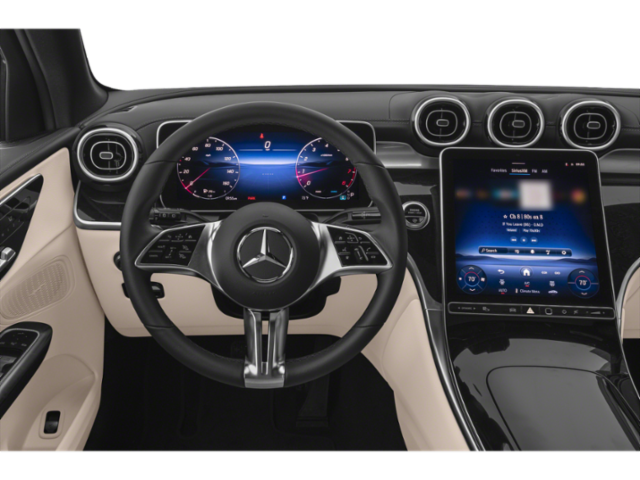
Displayed on a nicely integrated 11.9-inch vertical touchscreen display, the infotainment system features the navigation map as a background on the Home screen. Recently used applications appear overlaid on the map for quick and easy access, while shortcuts remain static for vehicle settings and communications. Climate functions appear at the bottom of the screen with large controls that make it simple to use while driving. Apple CarPlay and Android Auto are standard with the convenience of a wireless connection.
The updated infotainment system also allows the driver to set up automated routines. For example, the system can change the ambient lighting and turn on the heated seats when it detects the cabin temperature is below 60 degrees. Routines are set up by choosing a condition like day of the week, temperature, or time of day, then selecting a set of actions to take when that condition is met.
My test vehicle included the optional Driver Assistance package, which adds features like adaptive cruise control, automatic lane-change assistance, lane-centering assistance, and extended restart in stop-and-go traffic. While these systems provide assistance, the GLC does not have hands-free driving. The SUV will warn the driver if the capacitive steering wheel does not detect a hand on it.
Driving on I-94 heading west from the Detroit airport, I set the adaptive cruise control to 70 mph. Dashboard indicators showed a green steering wheel flanked by "A" on either side to indicate automatic lane-change assistance was active. As I approached a slower vehicle, the system automatically activated the left turn signal and smoothly steered the GLC to the left lane, resuming the original set speed. Once I passed the slower car, I hit the right turn signal, and the car moved back to the right lane.
As it happened, there was construction and a lane closure on my route, so traffic slowed quickly to a stop. The GLC reduced speed smoothly, eventually stopping behind the car in front. When the car ahead moved, I didn't have to take any action; the GLC began moving with traffic on its own. With the new extended restart, you can stop the car for up to 30 seconds and automatically get going again—a very convenient and stress-reducing feature for stop-and-go traffic.

Photo: Perry Stern
Already one of the most popular models in the Mercedes-Benz lineup, adding a plug-in hybrid powertrain should add to the compact crossover's appeal. With a premium cabin, a range of advanced, high-tech features, and a PHEV powertrain, the new 2025 Mercedes-Benz GLC 350e delivers the driving dynamics and efficiency of an electric luxury compact SUV without the typical range anxiety.
There are some quality choices for shoppers looking to get a luxury crossover with a plug-in hybrid powertrain, including the Alfa Romeo Tonale, Lexus NX Hybrid, and Volvo XC60 Recharge. However, with the luxury expected of a Mercedes and an electric driving range that beats all the competition, the Mercedes-Benz GLC 350e is one to remember.
Perry Stern has worked in the automotive industry for over 30 years and has always been a car enthusiast. Driving almost every new car on the market, Perry has written for multiple publications in addition to his work for JDPower.com. Recently relocated to southeast Michigan, Perry is still crazy about cars, especially his 2006 Mazda MX-5 Miata.