See answers to common EV questions, tax incentives, charging maps & more.
Explore EV19
25 - 27
291
8 speed, Automatic w/OD
Regular Unleaded V-6
All Wheel Drive, Front Wheel Drive
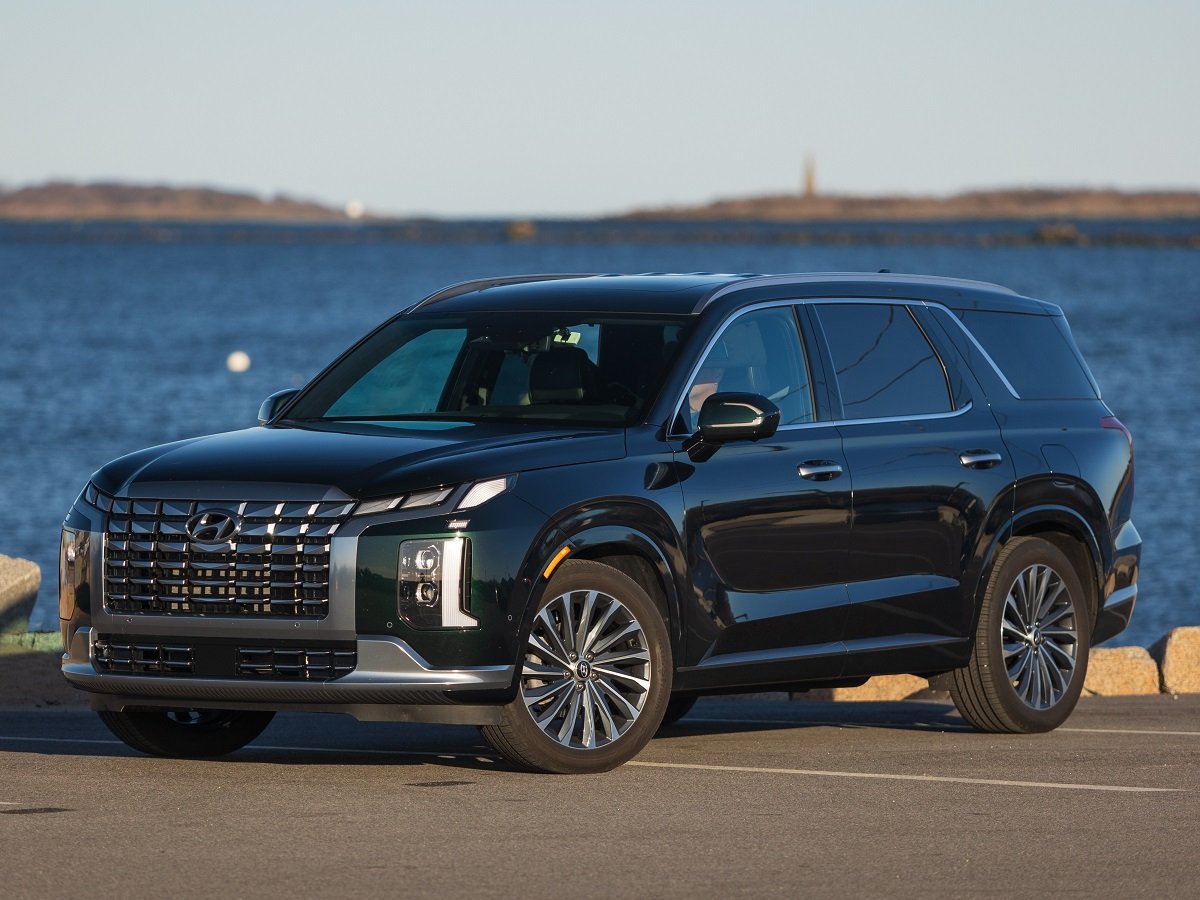
Photo: Kevin Nguyen
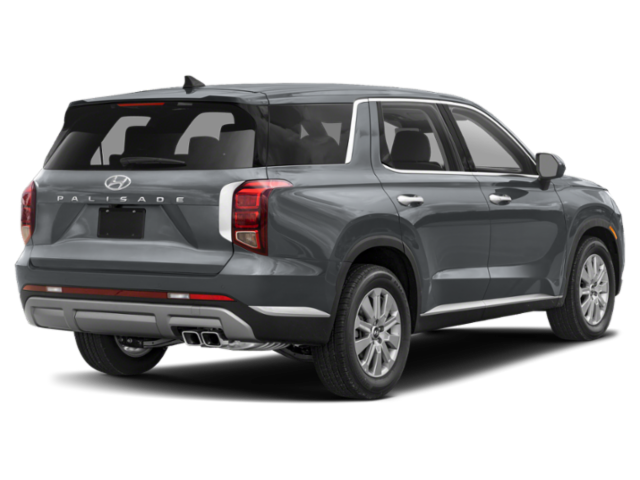
The Hyundai Palisade competes in the Upper Midsize SUV market segment. According to data collected from verified new-vehicle buyers for the JD Power 2022 Automotive Performance, Execution and Layout (APEAL) Study, 54 percent of new Hyundai Palisade buyers are male (vs. 52 percent for the segment), and the median age of a new Palisade buyer is 50 years (vs. 52).
As part of the APEAL Study, owners rated the Palisade in 10 primary categories. Listed below in descending order, you’ll find their preferences, from their most favorite thing about the vehicle to their least favorite:
In the 2022 APEAL Study, the Palisade ranks highest out of 15 Upper Midsize SUV models.

Photo: Kevin Nguyen
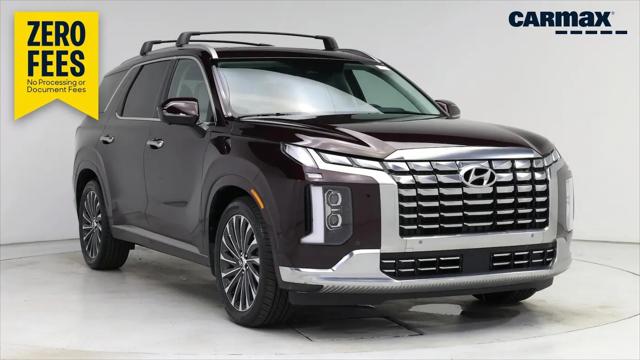
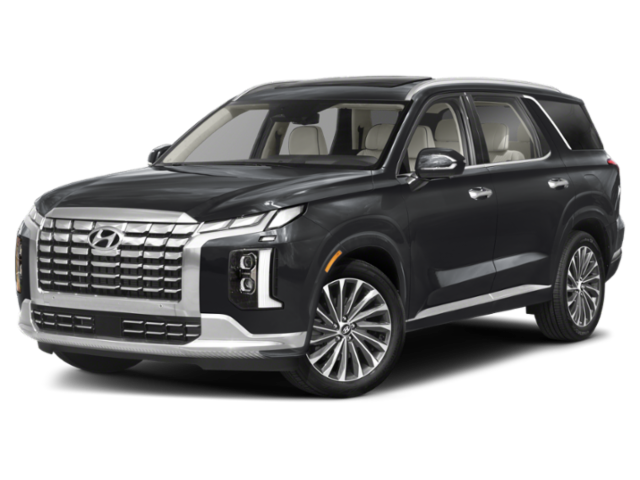
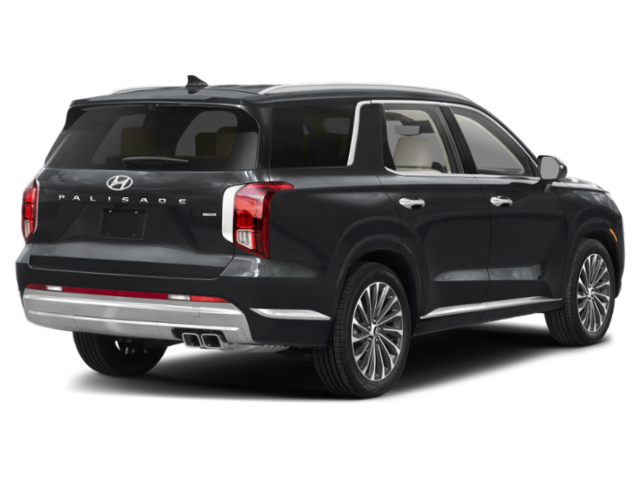
In the sections that follow, our independent expert analyzes a Palisade Calligraphy equipped with the following options:
The test vehicle’s price was $53,910, including the $1,335 destination charge.

Photo: Kevin Nguyen
While the entry-level SE and SEL trims seat eight, most Palisades get second-row captain’s chairs that cut seating to seven. That’s a good thing for those traveling with kids, as the extra space between second-row seats creates a small “demilitarized zone” between child seats. The Palisade’s tidy stance makes it easy for all passengers to climb in and out, and the front seats aren’t too aggressively bolstered, allowing for easier entry and exit. It’s a bit more challenging to access the third-row seats. They’re generally best reserved for children, but adults can get back there for shorter trips.
Seat comfort in the first two rows is excellent. In my Calligraphy test vehicle, the front seats came with active lumbar supports that change seat shapes on longer trips for less fatigue and better posture. The leather upholstery is soft and rich, and heating/ventilation functions work well in both rows. The second-row captain’s chairs offer plenty of head and legroom, even for adults, so at least four can ride in supreme comfort.
The active lumbar and comfort settings on the driver’s seat can be disconcerting at times. There were moments on longer drives where the seat’s air lumbar just deflated, leaving the driver to sink into the seat without warning. It’s easy to reset the seat and get back on track, but the initial change is shocking.
There’s good storage throughout the cabin, and Hyundai equips USB ports throughout to keep everyone charged and happy. The cupholders are large, especially in the front, where there’s a clever space for two cupholders and the wireless charging pad. The second-row seats have good storage space in each door pocket, and the seatback pockets are generous enough to stow an iPad or coloring book.
There’s only one genuine knock against the Palisade’s interior comfort, and it comes from the front seat adjustment settings. While achieving a comfortable position is possible, the seat doesn’t adjust as far downward as in many rival models. That makes the initial positioning feel a bit awkward, but the steering wheel adjusts nicely, and outward visibility is fantastic.

Photo: Kevin Nguyen
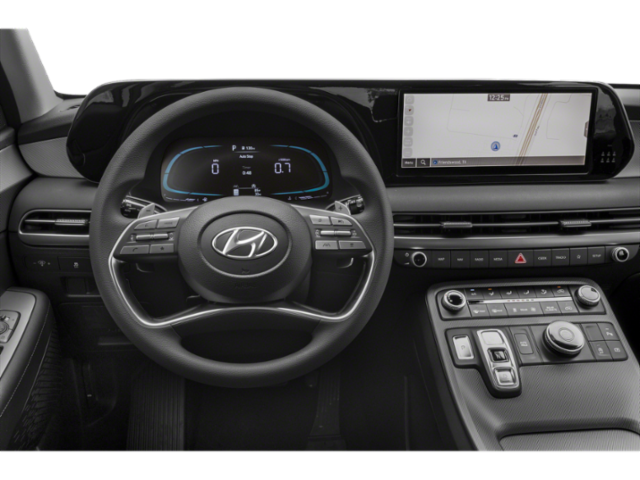
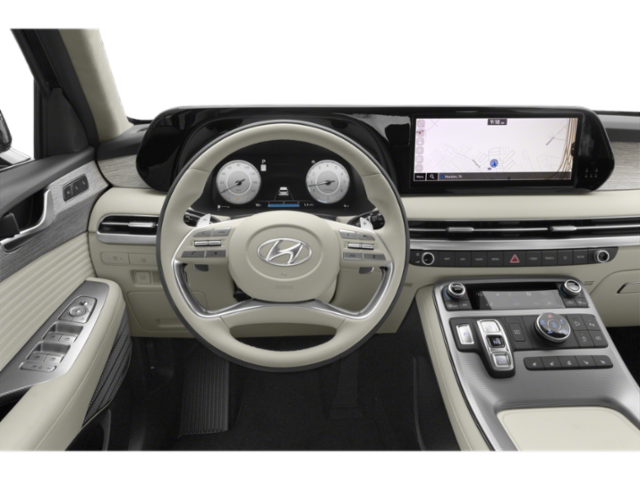
All 2023 Palisades get a 12.3-inch touchscreen with navigation and traffic information. My test SUV came with a 630-watt Harman Kardon sound system that can rock the house, but Apple CarPlay and Android Auto are wired only on all trims. Hyundai’s infotainment interface is easy to use and not too distracting while driving. Some knock it for being too simplistic, but that simplicity yields an intuitive system with responsive menus and easy navigation.
Other standard features include HD Radio, SiriusXM satellite radio, voice recognition, a rear-seat quiet mode, wireless charging, multiple Bluetooth device connections, and USB ports throughout the cabin. All features work well, but navigating radio stations could be easier. Hyundai’s interface employs an arrow-based station changing system, which would be less clunky with a physical tuning dial or on-screen scrolling menu.

Photo: Kevin Nguyen
Hyundai equips every 2023 Palisade with a 3.8-liter V6 engine and an 8-speed automatic transmission. Output is modest at 291 horsepower and 262 pound-feet of torque, and while leisurely cruising is no problem, the SUV has to dig deep to produce any meaningful power for acceleration. This is especially true on the highway, where it takes a solid throttle stab to get the transmission to downshift, and acceleration afterward is tepid.
What it lacks in grunt, the Palisade makes up with excellent ride quality and confident handling. There should be no expectation of canyon carving or lively back road drives. Still, the SUV holds its own in curves and always maintains a planted, confident feel. Steering is predictable, and the braking feel is solid, setting the stage for a quiet, comfortable cruise in most situations.
Though it’s a substantial 3-row SUV, the Palisade is easy and natural to maneuver in tight urban settings. Using its parking sensors, camera system, and generous outward visibility, parking in even the most annoying urban areas is very manageable. The Palisade offers a surprisingly tidy turning radius, and Hyundai perfectly weighted the steering system for in-town driving.

Photo: Kevin Nguyen
As part of its SmartSense suite of advanced driver assistance systems (ADAS), Hyundai gives every 2023 Palisade an impressive array of advanced driver aids, including blind-spot warning with rear cross-traffic warning, parking sensors, a rear-seat reminder system, forward-collision warning with pedestrian and cyclist detection, Safe Exit Assist, and a Highway Driving Assist system. Upgrades include an ultrasonic rear occupant system that doesn’t rely on door sensors and a more advanced highway driving assist system. There’s also a fantastic blind-spot warning camera system that projects an image of the blind spot onto the digital gauge display.
The Palisade’s safety alerts are intuitive and not super alarming. Though it’s a large SUV, the parking sensors and camera system make maneuvering the Palisade a breeze, and the blind-spot camera system is a blessing in heavy traffic. During a mid-afternoon drive through downtown Boston, the camera made navigating the insane traffic much more confidence-inspiring and less stressful overall.

Photo: Kevin Nguyen
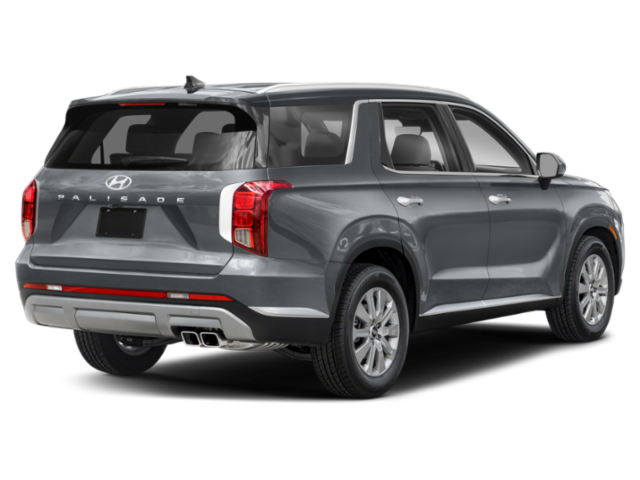
Like many 3-row SUVs, the Palisade’s cargo area is severely limited with the third-row seat upright. It offers just 18 cubic feet behind the third row, but thankfully, that space expands to a healthy 45.8 cubic feet behind the second-row seats. There’s a total of 86.4 cubic feet with both second and third rows folded flat. Loading and unloading are easy, thanks to the Palisade’s friendly ride height, and the available hands-free power liftgate is a godsend when trying to load the SUV with hands full of groceries or gear.
The 2023 Palisade returns 19 mpg city/26 mpg highway/22 mpg combined in FWD form. Those numbers shift slightly to 19/24/21 mpg with AWD. Those figures are just average for the segment, and there’s no hybrid option to boost fuel economy during in-town driving. Hyundai will soon offer the Ioniq 7 as a 3-row electric vehicle, but in the meantime, we’re left with the Palisade.
The 2023 Palisade earned a Top Safety Pick+ rating for the 2023 calendar year from the Insurance Institute for Highway Safety (IIHS). That score is despite a “Poor” grade in the more demanding new moderate overlap front crash test. The SUV picked up a “Good” score in the new side-crash test, where the IIHS now uses much more impact force. The shift in testing disqualified many vehicles from an IIHS Top Safety Pick award, but the Palisade has hung strong throughout.
As of this writing, the National Highway Traffic Safety Administration (NHTSA) hasn’t given the SUV an overall safety rating.
Pricing for the 2023 Palisade starts at just under $36,000 for the entry-level SE. The SEL retails for $38,900, while the XRT has a base price of $41,200. Stepping up to the more luxurious trims, you’ll pay $47,450 for the Limited and just under $50,000 for the top-spec Calligraphy trim. In addition to those prices, Hyundai charges a $1,335 destination charge.
The Palisade competes most closely with the Kia Telluride, its corporate cousin. They share a platform and powertrain, and many of the underlying technologies are very similar. Many buyers look to the Honda Pilot and Toyota Highlander as solid alternatives. The Pilot just received a makeover for 2023, bringing beefy styling and a new off-road trim. The Highlander got a new turbocharged 4-cylinder engine and will soon be available in a luxurious Grand Highlander configuration.
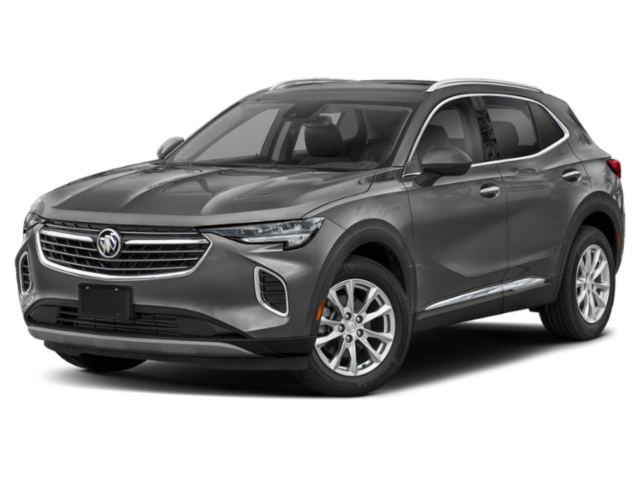
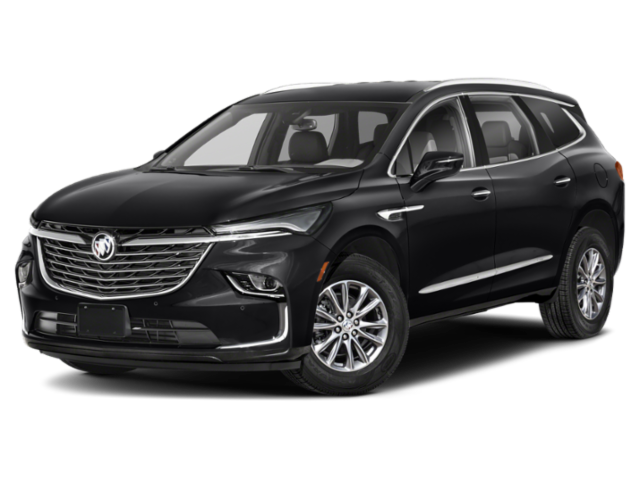
In the JD Power 2023 Initial Quality Study (IQS), theToyota 4Runner ranks highest in the Upper Midsize SUV segment. The Buick Enclave and the GMC Acadia are the next highest-ranked models.
In the 2022 APEAL Study, the Hyundai Palisade ranks highest in the Upper Midsize SUV segment. The Kia Telluride and the Jeep Grand Cherokee are the next highest-ranked models.
Other competitors to the 2023 Palisade include the Chevrolet Traverse, Kia Sorento, and Nissan Pathfinder.

Photo: Kevin Nguyen
The Palisade used to be a significant value in its segment, and while that’s changed a bit as its price has increased, it’s still one of the best-equipped models for its price. At the same time, the SUV feels upscale and is more premium than its price tag suggests, especially in lower trim levels. It’s comfortable, spacious, and easy to live with, which makes it an ideal vehicle for parents. My two children are out of bulky car seats but still use booster seats. The Palisade easily accommodated them, making it simple for them to climb in and buckle themselves.
Hyundai’s tech implementation and the in-cabin displays work well and are not overly complicated. The Palisade houses physical buttons for climate and other settings, and Hyundai conveniently locates the automatic engine stop/start button near the shifter buttons. On that subject, the controls take some time to get used to, and it’s puzzling why Hyundai couldn’t have used a rotary dial or even a small gear selector knob.
Ultimately, my money would be on the Kia Telluride, but that’s only because its styling is more appealing to me. The two perform similarly and are comparably equipped, so the choice between them is down to brand and styling preferences. As far as the rest of the segment goes, the Palisade is a refreshing entry because it doesn’t pretend to be too rugged or sporty in most configurations. That has allowed it to focus on comfort, ride quality, and safety, where it excels admirably in all categories.
Chris Teague is an experienced writer in the automotive and technology fields. In addition to JDPower.com, his work appears at Forbes, The Drive, Your Test Driver, and others.