73
65
600 - 835
1 speed, Automatic
Electric
All Wheel Drive

Photo: Ron Sessions
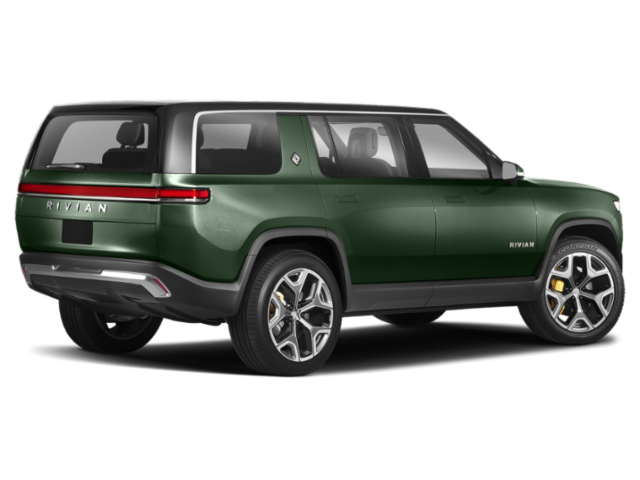
As with the R1T pickup, Rivian's R1S sport utility is a handsome, modern, square-jawed design of its own making, immediately identifiable from a distance. The squared-off shape also pays dividends in interior space, enabling the R1S with second- and third-row passenger room comparable to that of a Ford Explorer but with more third-row headroom than a Tesla Model X.
Aside from a pair of comfy, reasonably supportive, heated, and ventilated front buckets, the 7-passenger version offers a 3-person 40/20/40 split-folding second-row bench seat and a 2-passenger 50/50 split-folding third-row perch. There are five LATCH child-seat anchor locations.
The interior design of the R1S is both sparse in terms of switchgear and luxurious in its simplicity. The dash is uncluttered, relying heavily on the large, 15.6-inch center touchscreen for many driving interactions and convenience functions, such as adjusting the dual-zone automatic climate control, customizable drive modes, vehicle settings, navigation routing, and driver profiles. Rivian limited hard switchgear to the steering column stalks (wipers, lights, and turn signals), gear shifting, and cruise control; power window and door lock buttons on the doors; and a pair of roller switches on the steering wheel spokes for functions such as adjusting the side mirrors or tilt/telescoping steering column position.
Unlike most Tesla models, however, the Rivian R1S features a 12.3-inch driver display directly in line with the steering wheel for information related to the serious business of driving, such as vehicle range and speed. Still, R1S buyers unaccustomed to menu-intensive sequences to accomplish some tasks done previously with multiple single-use hard switches in other vehicles may want to practice accessing functions with the center screen a bit before venturing out on their first test drive.
Sport utility vehicles draw buyers for their cargo and storage versatility. In this regard, the R1S does not disappoint. Although there are not as many cubbies and bins as in a full-size pickup or SUV, the R1S has a modicum of stash space. There's a deep covered bin under the center armrests, a rubber pad for charging two smartphones, a large tray at floor level between the dash and center console for a backpack or purse, slide-out trays for small detritus at the leading edge of the front lower cushions, and front-door pockets. The R1S has a total of six cupholders.
As with the R1T pickup, the front trunk or "frunk" can swallow 11.1 cubic feet of stuff and has a 120-volt power outlet. Rivian says there's 17.6 cubic feet of cargo space behind the third-row seats, 46.7 with the third-row chairs folded flat, and 88.2 when you lower the second-row seats. Under the cargo floor and above the compact spare tire is another 5 cubic feet of concealed storage, perfect for stashing small valuables such as a camera, laptop computer, or purse.
Similar to the BMW X7, the R1S features a power-operated split liftgate. Rivian says the lower portion can support up to 1,000 pounds.
Also in the cargo bay is a built-in air compressor with a 150-psi capacity. Aside from its primary task of powering the R1S's adjustable-height air suspension, you can use the compressor to inflate tires, sports equipment, and such.
Interior occupants will enjoy the view out of the R1S's standard panoramic roof. However, although the automaker treated the large glass panel with a UV-reducing process, there is no sunshade per se, which in the oppressive desert summer heat can transmit too much warmth into the passenger compartment.

Photo: Ron Sessions
One area where the Rivian R1S takes a different tack than most of the competition is infotainment. The large, 16-inch landscape-format color center infotainment screen is one of the most expansive in the segment. When you select a tile, it features available options that slide out rather than segue into distracting menus. The big screen is the portal for most R1S functions, from the expected audio, media, and cloud-based navigation features to climate control and vehicle drive modes, brake regeneration, and charging.
However, there are some areas for improvement as the Rivian system is not compatible with Apple CarPlay and Android Auto smartphone mirroring, which so many drivers are familiar with and comfortable using. Additionally, the audio system doesn't have an AM radio band and is unavailable with the also-popular SiriusXM satellite radio. The R1S does, however, come with access to a few music-streaming services. And standard Amazon Alexa capability makes voice control of most center screen functions quick and easy.
Also, onboard the R1S are an AT&T 4G LTE Wi-Fi hotspot and wireless inductive phone charger. Keeping all your devices charged is easy with eight USB-C ports plus three 12-volt and two 120-volt outlets.
The standard audio system utilizes 14 speakers. However, the Adventure package on the R1S test vehicle came with the upgrade 23-speaker Elevation by Meridian premium system that filled the otherwise hushed interior with immersive, high-fidelity sound. A bonus is a detachable, rechargeable portable Bluetooth speaker, great for camping.
The Rivian R1S comes standard with an impressive Driver+ suite of safety and driver-assistive tech. In addition to eight airbags, the content includes the following:
In total, the R1S scans its surroundings with nine cameras, five radar sensors, and 12 ultrasonic sensors.

Photo: Ron Sessions
As with EVs such as the Volkswagen ID.4 and Volvo C40 Recharge, there is no start button in the R1S. Your butt in the seat is the start switch. With a foot on the brake, pulling the gear lever into Drive or Reverse wakes up the R1S. The all-independent air suspension, with ride height adjustable in multiple settings between 9.5 and 15 inches, means getting in the cabin isn't necessarily a huge climb up.
The Rivian R1S features skateboard construction with a large lithium-ion battery sandwiched between the frame rails under the passenger compartment, resulting in a low center of gravity. The air suspension, with firmness adjustable in the R1S's nine driver-selectable drive modes, features active damping and load-leveling, so the big SUV always feels like it's composed with good ride quality and vertical wheel control, even over big bumps and dips. A hydraulic roll-control system helps the R1S corner with little or no lean in sharp turns while avoiding the side-to-side head toss often experienced with stiff mechanical anti-roll bars.
Then there's the awesome power, the whisper-quiet yet intensely invigorating electric propulsion from the R1S's four-axle-mounted electric motors. Up to 415 hp and 413 pound-feet of torque is available at the front wheels, and 420 hp and 495 pound-feet of torque at the rear. That's about twice as much horsepower and torque as the twin-turbocharged Lincoln Navigator can muster and is sufficient to take the 7,000-pound Rivian R1S EV SUV from rest to 60 mph in a claimed 3.1 seconds.
Getting that power to the ground, the traction of the standard AWD system and torque-vectoring effect of four axle-mounted electric motors combined with the meaty 275/50R22 Pirelli Scorpion Zero all-season tires on the test vehicle provided plenty of grip. The short sidewalls of the 50-series tires helped with steering response.
Confident braking with the beefy, vented 4-wheel discs in the R1S is another strong point, with driver-selectable regenerative braking allowing one-pedal driving in most instances. However, most buyers would also welcome the choice of a less-aggressive setting for lazier cruising.
Towing capacity with the R1S is an impressive 7,700 pounds.
With the quad-motor Adventure package, the R1S offers an impressive 316 miles of driving range. As estimated by the EPA, the MPGe rating for the R1S is 73 city/65 highway. Rivian says a 180-kWh "Max" battery capable of extending the driving range to around 400 miles and a lower-cost 105-kWh battery with about 260 miles of range will be available in the future.
The Tesla-like Rivian Adventure Network of 3,500 200-kilowatt DC fast chargers now under construction at 600 locations along major highways and select off-road locations across the continental United States and Canada will be able to provide up to 140 miles of range for the R1S in 20 minutes, the automaker says. Also in the works is the Rivian Waypoints network of more than 10,000 Level 2 240-volt AC chargers.