See answers to common EV questions, tax incentives, charging maps & more.
Explore EV27
31
144
1 speed, CVT w/OD
Regular Gasoline I-4
Front Wheel Drive
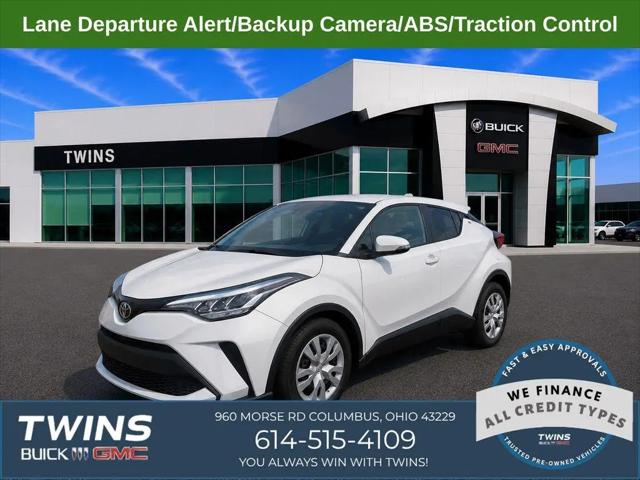
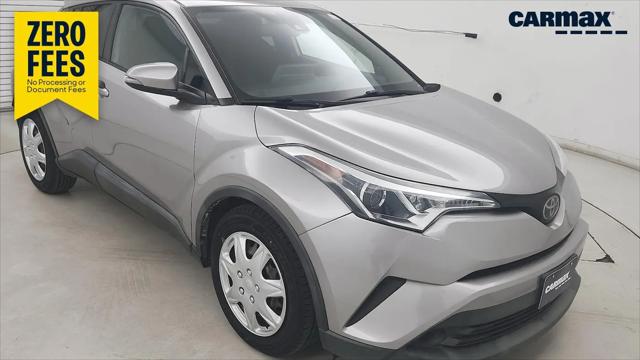
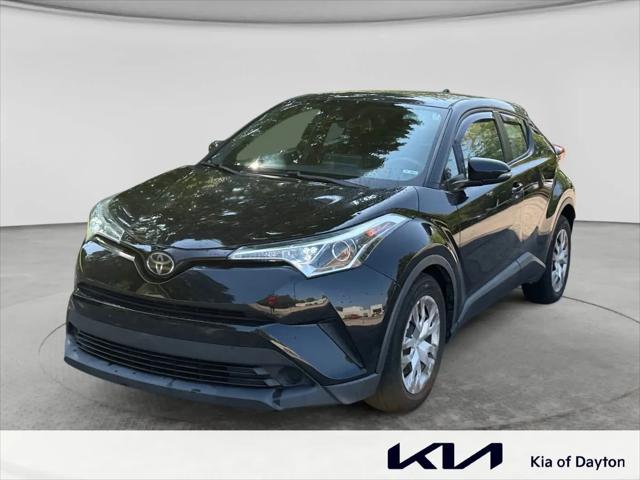
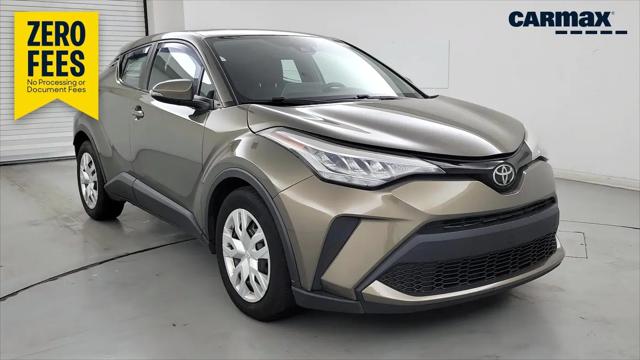
Originally intended for Toyota’s youth-oriented Scion brand before the automaker elected to cancel that experiment, the Coupe High-Roof (C-HR) is an expressively styled multi-purpose vehicle with seating for up to five people.
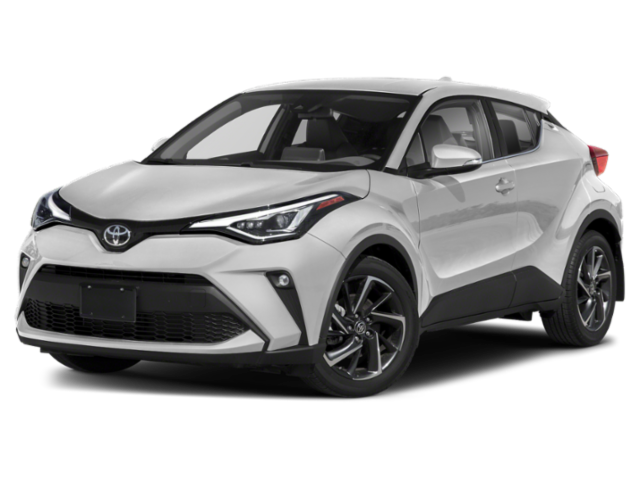
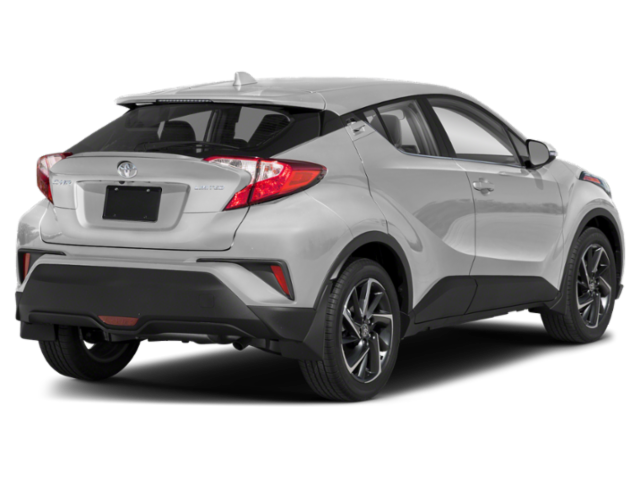
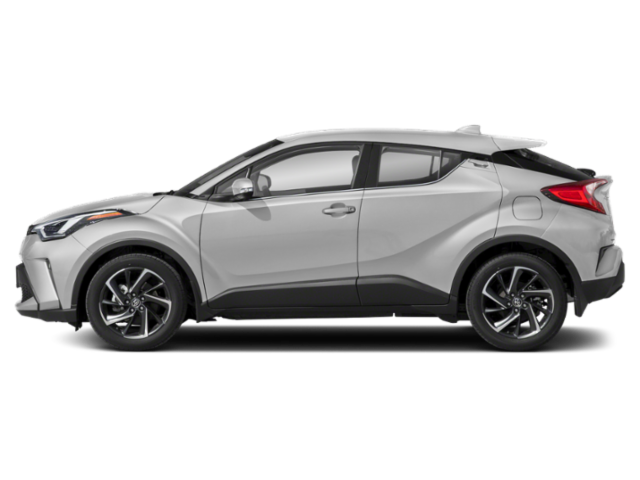
Designed to resemble a coupe, sitting high off the ground like a crossover SUV, and offering the practicality of a 5-door hatchback body style, the 2020 Toyota C-HR comes only with front-wheel drive and offers no more than 5.9 inches of ground clearance. You choose between LE, XLE, and Limited trim, and prices start at an affordable $21,295 before adding destination charges.
Direct competitors include the Hyundai Venue, Kia Soul, and Nissan Kicks, but the C-HR also serves as an alternative to any front-drive small crossover SUV, which is why JD Power classifies it as a small SUV. The C-HR is built on the Toyota New Global Architecture (TNGA), and the Lexus UX is based on the same set of underlying components but with a more luxurious look, feel, and price.

Photo: Christian Wardlaw
For this review, JD Power evaluated a C-HR Limited equipped with 2-tone paint, an Audio Plus sound system, a set of floor mats, and a cargo mat. The price came to $28,704, including the $1,120 destination charge.
In the sections that follow, our expert provides his own perceptions about how the 2020 Toyota C-HR measures up in each of the 10 categories that comprise the APEAL Study.
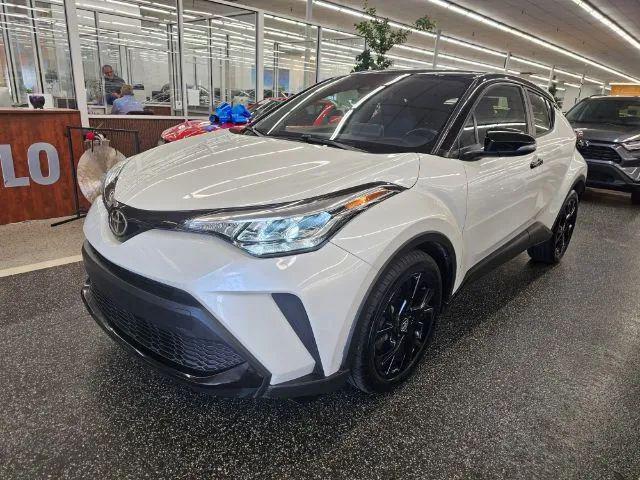
Exuberant, expressive, and extroverted, the Toyota C-HR’s styling is what draws people to it. The dramatic look is not for everybody, but that’s the point, and the C-HR clearly attracts the buyer it targets.

Photo: Christian Wardlaw
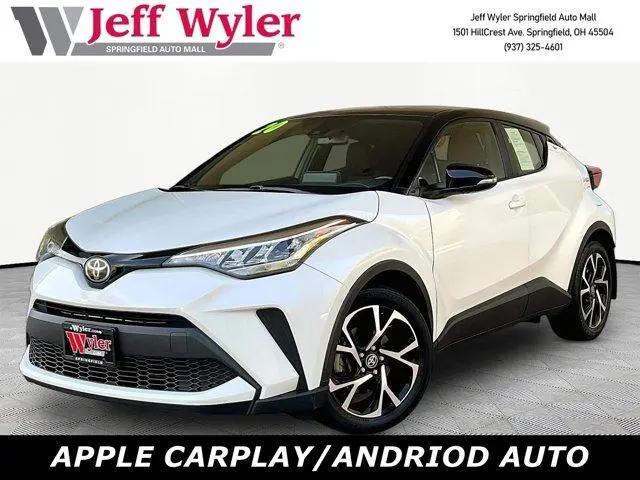
Upgrading from LE to XLE trim does two things. First, Toyota equips the C-HR with appealing 18-inch aluminum wheels. Second, you can get a 2-tone paint treatment with a contrast-color roof for an extra $500.
Open the C-HR’s doors, and you’ll find more soft-touch material than you might expect combined with plastic door panel inserts that have a stylish geometric pattern. At night, soft ambient lighting highlights the pattern, which is repeated in the Limited trim’s seat upholstery.

Photo: Christian Wardlaw
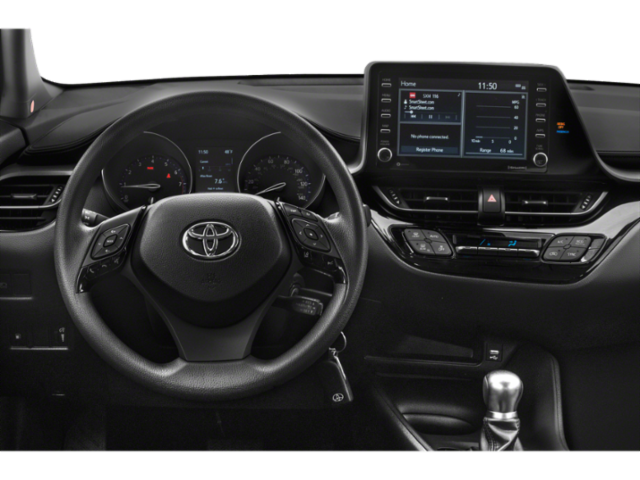
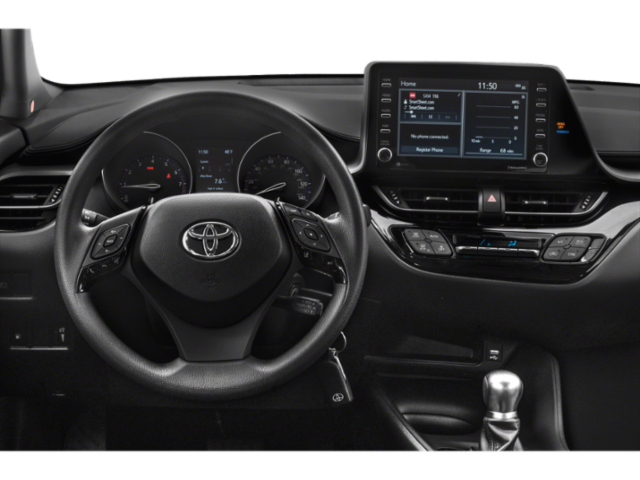
Wisely, Toyota emphasizes form over function when it comes to the C-HR’s cabin. The asymmetrical center console creates a driver-centric environment at the cost of practical storage, but in a vehicle like this the trade-off is understandable.
Because the C-HR sits high off of the ground, entry and exit are easier than with a typical car. And here’s another surprise with the C-HR: The Limited trim upgrades from cloth to genuine leather rather than Toyota’s widely used SofTex simulated leather.
To access the C-HR’s rear seat, use the release handle hidden high on the door where it meets the roof. Toyota places it there to preserve the C-HR’s coupe styling. Once you’re settled in, you’ll find it comfortable for this size of vehicle. However, there are no air conditioning vents or USB charging ports. And the side windows are small enough to cause claustrophobia.
A dual-zone automatic climate control system is standard in every C-HR. The temperature display is flanked by function buttons with simple markings, and is underlined with a piano-key temperature, fan speed, and air flow adjustment switches. Versions of the car with heated seats embed the 3-stage activation buttons within the gloss black surrounding the controls.
Owners rank their climate control systems fairly high in comparison to other vehicles. Aside from the lack of rear air vents, this is easy to understand. However, moderate temperatures during testing week did not require any extra effort on the part of the climate system.
As you might expect in a vehicle aimed at a youthful buyer, the C-HR includes a robust infotainment system, the screen and controls for which dominate the top of the dashboard.
In addition to a standard 8-inch touchscreen display, every C-HR includes Apple CarPlay, Android Auto, Amazon Alexa, USB ports, SiriusXM satellite radio with a free 3-month trial period, Wi-Fi Connect with a 3-month/2GB free trial period, and Safety Connect with a 1-year free trial period.
An upgrade called Audio Plus is available for the XLE and Limited, and it includes HD Radio. That’s it. I have no idea why anyone would pay $450 for it. A better option would be a premium sound system. Given the C-HR’s target audience, this vehicle demands better speakers.
Toyota C-HR owners rank storage and space low on their list of favorite things about this vehicle, and that’s understandable. As previously noted, the interior prioritizes form over function, limiting practical places in which to stash stuff.
Cargo volume measures 19.1 cu.-ft. behind the rear seat. While that’s more than any small sedan provides, it is important to remember this measurement reflects packing luggage all the way to the roof, inside the wells on either side of the cargo floor, and in areas beneath the cargo floor. Practical volume that preserves outward visibility is smaller than that number.
Fold the back seat down, and the C-HR offers 37 cu.-ft. of volume. That’s not much for this type of a vehicle, reflecting the price to be paid for the C-HR’s rakishly sloped roofline.
Toyota equips every C-HR with a backup camera, which is a good thing since visibility to the rear is awful without it. Looking forward, large side mirrors, thin windshield pillars, and small front quarter windows provide a good view out.
Every C-HR also comes with Toyota Safety Sense-P (TSS-P, and I have no idea what the “P” is for), a collection of advanced driving assistance systems (ADAS). They include adaptive cruise control, forward collision warning with pedestrian detection, automatic emergency braking, lane departure warning, lane keeping assistance, and automatic high-beam headlights.
This TSS-P package is not as smooth and refined in operation as the company’s latest suite of ADAS, which is called Toyota Safety Sense 2.0 (TSS 2.0). However, it does work effectively and with accuracy. Additionally, the test vehicle included a blind-spot warning system with rear cross-traffic warning.
Should a collision occur, the C-HR is quite safe. It has 10 standard airbags and receives top ratings from the Insurance Institute for Highway Safety (IIHS). It does not, however, get a Top Safety Pick designation because the IIHS has not evaluated the C-HR’s headlight illumination. In most crash tests conducted by the National Highway Traffic Safety Administration (NHTSA), the C-HR earns 5-star ratings.
Equipped with a free 1-year trial subscription to Safety Connect service, the C-HR includes automatic collision notification and emergency calling. This costs extra after the free trial period expires.
Perhaps the C-HR’s weakest link, the gutless 2.0-liter 4-cylinder engine and continuously variable transmission (CVT) might be refined and reliable, but those are its only redeeming qualities. Well, those and the fact that Toyota provides free maintenance for two years or 25,000 miles, whichever comes first.
Mustering just 144 horsepower at 6,100 rpm and 139 lb.-ft. of torque at 3,900 rpm, the 4-cylinder powers the C-HR’s front wheels. Under hard acceleration, which is frequently necessary, the CVT groans and drones even though Toyota has taken steps to try to make it sound and feel more like a traditional automatic.
On my testing loop, I was unable to safely pass slower vehicles on 2-lane roads, I had trouble accelerating onto a freeway using a very short on-ramp, and I couldn’t take advantage of holes in traffic. Nothing about this powertrain inspires confidence, and that includes when turning from a side street onto a busy main street. You need to exercise plenty of advance planning and deliberate driving when behind the wheel of a C-HR.
However, in urban situations, heavy traffic, or when cruising on a freeway, the powertrain is adequate. And the C-HR did climb a local mountain grade without trying too hard.
Toyota C-HR owners rate fuel economy as their least favorite aspect of the vehicle, but my experience doesn’t align with that. The EPA says to expect 29 mpg in combined driving, and I averaged 29.4 mpg on my testing loop.
If the C-HR’s engine and transmission are uninspiring, its driving dynamics are rather impressive. But this is true of any Toyota built on the company’s Toyota New Global Architecture (TNGA), which is specifically engineered to provide a fun-to-drive experience.
In particular, I found the C-HR’s suspension tuning impressive. It soaks up pavement irregularities without excessive head toss or body motions, and while its front-drive nose-heaviness is evident if you toss it into a turn with too much speed, chances are you’re not going to be inspired to do that in the first place.
Rather, for daily driving conducted by the typical person, the C-HR steers, stops, rides, and handles in an enjoyable way.