See answers to common EV questions, tax incentives, charging maps & more.
Explore EV20
30
300
1 speed, CVT w/OD
Premium Unleaded V-6
Front Wheel Drive
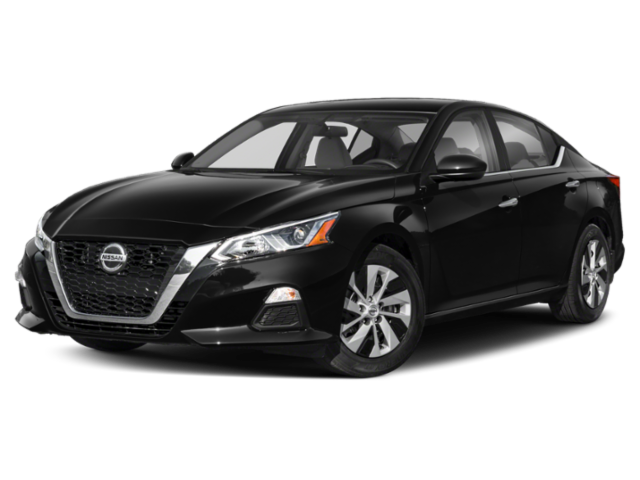
What is a Nissan Maxima? The answer to this question isn’t clear.
Once known as Nissan’s “4-door sports car,” by modern standards it is not. Positioned at the top of Nissan’s lineup like a full-size sedan, it has the interior volume and trunk space of a midsize sedan. Aspirations of luxury pit the Maxima squarely against the Acura TLX, while the genuinely upscale Mazda Mazda6 Signature offers similar performance for less. Compelling alternatives, if consumers would just give them a chance, include the Kia Stinger and Volkswagen Arteon.
Whatever a Nissan Maxima is, it makes its owners happy, and it ranks at the top of its class in terms of overall appeal according to JD Power.
The 2020 Maxima comes in S, SV, SL, SR, Platinum, and Platinum Reserve trim levels. Prices start at $34,350 and rise to $42,780 before adding options and destination charges. This year, Nissan makes its Safety Shield 360 collection of driving aids standard on every trim level, along with the Maxima’s Integrated Dynamics Control Module (IDM) which improves the car’s ride and handling. Previously, IDM was reserved for SR trim.

For this review, JD Power evaluated a Maxima Platinum Reserve equipped with a rear spoiler, a rear diffuser panel, illuminated doorsill kick plates, exterior ground illumination, a floor and trunk mat set, and more. The price came to $45,865, including the $895 destination charge.
In the sections that follow, our expert provides his own perceptions about how the 2020 Nissan Maxima measures up in each of the 10 categories that comprise the APEAL Study.
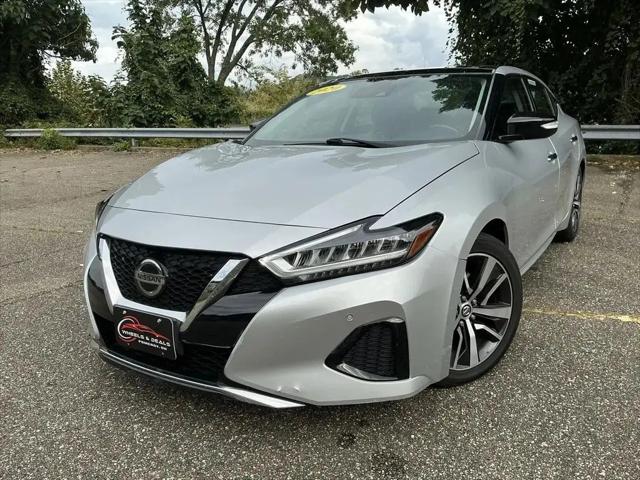
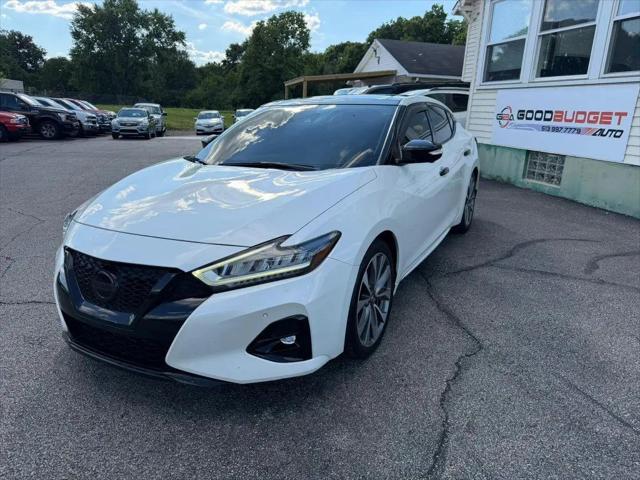
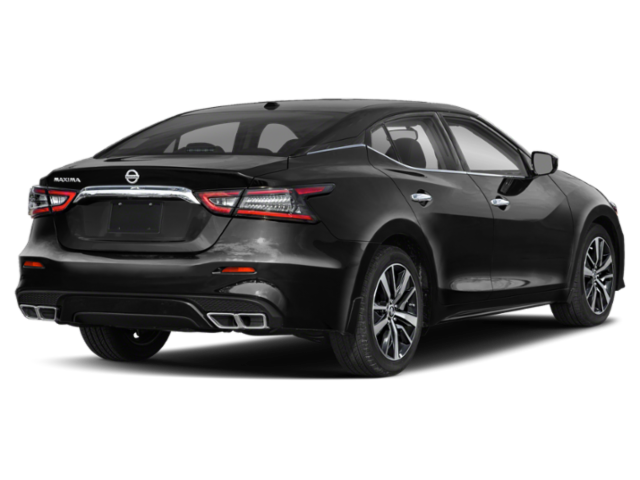
When it comes to the 2020 Nissan Maxima, you either like how this dramatically designed car looks, or you don’t. Since the current Maxima debuted for the 2016 model year, Nissan has refined the car’s details to bring a semblance of cohesion to its appearance. It remains expressively styled and boldly polarizing, though, offering plenty for your eyes to take in.

The school of thought dictating that more is better continues inside the Maxima, where contrast stitching and faceted metallic trim lends even the base S trim level’s driver-centric interior plenty of character.

At the opposite end of the spectrum, the Maxima Platinum Reserve equipped with Rakuda Tan semi-aniline premium leather upholstery is a feast for the eyes. The rich saddle leather features diamond quilted stitching, the metallic dashboard and door panel trim adopts a bronze tint, and the stitching throughout the cabin matches the color of the seats.
Add fabric windshield pillar coverings, padded center console and door armrest surfaces, and soft-touch materials throughout, and the Maxima Platinum Reserve looks, feels, and even smells like luxury. Let your gaze fall to the lower parts of the interior, though, and inexpensive-looking plastic panels confirm that a Maxima definitely does not belong in the Infiniti lineup.
Like most modern Nissans, the 2020 Maxima’s front seats are exceptionally comfortable. One of the better examples of the automaker’s Zero Gravity seat designs, they are perfectly supportive, almost to the point that you can’t feel them beneath you. Add the test car’s soft and supple leather along with heating and ventilation, and you’ve got a car offering all-day comfort as long as you don’t mind the somewhat confined driving position.
Nissan thoughtfully pads and upholsters the sides of the center console and door panel armrests, spots where your legs may come into contact with the cabin. On a multi-hour drive, however, I wished for denser material in these locations.
Back seat space is snug, making the Maxima feel smaller than the less expensive midsize Altima. However, as is true of the front seats, the rear cushions are quite comfortable and offer plenty of support. There just isn’t much room for adult passengers to move around.
From the climate system’s control layout to its performance, I had no issues with the Maxima’s heating and air conditioning systems. The rear window defogger rapidly cleared the back glass of morning dew, and on a warm and muggy late spring day the air conditioning blew hard and cold enough to make me chilly. In spite of the weather outside, I cranked the temperature up to 75 degrees and turned on the seat heaters.
If the Maxima’s climate system is a model of simplicity and effectiveness, the infotainment system turns in a hit-and-miss performance.
All Maximas include an 8-inch touchscreen display, Bluetooth, Apple CarPlay, Android Auto, satellite radio, and a hands-free text messaging assistant. The test car had the top version of the technology, complete with NissanConnect services, navigation with a door-to-door smartphone app functionality, and a Bose premium sound system.
From a control standpoint, the infotainment system offers stereo knobs and main menu shortcut buttons, a helpful approach that improves the user experience. The 11-speaker Bose Centerpoint surround sound system is nothing to rave nor complain about.
Using the voice control button on the steering wheel, I issued my usual litany of standard commands, which proved successful about half the time. The system had no trouble finding the nearest example of my favorite coffee shop or my home address but was flummoxed when I asked for directions to a favorite locally-owned restaurant. When I asked where the nearest hospital was, those of the veterinary variety dominated the selection list.
For what is supposed to be a large car, there isn’t much storage or trunk space, which is likely why owners rank the Maxima low in this regard.
Within the cabin, the glove compartment, center storage bin under the armrest, and door panel bins are all a decent size. Forward of the shifter, a small covered bin isn’t terribly accommodating, and the cupholders are fairly small.
Luggage space amounts to 14.3 cu.-ft. in a deep but narrow space. Notably, Nissan offers a small handle on the inside of the lid to use for closing it.
For 2020, Nissan Safety Shield 360 is standard on every Maxima, installing all of the most effective advanced driving assistance system (ADAS) on the car. It does not include a lane centering assistance function but is otherwise comprehensive.
Additionally, every Maxima includes a Rear Door Alert system designed to prevent owners from accidentally leaving someone or something important in the vehicle. With an active subscription, NissanConnect services also provides a measure of extra safety through automatic collision notification, emergency calling, and safe teen driver settings related to speed, curfew, and geographic boundaries.
The ADAS systems work well on long highway slogs. The adaptive cruise control is smooth, the lane keeping assist is effective, and the Maxima’s engine supplies enough oomph to help it accelerate around slower moving vehicles after a lane change. The blind-spot monitoring light is rather dim and is not located on the mirror or its housing, which is less than ideal.
There was a situation during which the adaptive cruise control momentarily and inappropriately braked the Maxima. A slower moving semi-truck ahead switched lanes in front of me and, in response, I switched lanes behind it. As the truck passed in front of the Maxima, the car braked even though it wasn’t necessary, and the drivers following me were not happy about it.
If you get into an accident, the Maxima is an exceptionally safe sedan according to Insurance Institute for Highway Safety (IIHS) crash-test ratings. The IIHS gives the car a Top Safety Pick+ rating. Similarly, the Maxima earns a 5-star overall rating from the National Highway Traffic Safety Administration (NHTSA). In fact, aside from 4-star ratings in a couple of individual tests, the Maxima got the top score across the board – including for rollover resistance.
Say what you might about a Nissan Maxima, but there is no arguing that this car isn’t safe.
Maxima owners rate the engine and transmission to be their favorite thing about the car, and that’s easy to understand.
A 300-horsepower version of Nissan’s vaunted VQ-series 3.5-liter V-6 engine, this powerplant produces creamy, robust, effortless power. It’s hooked to a continuously variable transmission (CVT), which is normally a cause for concern. However, this iteration of Nissan’s Xtronic CVT is excellent, featuring what the automaker calls D-step shifting logic. It even holds a lower ratio when it detects high g-force cornering loads, ensuring the V6 is ready to rip down the next straightaway.
As wonderful as this engine is, and as remarkable as the CVT is, the powertrain isn’t flawless. Torque steer is an issue, which means the Maxima is begging for an all-wheel-drive system, a preferably of the torque-vectoring variety as found on the Acura TLX. Also, I sincerely wished for a set of shift paddles, which I normally find to be utterly useless in cars with CVTs.
Drivers can choose between Normal and Sport driving modes, the latter adjusting throttle response, CVT operation, steering effort level, and, with SR trim, the Active Sound Enhancement system.
According to the EPA, the 2020 Nissan Maxima should get 24 mpg in combined driving. I averaged 21.4 mpg on my testing loop, including plenty of back-road driving in Sport mode.
As much as Maxima owners like this car’s engine and transmission, driving dynamics fall mid-pack on their lists of their favorite things. A change Nissan makes for the 2020 model year might improve that sentiment.
Last year, the Maxima’s Integrated Dynamic Control Module (IDM) chassis management technology was exclusive to the SR trim level. Now, Nissan makes it standard in every Maxima.
The IDM includes three systems that improve the Maxima’s ride and handling: Intelligent Trace Control (brake-based torque vectoring), Intelligent Engine Brake (brake initiated CVT ratio adjustment), and Active Ride Control (smoother ride with less unwanted body motion). Together, they make what is a nose-heavy, front-wheel drive car feel more like a sport sedan.
Nevertheless, the Maxima feels heavy and solid rather than light and athletic from behind the steering wheel. It’s not a tossable vehicle, begging its driver to fling it into corners with wild abandon. But that’s not a problem, because the Maxima isn’t that sort of car.
Instead, this is a fast, comfortable, high-speed cruiser that can take a corner or curve with enthusiasm when the situation presents itself. Just make sure to hang on tight to the steering wheel to correct the torque steer as you accelerate past the apex.